
The Illustrative Art Style Behind Book Pages and Magazine Spreads
 FLORA
FLORA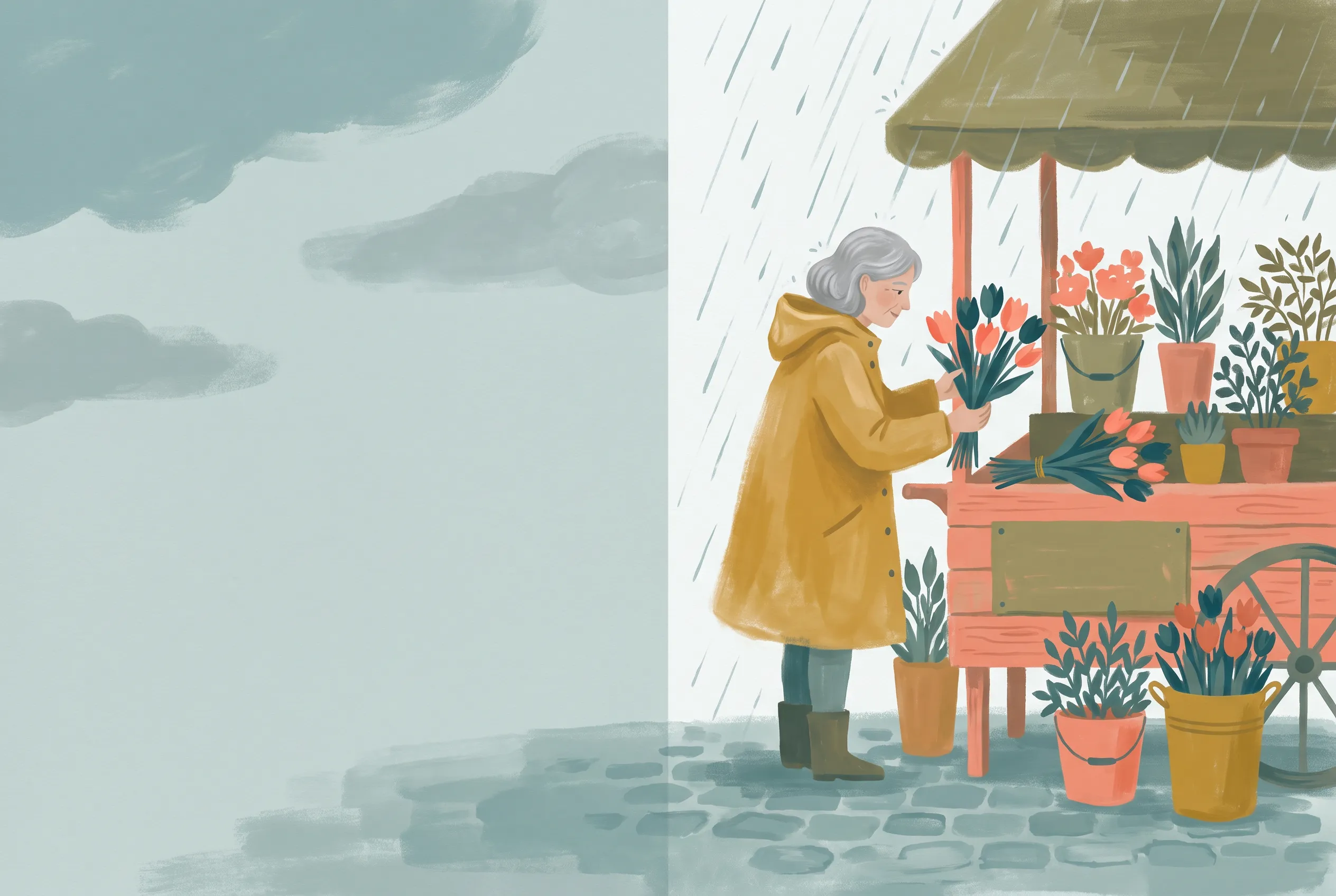
An illustrative art style is the look of pictures drawn or painted to do a job, whether the job is a story, an article or a product. The trade grew up in print. In the late 1800s Howard Pyle headed the first generation of American narrative illustrators to succeed at it, and publishers learned that their pictures helped sell magazine subscriptions and advertising. The look is easy to recognize. The subject reads at a glance, usually held by a confident outline around simplified forms. Palettes are often limited, and the artist's hand shows in brushwork, hatching or paper grain.
Illustrative art style examples made in FLORA
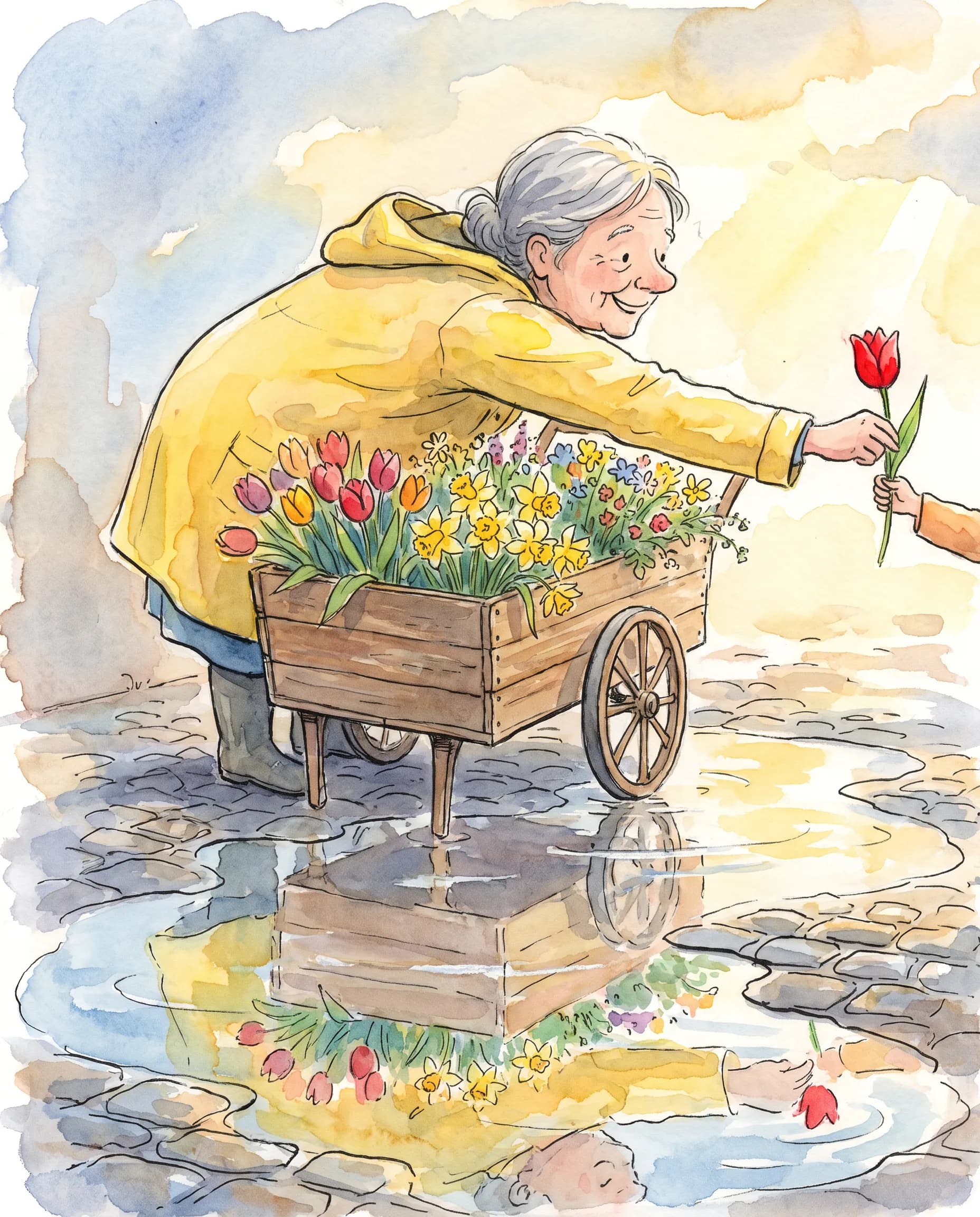
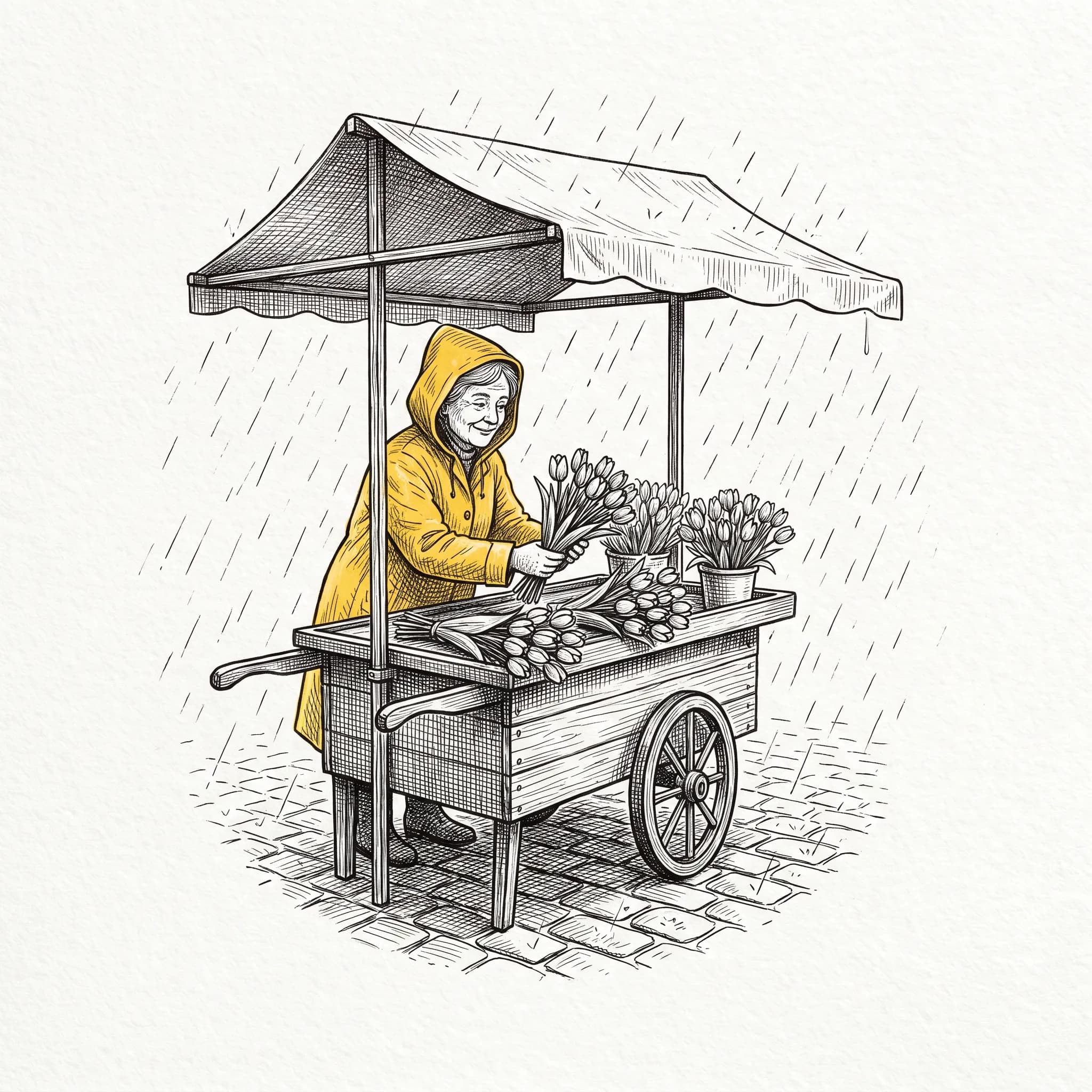
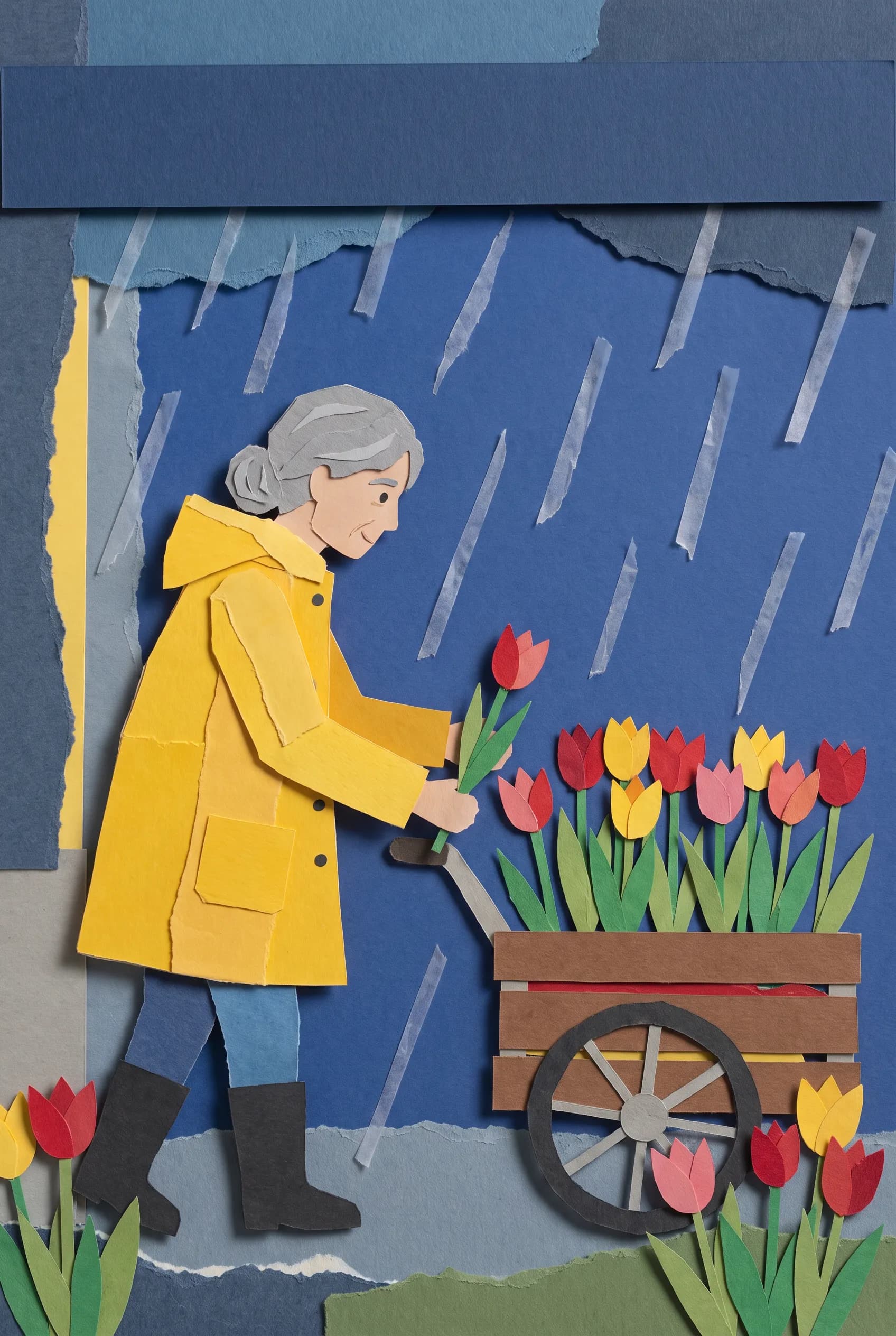
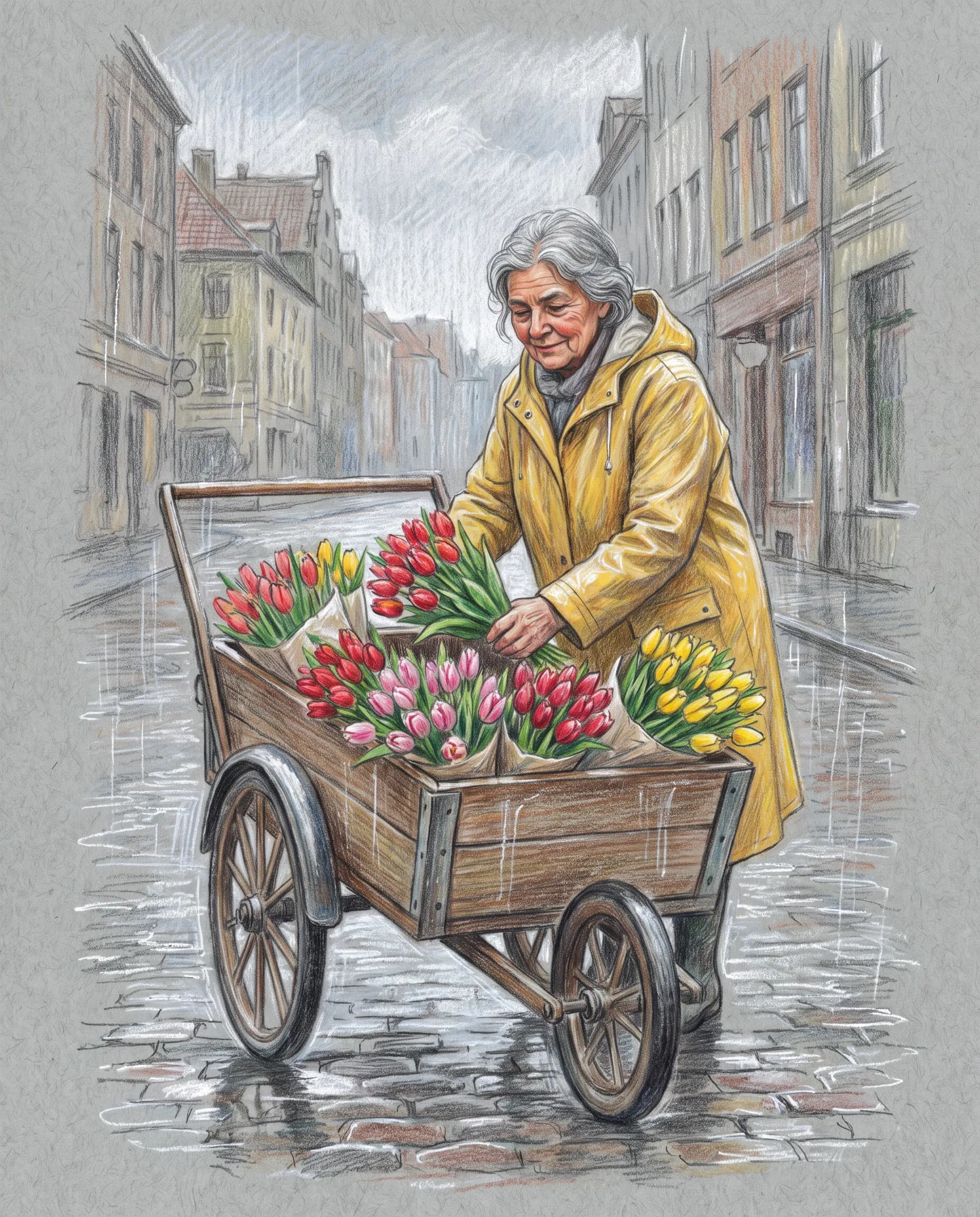
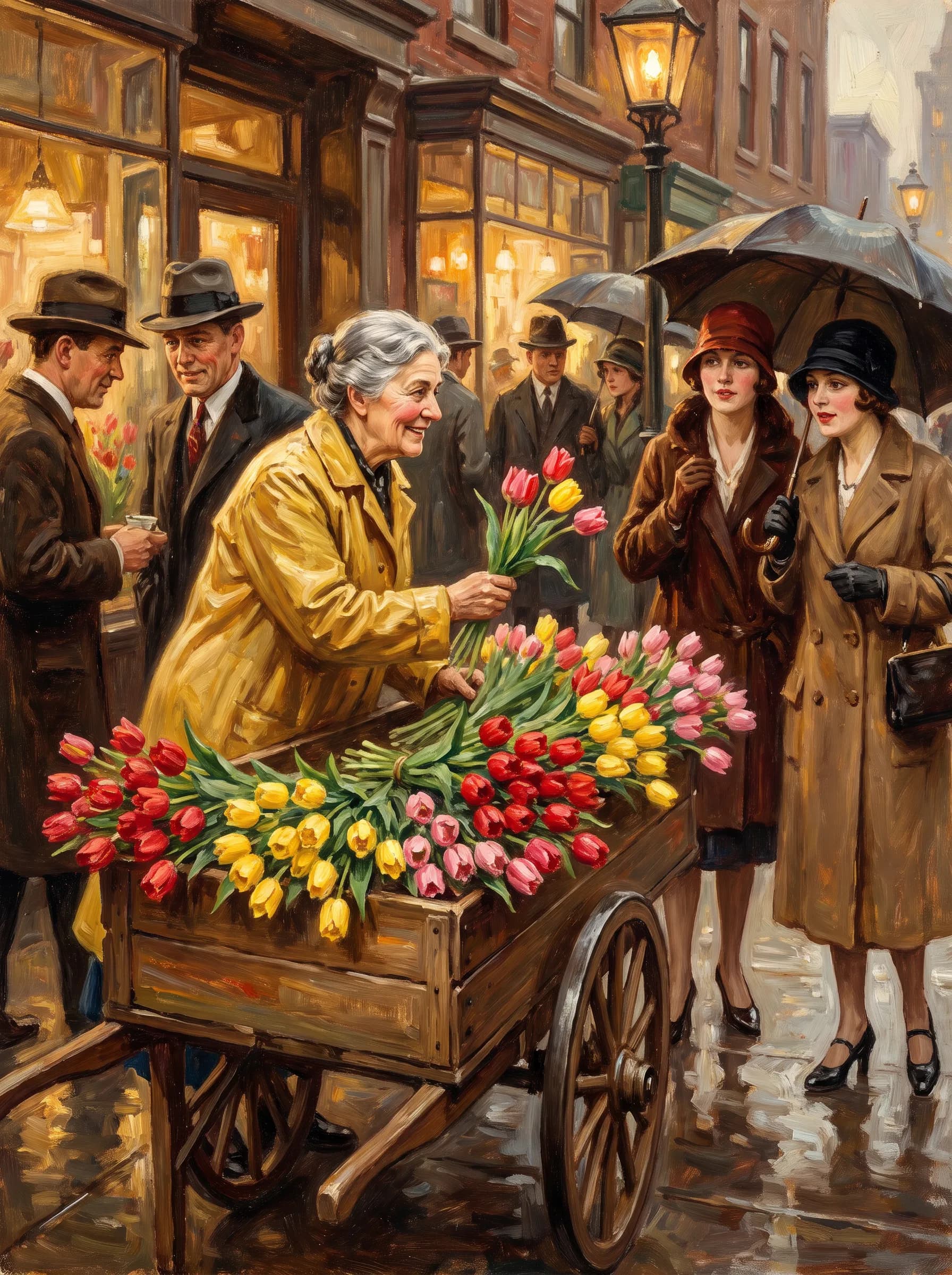
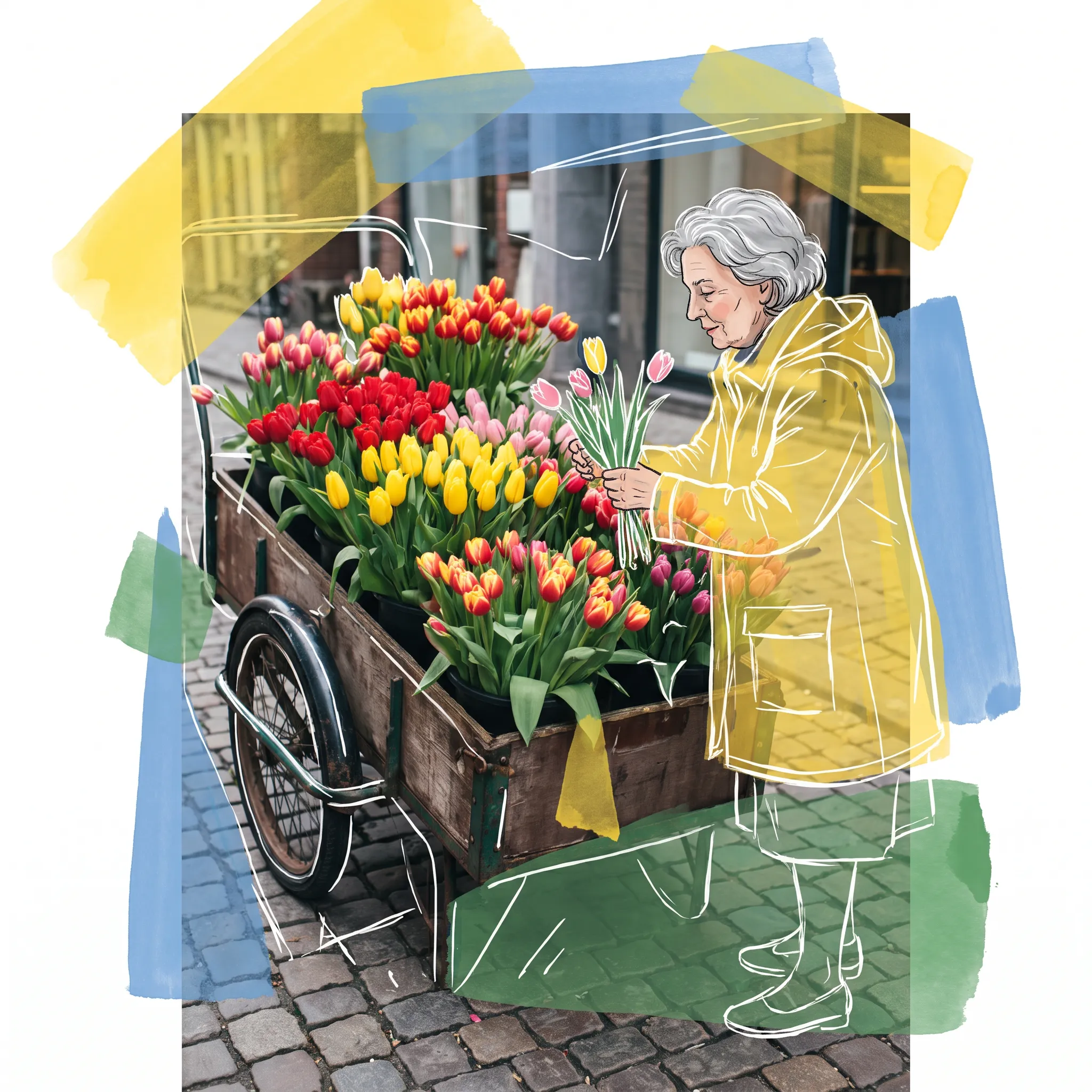
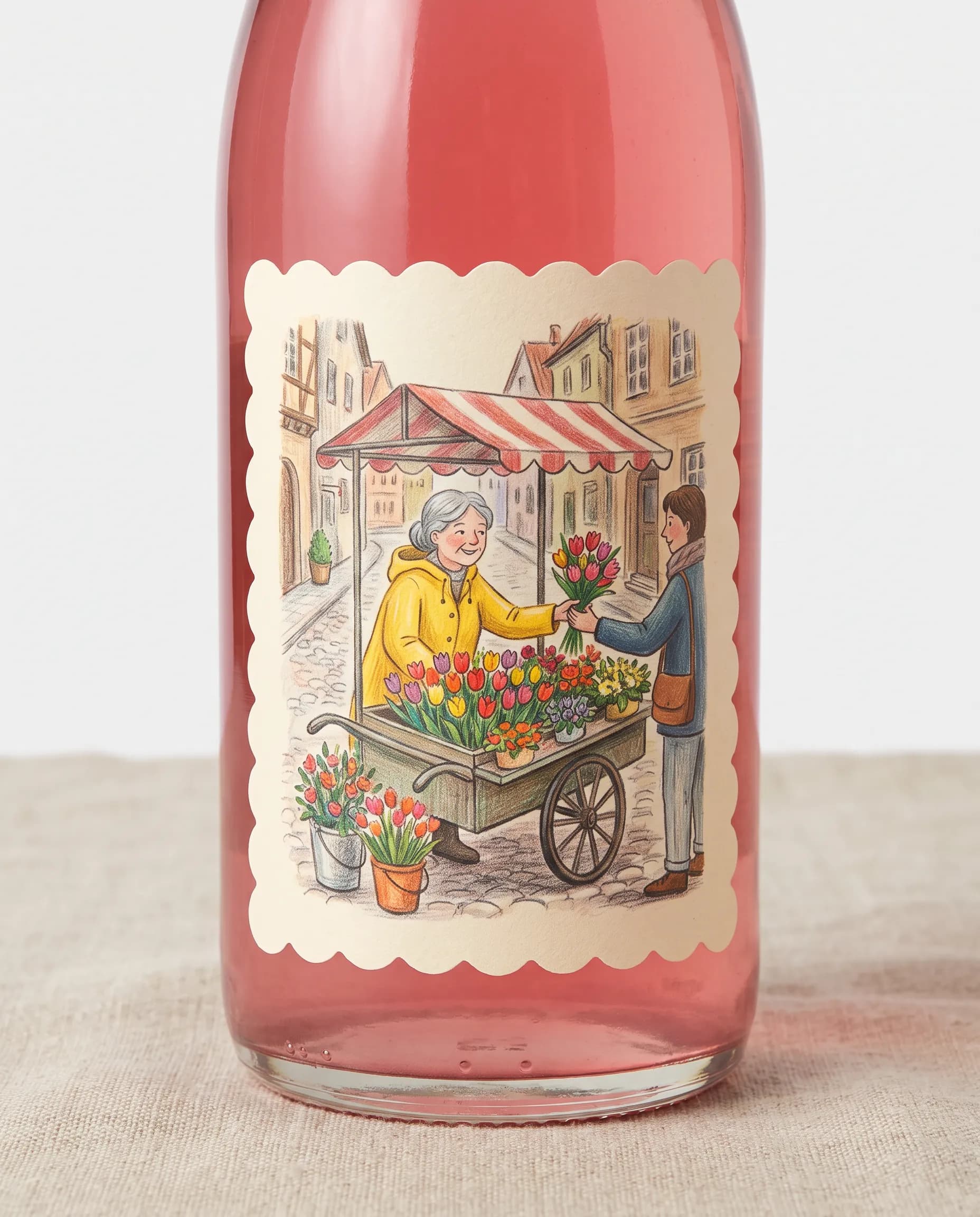
An older woman selling tulips from a street cart, gray-haired and wrapped in a canary-yellow raincoat, appears in all eight images. She works as well on a syrup label as she does in a magazine or a children's book, and that range is what this style has to cover. FLORA's AI image generator made every picture, and each caption is its full prompt.
How to prompt for illustrative art style
Start with the job the picture has to do. An editorial spread needs open space for type, while a picture-book page can fill every corner, and a prompt that names the job tends to get the composition closer. Describe the subject in one line with a prop or two, then pick a traditional medium. Many lists of illustration art styles are organized by medium, and words like gouache or colored pencil often pull a model away from a photographic finish better than the word illustration does. End with a short palette and the paper.
Prompts for a spread, a picture book and a label
- Editorial spread. Gouache editorial illustration for a magazine spread, a gray-haired flower seller in a yellow raincoat arranging tulips at her street cart in the rain, simplified shapes with soft brushed edges, muted teal, mustard and coral, plain open sky across the left third, matte paper grain, no text
- Picture book. Children's picture book page in watercolor and ink, a flower seller with gray hair and a yellow raincoat handing a red tulip across her street cart, loose wet washes, wobbly pen line, puddles reflecting the cart, warm light after rain, no text
- Product label. Illustrated label on a glass bottle of rose syrup, the label art showing a street cart of tulips run by a gray-haired woman in a yellow raincoat, colored pencil and gouache on cream paper, scalloped border, studio packshot on linen, no text
When the picture stops looking drawn
The common slip is toward a glossy digital render with smooth skin, shallow depth of field and perfect light. Naming the paper and the tool, say a soft brush or a dip pen, usually brings the drawing back. Faces can go wrong too. An illustrated face holds up with very little detail, and models often add too much, so ask for simplified features. Rain scenes sometimes turn gray and flat, and one warm color such as the raincoat yellow gives the eye a place to land. If the cart keeps changing between images, describe it in the same words every time.
Where illustrative art style works
Photography started replacing realistic drawings in advertising in the late 1950s, and illustration found new room as art directors turned to illustrators whose playful, more abstract styles a camera couldn't match. For a loose editorial spot built from a reference photo, the Scribble Effect technique redraws any photo as hand-drawn scribble line work.
Photoshop's layers led many 1990s artists toward montage illustration. The Doodle Generator, which adds hand-drawn doodles and handwritten notes on top of a photo you upload, is a quick way to test that mix.
Packaging is the commercial case. Describe the brand, product, flavor and bottle, and Bottle Label Maker designs the label, shows it flat and wrapped onto a photoreal bottle, and fans it out into matching flavor variants. Check the drawing at shelf size. Fine lines that look delicate on screen can vanish there.
Related styles
- Graphic art styles, the poster and layout schools around illustration
- Vector art style, the software route to the flat shapes Nancy Stahl once painted in gouache
- Line methods get their own breakdown in drawing art styles
- Comic art styles, where pictures carry the whole story
- Painting art styles, the gallery side of the same brushes
FAQs
What does illustrative art mean?
It means art made to serve something outside itself, usually a text or a product. The Norman Rockwell Museum's illustration history calls the Lascaux cave paintings in France, made around 15,000 B.C., the earliest recorded illustrations, and says they set out important events in sequence.
What are styles of illustration?
Illustration styles are easiest to sort by medium, with pen and ink, watercolor, collage and vector among the common ones. Hand tools held on a long time. In the 1990s, the same museum history says, oil, acrylic, watercolor, gouache, pastel and pen and ink were still the main approaches for most illustrators while some explored drawing software.
What is children's book illustration?
It is illustration made for young readers, where the pictures carry much of the story alongside the words. In England, wood engraver Thomas Bewick ran a studio whose commercial illustration included works for children, alongside school materials and natural history plates.



