
Painting Art Styles Seen Through One Red Rowboat
 FLORA
FLORA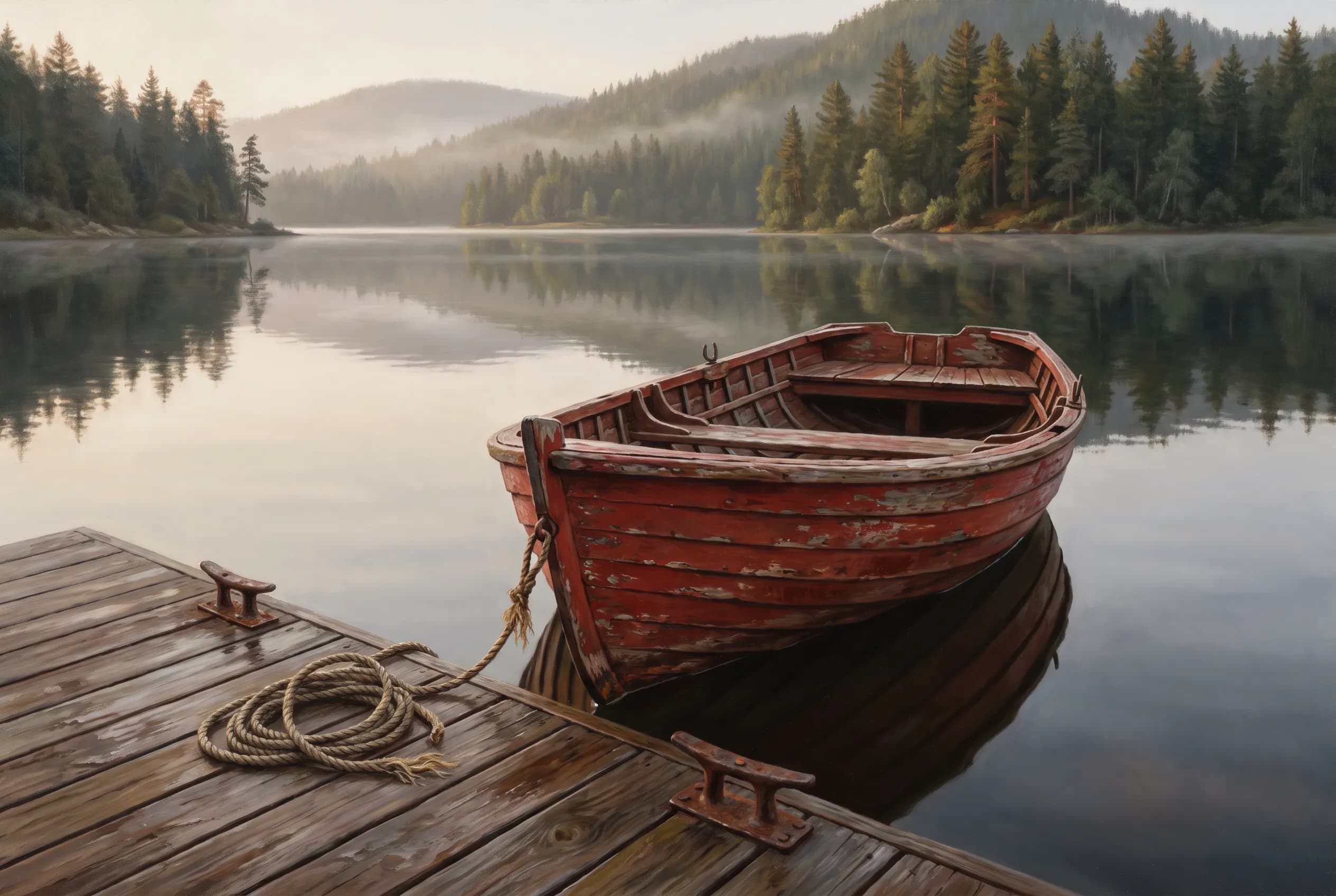
Painting art styles take their names from two places. Some belong to movements, such as realism, which Tate dates to the mid-19th century, or abstraction, which has run through modern art since the early 1900s. Others belong to media, because a watercolor and a tempera panel look different whatever they show. The differences show on the surface. Brushwork is either blended until it disappears or left as separate strokes, and color either copies what the eye sees or gets chosen for feeling. Paint can lie thin as a stain or stand up in ridges. The subject itself may stay fully readable or dissolve into shape.
Painting art styles examples made in FLORA
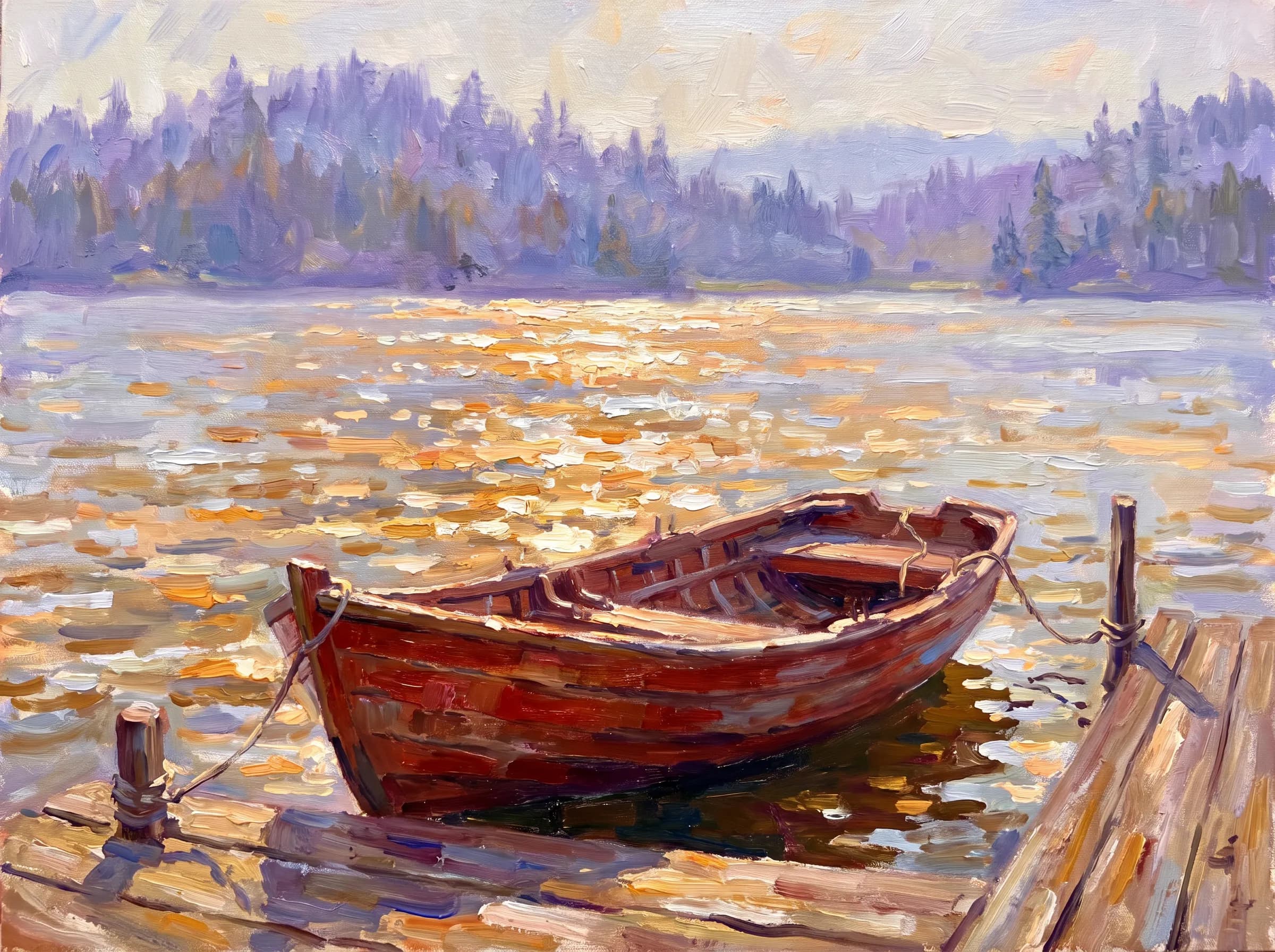
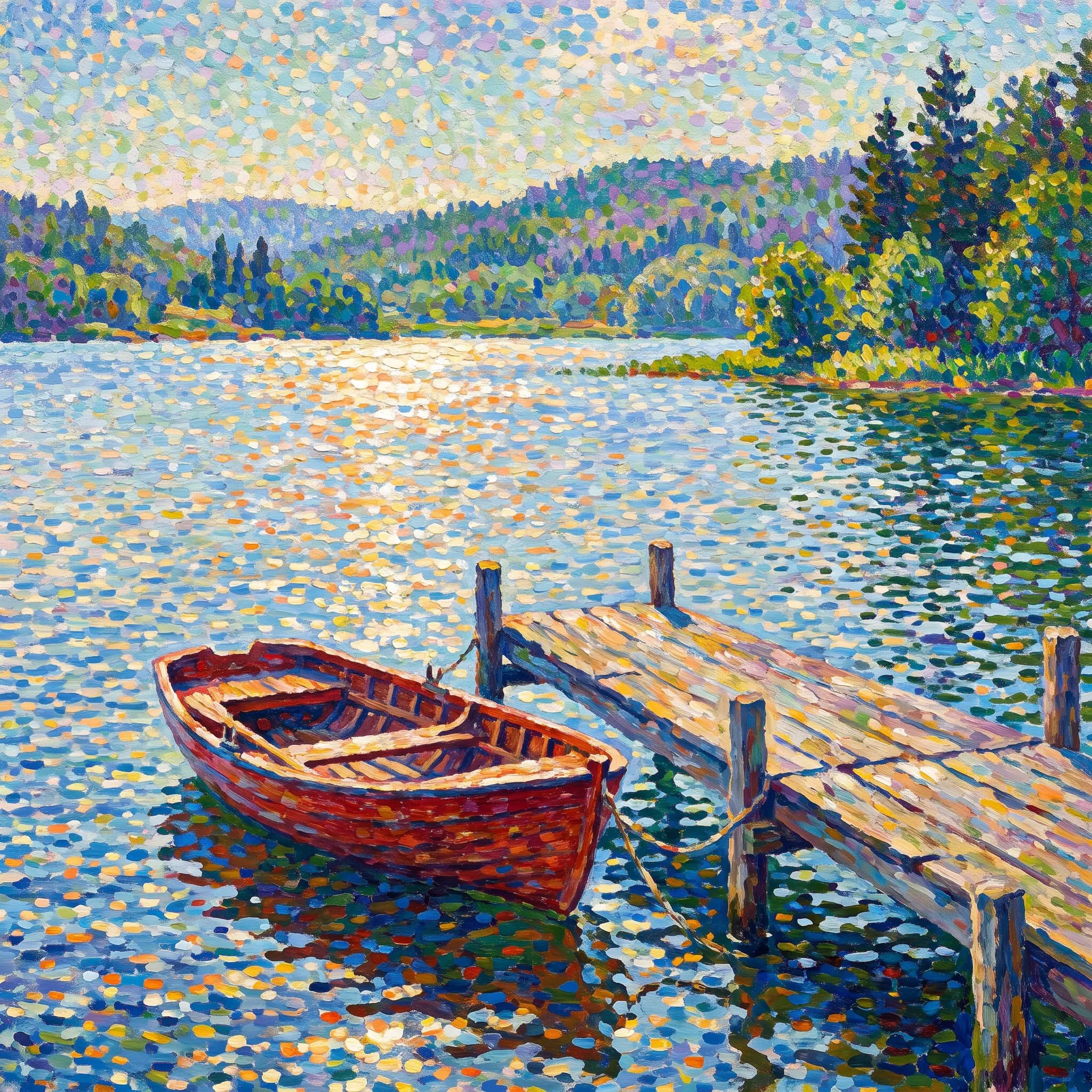
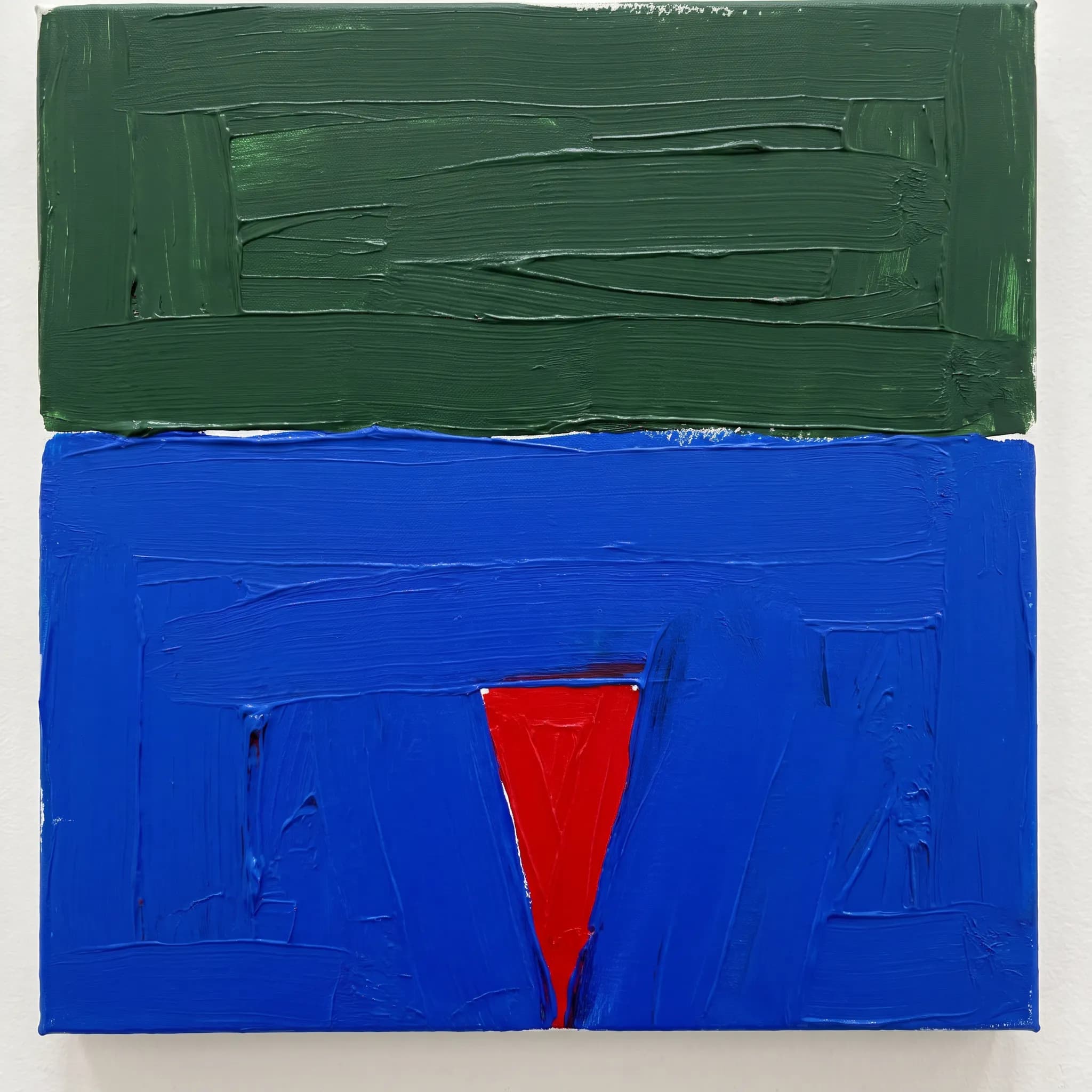
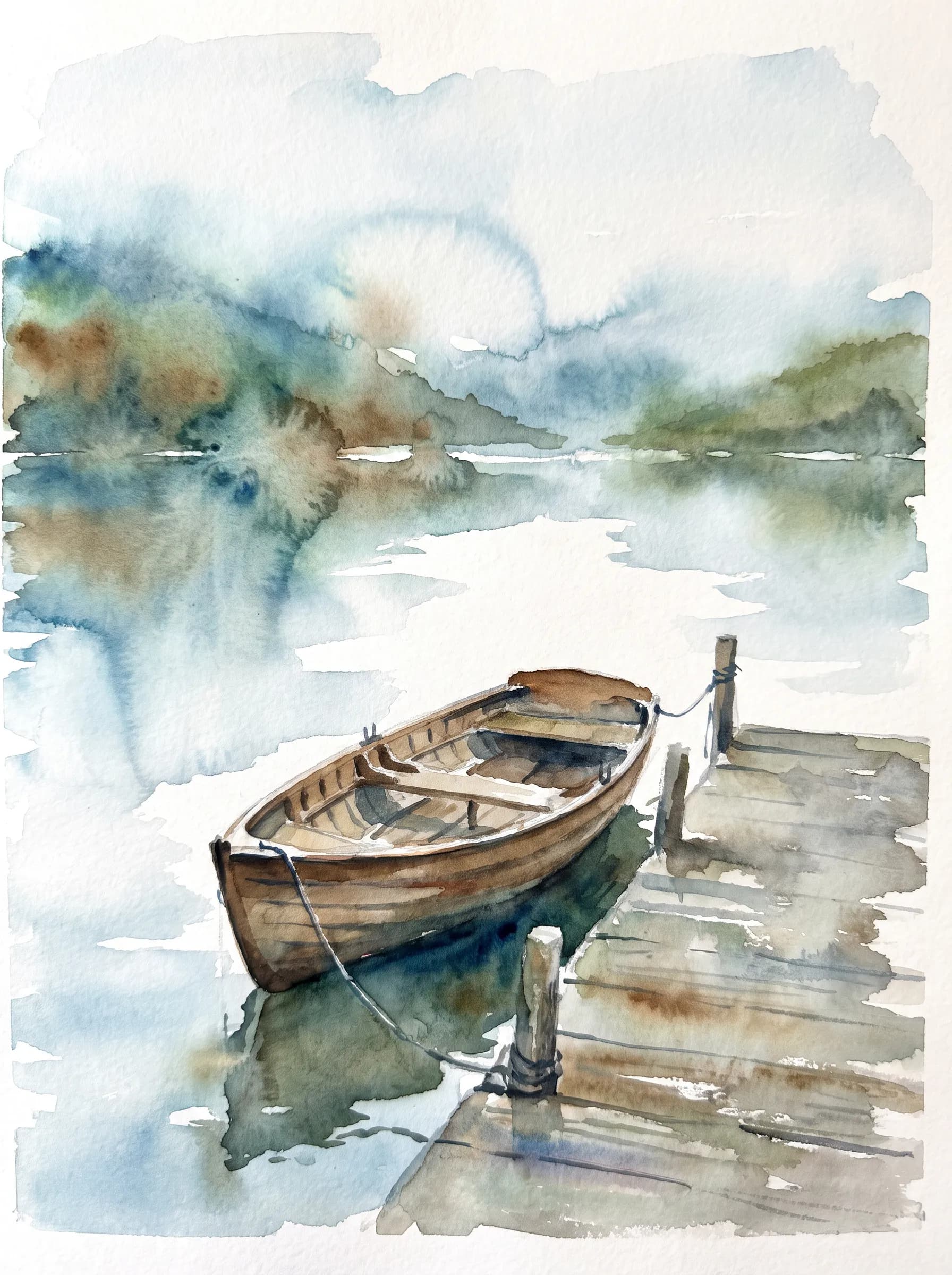
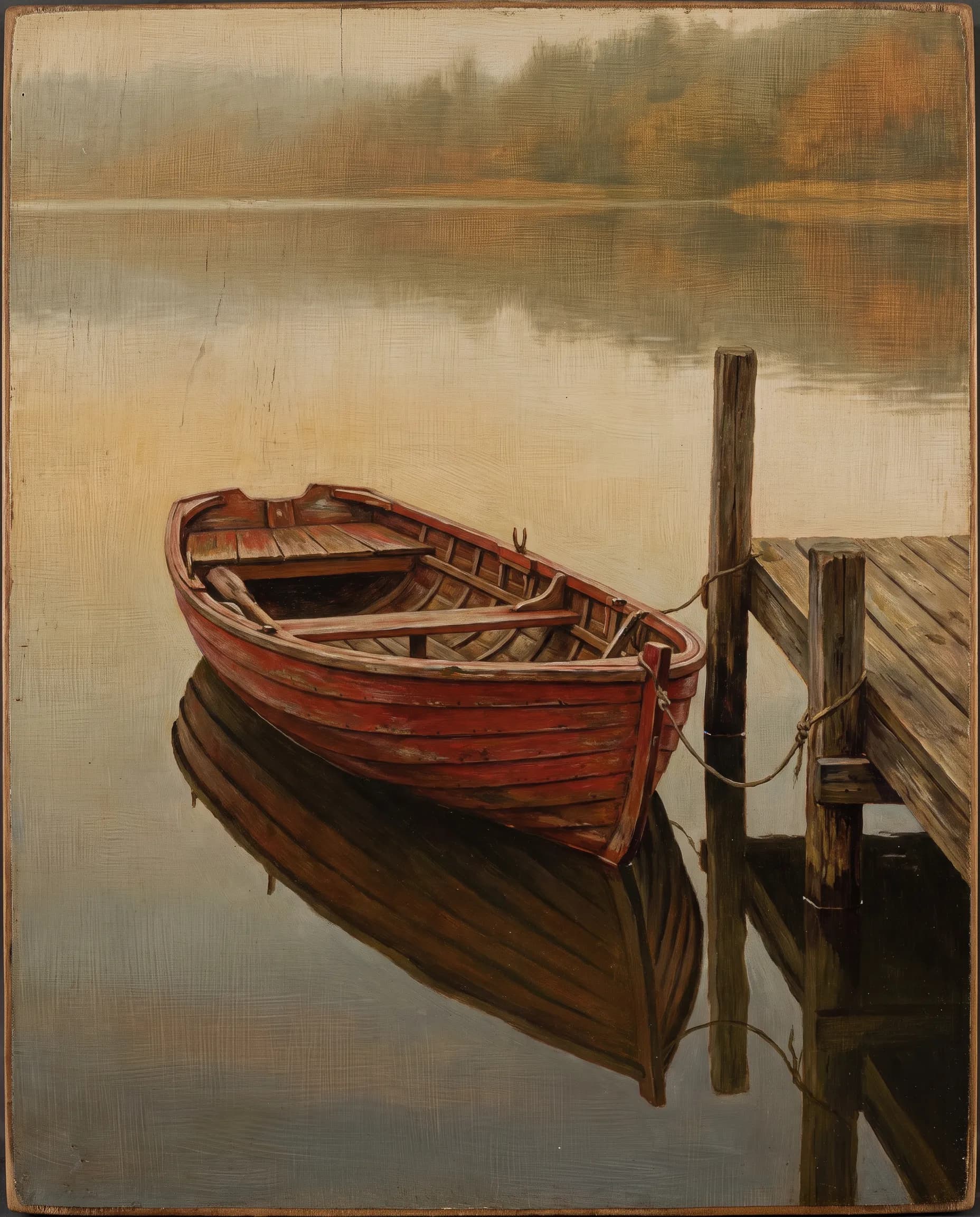
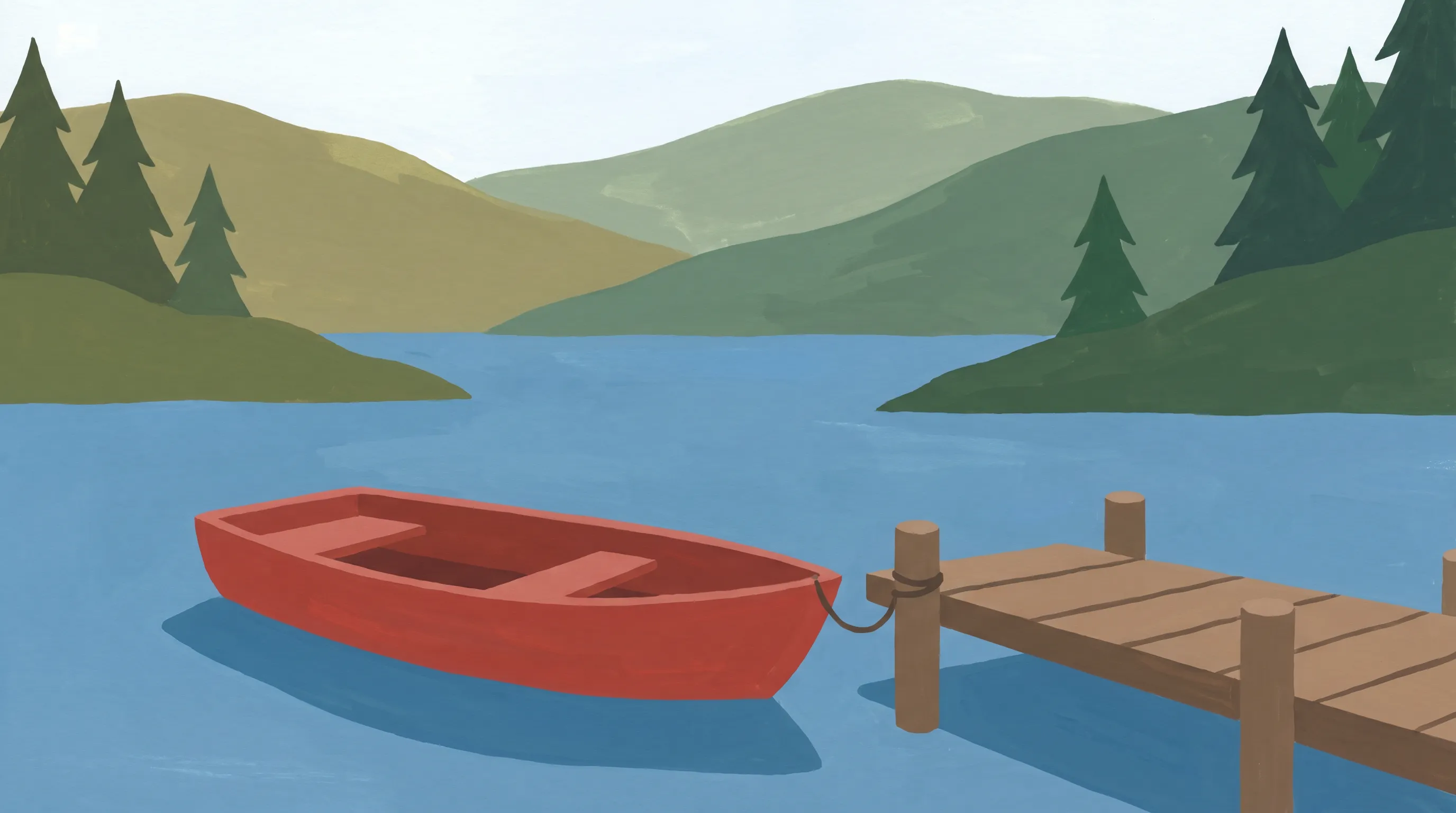
A red rowboat moored at a small wooden jetty, with pine hills across the water, sits in all eight paintings. A lake in morning light gives every movement something of its own to do. Each version was generated with FLORA's AI image generator, and its prompt is the caption.

How to prompt for painting art styles
Two words do most of the steering in a painting prompt, the movement and the paint. Lists of art painting styles tend to mix the two kinds freely, but in a prompt they do separate jobs. Impressionist decides the handling and the light, while oil or watercolor decides the surface. Describe the brushwork in plain terms after that, then whether the color is natural or invented, then the time of day.
Impressionists worked outdoors and fast, which is why plein air and broken color call up that look. The neo-impressionists Georges Seurat and Paul Signac pushed further, placing tiny dabs of unblended color next to one another and leaving the mixing to the eye, and since Signac rejected the popular label pointillism, divisionist is the more accurate prompt word. Expressionism, a name that began with modern artists in early 20th-century Germany, distorts forms and drives color well past nature.
Ready-to-run prompts
- Realism. Realist oil painting of a red wooden rowboat tied to a short jetty on a still lake, pine-covered hills behind, sharp detail on weathered planks and coiled rope, true-to-life morning color, smooth blended brushwork, unsigned, no text
- Expressionism. Expressionist oil on canvas of a small red boat moored at a lake jetty under a churning sky, tilted and distorted shapes, orange water against a green sky, thick textured paint, unsigned, no text
- Watercolor. Watercolor of a rowboat at a lakeside dock, transparent wet-on-wet washes melting the hills together, bare white paper left for glare on the water, soft pigment blooms, unsigned, no text
Where results drift
Movements bleed into each other. An impressionist request often returns crisp, photographic water, and more weight on visible dabs and a hazy distance can loosen it. Expressionist color may get tamed into a pleasant sunset unless the prompt names the clashing pair outright. Watercolor fails in its own way, with opaque white paint where bare paper should show, so say that the whites are unpainted. Abstract prompts sometimes hold on to the hull and oars, and asking for a few flat shapes helps.
Where painting art styles work
A painted cover suits a folk or ambient release that wants to look handmade. The Album Cover Maker returns square cover art, colorway editions and a motion loop, so one expressionist or gouache treatment can serve as the streaming tile and the release-day post.
Small painted landscapes sit well on wine and cider labels, where watercolor reads as hand-finished. The Bottle Label Maker works from four written fields (brand, flavor, product and bottle) and returns flat label art, that label on a photoreal bottle and a matching flavor lineup, so a label range can be judged on glass before printing.
Related styles
- Drawing art styles cover line, hatching and tone before any paint arrives
- Renaissance art style, the era when linear perspective became the rule
- Baroque art style brings 17th-century drama and deep shadow
- Pop art style puts flat commercial color on canvas
- Chinese art styles include ink and wash painting with its own long lineage
FAQs
What is tempera painting?
Tempera is paint bound with an emulsion that thins with water, classically egg yolk, sometimes a whole egg mixed with oil, and in some recipes gum or glue. It sets into a hard film and was usually painted on rigid wooden panels.
How does fauvism differ from impressionism?
Impressionism set out to record how light fell on a real scene, whereas fauvism used color for its own force and often ignored the colors actually in front of the painter. Henri Matisse, André Derain and the other fauves worked from about 1905 to 1910 with strong colors, often straight from the tube, simplified forms and flat patches that gave up on three-dimensional space. They also took an interest in 19th-century color theory, especially complementary pairs that brighten each other when placed together.
What are the key elements of cubism?
Cubism puts several views of one object into a single picture, broken into flat planes, so the image looks fragmented while the canvas stays flat. Pablo Picasso and Georges Braque developed it around 1907 and 1908. The analytical work of 1908 to 1912 keeps to muted blacks, grays and ochres. In the synthetic phase, about 1912 to 1914, color got brighter, shapes got plainer, and real scraps such as newspaper were pasted onto the canvas.



