
Drawing Art Styles Tried on One Whippet
 FLORA
FLORA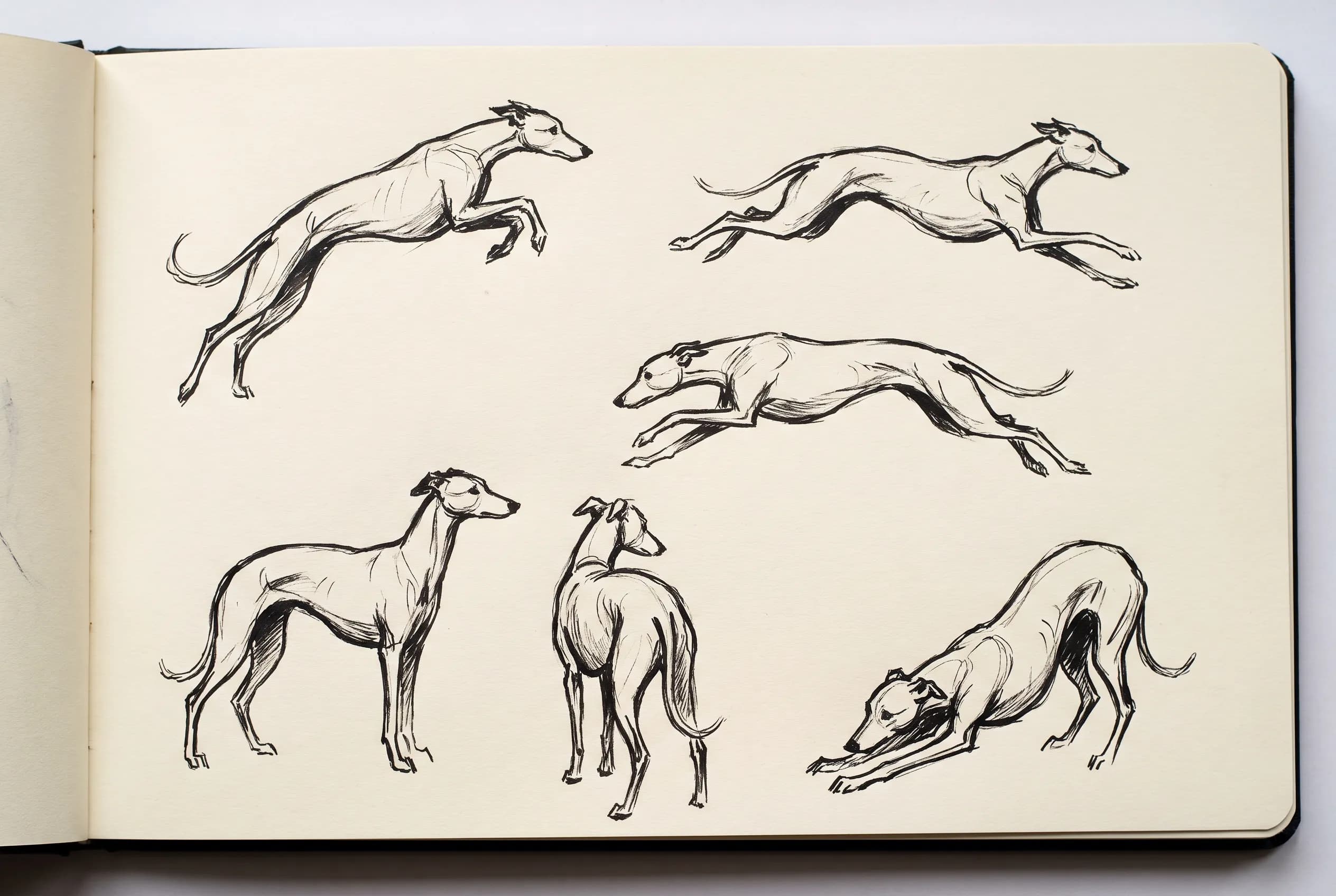
Drawing art styles are the separate methods artists use to build a picture out of marks, usually made in ink, graphite, chalk, charcoal or crayon. Line is the main tool in nearly all of them. Through antiquity and the Middle Ages drawing mostly served other arts as groundwork, and Britannica places its arrival as finished art in the late 14th century. Four visible traits separate the methods. Some keep the line as a single clean edge, while others pile strokes up into shadow or break them into dots. They usually stay in a single color. The bare paper between marks does real work, reading as light, air or open space.
Drawing art styles examples made in FLORA
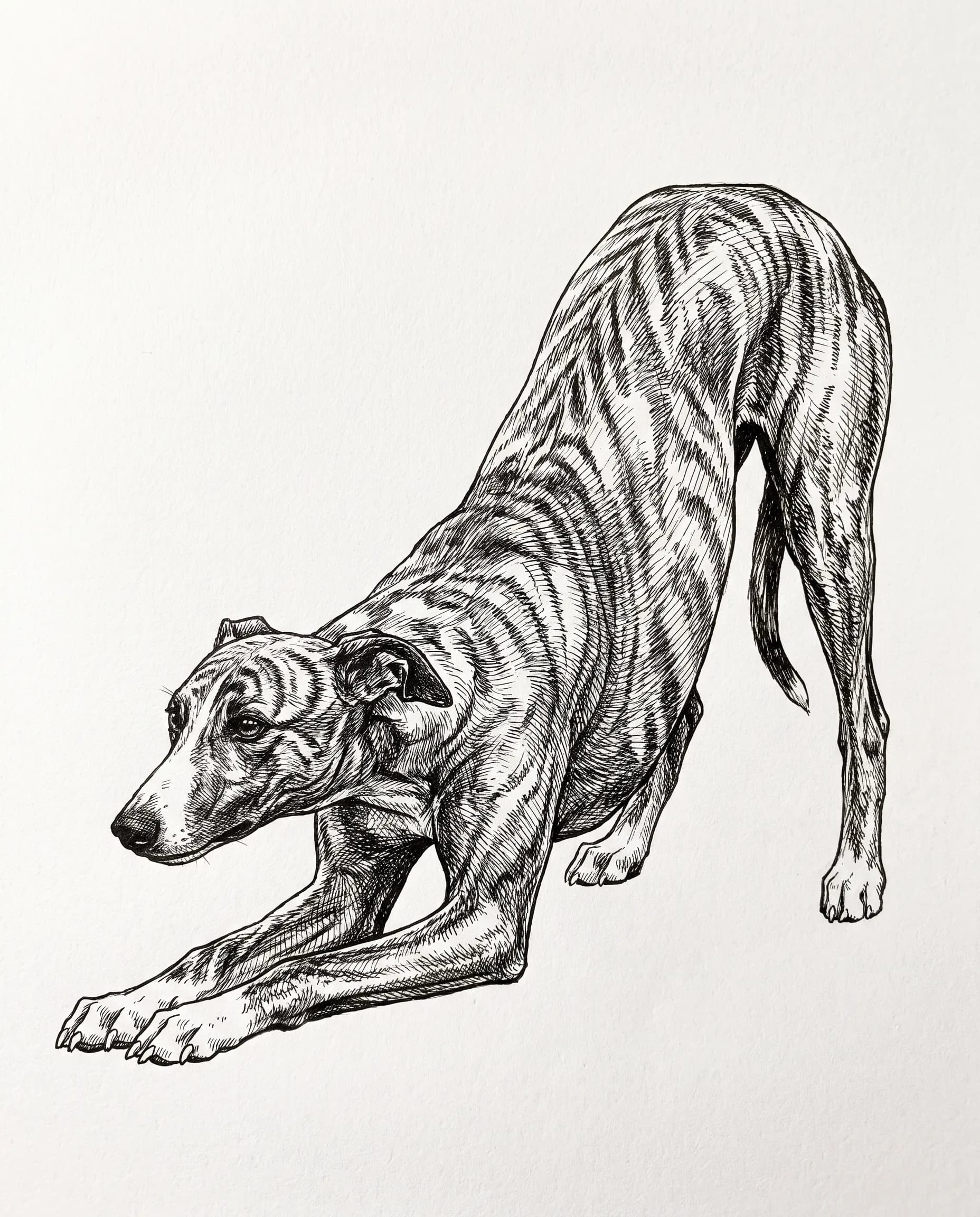
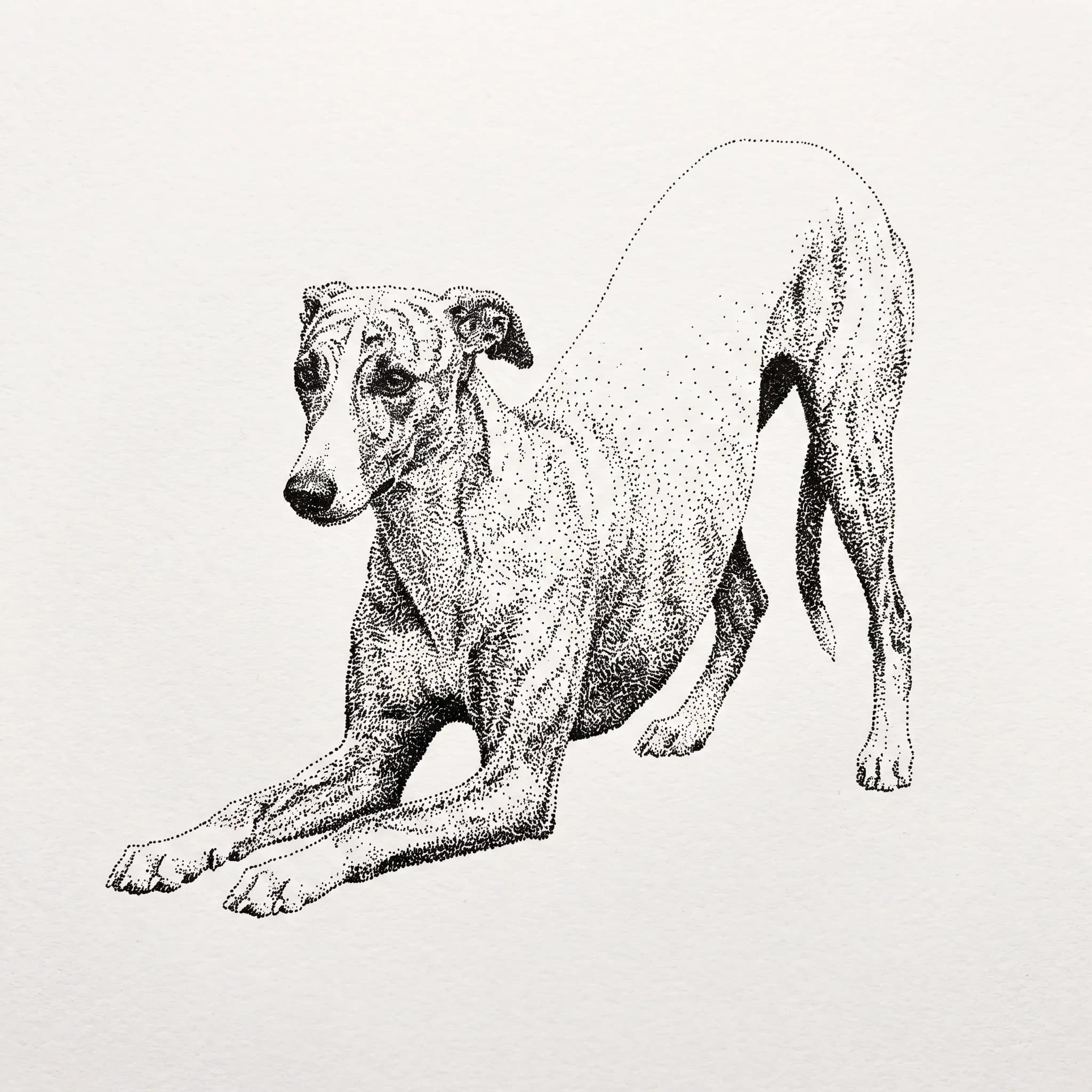
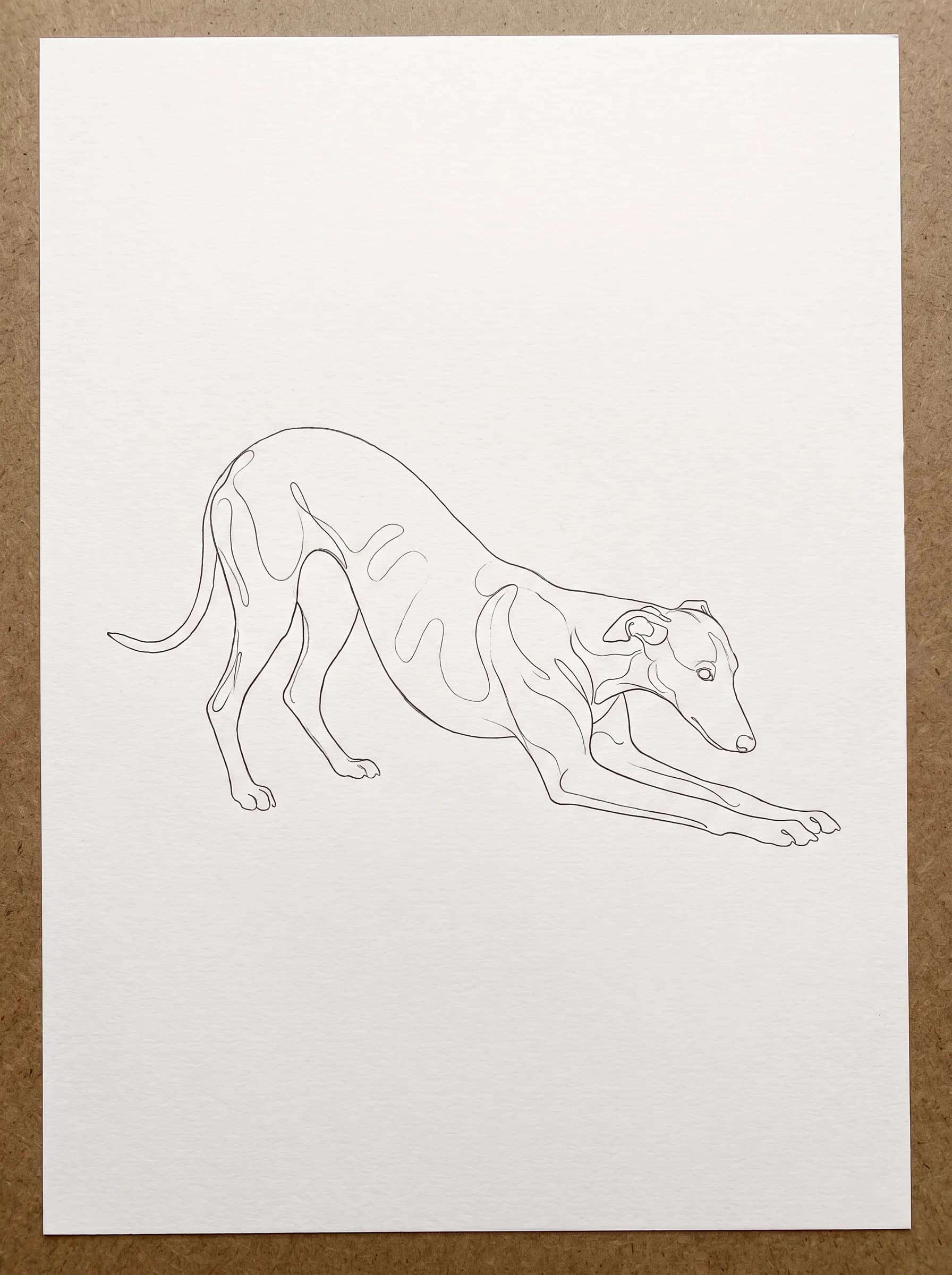
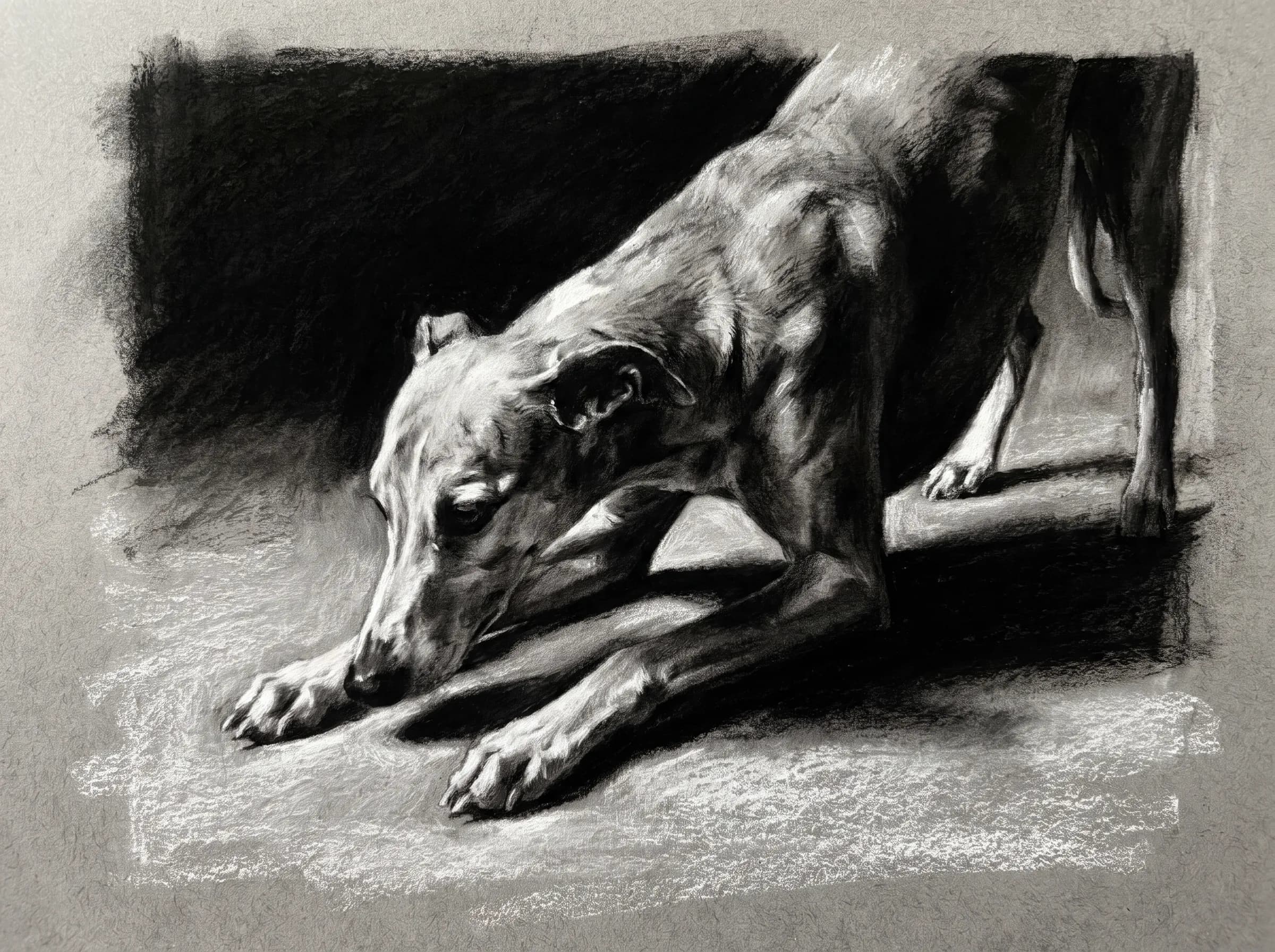
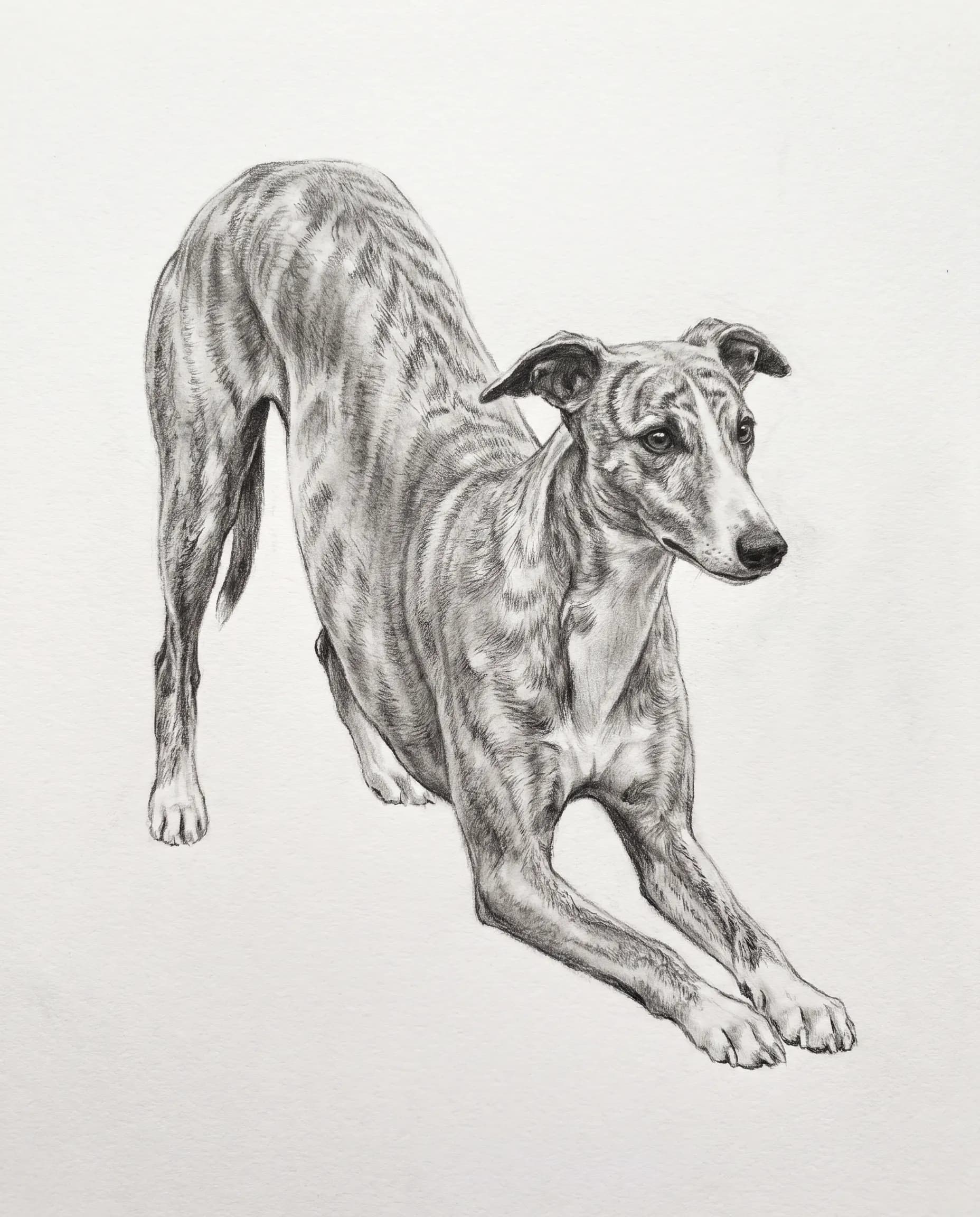
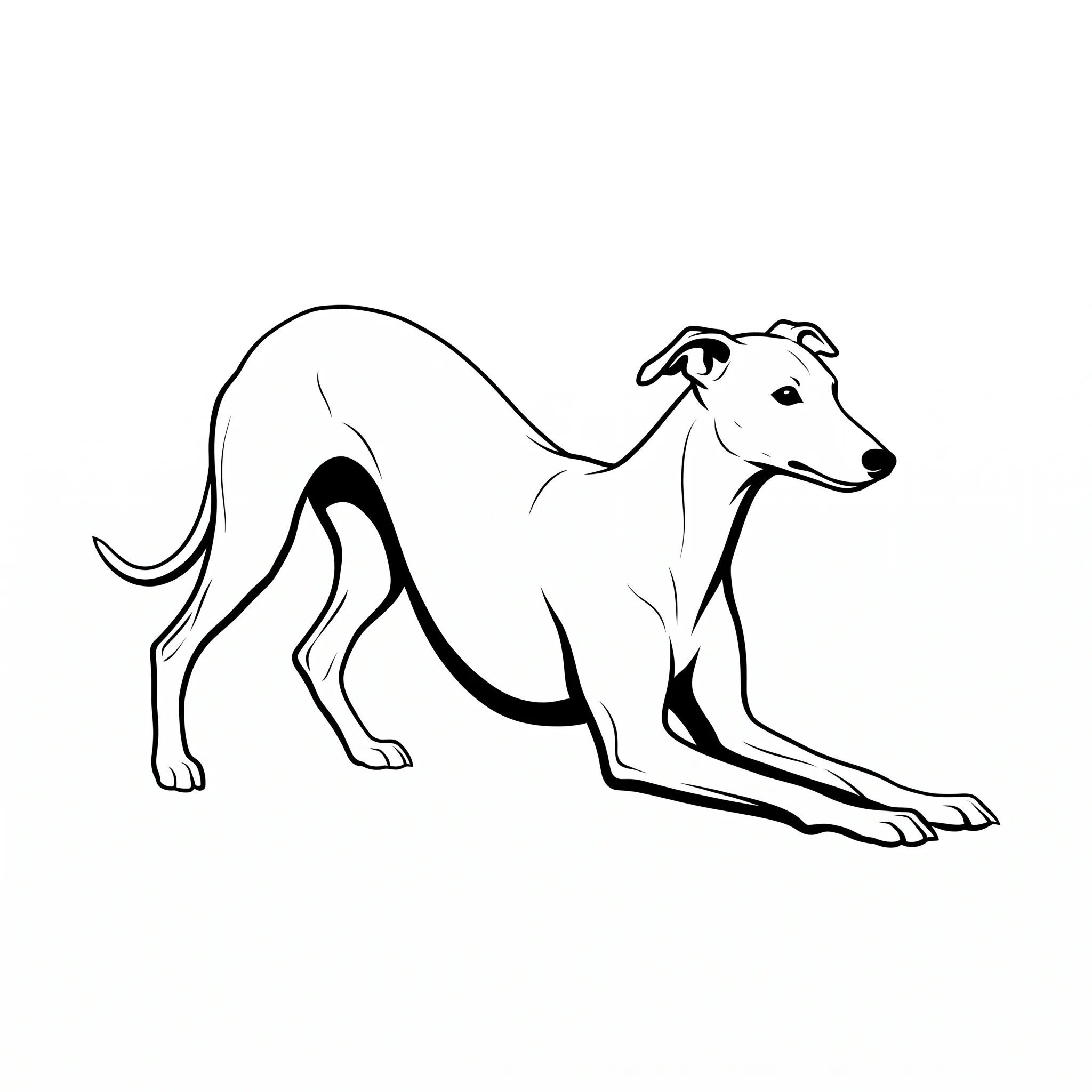
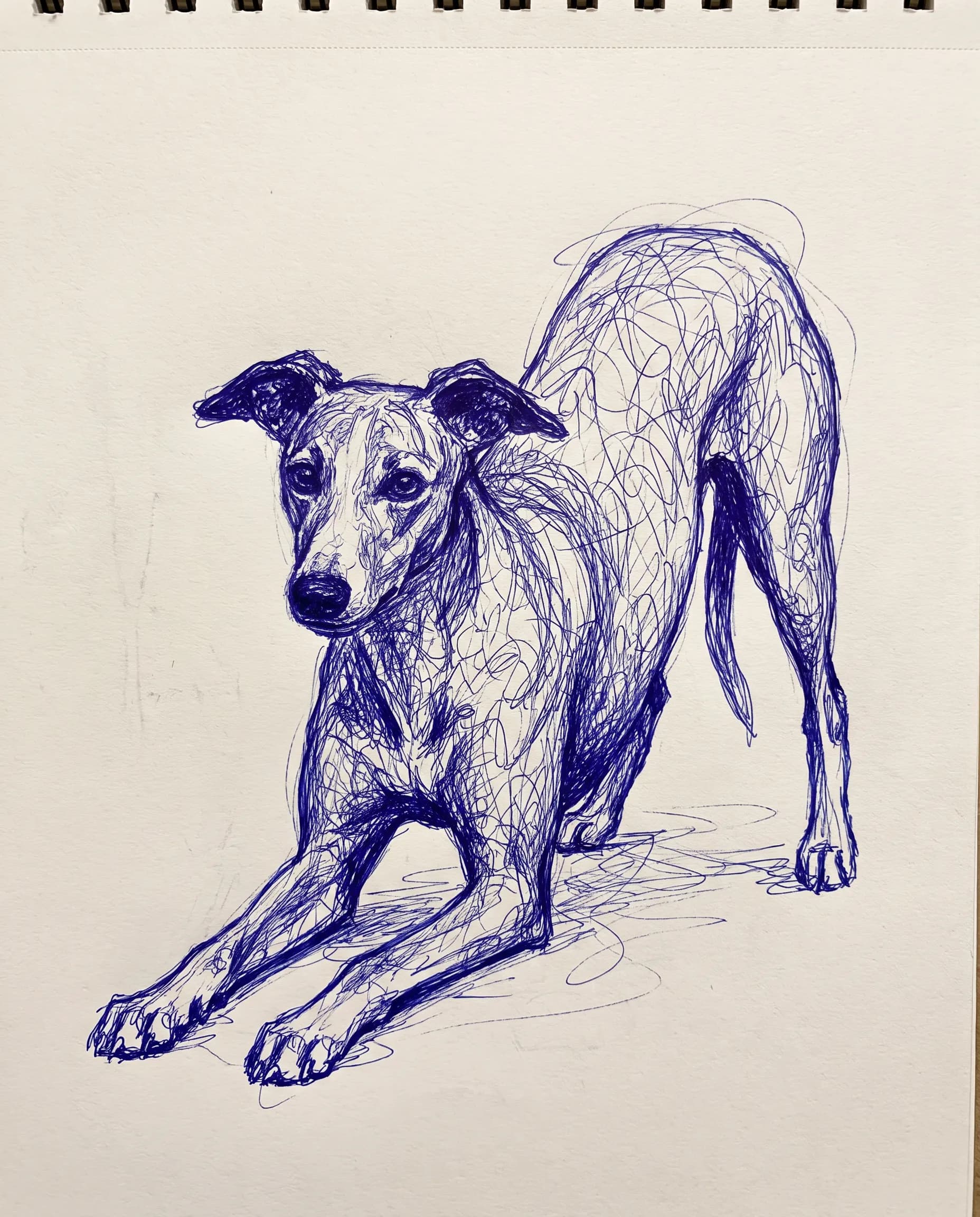
A whippet with a brindle coat, caught in a play bow with its chest down and tail up, posed for all eight drawings below. Its long curves suit contour work, and the folds at the shoulders give shading something to grip. Each image came out of FLORA's AI image generator with its prompt printed underneath.
How to prompt for drawing art styles
In a drawing prompt the tool and the kind of mark tend to steer the result more than the subject does, so they belong near the front. A fine-liner, a stick of willow charcoal and a soft pencil each leave a different edge. Charcoal, for example, goes darkest where you press and crumbles soft at the edges, which is why Tate calls it suited to freer studies. Paper comes next, since cream sketchbook stock and gray toned sheets change how highlights read. Shaded styles need a light direction too. A contour drawing can skip lighting altogether.
Shading is where one drawing art style parts ways with the next, so say how the tone gets built. Hatching uses short parallel strokes that make a form look round once they curve along it, and crosshatching lays a second set across the first at right angles, the method 17th- and 18th-century engravers relied on above all others. Stippling reaches similar gradations with dots alone, while blended graphite smooths the steps away entirely.
Prompts for three techniques
- Crosshatching. Pen and ink drawing of a brindle whippet stretching forward with its chest low and rump high, ribs and haunches modeled in dense crosshatching, curved hatching that follows the spine, crisp black lines on white paper, light from the upper left, unsigned, no text
- Gesture. Gesture drawing sheet of one whippet in six quick poses ending in a bow, loose sweeping brush pen strokes, each figure caught in a few seconds, cream sketchbook page, unsigned, no text
- Chiaroscuro charcoal. Charcoal drawing of a whippet bowing low with its front legs stretched out, strong chiaroscuro from a single hard side light, deep velvety blacks, powdery edges, white chalk highlights on gray toned paper, unsigned, no text
Common misfires
Hatching often comes back uneven, crowded in one patch and missing where the shadow belongs, so state where the light comes from. Stippling can harden into a mechanical halftone screen. Asking for hand-placed dots with varied spacing usually loosens it. Contour drawings sometimes sprout a second, sketchier outline. Gesture work has the reverse problem, since models like to finish things, and a pose meant to take seconds arrives fully rendered. The words unfinished and rapid tend to help.
Where drawing art styles work
Crosshatched pen drawings recall the pages of an old engraved catalog, which makes them a natural fit for heritage packaging and editorial spot illustrations. Keep the hatching fairly open if the art will print small, since tight lines can fill in.
Product design often starts as a rough pen drawing. AI Sketch takes that rough product drawing and returns a photoreal render, inked line art, two colorways and a reveal clip, so the loose concept and a clean drawn version arrive together.
Campaign photos can borrow the energy of a gesture drawing without anyone picking up a pen. Scribblify redraws any photo as loose, hand-drawn scribble line work.
Related styles
- Painting art styles take over once color and brushwork enter the picture
- Simple art styles keep only the few lines a subject needs
- Comic art styles lean on inked hatching and solid blacks
- Eye art styles study one feature across many approaches
FAQs
What are the top 10 drawing styles?
No official top ten exists, and guides that rank in search disagree on the count, with a Domestika article stopping at 10 and a Linearity guide listing 17. Sorted by technique, a workable ten would be line art, contour, blind contour, gesture, hatching, crosshatching, stippling, scribble, blended tonal rendering and chiaroscuro.
What are some types of drawings?
By purpose, drawings fall into studies of details, preliminary sketches for another work, finished stand-alone sheets and cartoons. In the older sense a cartoon was a full-size drawing for a painting. Its contours were transferred by pressing them through the paper, or by pricking holes along them and dusting charcoal through.
What are some different drawing techniques?
Rubbing and brushwork are two that work in tone rather than line. Rubbing works crushed drawing material into the paper, wet or dry, to make a flat ground that later lines can sit on, and a loaded brush can thicken a single stroke as it moves and lay its wash pale or nearly black.



