
Baroque Art Style in Shadow and Light
 FLORA
FLORA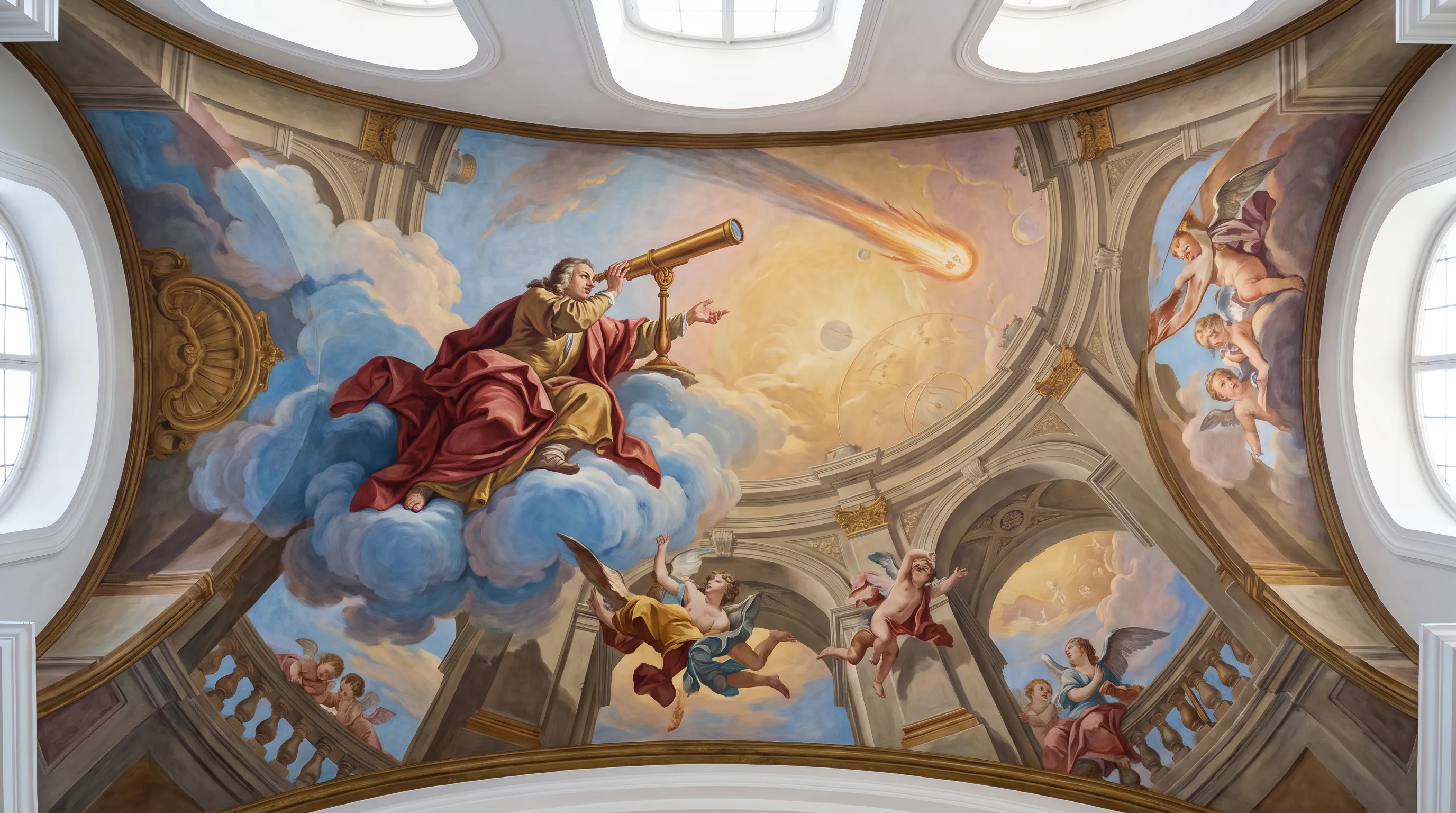
Baroque art style is the theatrical manner that ran through European painting, sculpture and architecture for roughly the 17th century. Its first signs appeared in Italy in the closing decades of the 1500s, and in Rome it became the voice of the Counter-Reformation, when the Catholic Church wanted art that spoke straight to the emotions of ordinary churchgoers. Light is one giveaway, with faces and hands pulled out of deep shadow by one hard source. Figures twist through steep diagonal compositions. Church ceilings open up into painted heavens, and interiors pile costly materials and clashing textures together until it gets hard to say where the painting stops and the sculpture begins.
Baroque art style examples made in FLORA
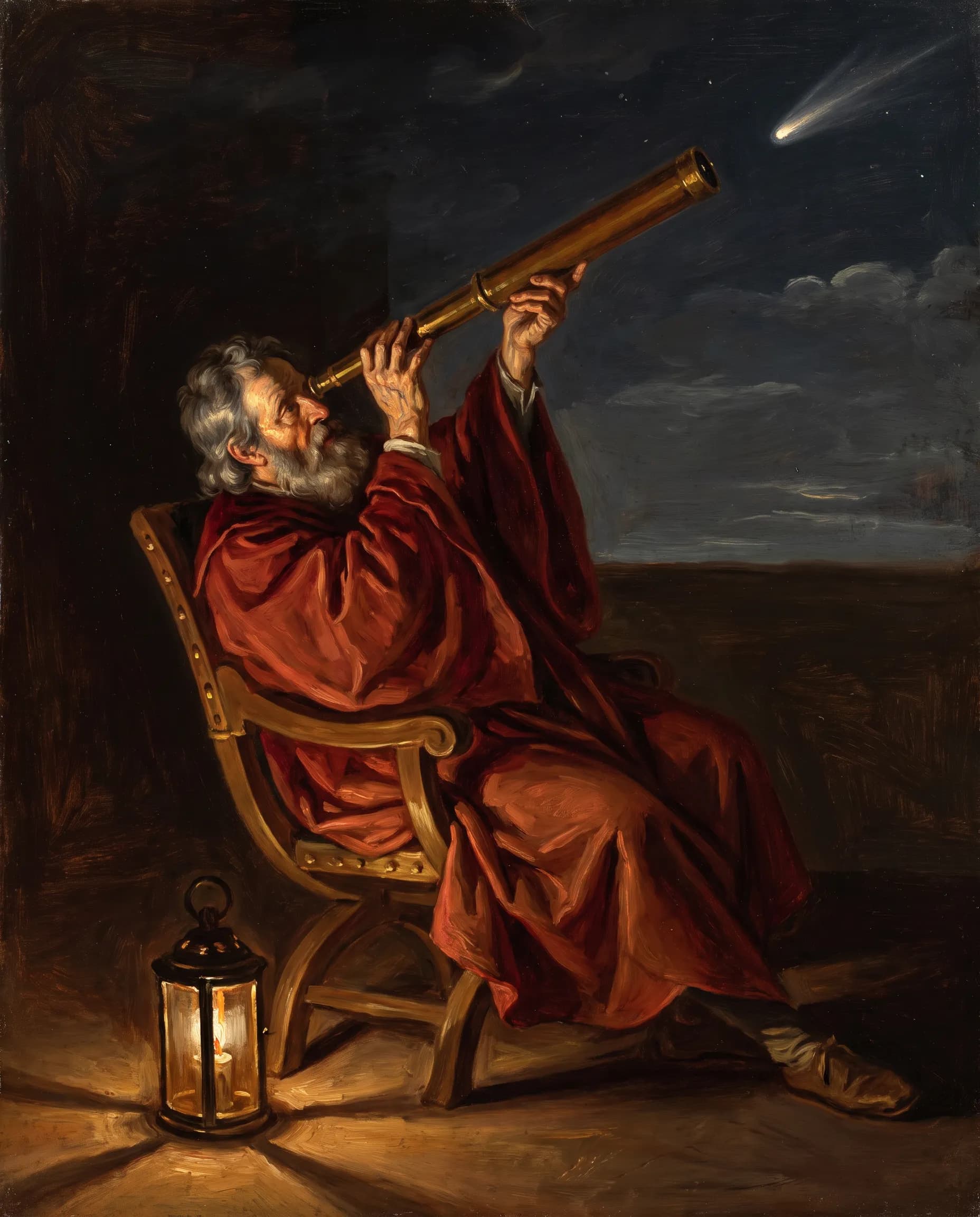
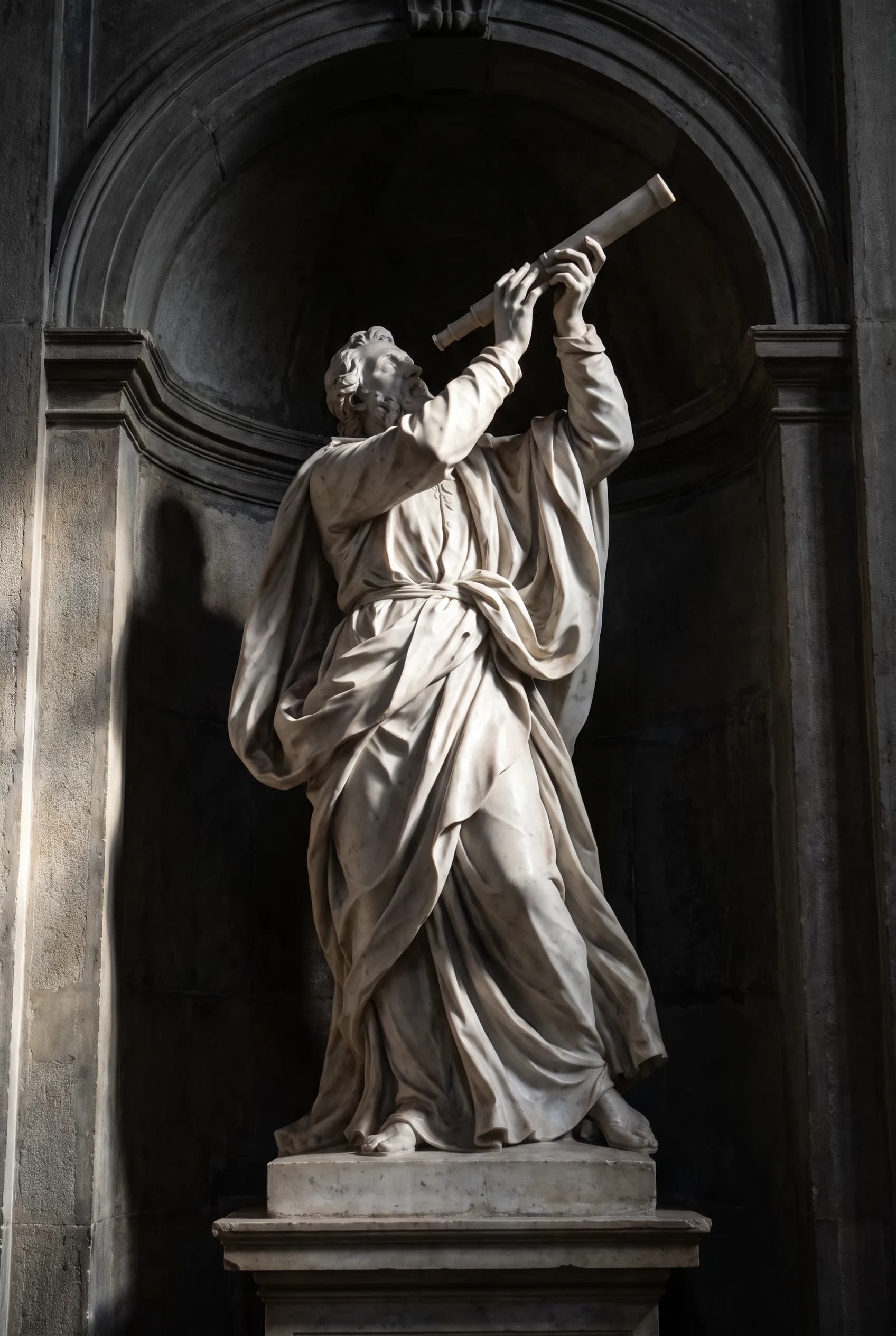
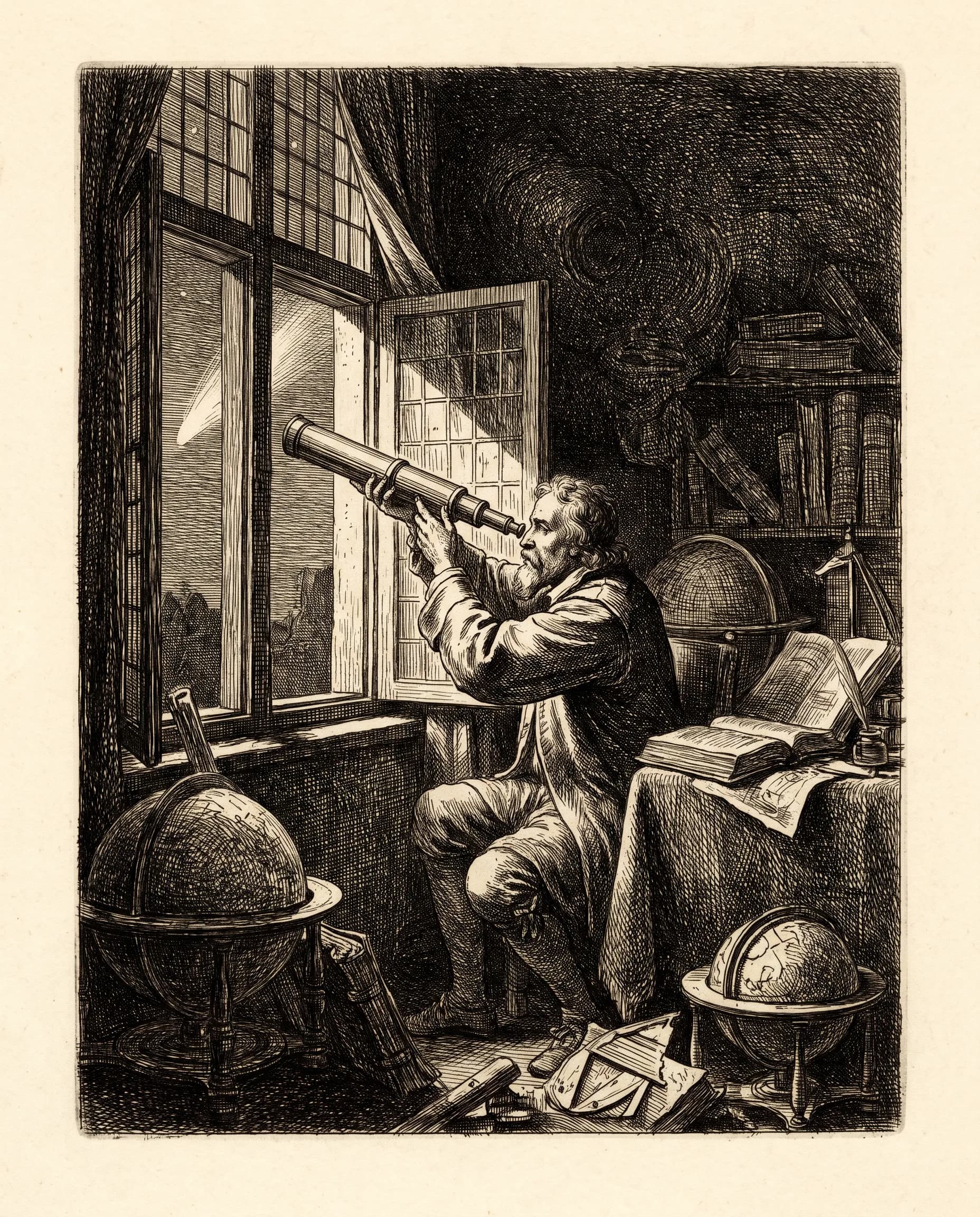
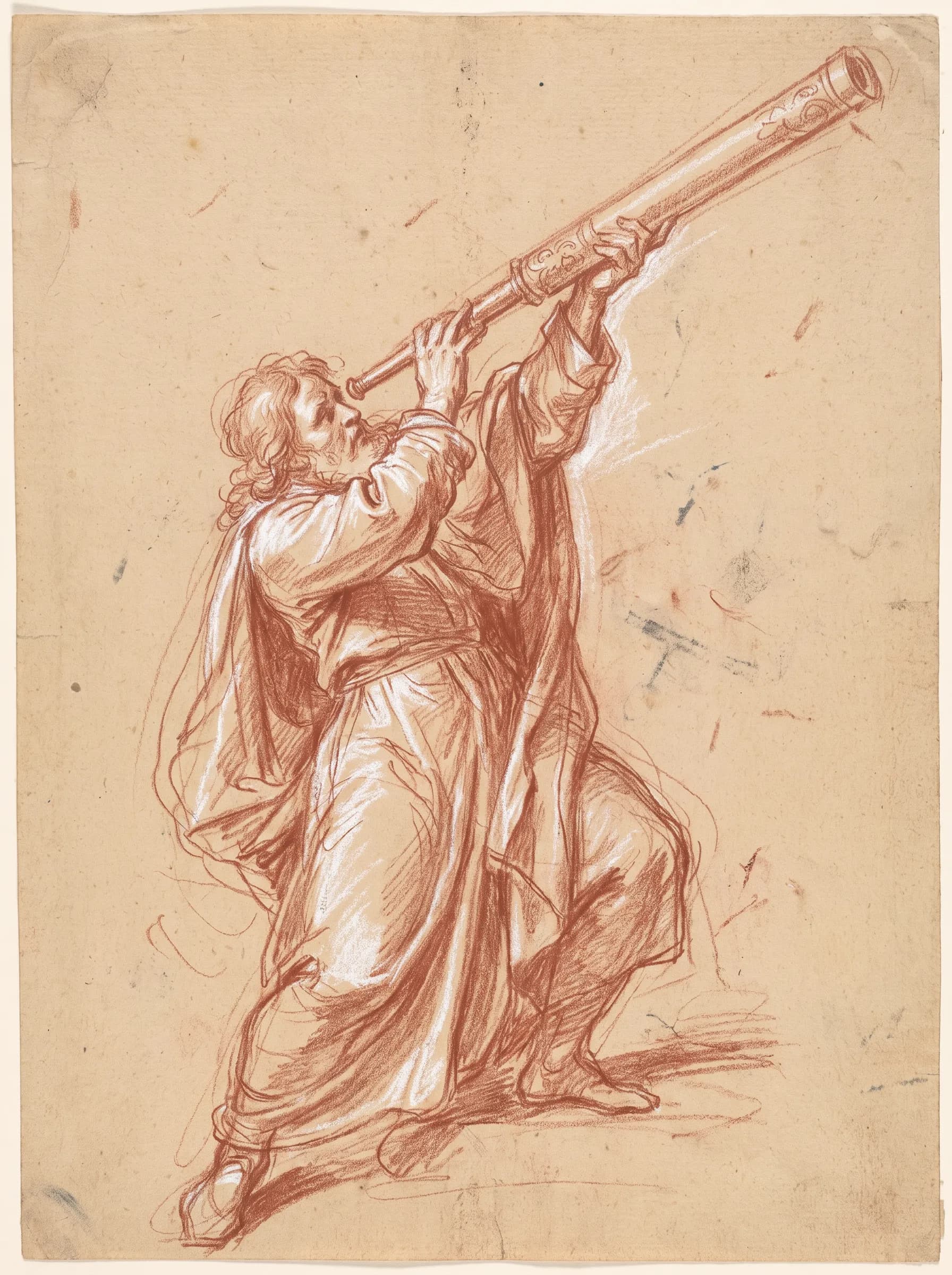
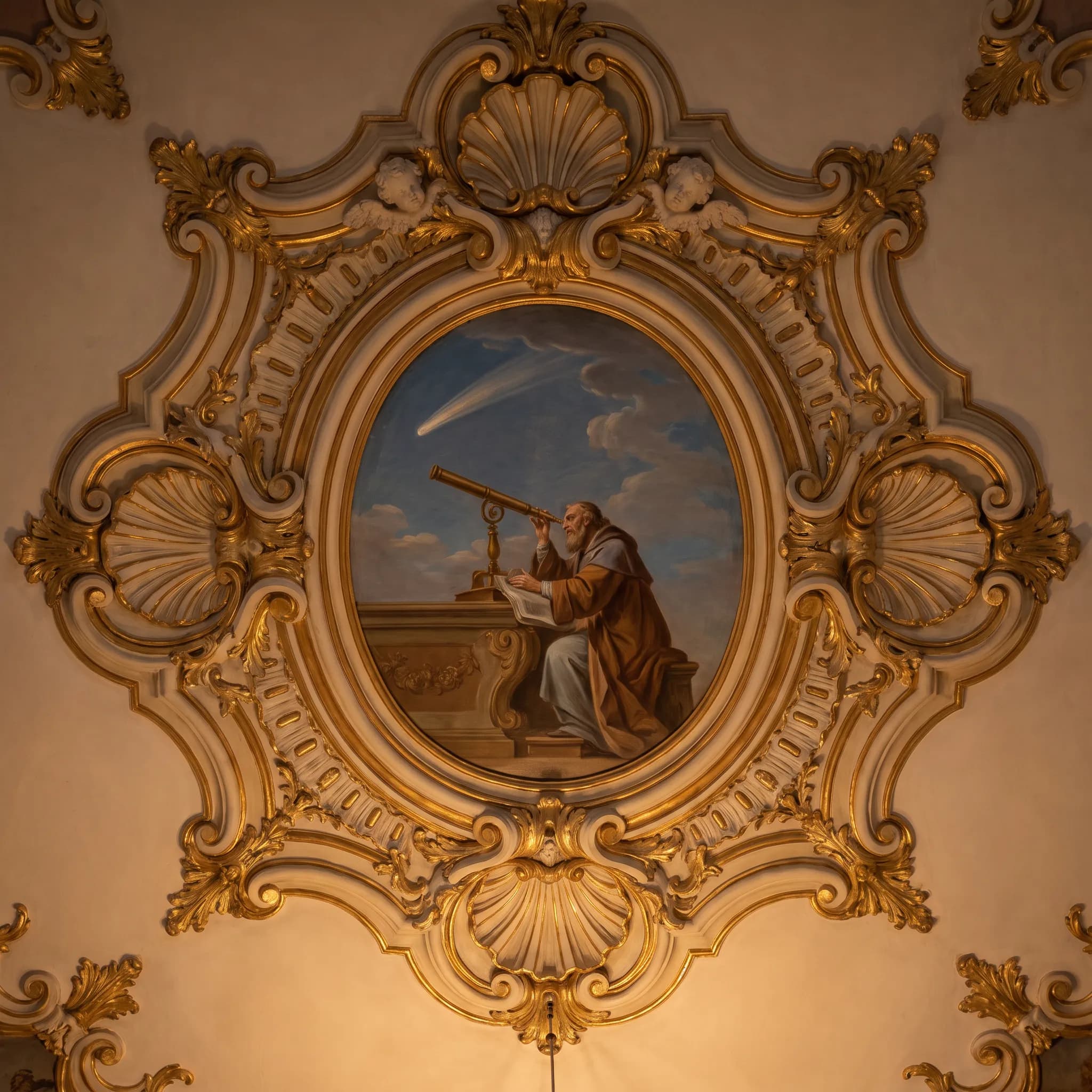
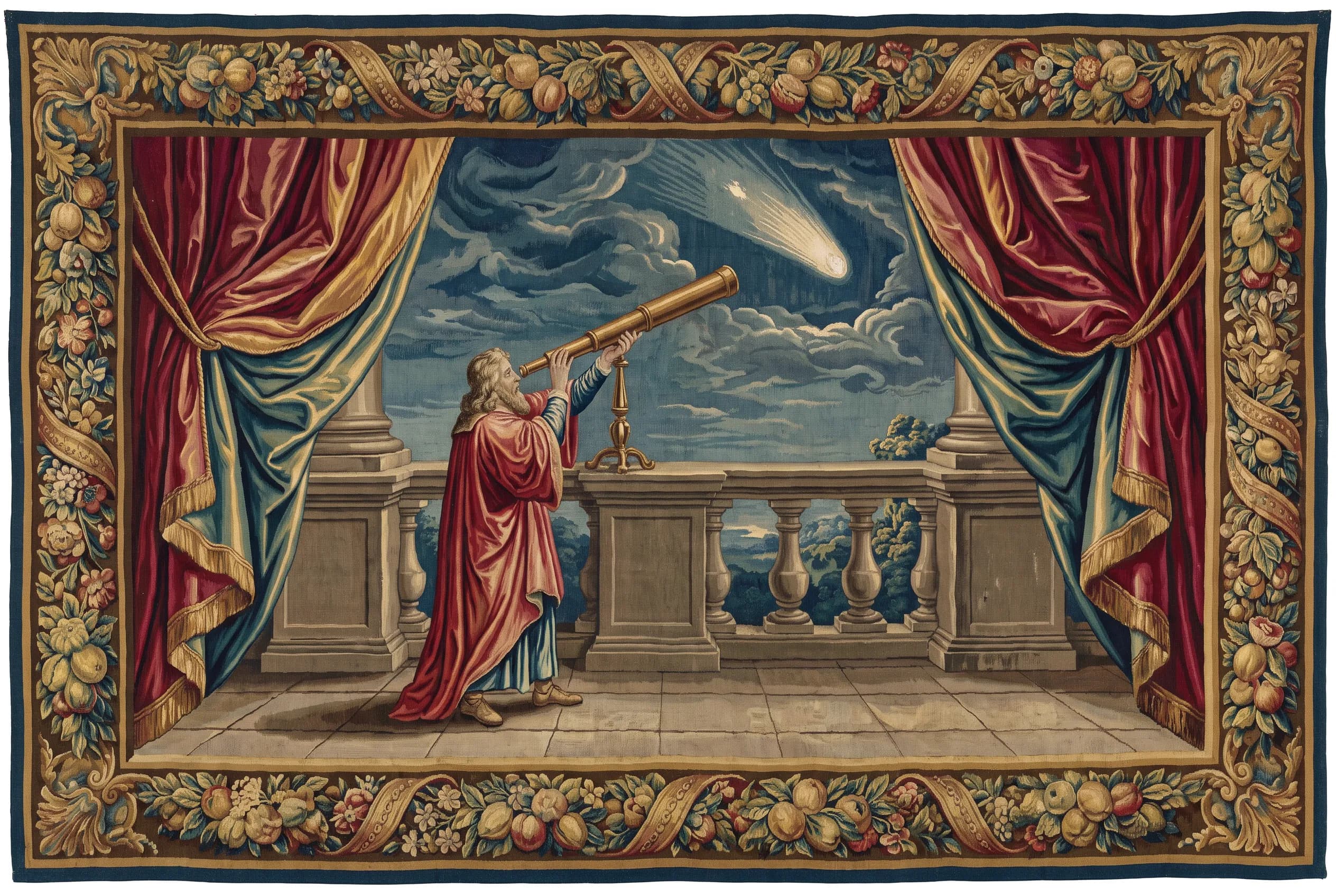
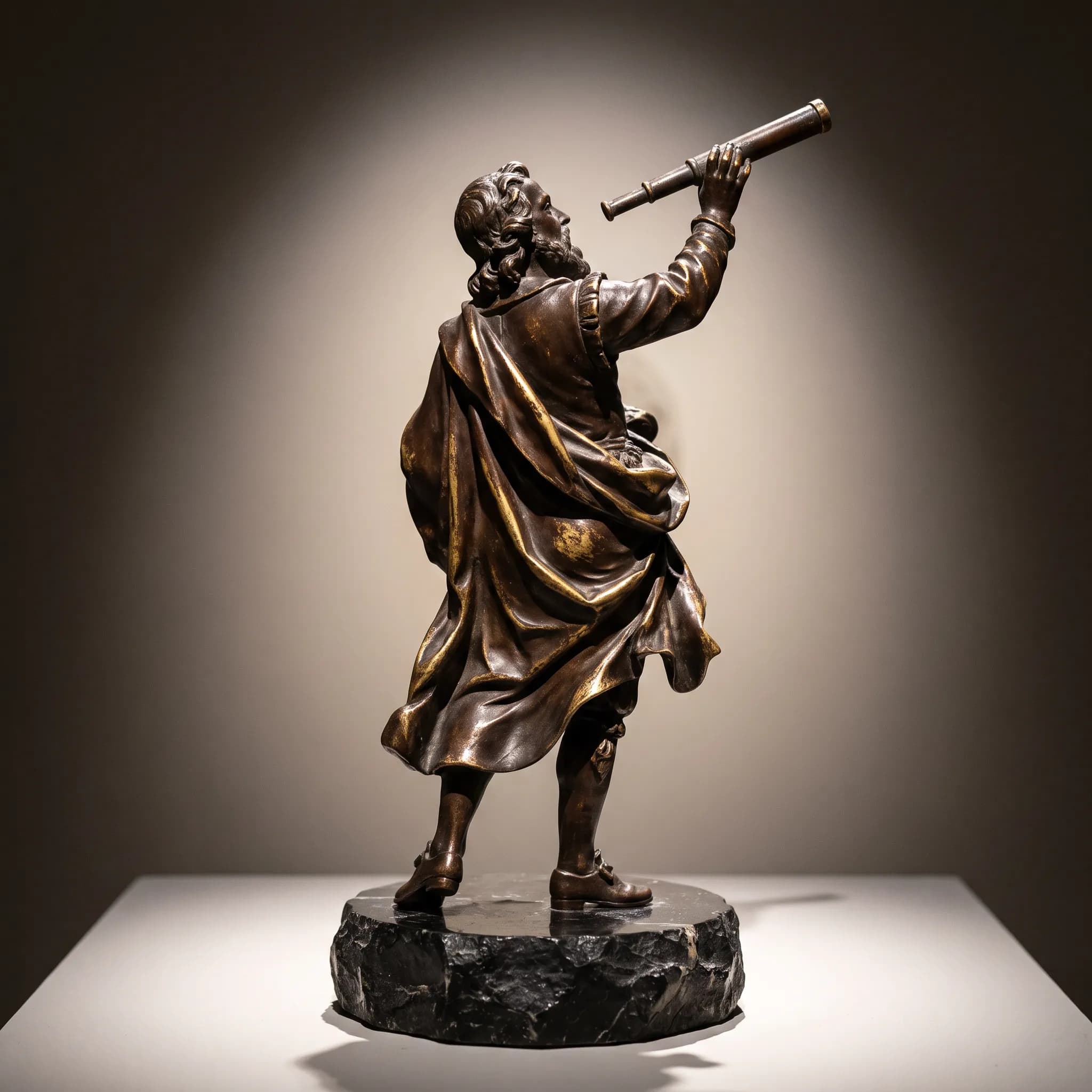
An astronomer swings his telescope up at a comet in all eight pictures, a nod to the period's new interest in science. Each image came out of FLORA's AI image generator in a different medium, captioned with its exact prompt.
How to prompt for baroque art style
Light deserves more words than anything else in a baroque prompt. Name one source and put it somewhere specific, a lantern below the subject or a high window to one side, and ask for the rest of the frame to fall into near-black. Tenebrism, the art-history word for that extreme contrast, can help next to a plain description. Action comes next, one moment with the body turning or reaching and a diagonal running through the composition. Palette and medium finish the prompt, dark reds and gold for oil or white marble in a shadowy niche for sculpture.
Regional flavor is the last dial. Rome means painted ceilings at full drama and Flanders means heavy, vigorous bodies, while Spain stays somber and France orderly.
Three prompts to copy
- Oil painting. Baroque oil painting of a gray-bearded astronomer in a crimson cloak leaning back to aim a long brass telescope at a comet, single lantern below him as the only light, face and hands emerging from near-black shadow, steep diagonal composition, deep red, umber and gold, visible brushwork, no text
- Ceiling fresco. Baroque ceiling fresco seen from directly below, one continuous painted vault with no seams, an astronomer in billowing crimson robes seated on clouds and pointing a brass telescope toward a blazing comet, painted architecture opening into a golden sky, figures sharply foreshortened, soft daylight from the vault windows, no text
- Marble statue. White marble statue of an astronomer twisting at the waist to raise a telescope toward the sky, baroque art style, cloak carved as if caught in a gust, deep undercut folds, polished stone on a plain uninscribed plinth against a dark chapel niche, dramatic side light, no text
What tends to go wrong
Some models read baroque as decor and can hand back gilded mirror frames or carved furniture, so open with the medium and the action. Shadow can swallow the subject too. If the astronomer vanishes, keep the dark and name what the light should catch, his face and the brass. Ceilings can come out as flat murals with upright figures, and asking for a straight-up view with foreshortened bodies tends to fix that.
Where baroque art style works
Key art for period dramas and opera seasons suits the style. The AI movie poster generator turns a written film concept, a title and a tagline into a hero poster with the title already set, plus campaign variations.
Still lifes belonged to the period too, and a bottle or a watch lit from one side on a black ground borrows their gravity for a product shot. Describe the object as the Subject and the dark table as the Scene in FLORA's Realistic AI Image Generator, add a second setting as the New Scene, and one run returns a photoreal hero shot, the item in that second setting and a filmic grade.
Related styles
- Rococo art style, which keeps the curves and the gilding but lets the shadows go
- Renaissance art style, the calmer, balanced tradition that came before
- Medieval art style, with flat gold grounds where this style puts darkness
- Painting art styles, the wider family this one belongs to
FAQs
What are five characteristics of Baroque art?
Grandeur, sensuous richness, drama, movement and emotional exuberance are five of the qualities most often tied to it, and vitality and tension belong on the same list. Underneath them sits a single aim, to rouse emotion through the senses.
Who are five famous Baroque artists?
Caravaggio, Artemisia Gentileschi, Gian Lorenzo Bernini, Peter Paul Rubens and Anthony van Dyck make a strong five. Caravaggio popularized tenebrism, and Gentileschi built her history paintings on it at a time when few women painted such subjects. Bernini designed the spiral-columned canopy over the altar of St. Peter's in Rome. Van Dyck, a pupil of Rubens, served as court painter to Charles I from 1632 until his death in 1641.
What is the Baroque style of art?
It is the dramatic Western style of the 1600s, and its name most likely comes from barocco, the Italian word medieval philosophers used for a snag in formal logic, though barroco, Portuguese for a misshapen pearl, is another candidate. For a long time critics used baroque to mean odd, grotesque or overdecorated. Heinrich Wölfflin's 1888 study Renaissance und Barock was the first to use it as a plain style label.



