
Rococo Art Style in Pastel Silk and Gilded Scrolls
 FLORA
FLORA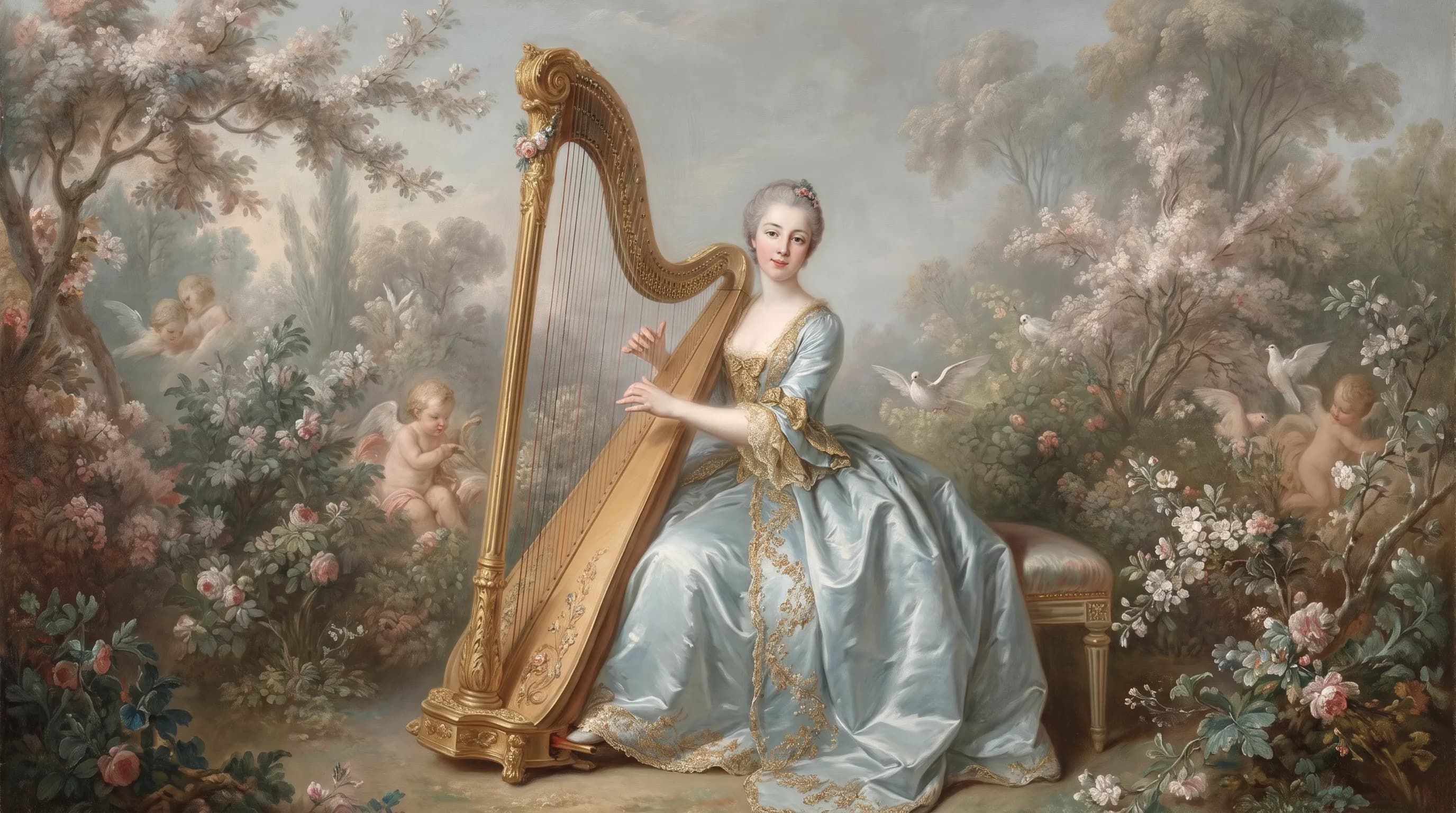
Rococo art style is the airy, ornamental manner that took hold in Paris in the early 18th century and later traveled to Germany and Austria. It began as interior decoration, devised by designers and engravers such as Nicolas Pineau for the new Paris residences of the nobility, and was quickly adapted to silver and porcelain. Look for curves built on the letters C and S, arranged so that one half of a design never quite mirrors the other. Shells and stylized acanthus leaves fill the ornament. Gold and ivory white sit against light pastels.
Rococo art style examples made in FLORA
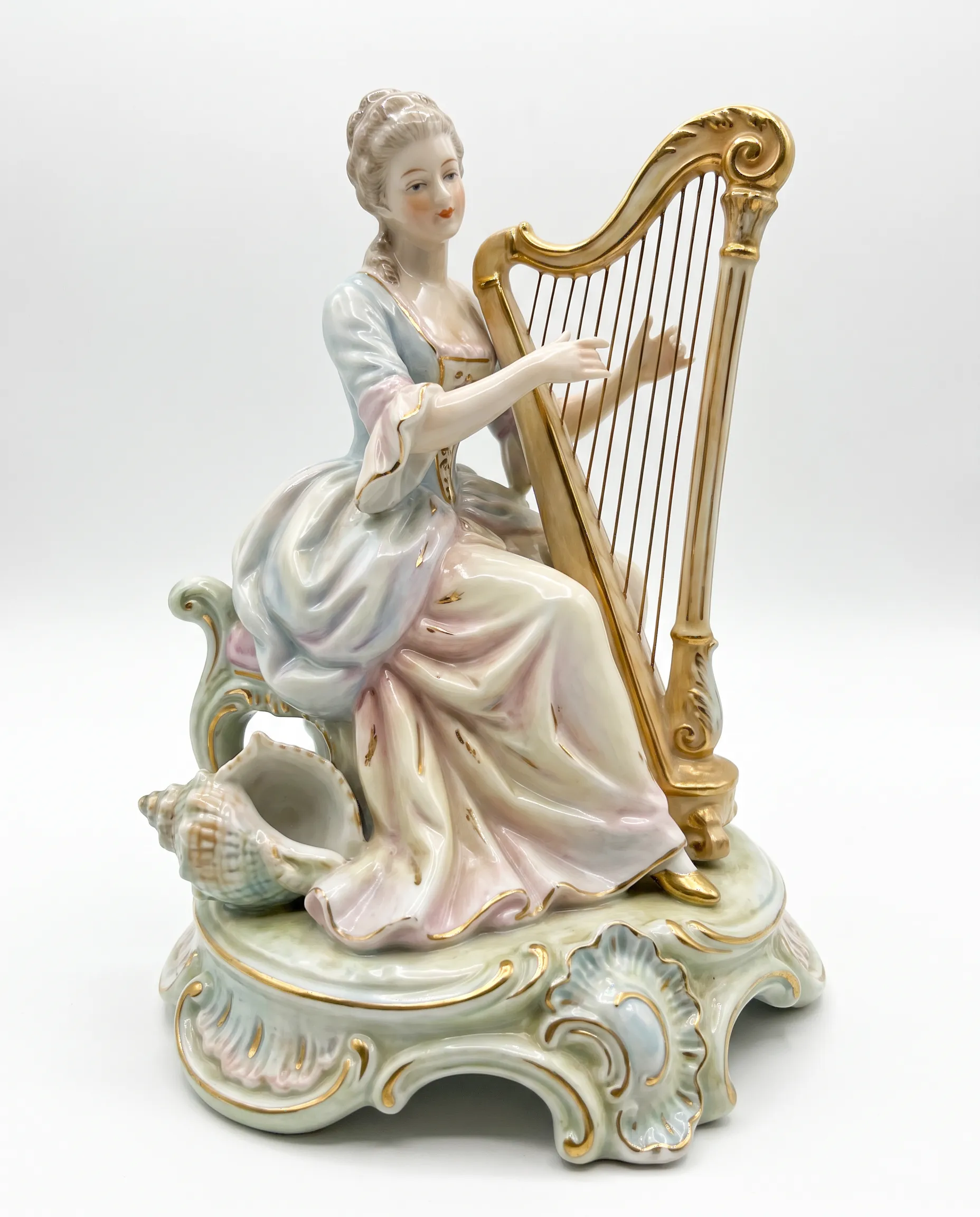
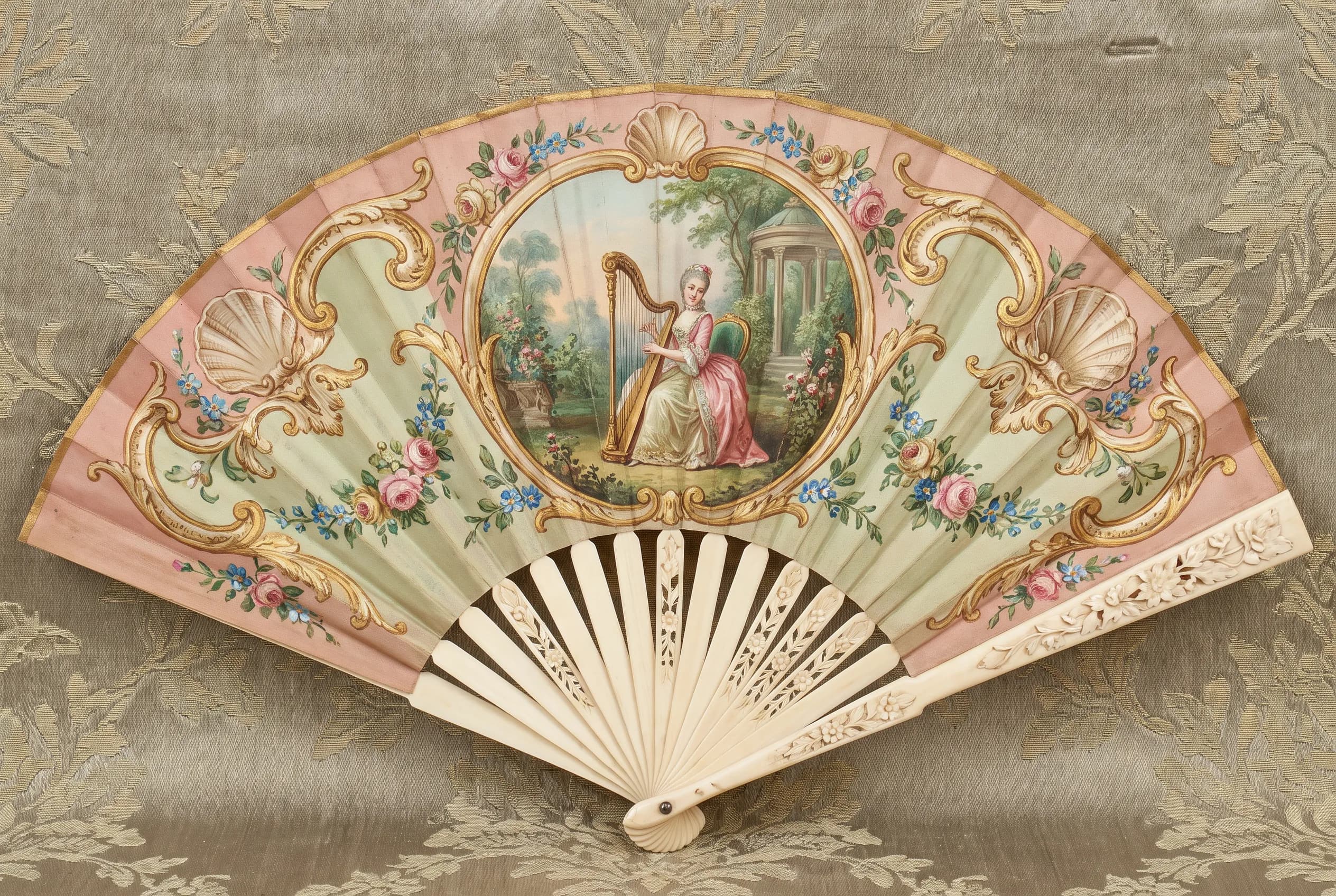
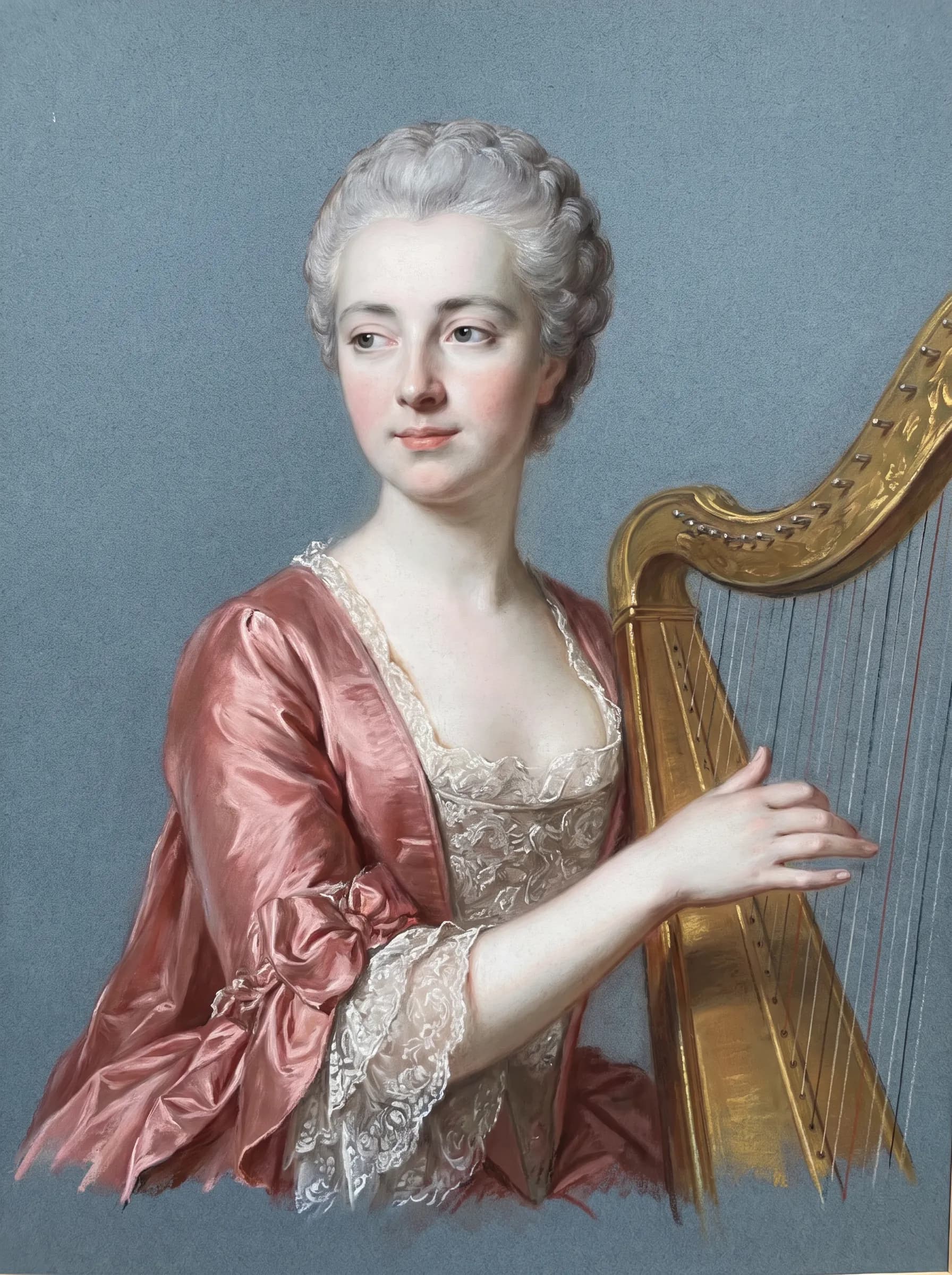
The harpist in these eight pictures is invented, a woman in a pale silk gown playing a gilded harp in a garden. Her instrument gives the ornament somewhere to go, because a carved harp frame can curl into scrolls in any medium. Each image came from FLORA's AI image generator and carries its prompt as the caption.
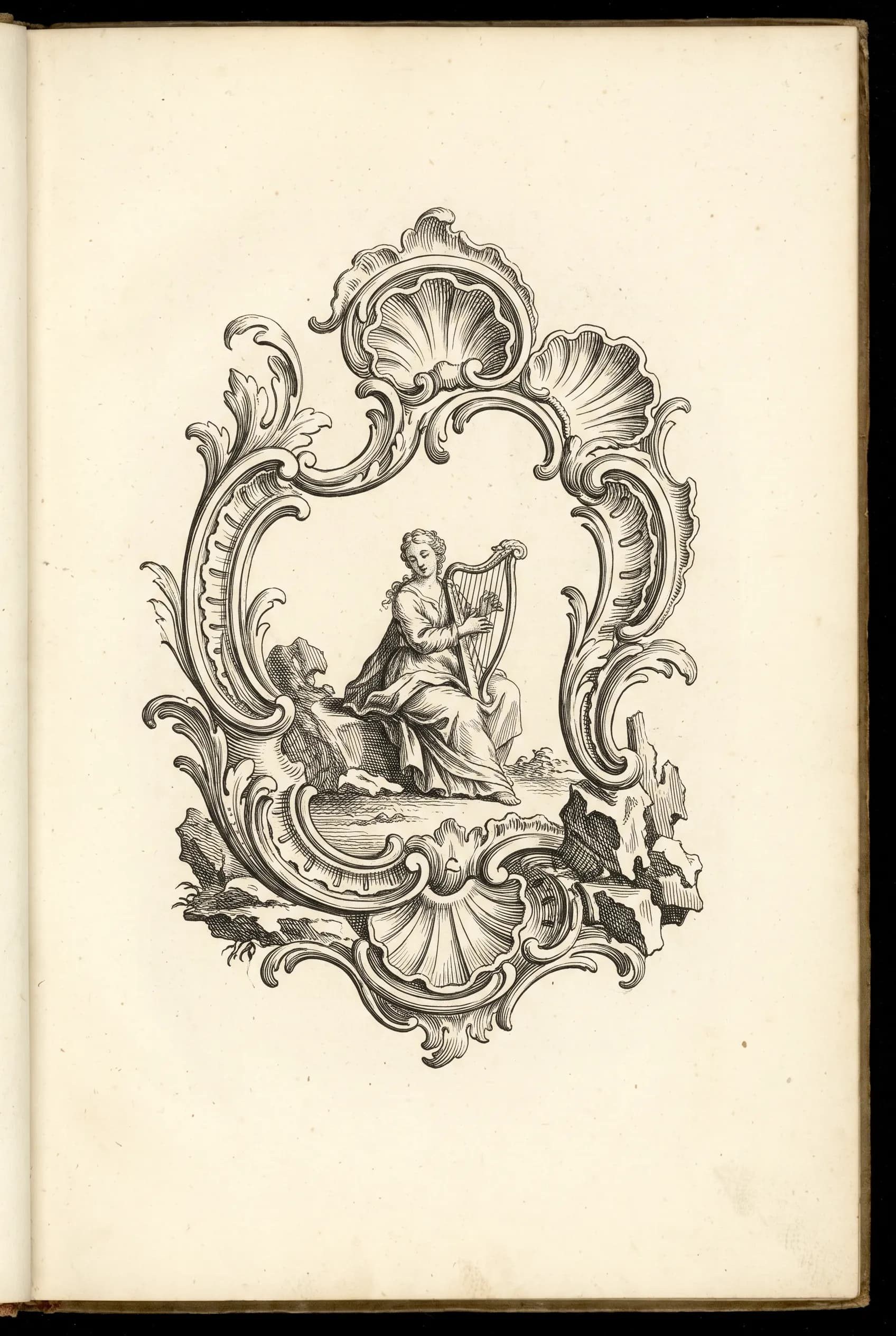
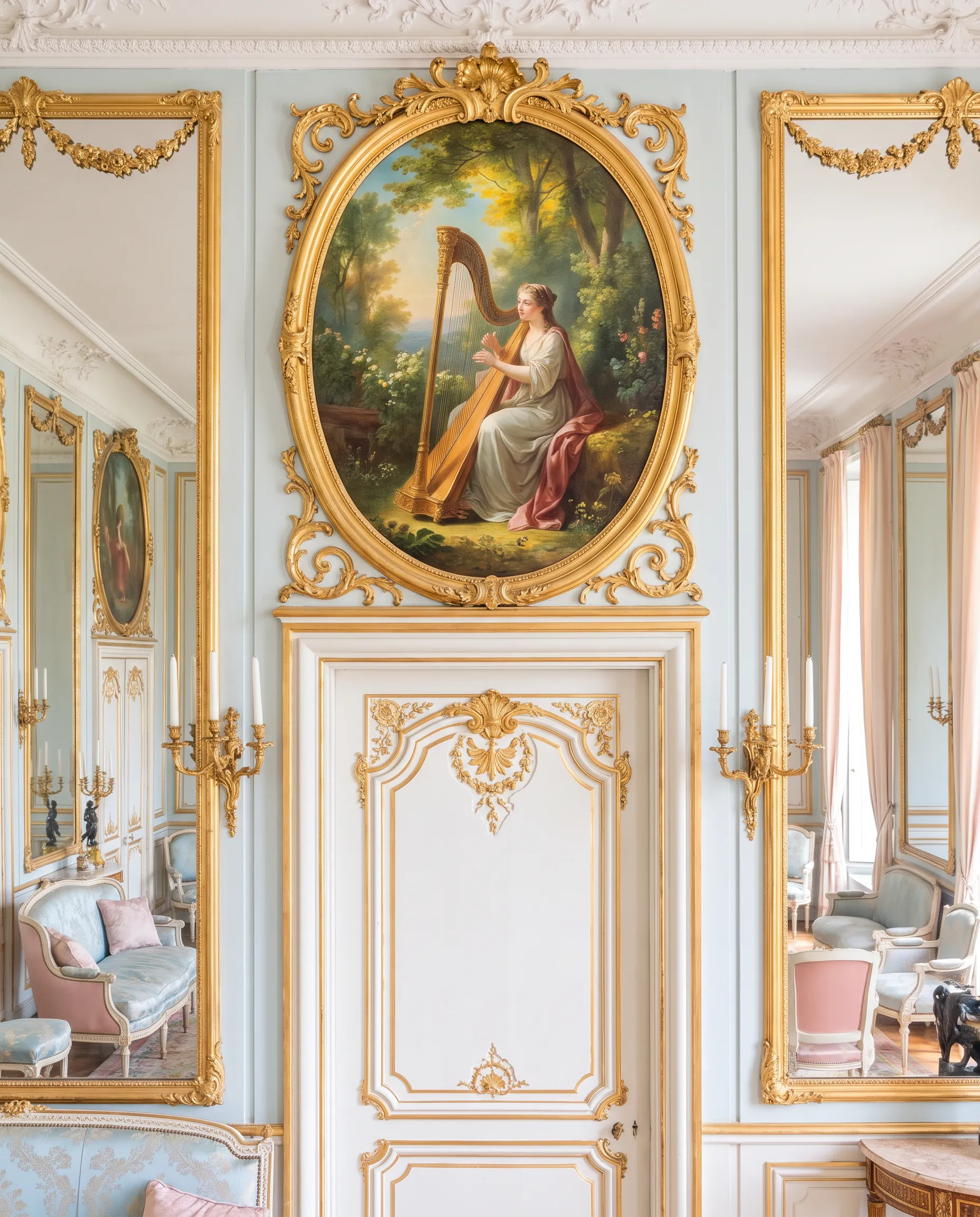
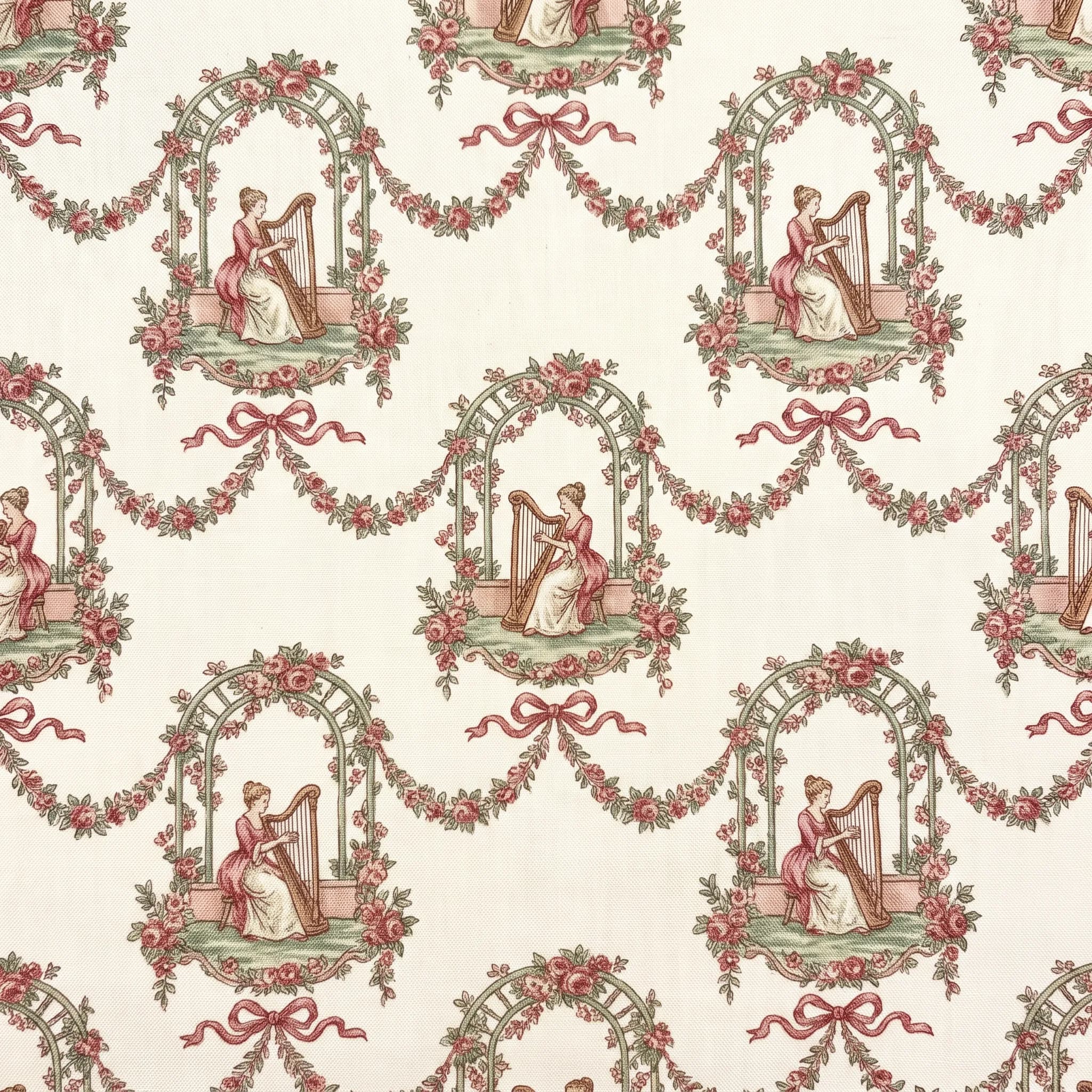
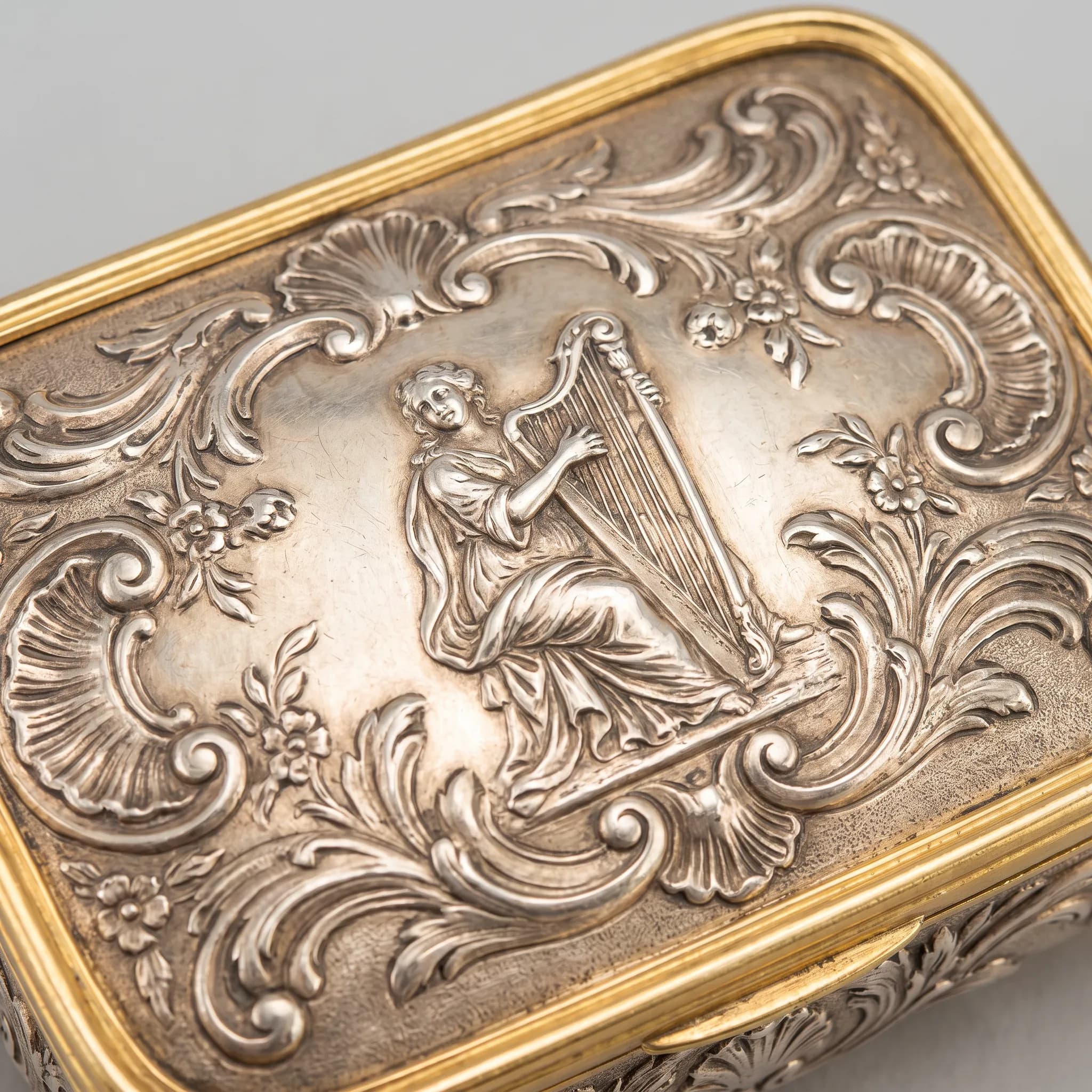
How to prompt for rococo art style
A good rococo prompt is mostly about weight. Ask for a light tonal key and name the pastels you want, say powder blue, rose and pistachio over ivory, with gold kept to accents. Deep shadow tends to drag the result back toward the heavier century before it.
Ornament comes second. Write C and S scrolls, shells and asymmetrical outright, since image models often default to symmetrical frames. French Rococo painting generally handled love and mythology with a light touch, so a garden concert or a quiet flirtation suits the subject slot better than a battle. Then pick the medium, because rococo style art reached far past the easel into porcelain figures, silver, carved wall paneling and printed ornament sheets, and each handles the curves in its own way.
Prompts for three media
- Garden painting. Rococo oil painting of a woman in a pale blue silk gown playing a gilded harp in a leafy garden, feathery trees, soft hazy daylight, light tonal key, rose, powder blue and ivory with gold accents, delicate brushwork, lighthearted mood, no text
- Porcelain figure. Glazed porcelain figurine of a harpist in a flowing pastel gown seated on a base of shells and C and S scrolls, gilded harp, asymmetrical composition, soft studio light on white, rococo art style, no text
- Painted fan. Painted silk fan leaf spread open on ivory sticks, a harpist in a garden at the center, framed by asymmetrical gilt scrolls, shells and flower garlands, pastel rose and pistachio palette, rococo style, no text
Common misfires
Gold is the usual culprit. Left alone, it can spread over every surface until the picture looks like a throne room, and asking for mostly white and pastel with gilt details usually reins it in. The other trap is costume drama, which can arrive as a film-set version of the 1700s in stiff satin and harsh light. Describing the brushwork as feathery and the light as soft gets closer to the period's delicate handling.
Where rococo art style works
- Confectionery and fragrance packaging can take the full treatment, with a pastel ground, a gilt cartouche left empty for the brand name and a shell tucked into one corner. Give the product to AI Packaging Design and it returns a hero carton, a photoreal retail shelf render and a matching lineup of variants, a quick way to see whether the ornament holds up next to plainer packs.
- Fabric and wallpaper repeats suit the style's floral ornament. Generate the repeat first, then use Print/Pattern Replacement to place that existing print onto a photo of a cushion, dress or chair, since the technique applies a pattern you supply and does not invent one.
- Hotel bars, salons and boutique interiors can borrow a trick the original decorators relied on. They hung mirrors to make rooms feel more open, and a render with tall mirrors between white and gold panels points straight at the period.
Related styles
- Baroque art style, its heavier and darker predecessor
- Art nouveau style, a later movement built on curving plant forms
- Art deco style, for ornament straightened into geometry
- Renaissance art style, symmetry and calm where this style prefers play
FAQs
What's the difference between baroque and rococo art?
Rococo started as a reaction to the Baroque. Paris decorators turned away from the weighty design of Louis XIV's Versailles and the official art of his reign and made rooms that were lighter and more intimate. The V&A notes that it is often described as the Baroque's final expression, and once it reached the Catholic German-speaking lands in the 1730s, its churches joined French elegance to a lingering Baroque love of dramatic space.
What defines the Rococo style?
Curving, asymmetrical ornament built around the shell. The name itself comes from rocaille, the French word for the shell-covered rockwork that lined artificial grottoes. Printed pattern books spread it through Britain, where Matthias Lock and Henry Copland began publishing Rococo scrollwork prints in 1742, and Thomas Chippendale's furniture book, The Gentleman and Cabinet Maker's Director, came out as a collected edition in 1754.
What is the most famous Rococo painting?
A common answer is Jean-Honoré Fragonard's The Swing of about 1767, which hangs in the Wallace Collection in London. Fragonard closed the story of French Rococo painting, which opened with Antoine Watteau's graceful, wistful scenes and passed through François Boucher's playful mythologies, among them Cupid a Captive (1754), also at the Wallace Collection.



