
Gachiakuta Art Style, from Scratchy Ink to Spray Paint
 FLORA
FLORA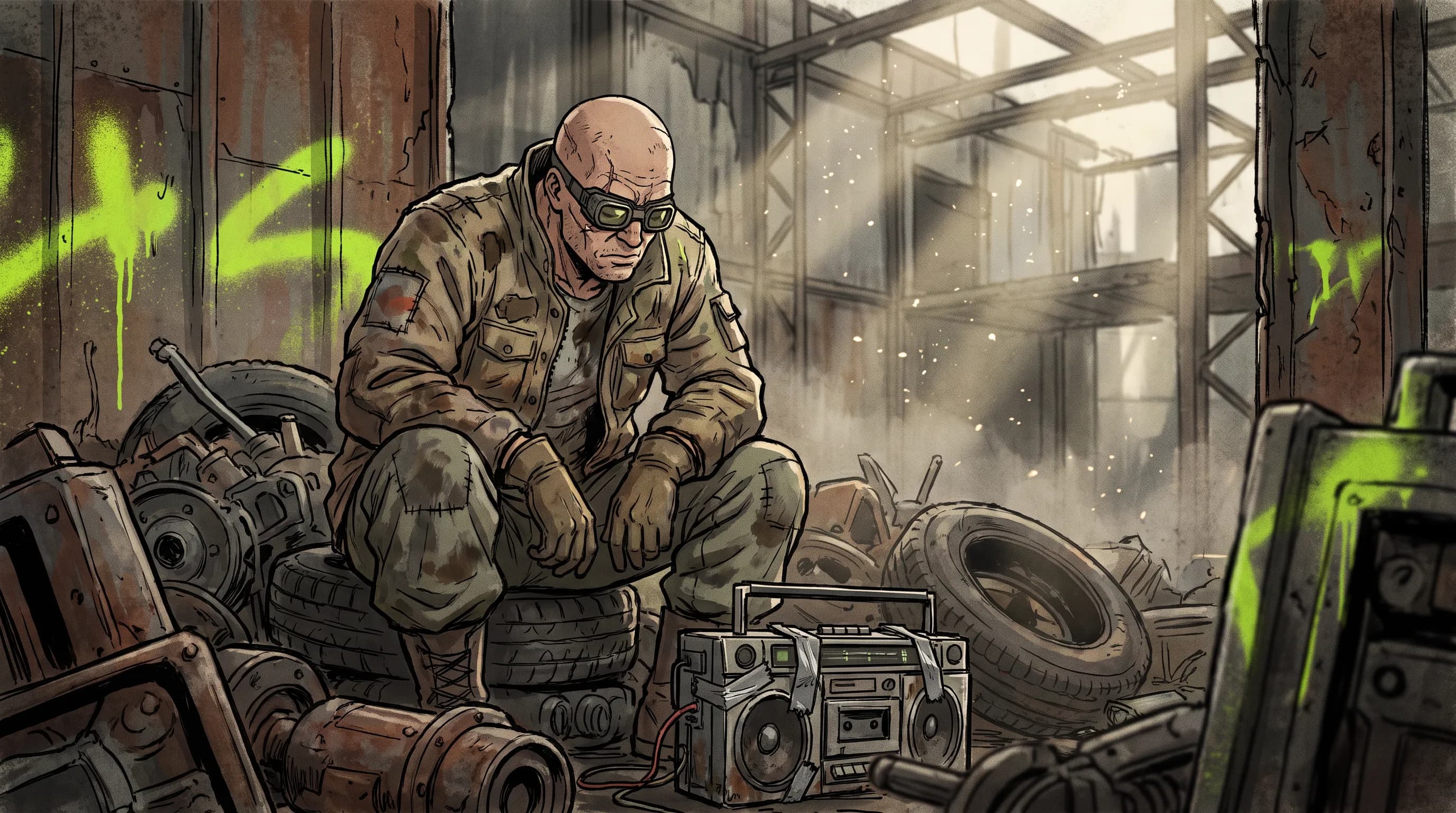
The Gachiakuta art style is the look of Kei Urana's dark fantasy manga Gachiakuta, serialized in Kodansha's Weekly Shōnen Magazine since February 2022 and adapted into an anime by Bones Film in 2025. Urana draws the characters, while graffiti artist Hideyoshi Andou supplies the graffiti designs on the walls behind them. Her ink is scratchy and densely hatched, so every jacket, scrap heap and face carries grime. She builds each figure from its silhouette and says she loves designing their outfits. Andou's tags and murals sit right inside the panels, angular and loud, and carry part of the story.
Gachiakuta art style examples made in FLORA
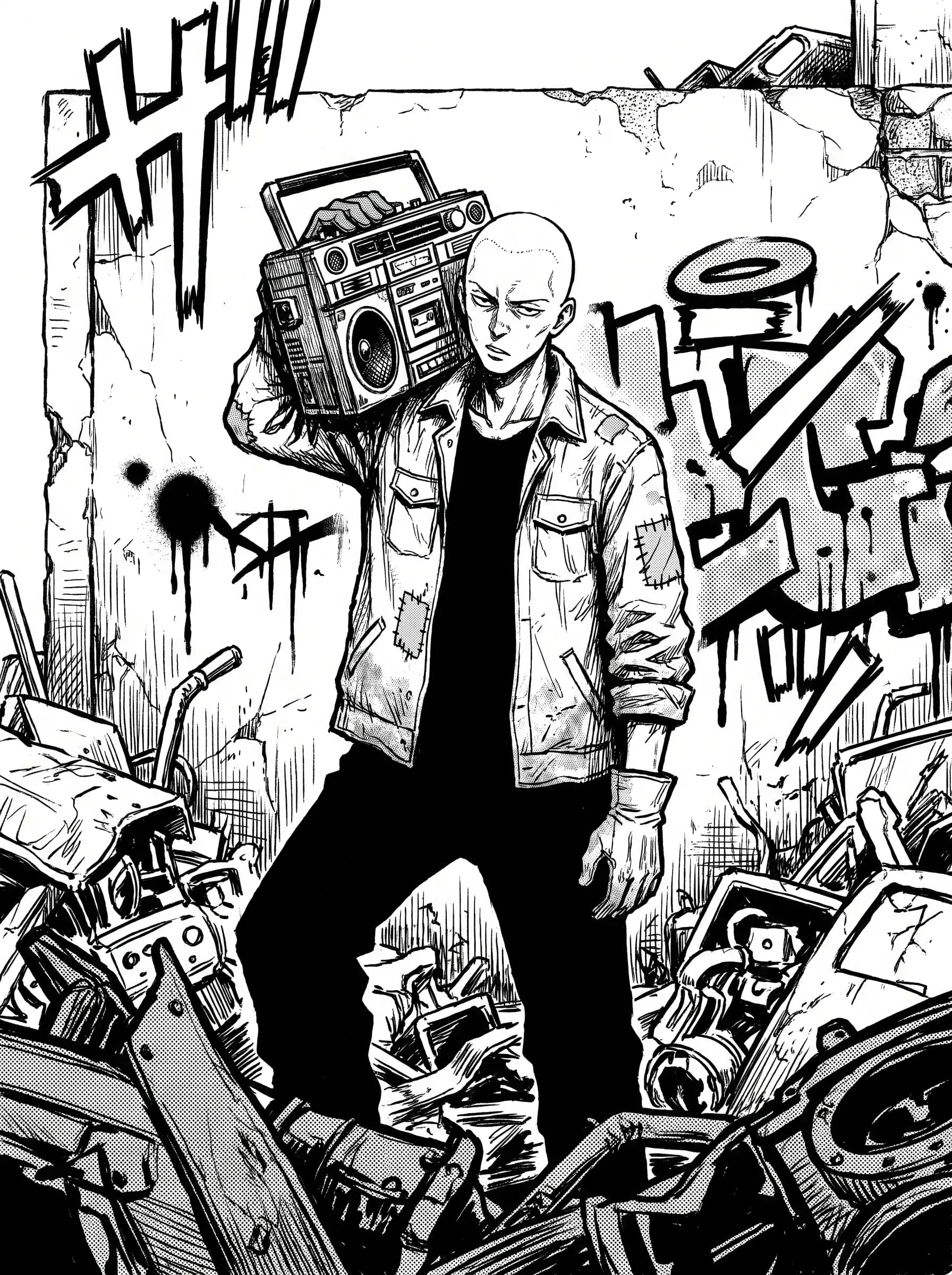
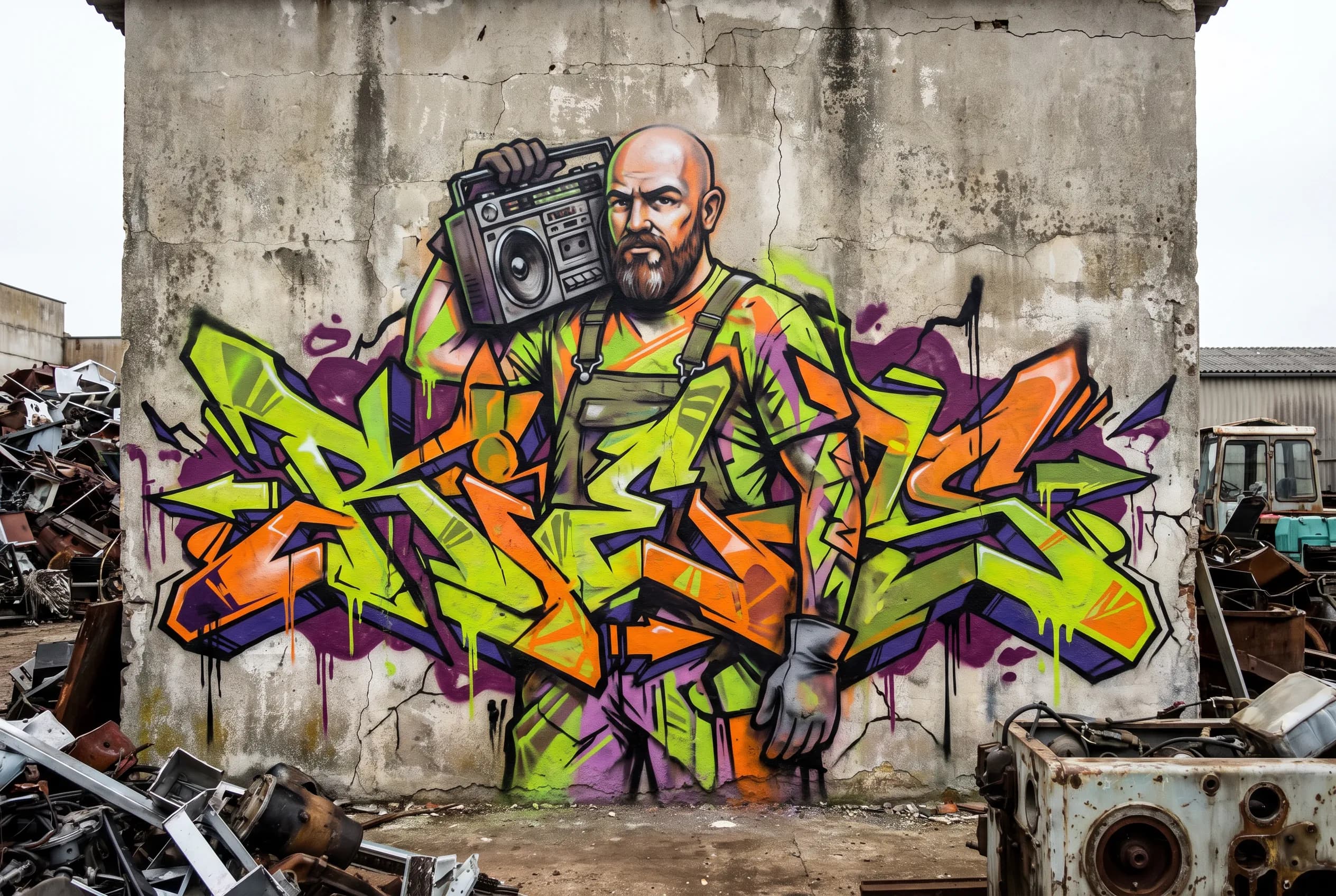
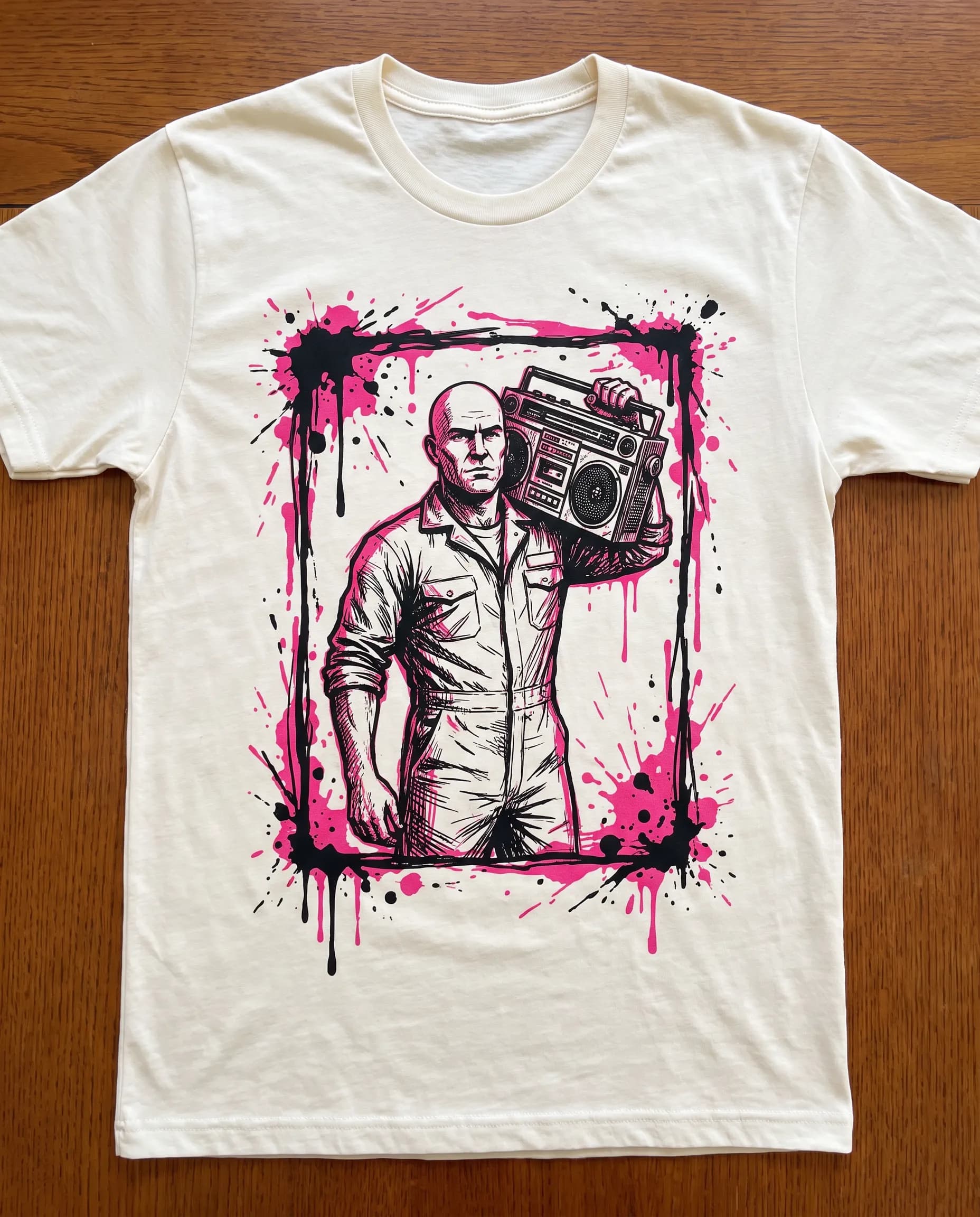
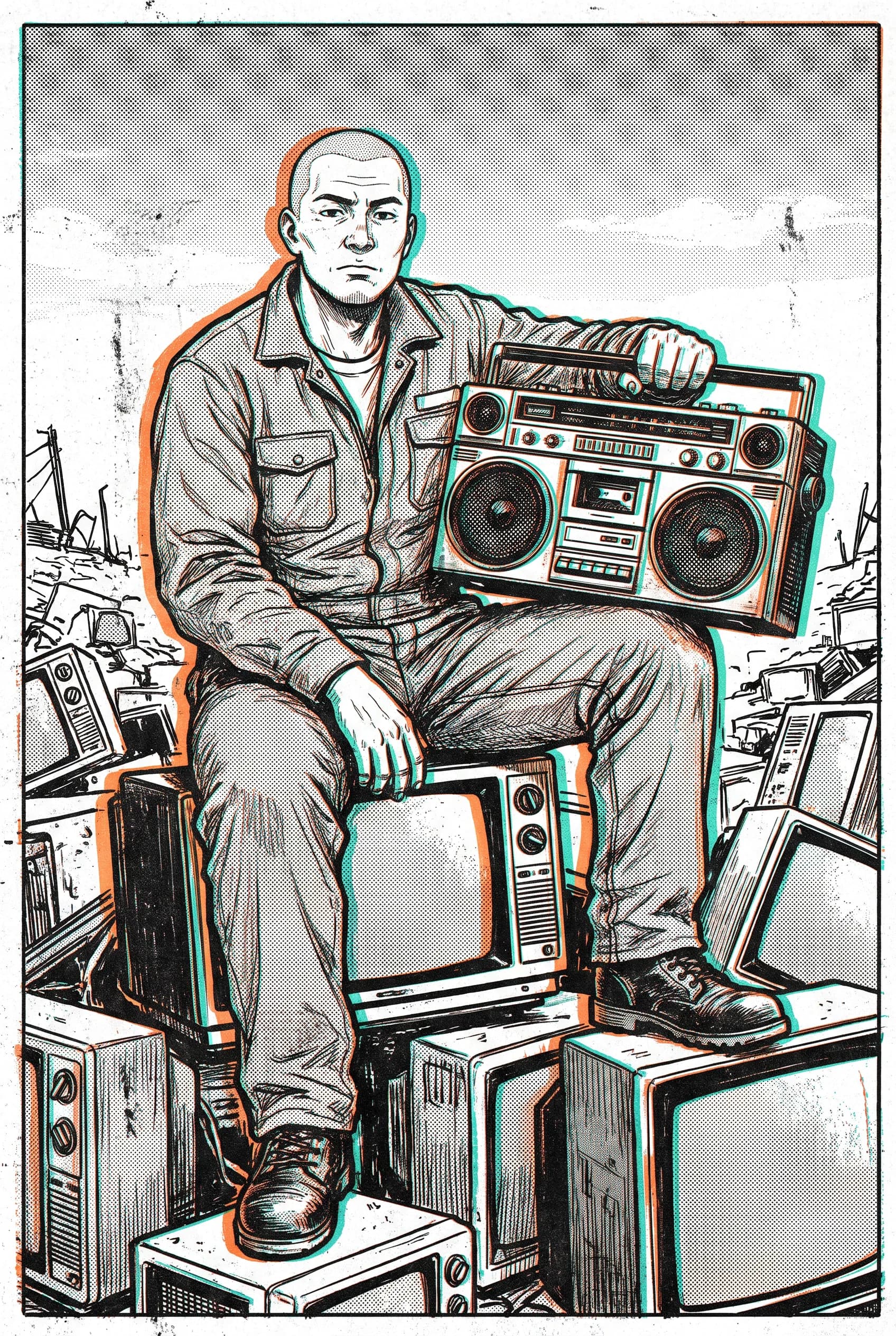
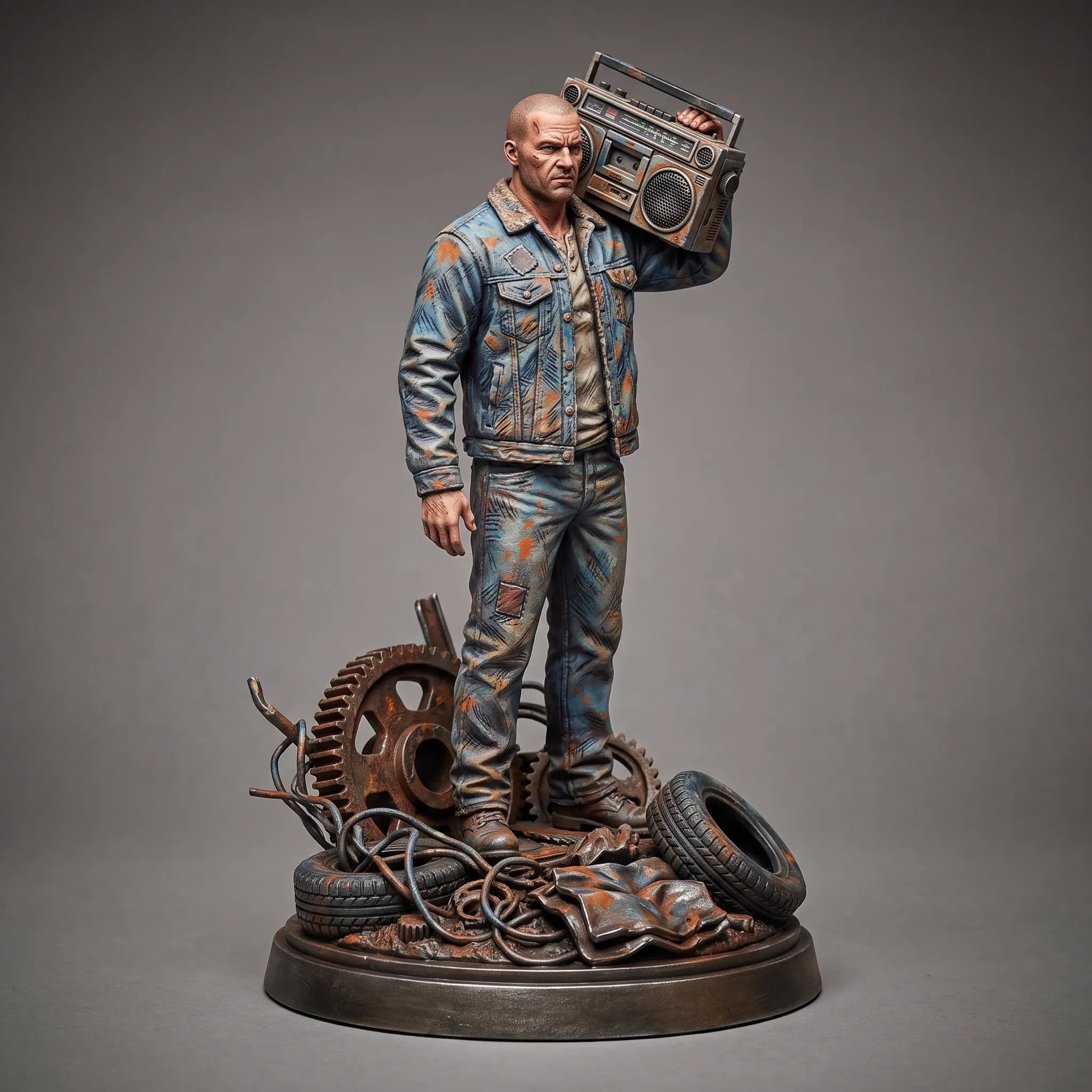
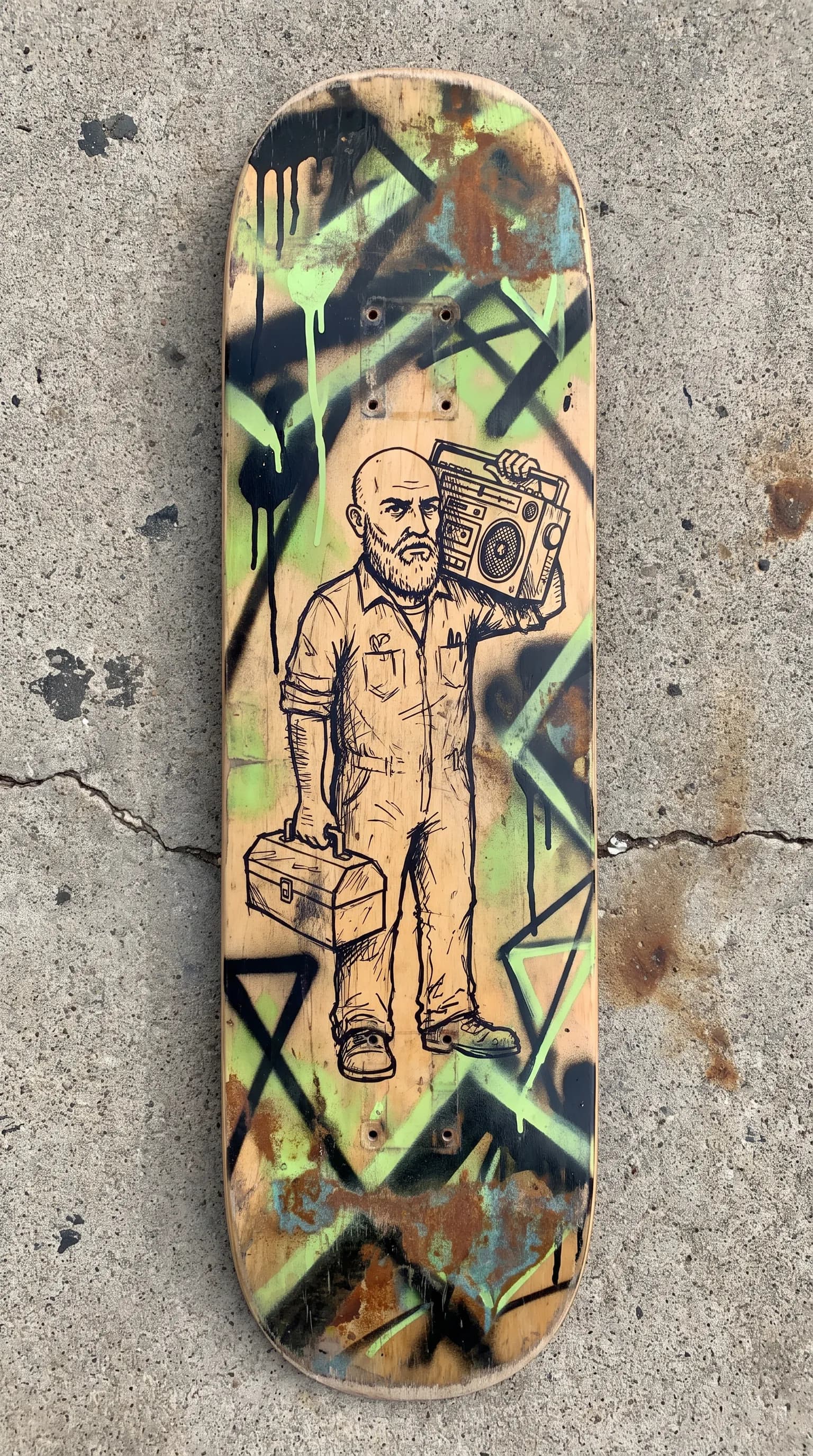
Every picture below came out of FLORA's AI image generator and stars the same invented junkyard worker, a shaved-headed man in his late twenties who hauls a salvaged boombox. Each caption repeats its prompt word for word.
How to prompt for Gachiakuta art style
Urana has said she usually settles on a character's weapon before deciding who should hold it, and the same order helps a prompt. Hand the figure one battered object he obviously treasures, like the mechanic's boombox, and describe his outline before his face, since a hunched, lanky frame in a patched jacket reads from across a page. Then ask for scratchy cross-hatching and heavy solid blacks, and add grime if the surfaces look too clean.
Graffiti is the last layer. Spray drips and angular wildstyle shapes belong on the walls behind him, and a few can cross his jacket. Manga pages stay black and white with screentone. In color, rust and smog gray want one acid accent like lime or hot pink.
Copy-ready prompts
- Manga panel. Black and white manga panel of a lanky adult scrapyard mechanic in his late twenties with a shaved head and a patched canvas jacket, salvaged boombox on his shoulder, scratchy cross-hatched ink and heavy solid blacks, spray-paint drips and abstract graffiti shapes on the wall behind him, gritty shōnen manga, no text
- Anime key frame. Anime key frame in the Gachiakuta art style, a shaved-headed adult scrapyard mechanic, late twenties, wearing a patched canvas jacket and crouched on a mountain of junk, salvaged boombox at his feet, rust brown and smog gray with acid green spray-paint accents, rough ink outlines, dusty backlight, no text
- Mural. Spray-paint mural on a cracked concrete wall showing a bald adult mechanic from a scrapyard, boombox on his shoulder, angular wildstyle shapes in place of letters and paint drips around him, sharp black outlines, acid green, orange and purple, photographed in flat daylight, no text
When the look slips
Figures can come back glossy, with clean cel shading that could belong to any action anime, and more hatching plus the word grimy often roughs them up again. Image models also tend to attempt real words inside graffiti and produce nonsense lettering, which is why the mural prompt asks for shapes in place of letters. State the age too, since shōnen prompts can drift younger.
Where Gachiakuta art style works
Streetwear is the obvious home. Hatched ink and spray marks already look like a screen print. Pick the garment, write the mechanic and the ink colors into the print brief, add a scene, and FLORA's T-shirt designer returns the artwork, colorways and an on-model shot.
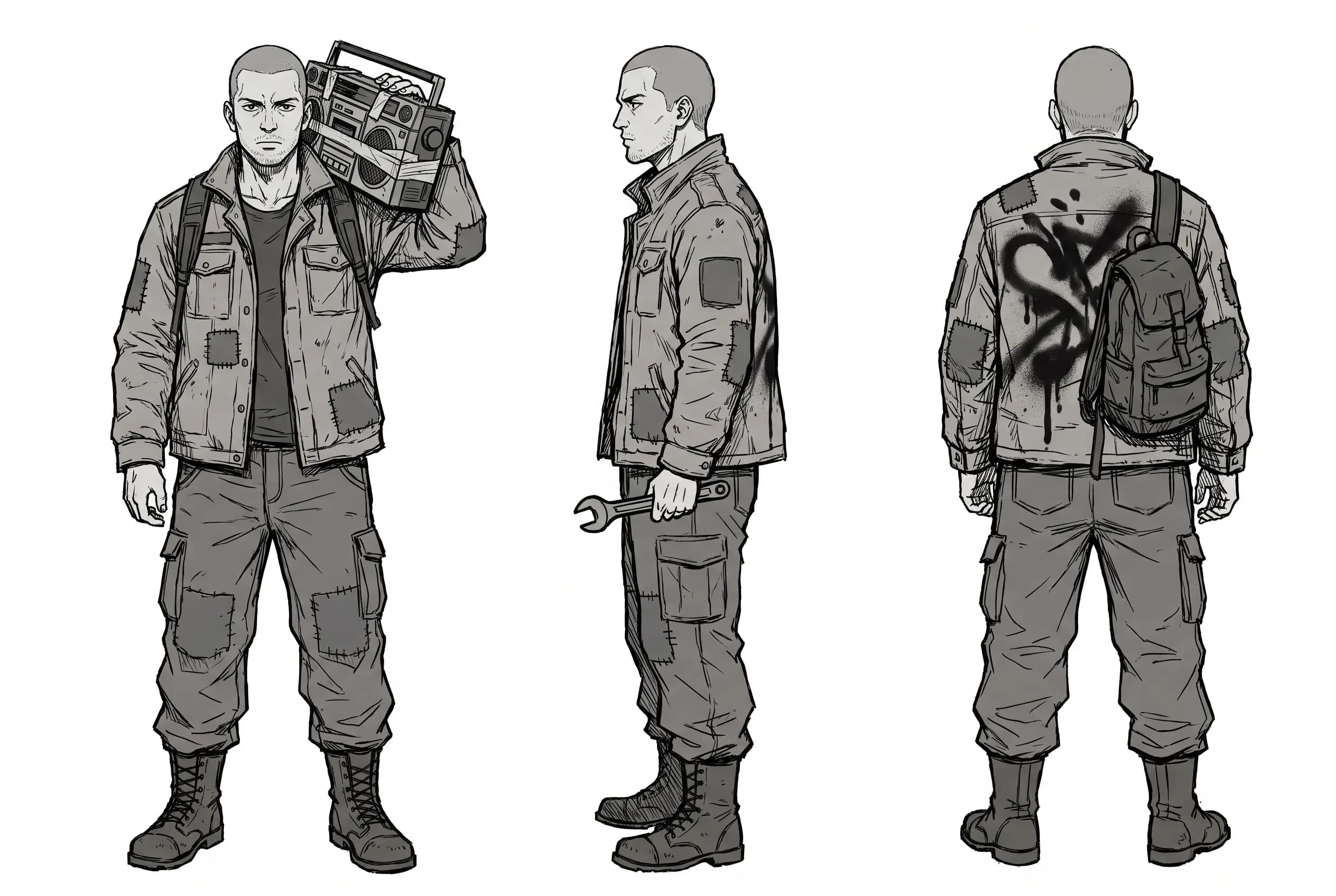
Comic pitches and indie games need a cast that holds together across hundreds of drawings, which is hard to get one prompt at a time. Describe an original character once, treasured object included, and the Character Creator returns turnaround views, an alternate outfit, a name card and an idle loop.
Andou has said most of his inspiration comes from music he likes. He named Limp Bizkit, Korn and Slipknot. That makes heavy music artwork a natural fit, and the AI album cover generator turns one scene prompt into a titled cover, two single covers and a looping motion cover.
Related styles
- Graffiti art styles, the street lettering family behind Andou's half of the page
- Demon Slayer art style, another shōnen look built on heavy outlines
- Manga sits beside Western panel traditions in comic art styles
- Ukiyo-e, sumi-e and modern manga share a page under Japanese art styles
FAQs
Who does the graffiti for Gachiakuta?
Hideyoshi Andou, who is credited for the graffiti designs alongside Urana's art. Urana began the series on her own, and the pairing grew out of work chats soon after, when the two tried putting his art behind her characters and liked the result. Andou has also said Japanese opinion of graffiti shifts once it appears as a drawing on paper.
What was Gachiakuta inspired by?
Urana has named Soul Eater, Hellsing and The Lord of the Rings. The story's core idea is older. As a child she snapped a favorite pen in two and felt as if it were pleading with her.
Is Gachiakuta connected to Soul Eater?
The tie runs through Urana herself, since she worked as an assistant while Fire Force was being serialized and its author, Soul Eater creator Atsushi Ohkubo, has called her his "successor who had already surpassed" him. Fire Force ended in Weekly Shōnen Magazine only a week after Gachiakuta began there.
What does Gachiakuta mean?
Roughly "legit trash." The name fits a story whose hero is dumped into a garbage-filled pit below the Sphere, a floating structure the size of a country, and English speakers pronounce it gah-CHEE-ahk-TAH.



