
A Guide to the Demon Slayer Art Style for AI Images
 FLORA
FLORA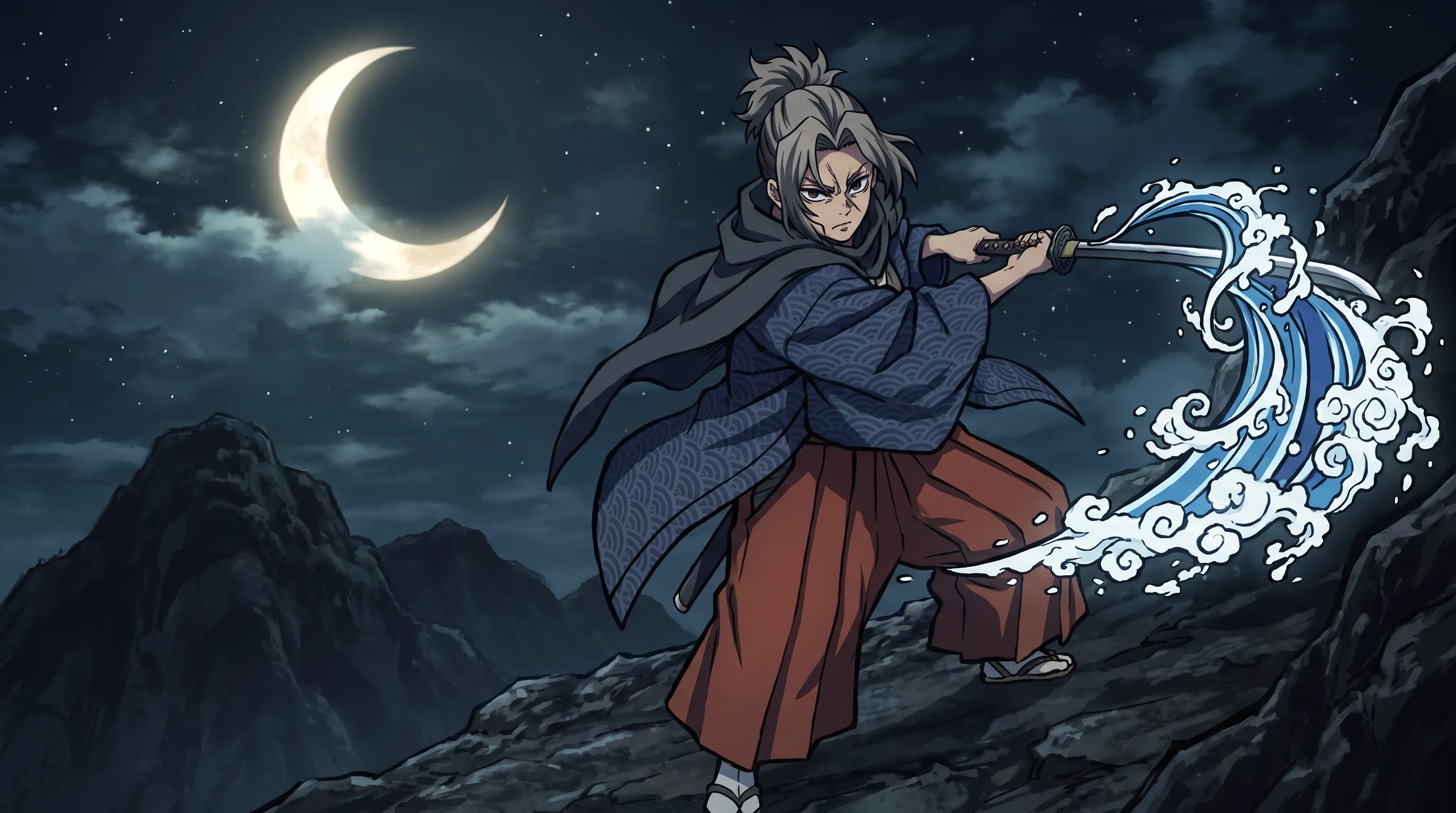
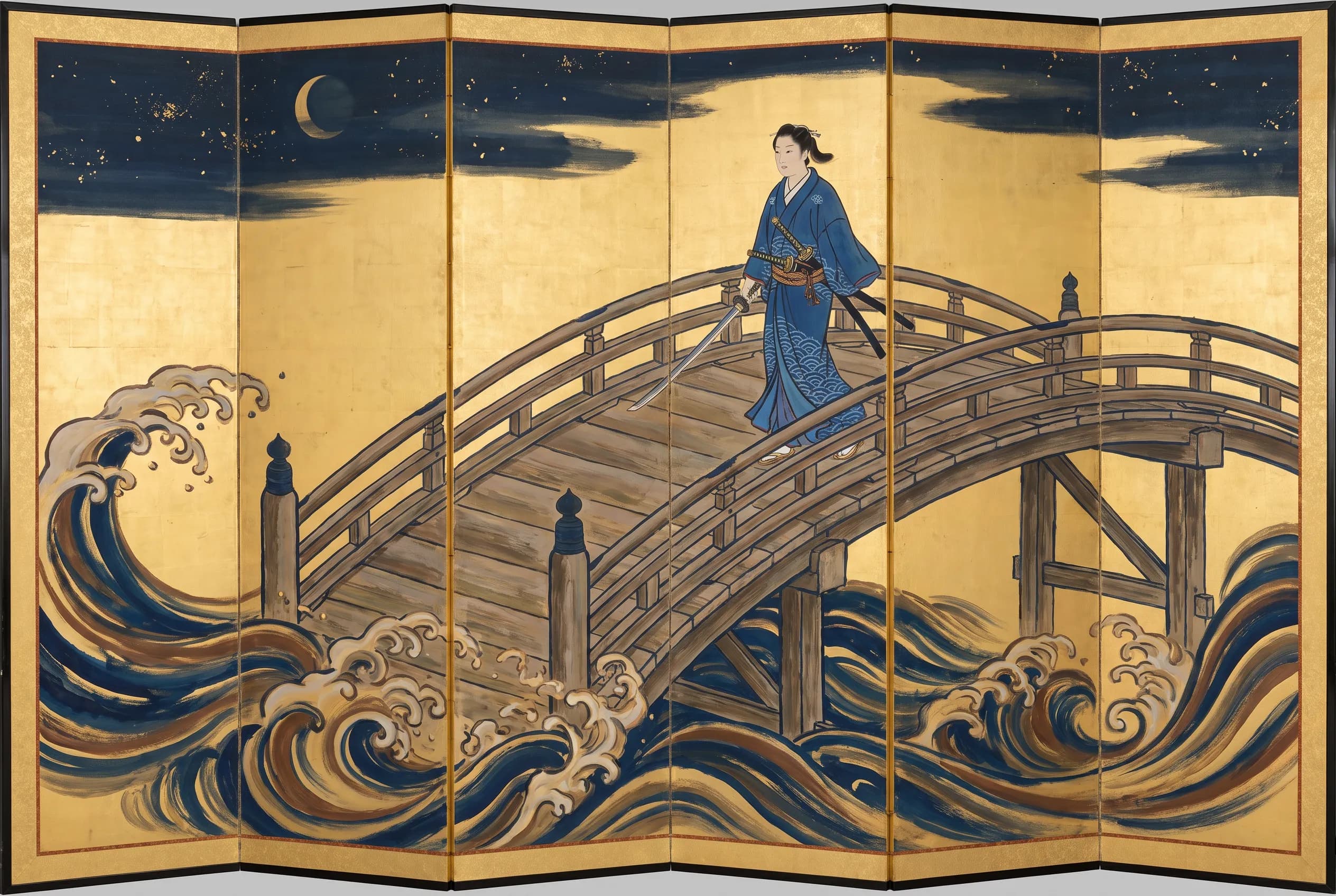
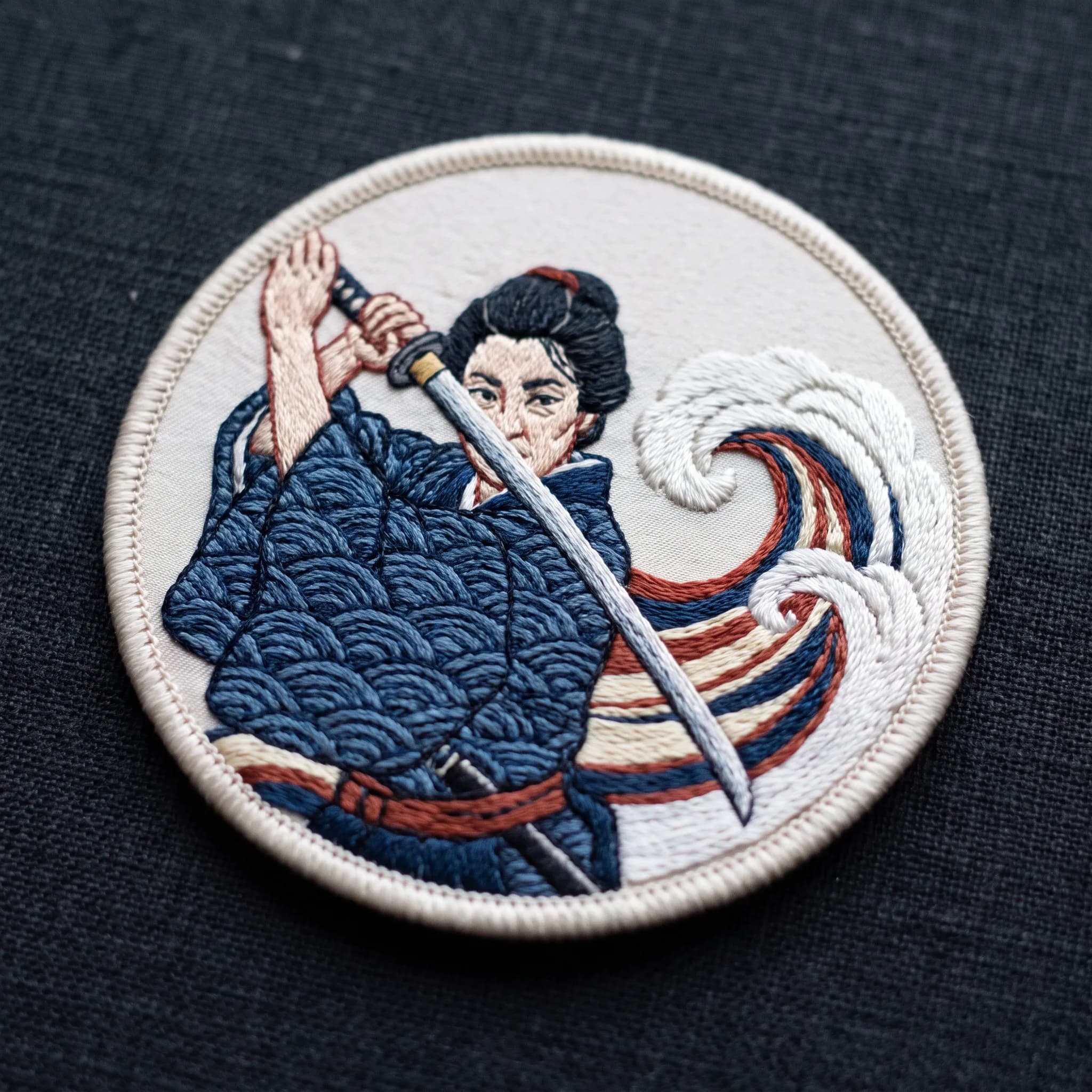
The Demon Slayer art style is the look of Koyoharu Gotouge's manga Demon Slayer, which ran in Weekly Shōnen Jump between February 2016 and May 2020, and of the anime adaptation by studio Ufotable. The story is set in Taishō-era Japan, so the clothing runs to kimono, hakama and haori jackets, often in bold repeating patterns. Gotouge's figures have hard corners and few soft curves, and the pen shifts weight often and breaks into short dashed strokes for small details. In the anime, sword techniques throw off elemental effects, and the water attacks borrow their curling white waves from Hokusai's ukiyo-e prints.
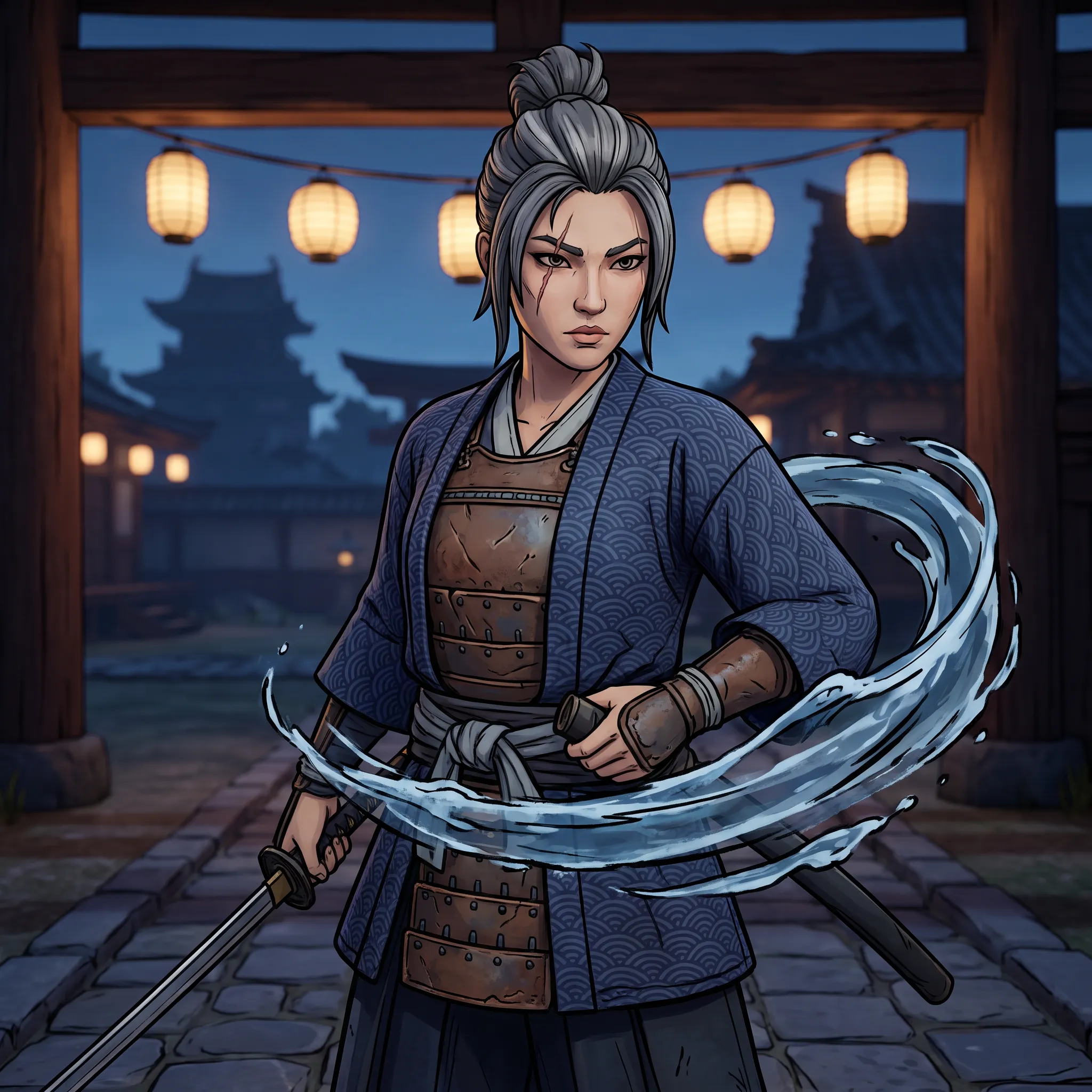
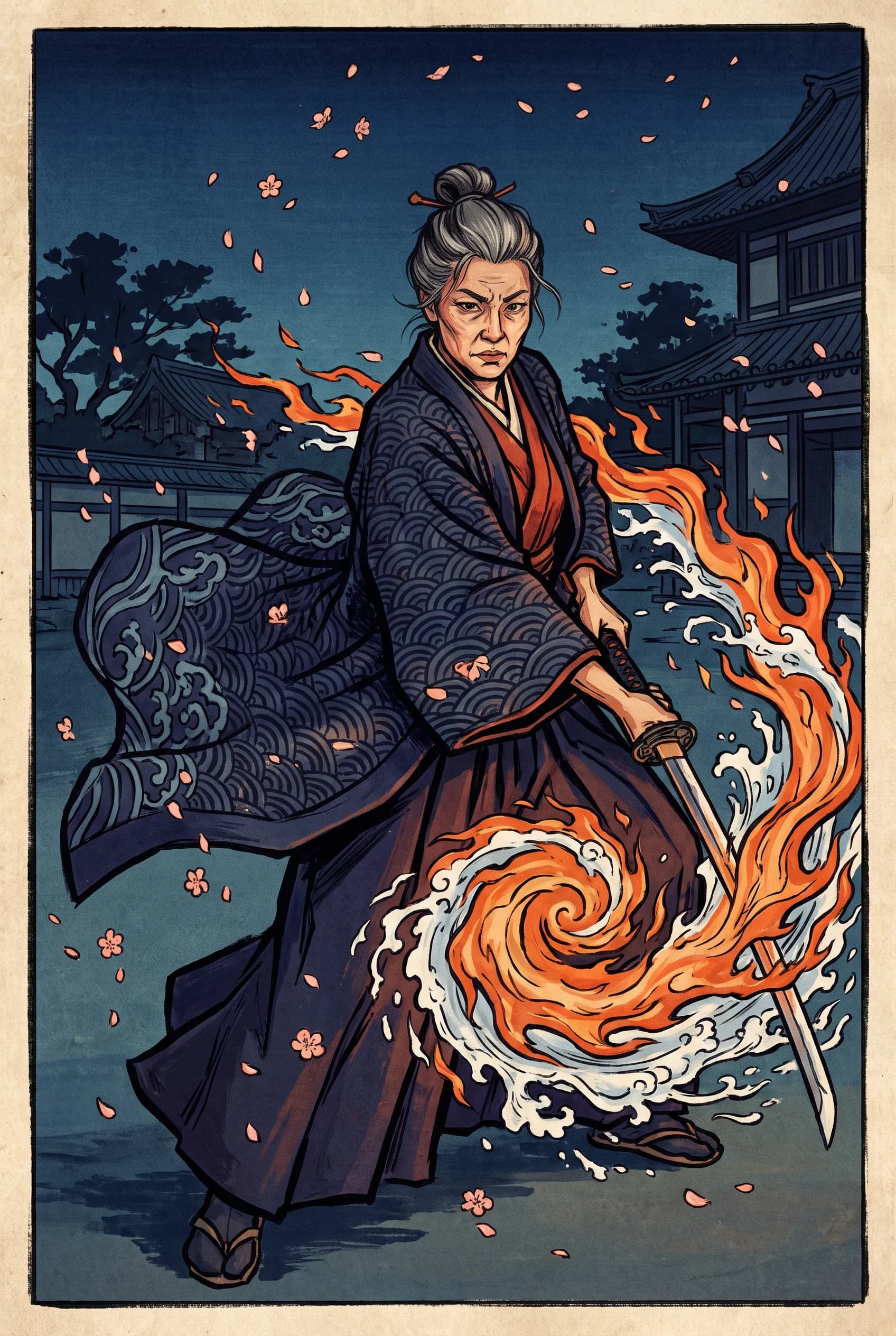
Demon Slayer art style examples made in FLORA
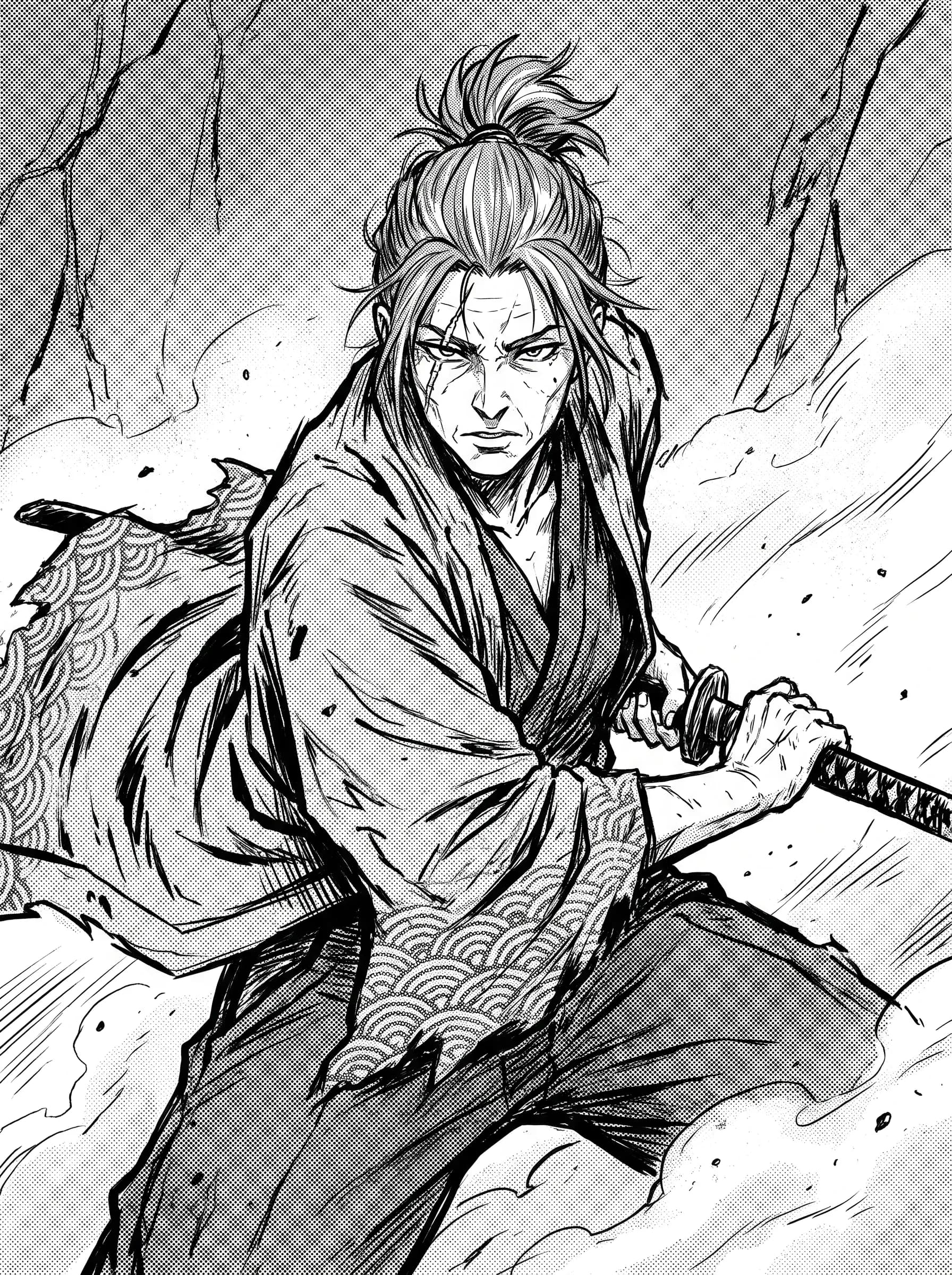
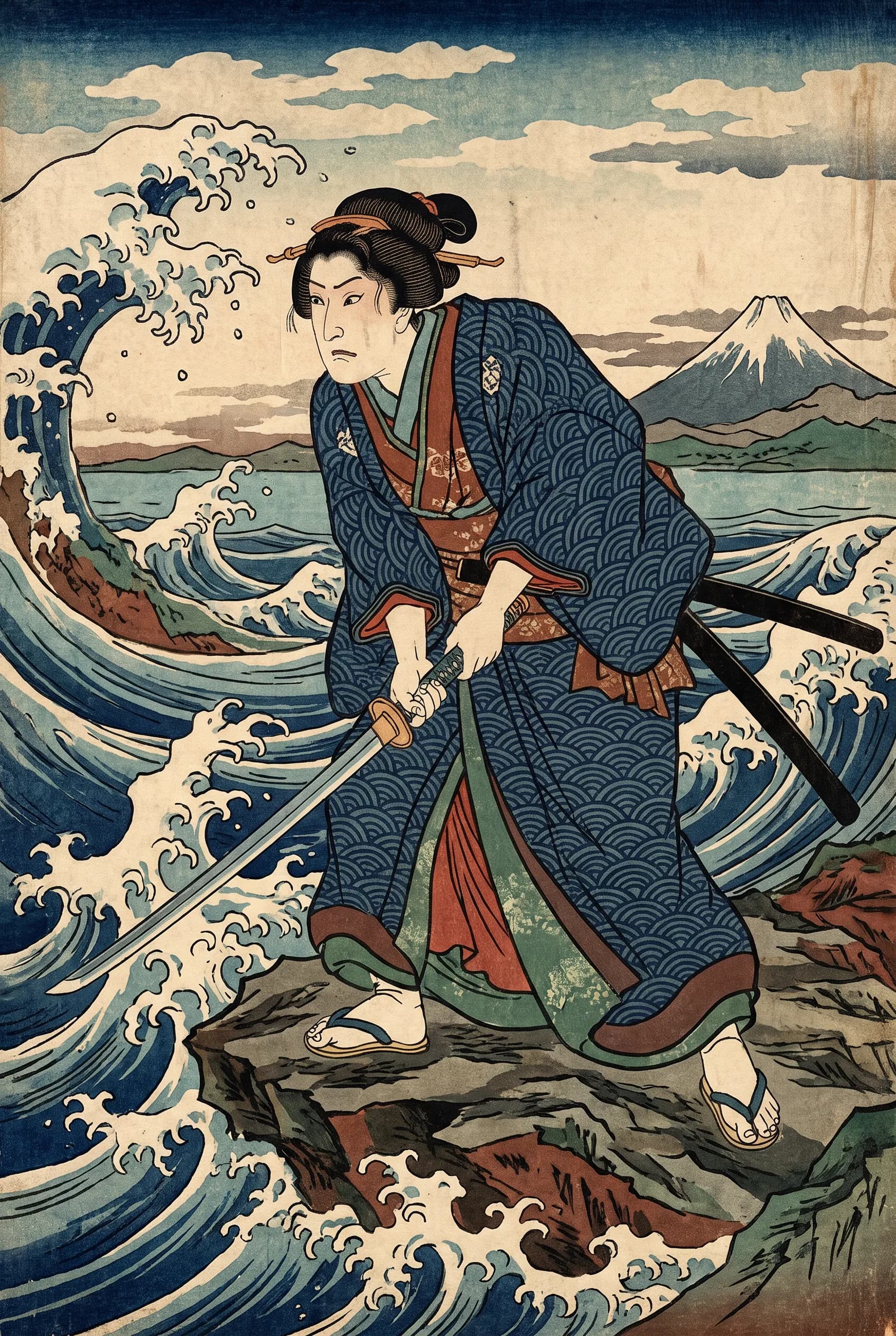
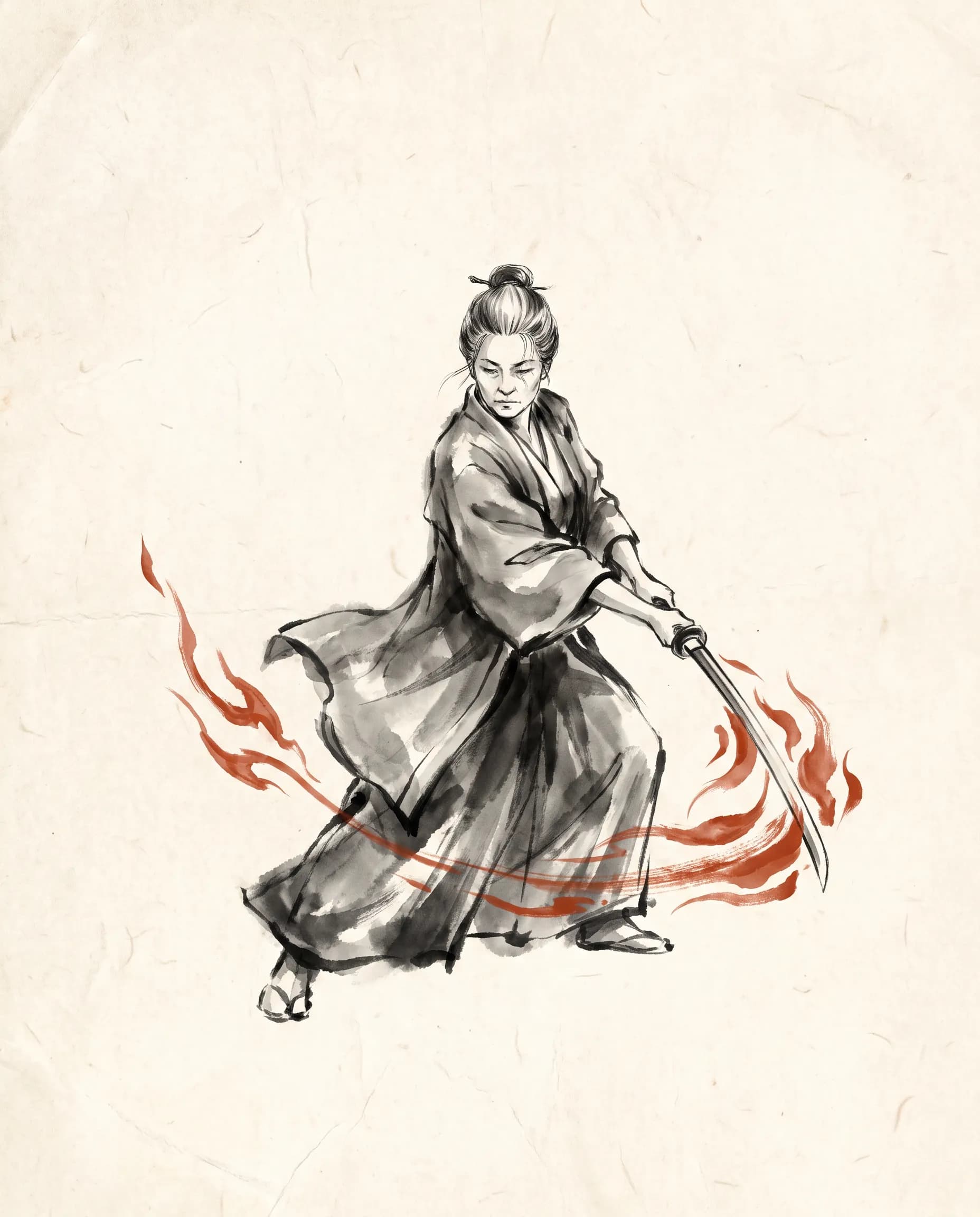
The eight images share one invented character, a forty-something swordswoman whose topknot is streaked with gray and whose indigo haori is printed with seigaiha waves. All of them were made in FLORA's AI image generator, and the caption under each gives its full prompt.
How to prompt for Demon Slayer art style
Start with the outline. Ufotable's director of photography, Yūichi Terao, has described a lot of trial and error over line thickness on the first episode, since a screen full of effects tends to wash linework out. Ask for thick, angular contours with thin broken strokes inside the folds, and the effect will have something solid to sit on.
Then dress the figure. A patterned haori does much of the identifying here. Avoid any pattern fans tie to a particular character. A traditional repeat like seigaiha waves or plum blossoms keeps the figure your own. Name one element next and give it a shape, like water curling into ukiyo-e waves or flame licking along the blade. Keep everything else muted in indigo, rust and charcoal so the effect is the brightest thing in the frame.
Three to start from
- Anime key frame. Anime key frame of a weathered swordswoman in her forties with a gray-streaked topknot, indigo haori printed with seigaiha waves over a rust hakama, mid-swing on a moonlit mountain road, white-capped water curling off her blade in ukiyo-e waves, thick angular outlines, Demon Slayer art style, no text
- Manga panel. Black and white shōnen manga panel of a swordswoman in her forties with a scar through one eyebrow and a gray-streaked topknot, jagged angular figure, heavy contour lines with broken strokes in the folds of her haori, seigaiha pattern in screentone, speed lines, no text
- Woodblock print. Ukiyo-e woodblock print of a middle-aged swordswoman in an indigo seigaiha haori braced on a rocky shore, stylized waves with clawed white crests breaking around her sword, flat Prussian blue and rust, carved key-block outlines, washi paper grain, no text
Fixes for common drift
The face can slip first, softening into round-cheeked generic anime, so the words angular and jagged are worth repeating near the end of a prompt. Effects can also swallow the figure, and giving the water or fire a direction, such as curling off the blade toward the viewer, tends to keep her readable. If a result starts to resemble someone from the series, change the hair and the pattern before anything else.
Where Demon Slayer art style works
Textiles are an easy win, because the patterns carry so much of the look. For your own product, generate a seigaiha or plum blossom repeat first. Then give that print and a product photo to Print/Pattern Replacement, which returns one product shot with the pattern in place.
Action sequences are the other strong fit, for animation pitches, game cinematics and trailers that need several beats of one fight. Upload a single key frame, such as the mid-swing shot above, to the Storyboard Maker and it returns nine storyboard frames that hold the same character and look.
Related styles
- The ukiyo-e prints behind the water effects sit among the Japanese art styles
- Gachiakuta art style, a grittier shōnen look covered in graffiti
- Comic art styles, where shōnen manga is one branch among many
- Moe art style, the soft, rounded end of anime drawing
FAQs
Is Demon Slayer CGI or hand drawn?
Both. Director Haruo Sotozaki has said the water techniques started as a question of how to move a ukiyo-e look in 3D. He worked it out with 3D director Kazuki Nishiwaki. The final effect blends that 3D with 2D keyframes and sakuga animation drawn on top.
What type of art is Demon Slayer?
It is shōnen manga art, and Gotouge has named JoJo's Bizarre Adventure, Naruto and Bleach as the series' three biggest influences. Che Gilson of Otaku USA found the drawing stiff in the first volume but wrote that the series "looks as if it were carved and printed from woodblocks."
Did Demon Slayer change art style?
The anime was made to stay close to the manga. Popverse says Ufotable held on to Gotouge's original style as closely as it could. Sotozaki also said the finished water scenes matched the picture he had formed reading the manga. The manga itself drew mixed early notices, and Rebecca Silverman of Anime News Network called volume one's art "unpolished and inconsistent."
What style of animation is Demon Slayer?
It is Japanese TV anime from studio Ufotable, directed by Haruo Sotozaki, with a first season of 26 episodes that aired between April and September 2019. The 2020 film Mugen Train became the highest-grossing Japanese film, a record the 2025 film Infinity Castle has since taken.



