
The Danganronpa Art Style for Original Characters
 FLORA
FLORA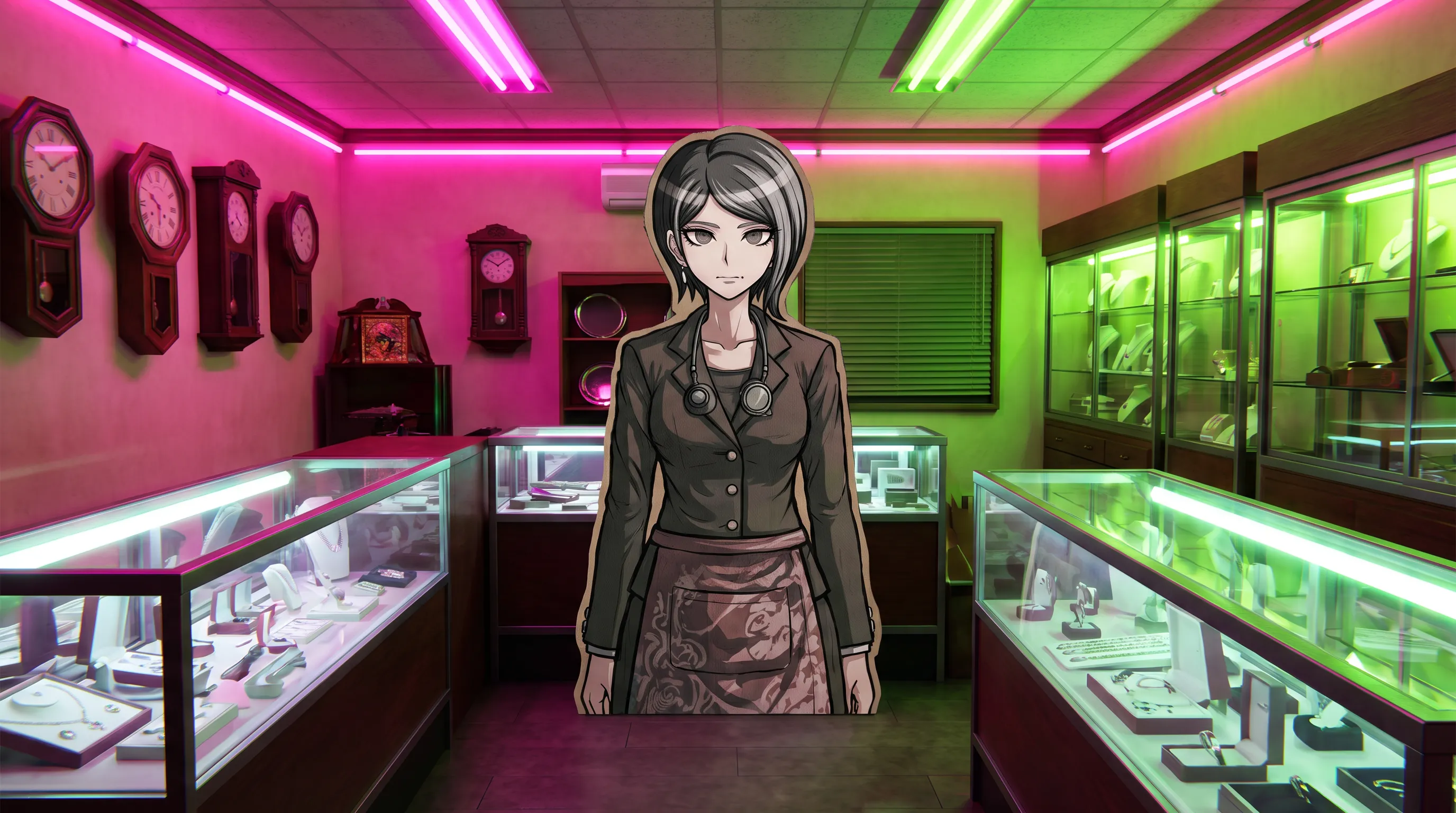
The Danganronpa art style is the look of Spike Chunsoft's murder-mystery game series, drawn from Rui Komatsuzaki's character designs since the first game reached PlayStation Portable in 2010. Creator Kazutaka Kodaka calls the mix psychopop, grim material with a bright pop-art twist, which is why the series' blood is hot pink. Faces pair big round irises and tiny pupils with a heavy lash line, a small nose that is sometimes just a dot, and a sharply pointed chin. Shadows fall in hard-edged shapes, clothes collect creases, and character colors stay muted against bright surroundings.
Danganronpa art style examples made in FLORA
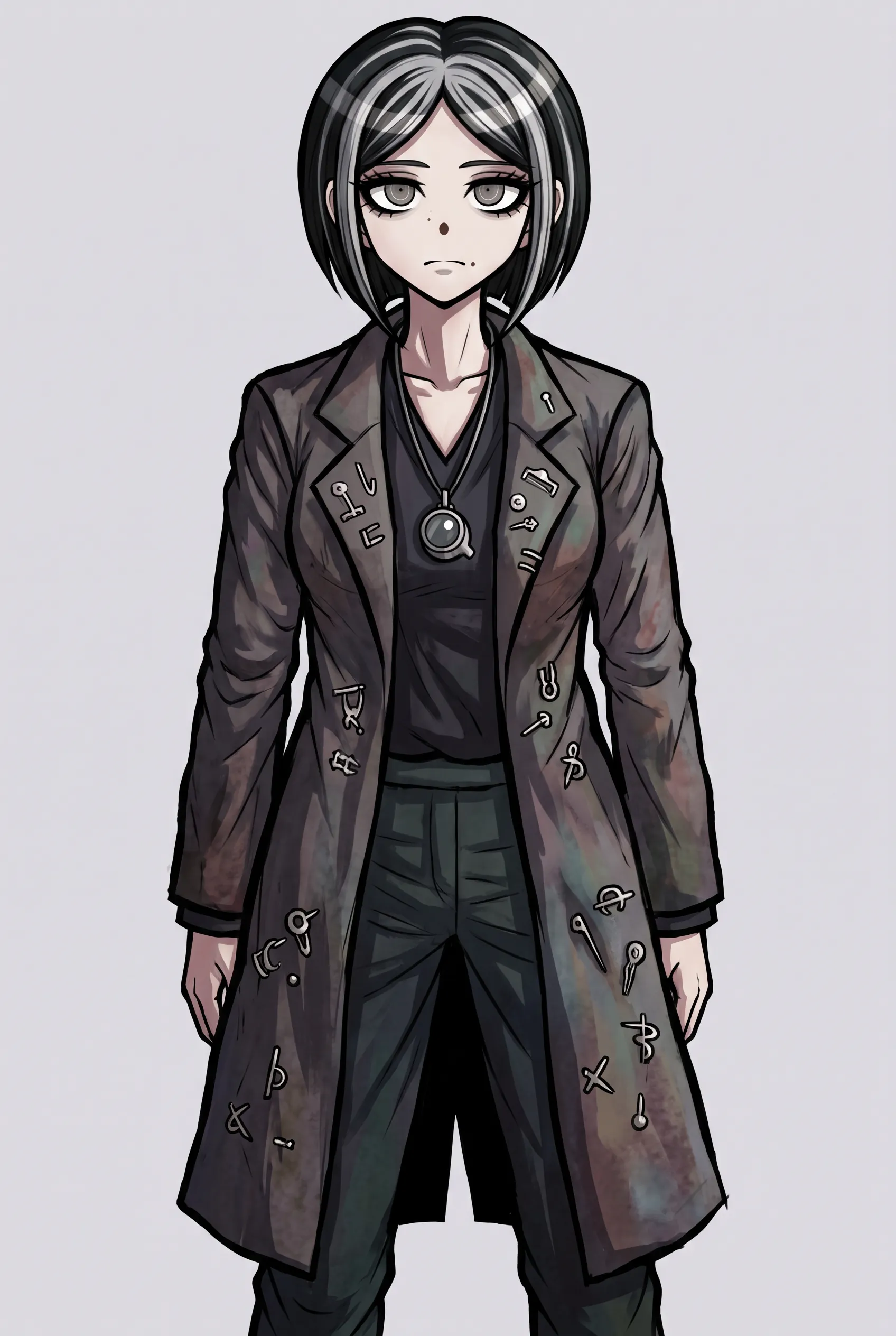
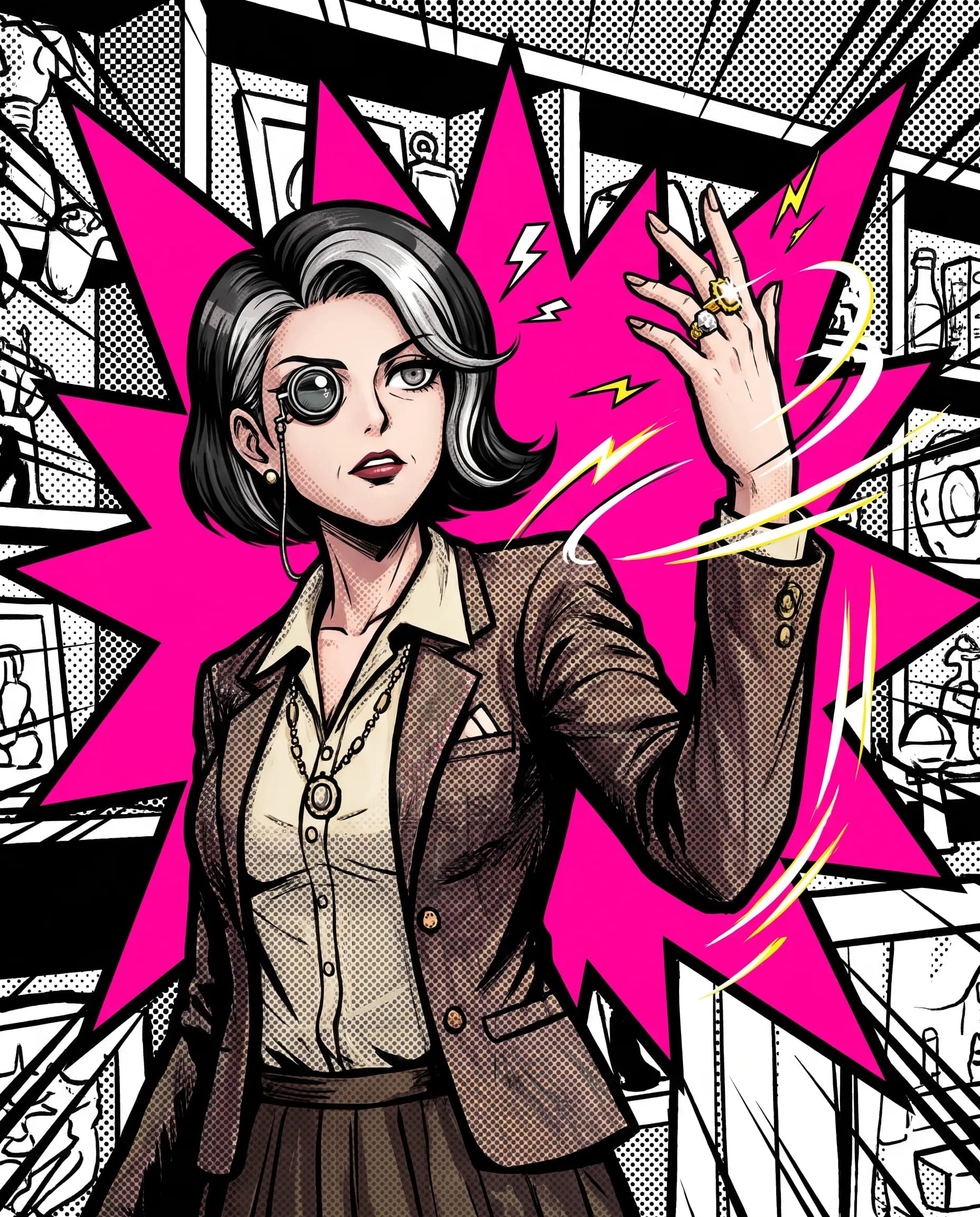
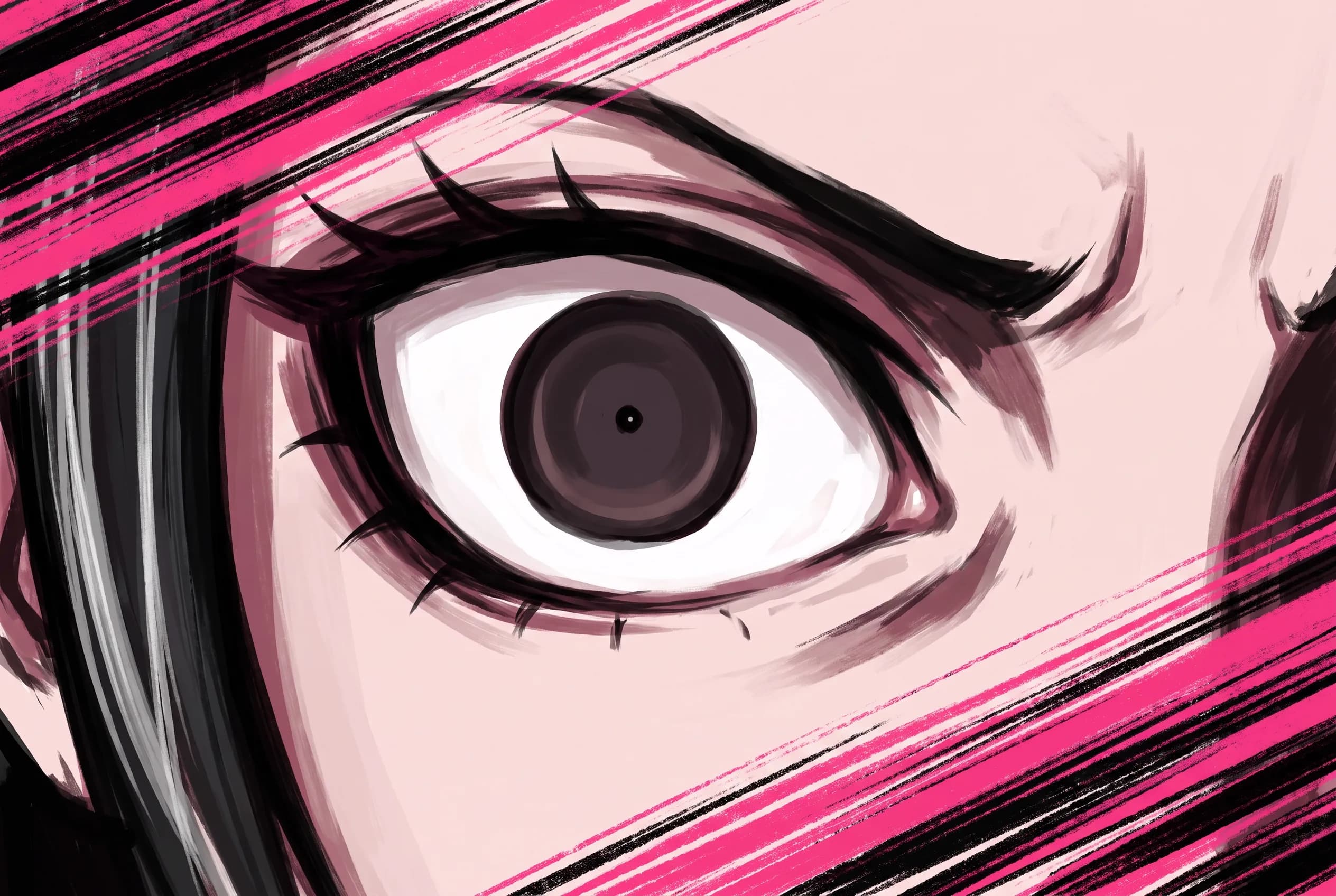
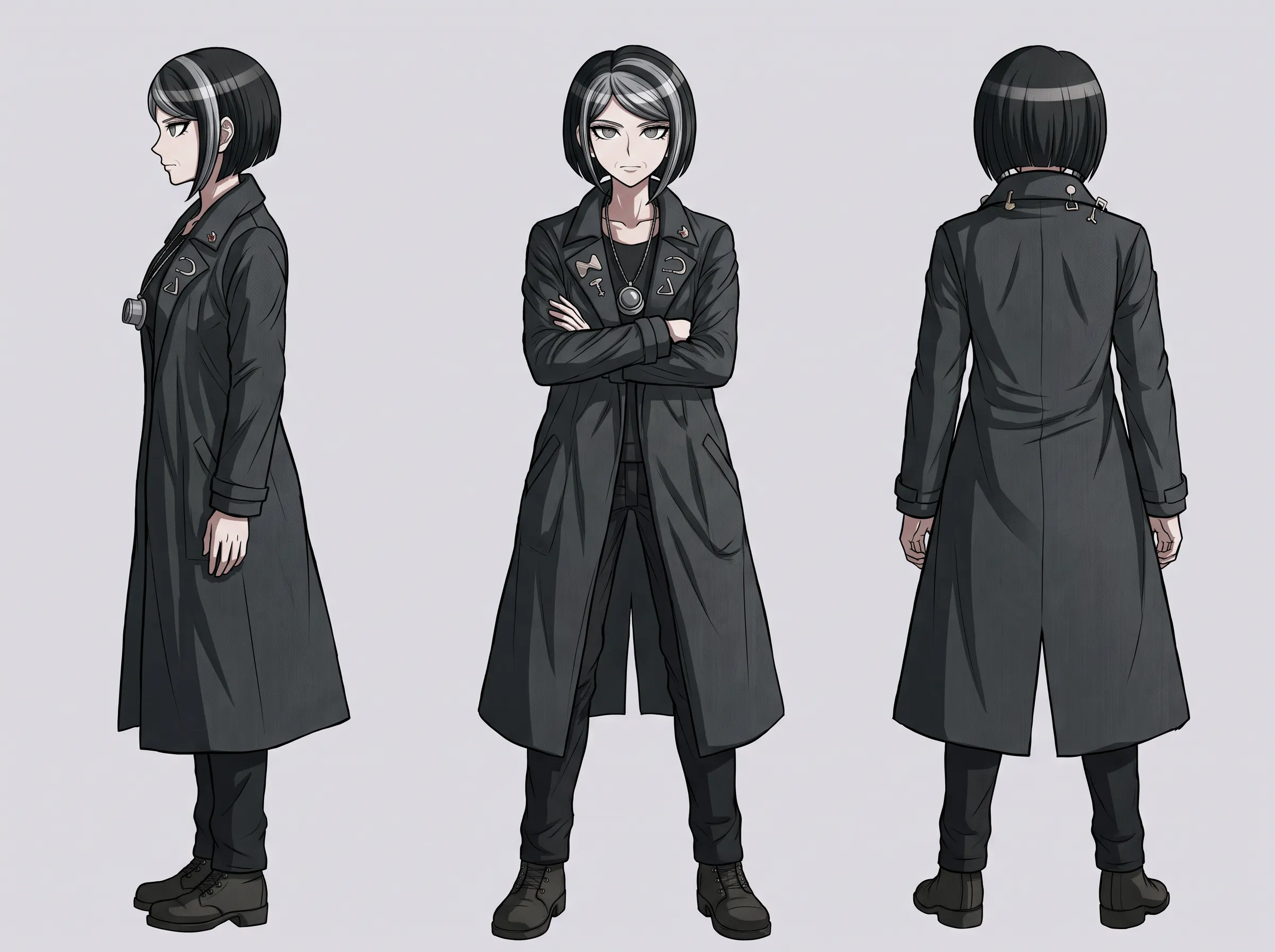
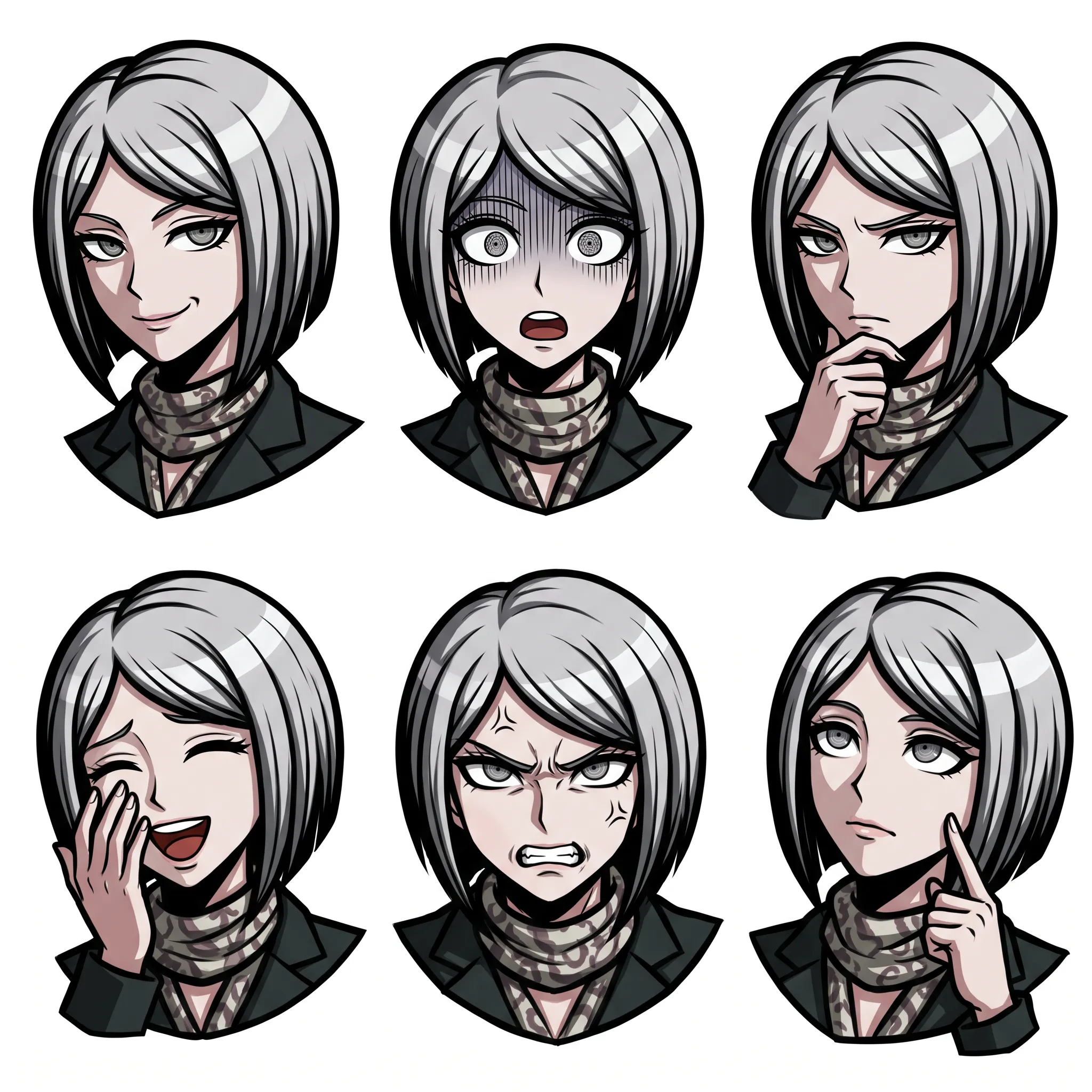
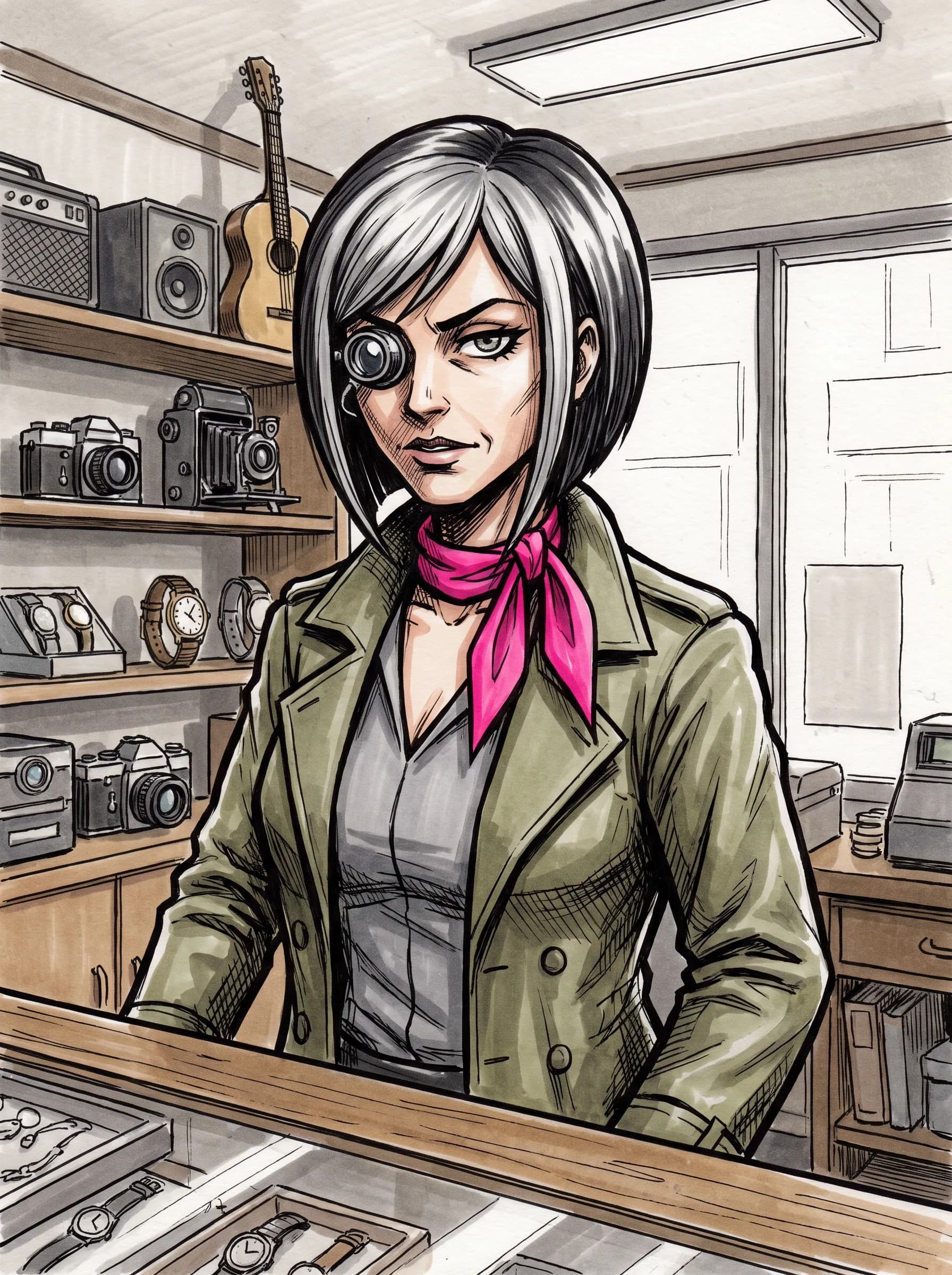
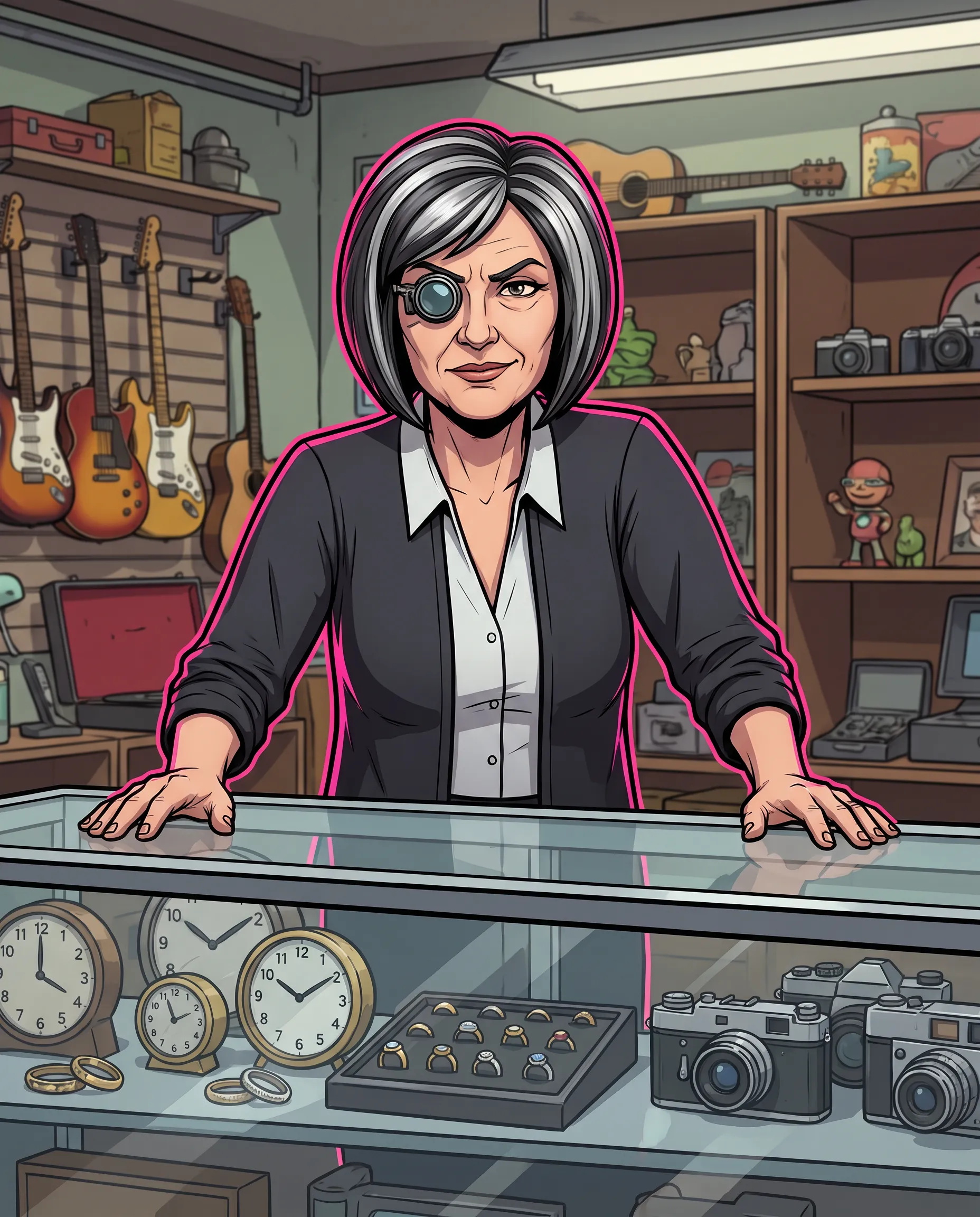
Our stand-in for a cast member is an original character, a pawnbroker in her forties with a silver-streaked black bob and a jeweler's loupe. She appears in eight formats below, including a standing sprite and a toon-shaded 3D render, all made in FLORA's AI image generator. Each caption is the exact prompt.
How to prompt for Danganronpa art style
Decide first between a lone sprite and a figure in a room. The first game placed flat 2D character art inside explorable 3D spaces, a technique billed as 2.5D Motion Graphics, and a prompt can ask for either. Then build the face, with big round irises, tiny pupils, a heavy lash line, a tiny nose and a pointed chin over a thin neck. Give the hair real volume, since thick hair often makes the top of the head half its height or more. Fan guides also mention icons and logos scattered over outfits, which abstract pins can stand in for.
The finish is painted. Shadow shapes stay hard-edged under black line work, yet the color inside them is blended by hand with an oil-paint feel. Keep the outfit in low-saturation colors and save the bright ones for a hot pink accent or a pop-art backdrop. Short flash strokes trailing a moving hand sell an action pose.
Three prompts to copy
- Character sprite. Danganronpa art style character sprite of a pawnbroker in her forties with a silver-streaked black bob and a jeweler's loupe, full body standing pose, big round irises with tiny pupils, heavy lash line, dot nose, pointed chin, long charcoal coat with many creases and small abstract pins, hard-edged shadows with painterly blending, black linework, plain pale gray background, no text
- 2.5D scene. Flat 2D painted figure of a pawnbroker in her forties with a silver-streaked black bob and a jeweler's loupe, standing like a cardboard cutout in a 3D-rendered pawnshop full of glass cases and wall clocks, Danganronpa art style, muted character colors, hot pink and acid green lighting, wide shot, no text
- Key art. Pop-art key art of a pawnbroker in her forties with a silver-streaked black bob and a jeweler's loupe, Danganronpa art style, dramatic low angle, one hand raised mid-gesture with short motion flash strokes, halftone dots and a hot pink starburst behind her, hard-edged shadows, black linework, no text
What tends to go wrong
Soft, rounded anime faces are the common drift, and repeating the pointed chin and tiny pupils pulls the face back. Saturated clothing can creep in too, so name muted colors for the outfit. Since the series is set among students, a model may also reach for a school uniform, so state an adult age and describe her own clothes, as the sprite prompt does.
Where Danganronpa art style works
Fan developers build whole visual novels in this look and call them fangans. For an original cast member, one written description is enough for the Character Creator, which returns turnaround views, an alt outfit, a name card and an idle loop, ready for a pitch before anyone paints a final sprite.
Visual novel characters often need several faces per conversation. Give the sticker pack generator one written character description and it returns eight die-cut stickers, a base pose, six expressions and a pack cover, a quick check on whether the design holds up when the face moves.
Related styles
- Pop art style, for the halftones and loud backdrops
- Japanese art styles, the anime lineage behind the faces
- Moe art style, a round-faced contrast to these sharp chins
- Character art styles, for original casts in other looks
- Demon Slayer art style, another bold-outlined anime look
FAQs
Who makes the art for Danganronpa?
Rui Komatsuzaki, the franchise's character designer and main concept artist. He graduated in sculpture before joining Spike, and Danganronpa was his first job designing characters. He later illustrated the Danganronpa Kirigiri novels, published from September 2013.
What art style is Danganronpa?
Kodaka calls it psychopop, and he gave USgamer a commercial reason for it in 2015. Horror sells to a narrow market in Japan, so the team added pop elements to reach more players, and a genre of its own meant no rivals to beat.
What does the name Danganronpa mean?
It translates roughly as "bullet refutation," which matches the trials, where players fire Truth Bullets of evidence at weak points in an argument. Komatsuzaki came up with the word. It was first written in kanji, then switched to katakana for the logo.
How to design a Danganronpa OC?
Keep the official sprites open as reference and paint over a gray base, which makes gaps and stray marks easy to spot. Post the result as a Danganronpa fan character, with credit to the original artist for the style, as fan tutorials request.



