
How the Semi Realistic Art Style Balances Real and Drawn
 FLORA
FLORA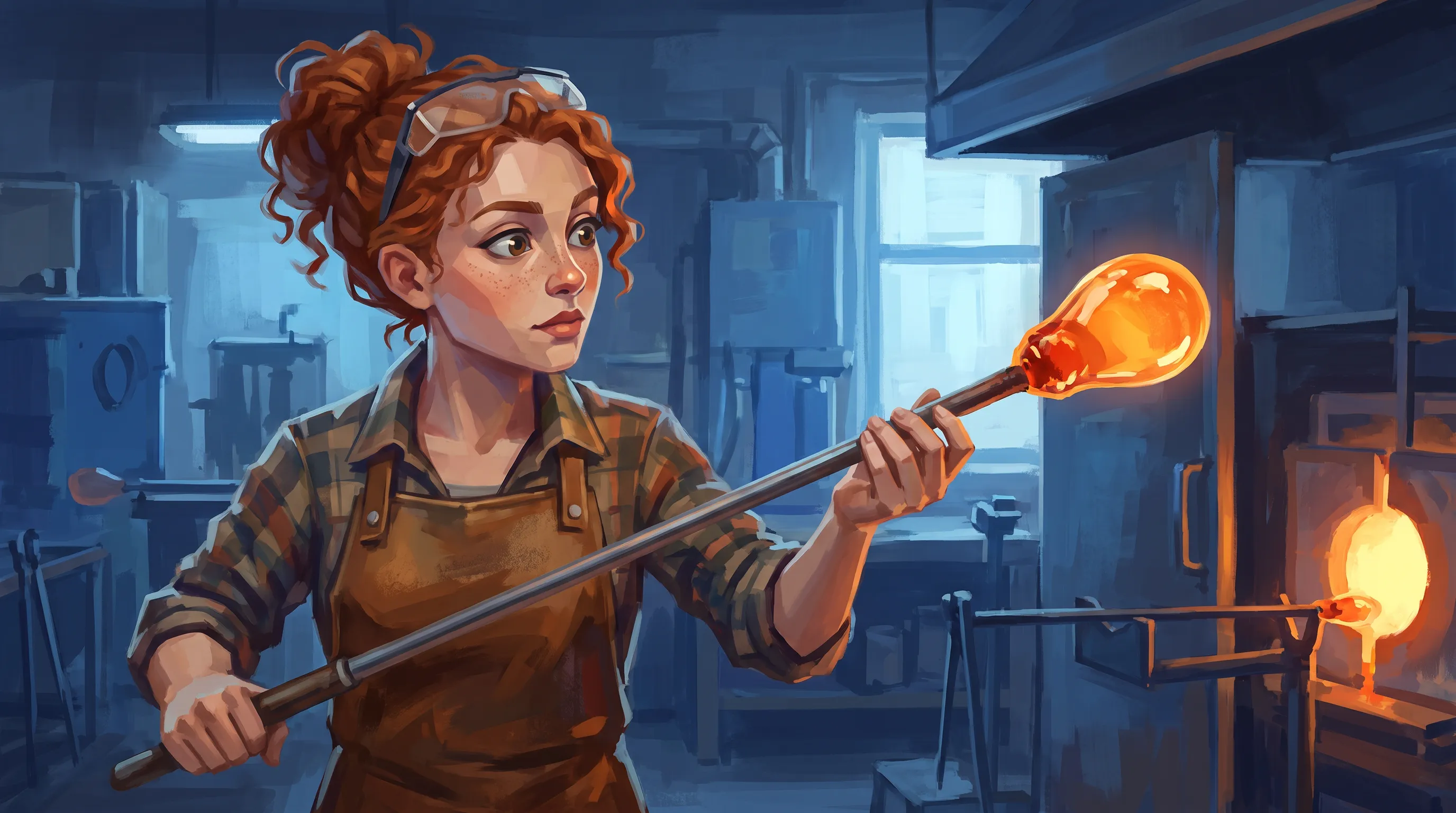
The semi realistic art style keeps the anatomy, proportions and light of a real person, then simplifies the shapes and pushes a feature or two. It sits between anime or cartoon drawing and full realism. The label comes out of online art communities, and searching it brings up Pinterest boards, a Reddit r/learnart thread asking what the look is called, DeviantArt journals and portrait blogs. Look for simplified planes across the face, eyes and forehead drawn a little larger than life, shading saved for a few spots such as the eyes and lips, and loose, flowing lines. FLORA's AI image generator made all eight examples below.
Semi realistic art style examples made in FLORA
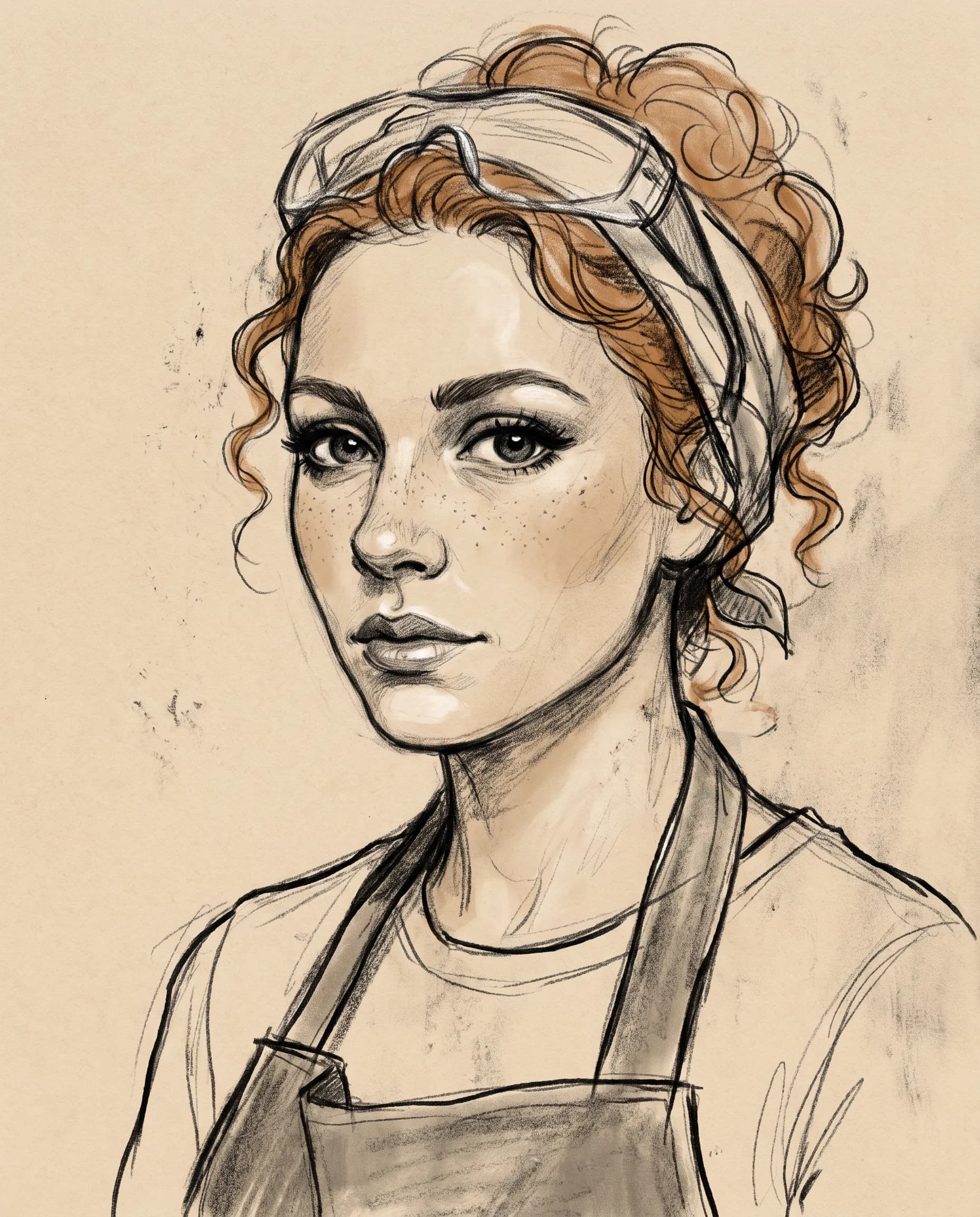
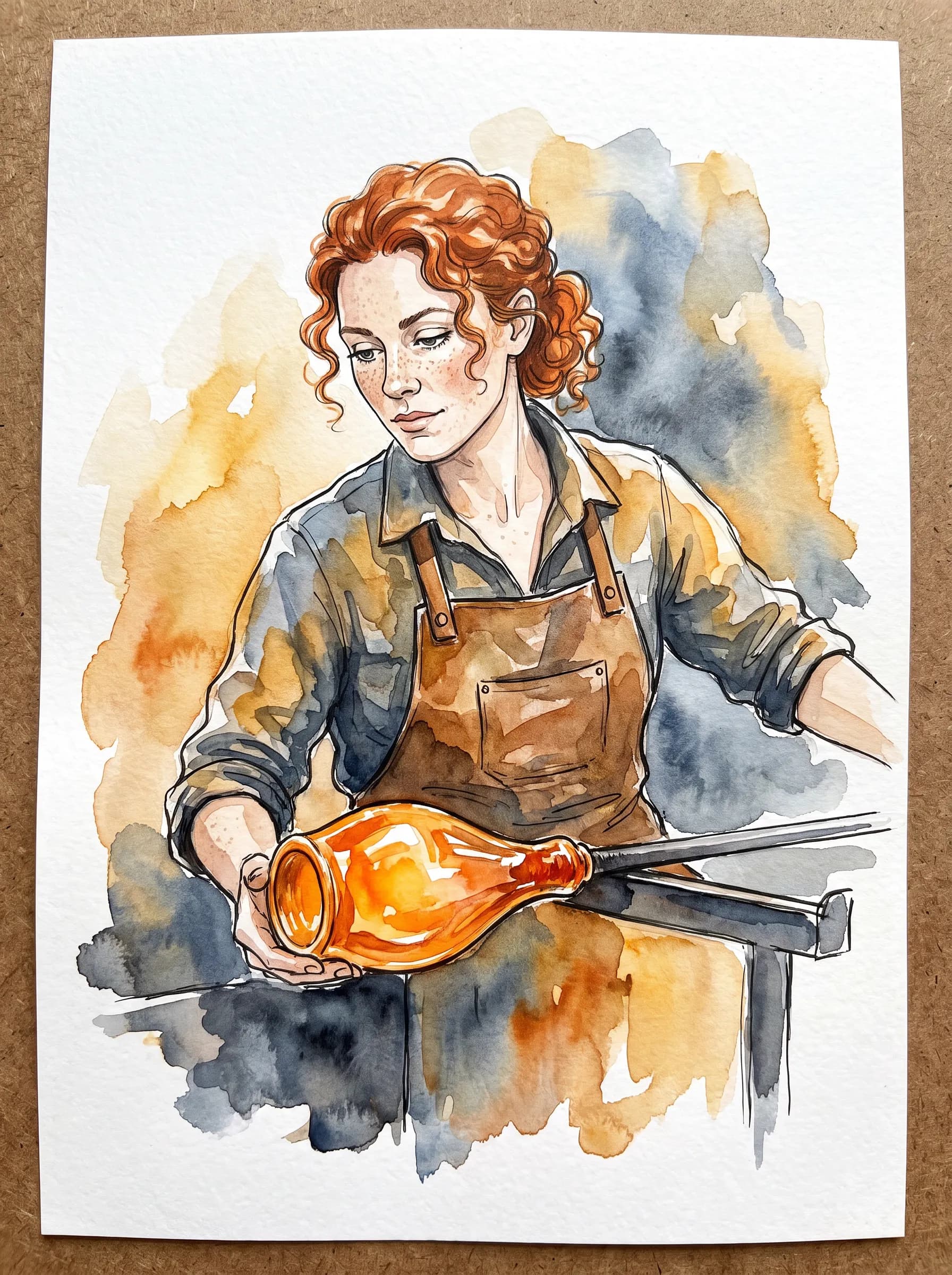
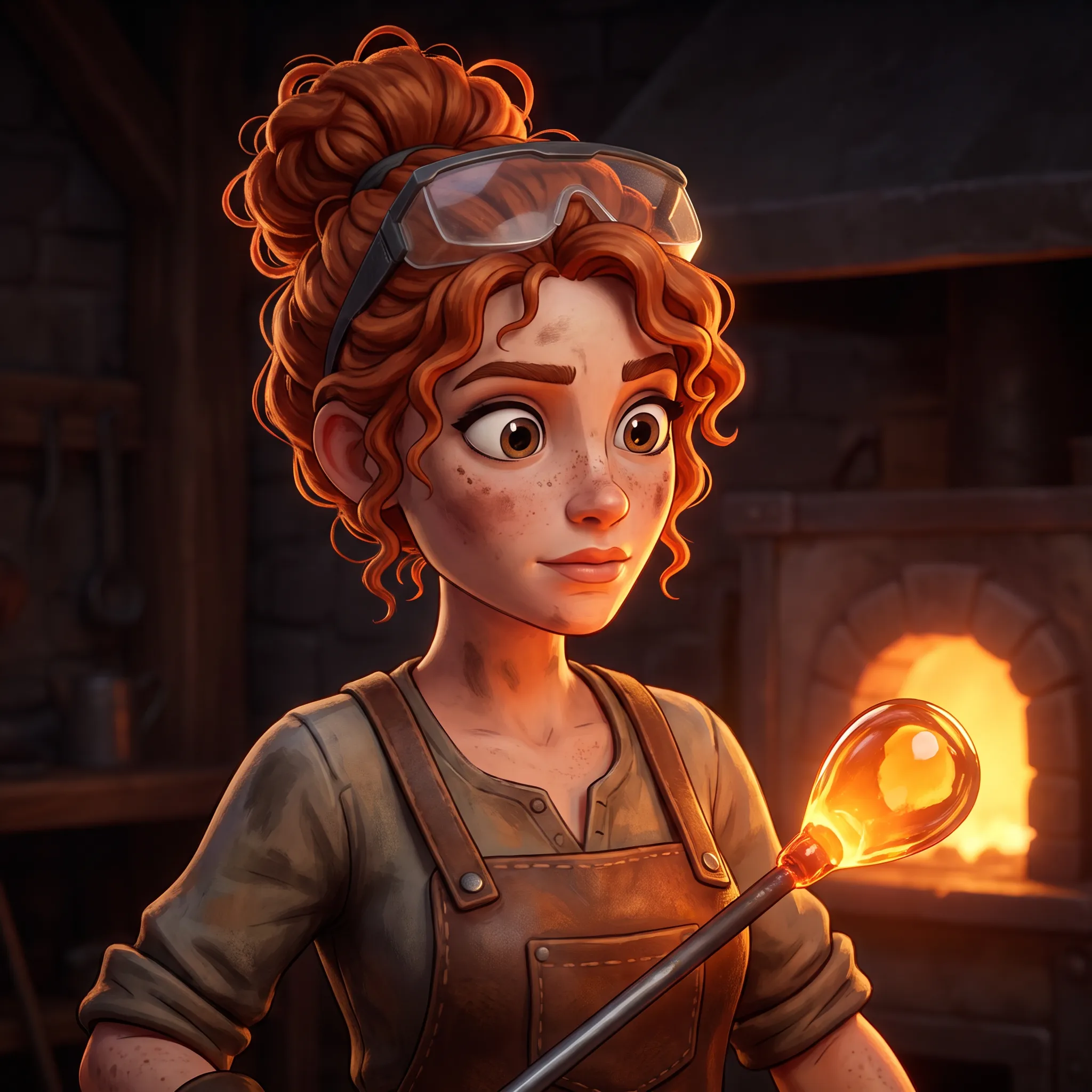
A furnace gives off one strong warm light, which suits a style built on a few well-placed shadows. Every frame shows the same invented glassblower in her late thirties, with copper curls tied back and freckles, and each caption is the prompt behind it.
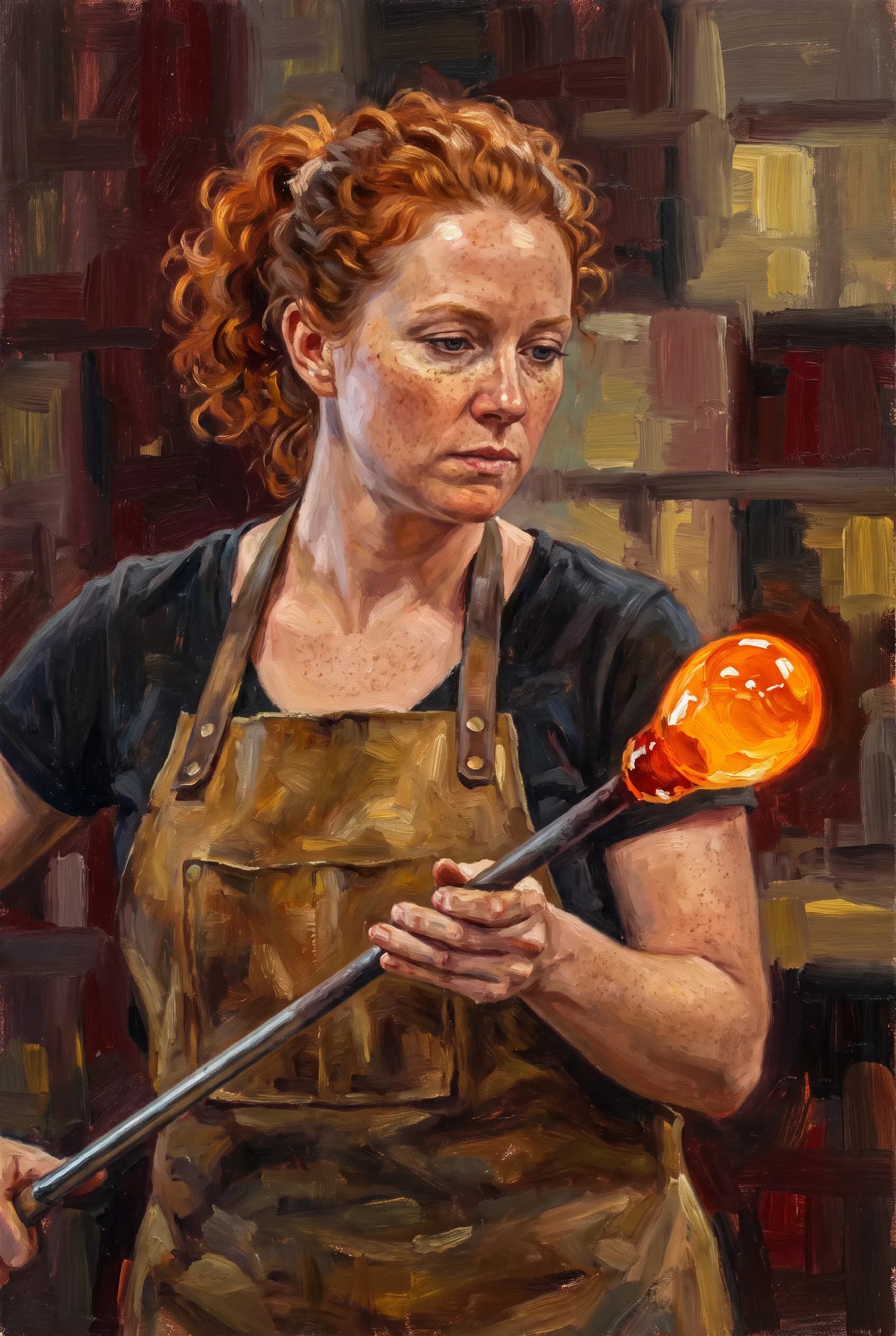
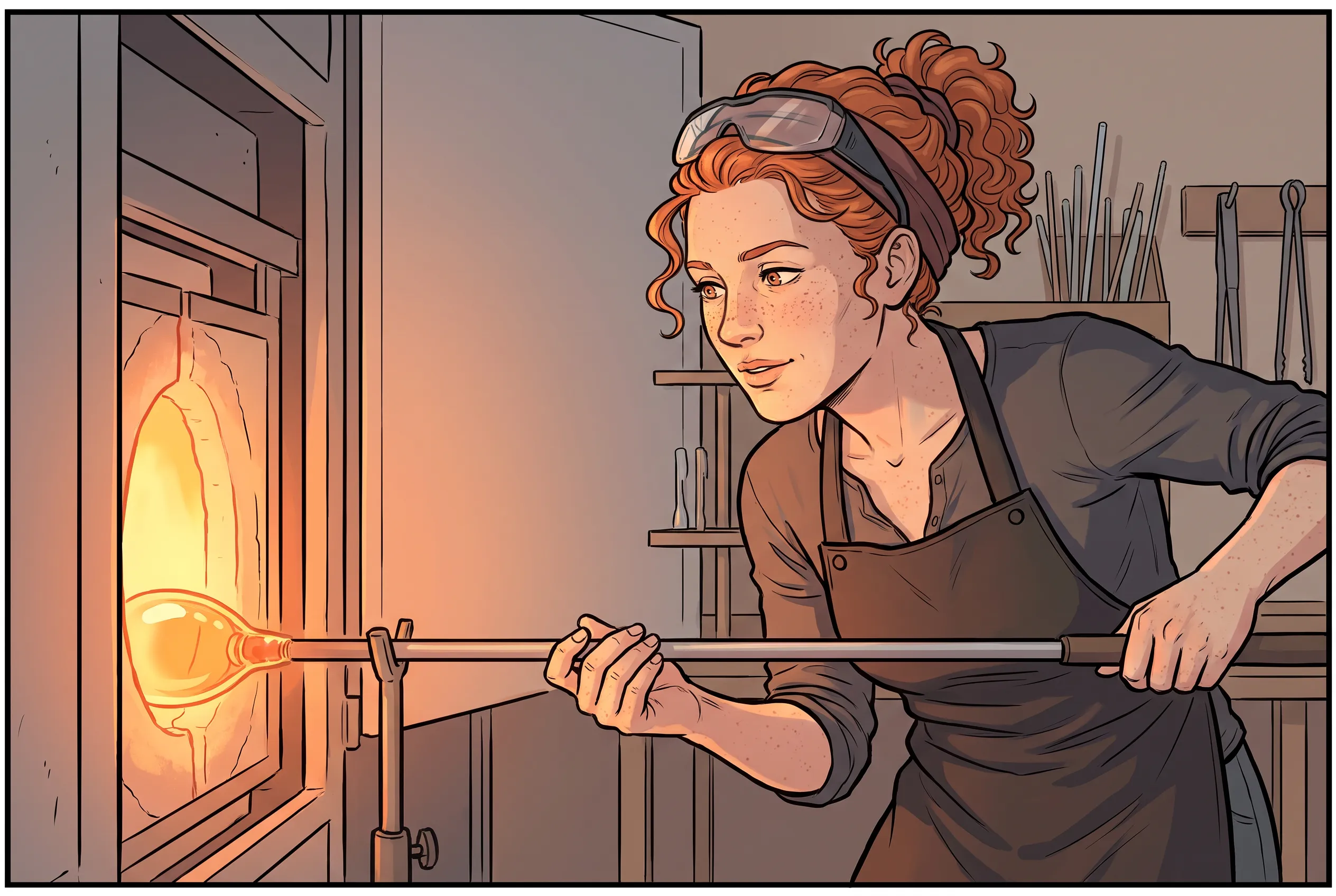
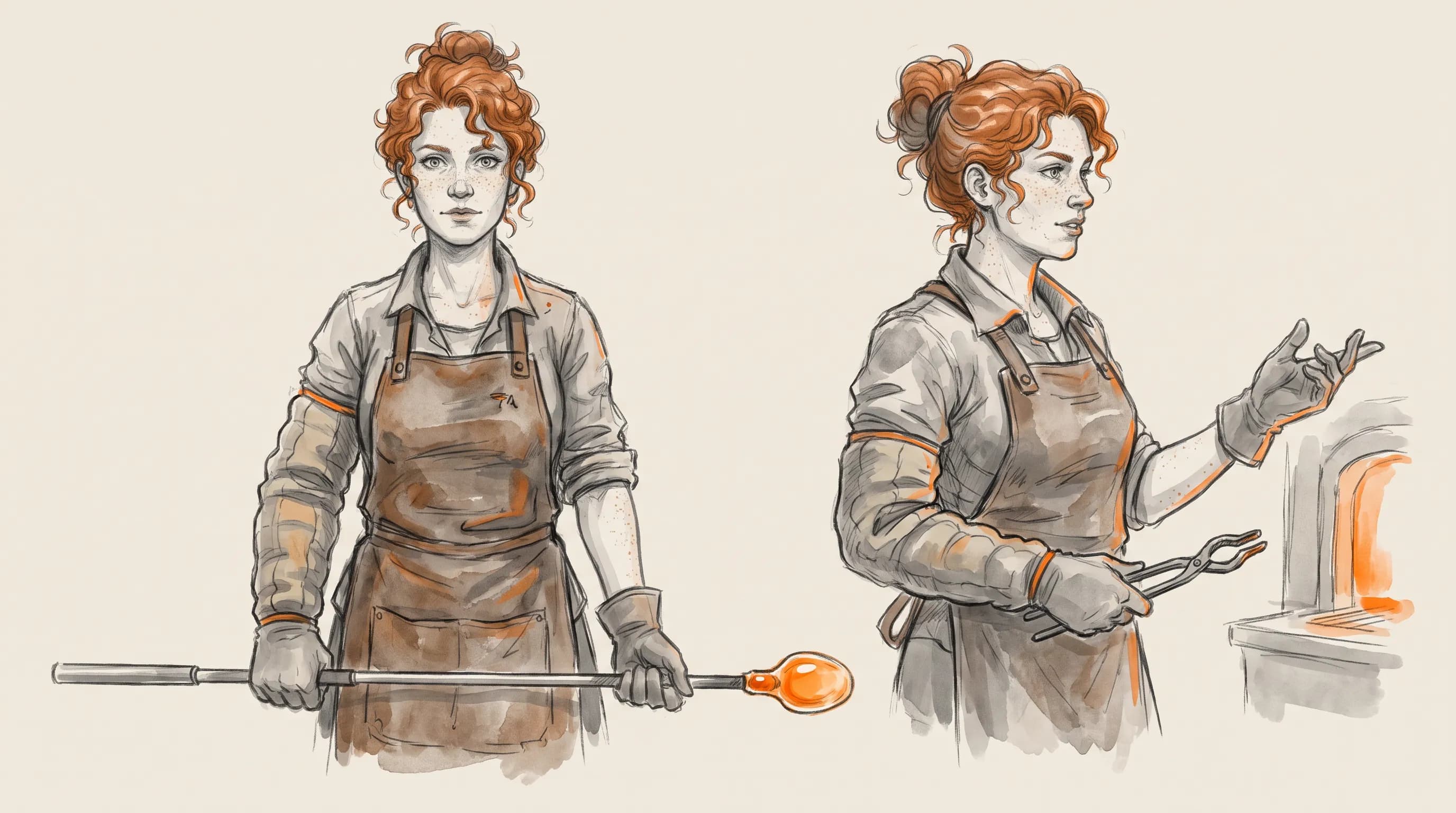
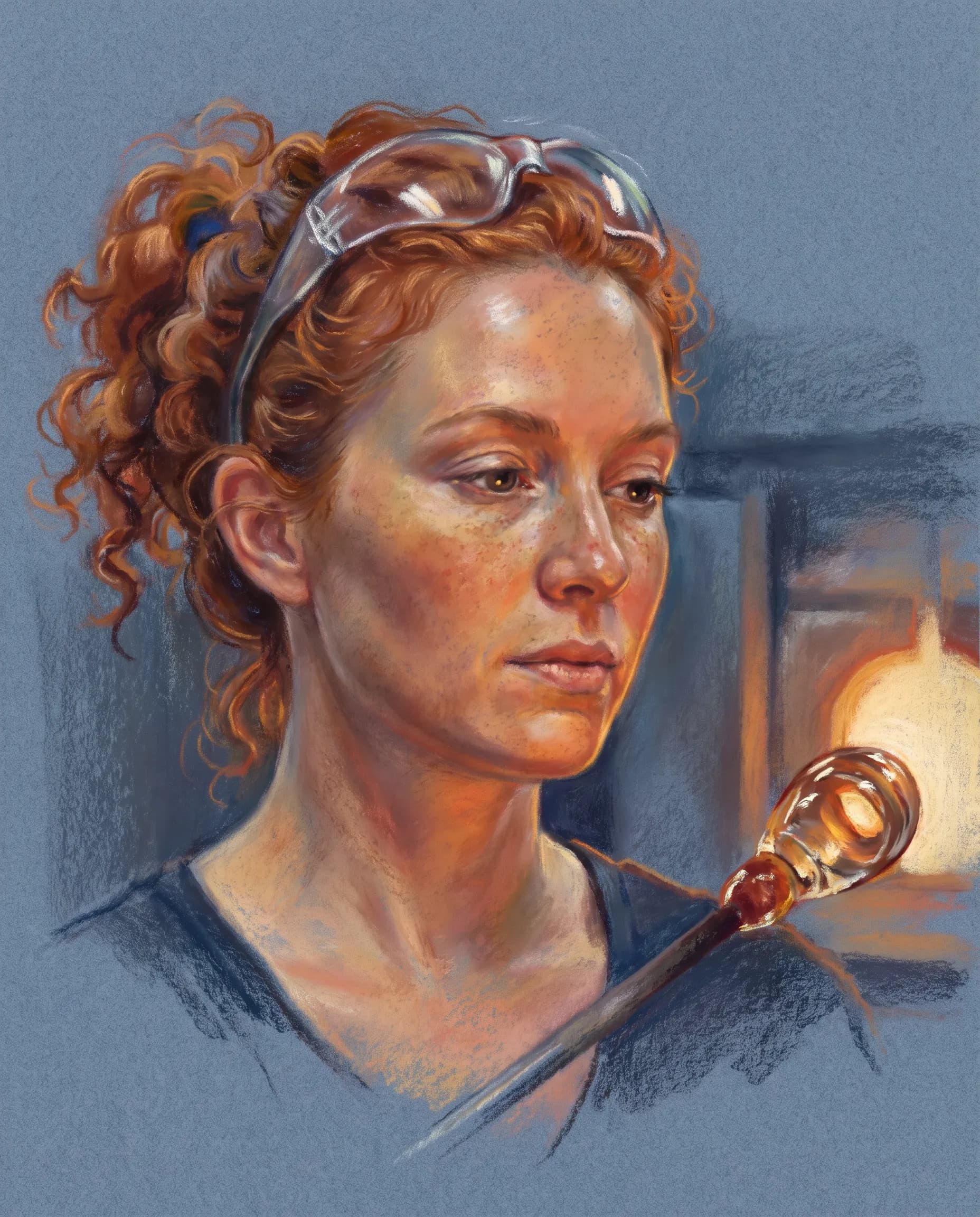
How to prompt for semi realistic art style
Describe the person the way you would for a realistic portrait, including age and what they are doing, then add the edits. Name the features to push, often the eyes and forehead by a small amount, and the details to drop, such as pores and fine wrinkles. Painterly edges and selective shading keep the surface from turning photographic. A single motivated light gives the simplified shadows a reason to sit where they do. Medium comes last, since the same face reads differently in graphite and in 3D.
Prompts for three media
- Digital painting. Semi realistic art style digital painting of a glassblower in her late thirties, copper-red curls tied back, freckles, safety glasses pushed up on her head, leather apron, turning a glowing gather of molten glass on a blowpipe, eyes slightly larger than life, simplified planes on the face, painterly edges, orange furnace light against a cool blue studio, no text
- Graphite portrait. Graphite and charcoal portrait of a glassblower in her late thirties, semi-realistic proportions, copper curls tied back, freckles, safety glasses pushed up on her head, shading kept to the eyes, lips and hairline, cheeks left as bare toned paper, loose flowing contour lines, no text
- 3D character. Stylized 3D character render of a glassblower in her late thirties, semi-realistic proportions with slightly enlarged eyes and smoothed skin planes, copper-red curls tied back, freckles, safety glasses on her head, hand-painted textures, warm rim light from a furnace, dark studio background, no text
When the balance slips
Output often slides toward one end of the scale. Visible pores, every lash and a crisp catchlight mean the image went photographic, and asking for painterly edges and fewer details pulls it back. Huge eyes over a tiny nose mean it slid toward anime, so set the eyes to slightly larger than life and ask for a realistic nose and mouth. Semi-real faces in 3D can also look waxy, and hand-painted textures with some variation in skin tone often help.
Where semi realistic art style works
Book covers and editorial portraits suit the style, because the face stays believable while the brushwork shows an illustrator's hand. When a series of covers has to share a palette, Image Recolor recolors each portrait to match a color reference or palette while the shapes, texture and lighting stay as they were.
For a game or animation pitch, one semi-realistic frame of a character can grow into a sequence, since the Storyboard Maker takes a single image and returns nine storyboard frames that keep the same character and lighting as the camera moves.
Related styles
- Eye art styles, the semi-real eye next to anime and cartoon versions
- Character art styles, more looks for original characters
- Painting art styles, the traditions behind the painterly edge
- Comic art styles, where believable anatomy meets ink and flat color
- 3D art styles, stylized renders between toon and photoreal
FAQs
What does "semi-realistic" mean?
It means partly realistic, with a structure that would pass for a real person and a surface that has been simplified or exaggerated on purpose. The word is loose. One DeviantArt essay on realism and idealism calls semi-realism non-descriptive because it stretches across so many looks, and argues that much of what gets the label, fan art especially, is closer to idealism.
What are the differences between realistic and semi-realistic art?
Realistic work tries to show a subject as it looks, while semi-realistic work keeps that structure and edits the surface. Realism is also the name of a movement. Tate credits the French novelist Champfleury with coining the term in the 1840s and names his friend Gustave Courbet as its example in painting, and photorealism, which appeared in Europe and the USA in the late 1960s, went further still by aiming for pictures that looked like photographs.
What is semi realistic art style?
It is a way of drawing and painting people that starts from correct anatomy and then simplifies and exaggerates on purpose, so the result reads as more real than caricature or animation art. If you are learning it by hand, get comfortable with average head proportions and with construction methods such as the Loomis method and the Reilly abstraction first, because simplifying only works on a sound structure.



