
Mexican Art Styles, Traced Through Eight Traditions
 FLORA
FLORA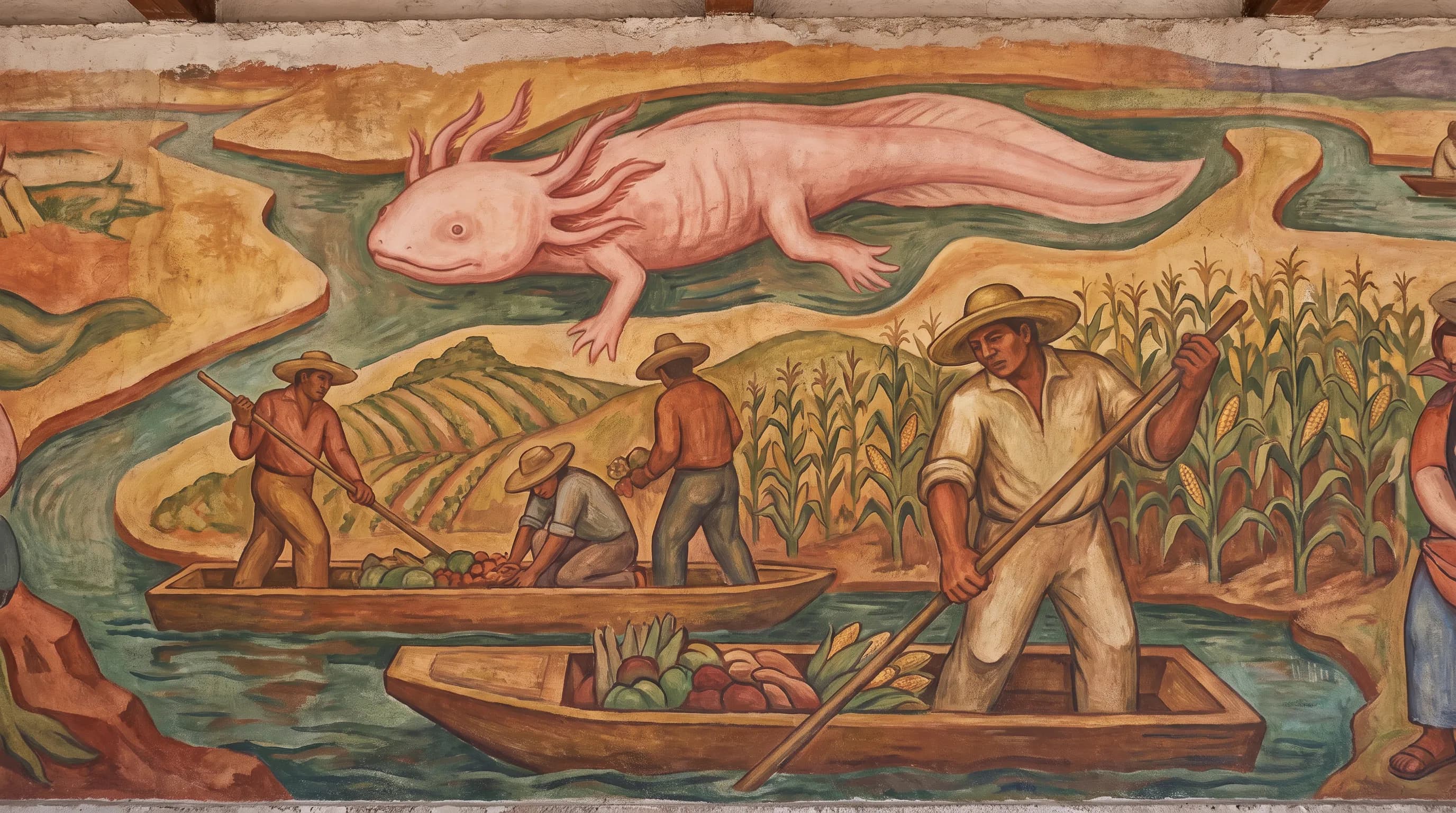
Mexican art styles cover more than three thousand years of making. The Olmec, Maya, Teotihuacán, Toltec and Aztec ruled the region before the Spanish conquest of 1521, colonial rule brought glazes and tin, and in 1921, after the revolution, the new secretary of education invited artists to paint the bare walls of government buildings. Across those periods a few traits keep returning. Color is saturated and often set against black clay or rough plaster. Pattern spreads over every surface, plants and animals are constant subjects, and skeletons turn up both as satire and as celebration.
Mexican art styles examples made in FLORA
An axolotl, pink and frilled, sits for all eight pictures. Each tradition handles it differently, and every image here came from the FLORA AI image generator. Read any caption for the prompt that shaped that piece.
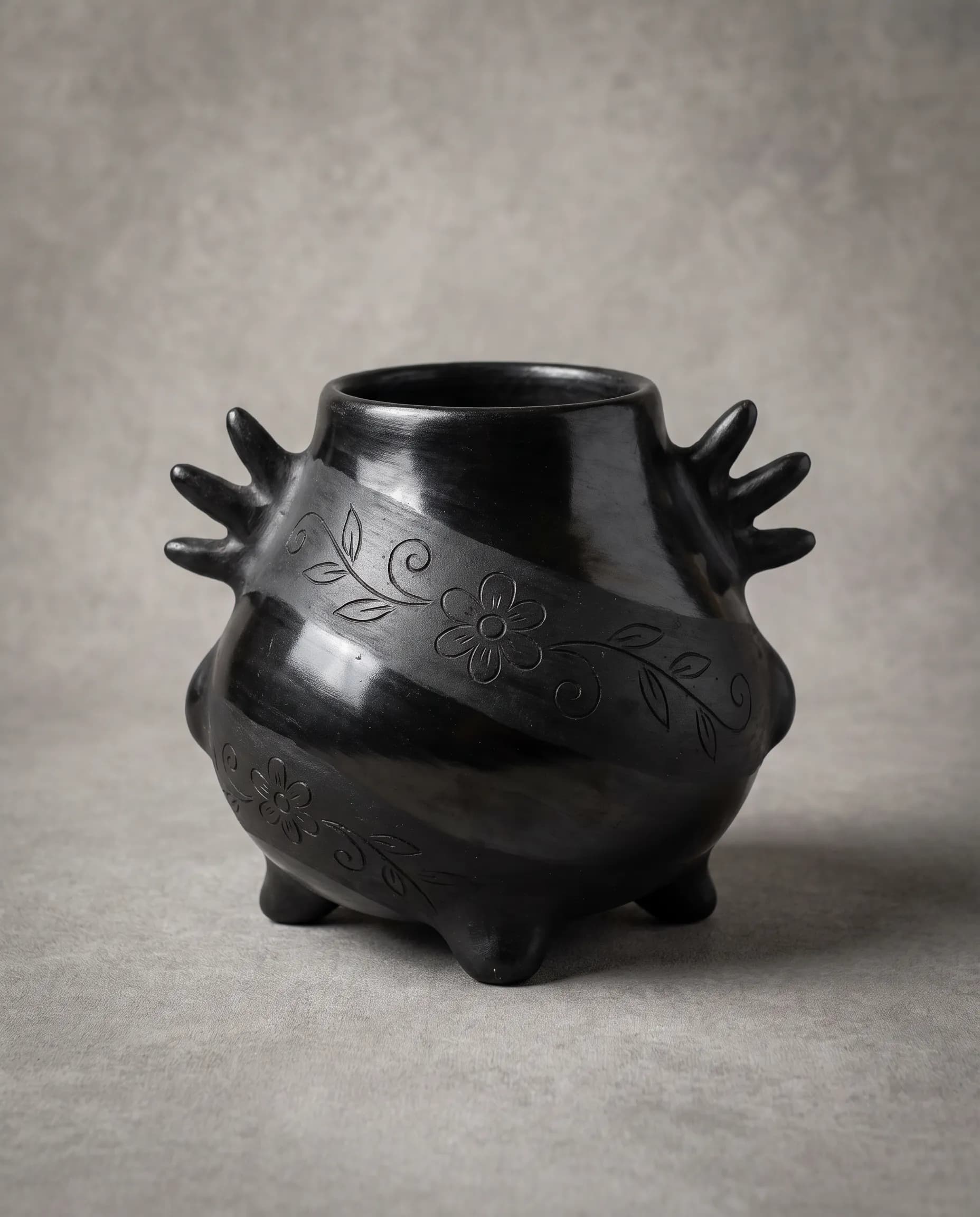
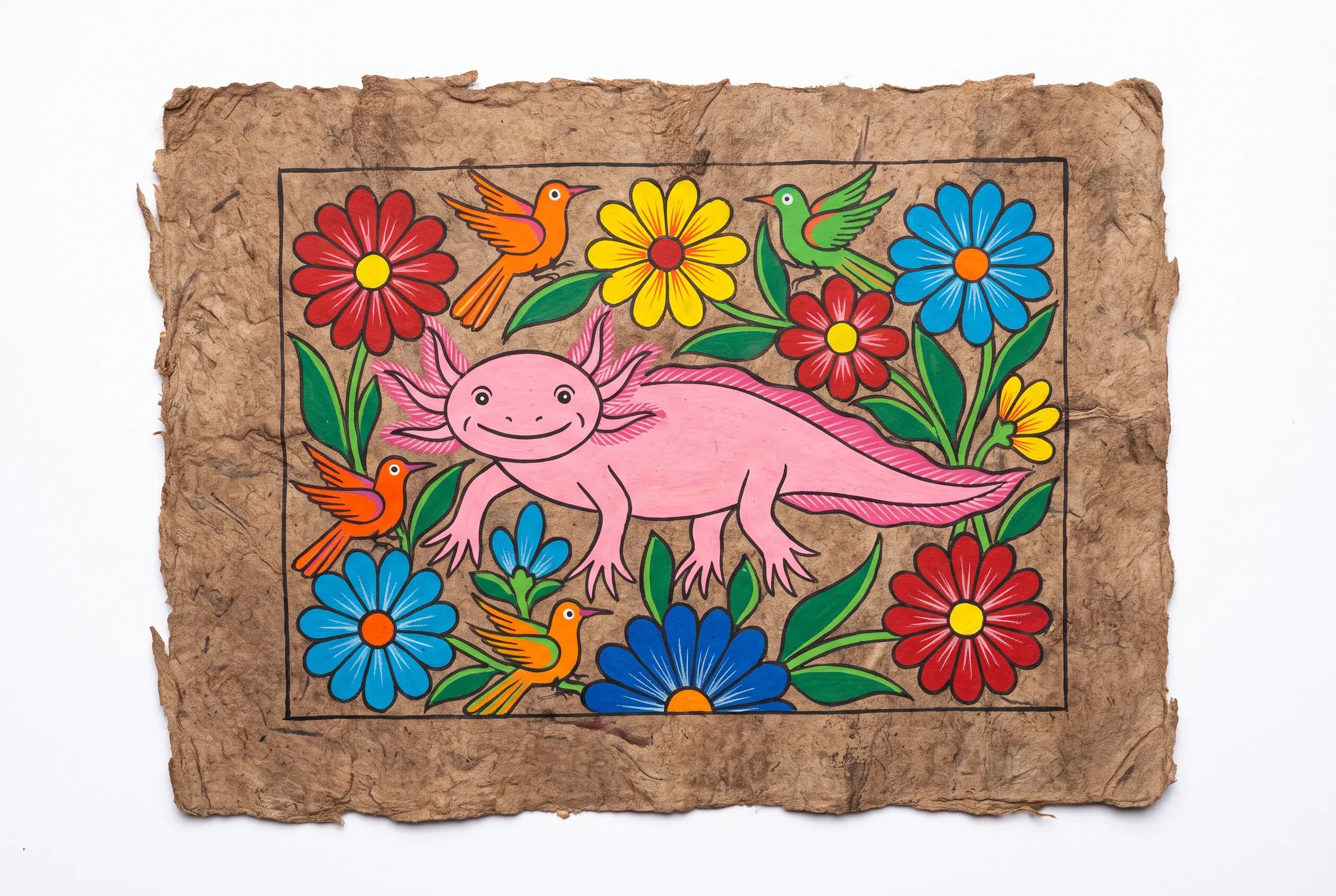
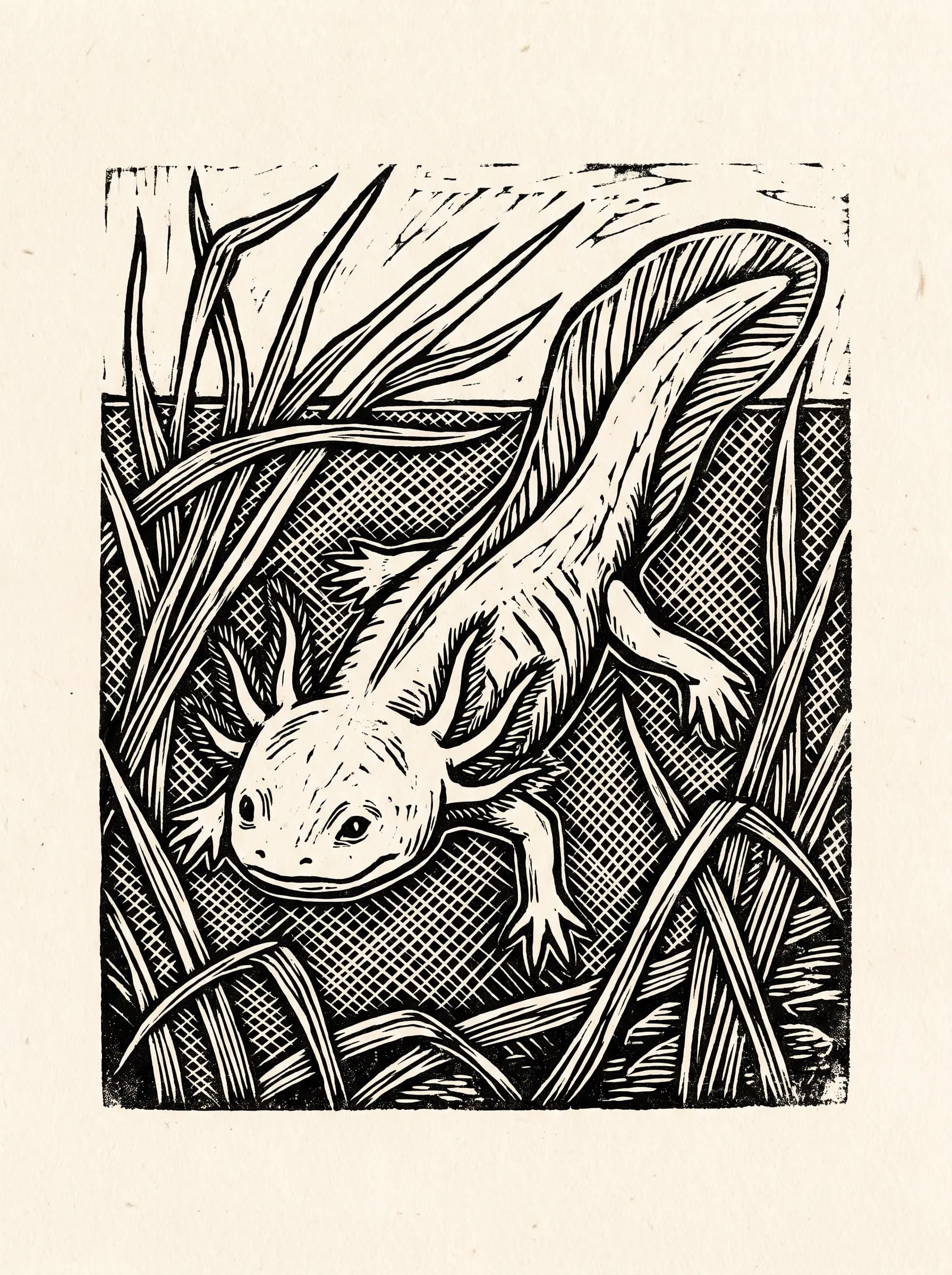
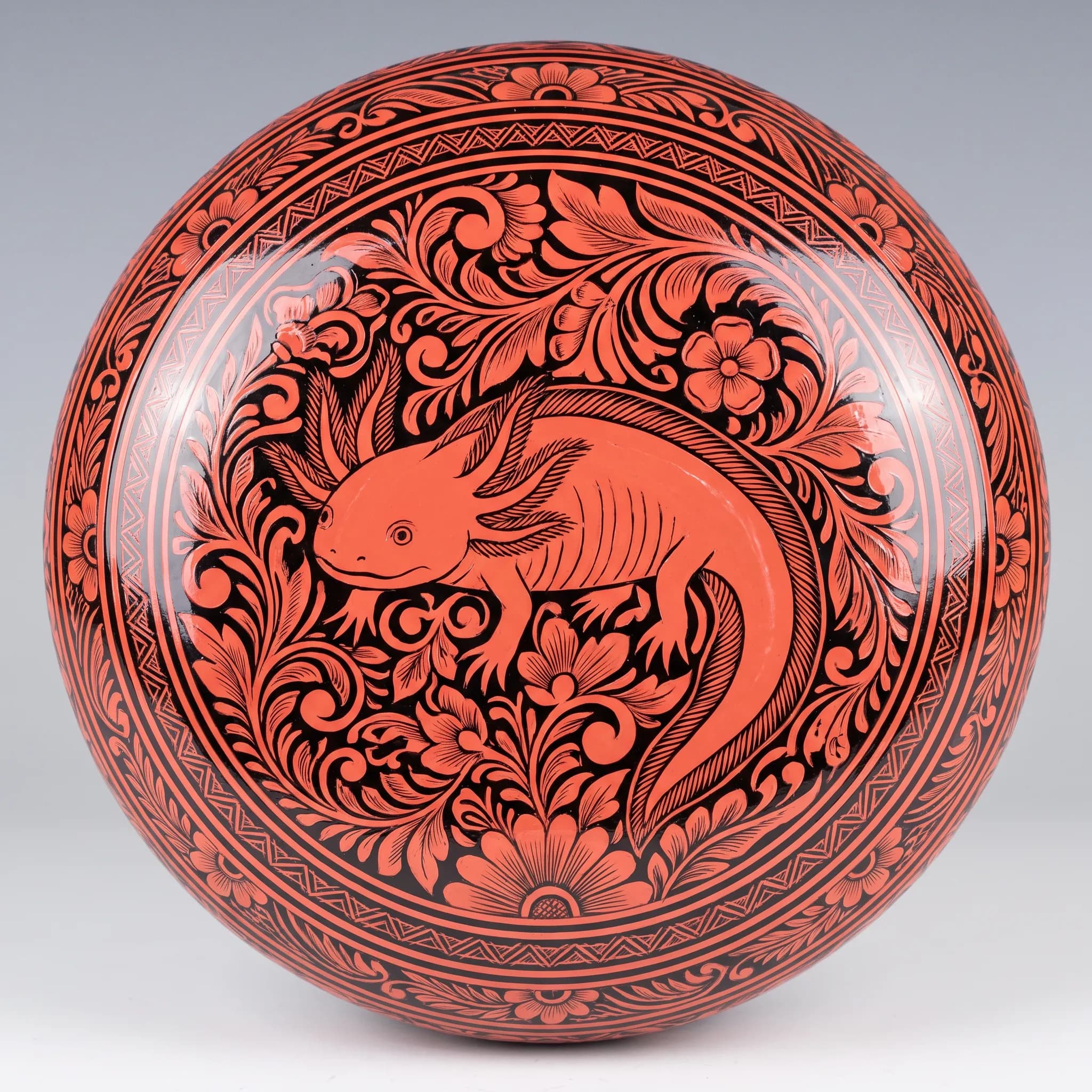
How to prompt for Mexican art styles
Open with the tradition's name and, when it has one, its town or state. In Mexico a craft is often tied to a place, which tells a model the material. Oaxacan copal carving implies soft copal wood, sanded smooth and painted by hand in bright colors. San Bartolo Coyotepec, famous for its blackware since the 1950s, turns pots black by starving the kiln of oxygen, and potters stone-polish parts of each pot before firing so the design shows where it was rubbed. Put the subject after the tradition, then the palette, and keep the light even.
Diego Rivera painted his walls in buon fresco, straight into fresh plaster, while David Alfaro Siqueiros sprayed commercial pyroxylin paint with air guns, and each term gives a prompt a different surface. For prints, the Taller de Gráfica Popular, founded in Mexico City in 1937, worked in woodcut and lithography after the example of José Guadalupe Posada.
Three traditions, three prompts
- Muralist fresco. Buon fresco on fresh plaster in the manner of the 1920s Mexican muralists, a giant pink axolotl gliding through canals as farmers pole flat-bottomed boats past fields of corn, simplified monumental figures, earthy ochre, terracotta and deep green, wide wall composition, no text
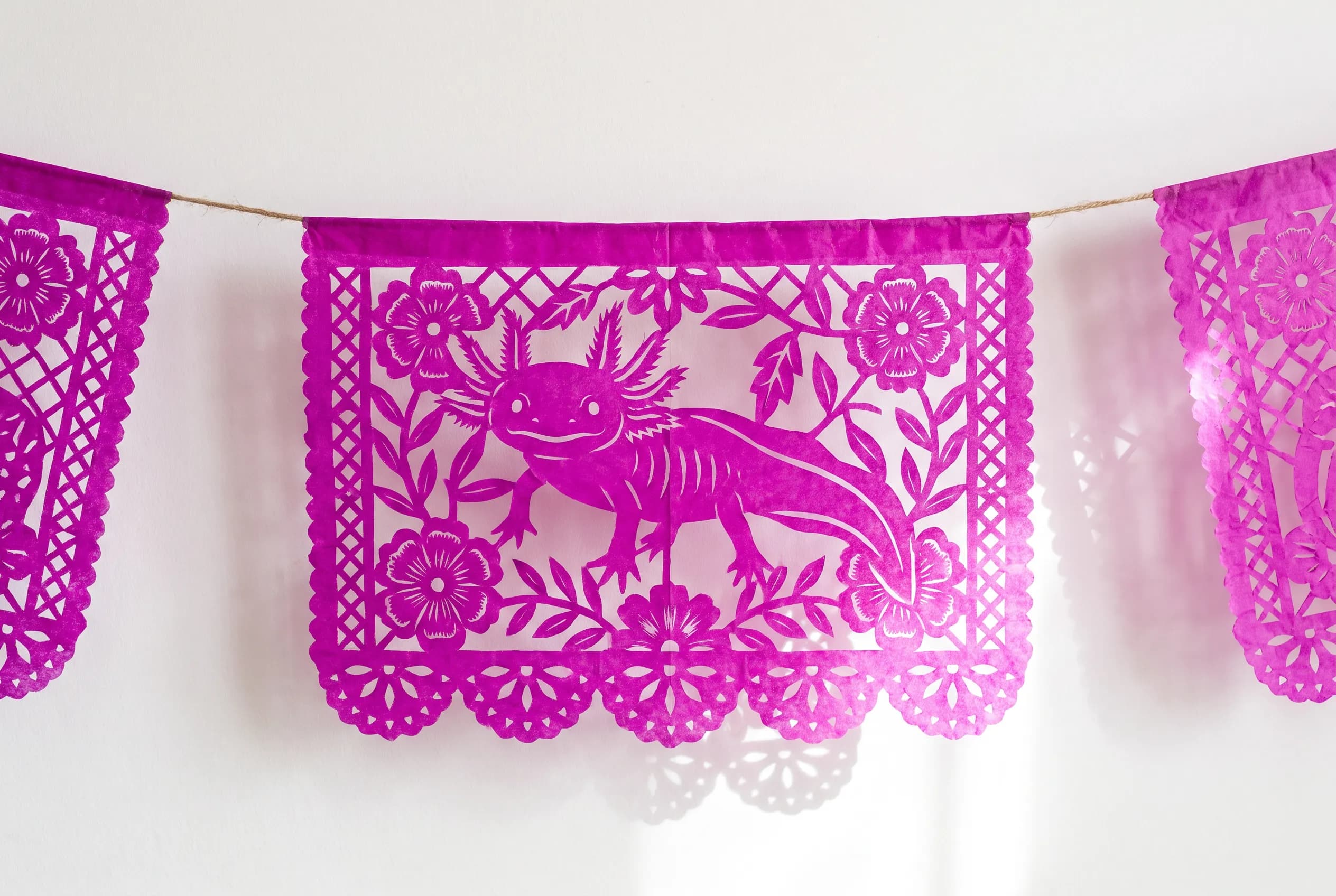
- Papel picado. Papel picado banner of magenta tissue paper with an axolotl cut out at the center, framed by cut marigolds, leaves and lacy geometric borders, strung on a cord against a plain white wall, daylight shining through the cuts, no text
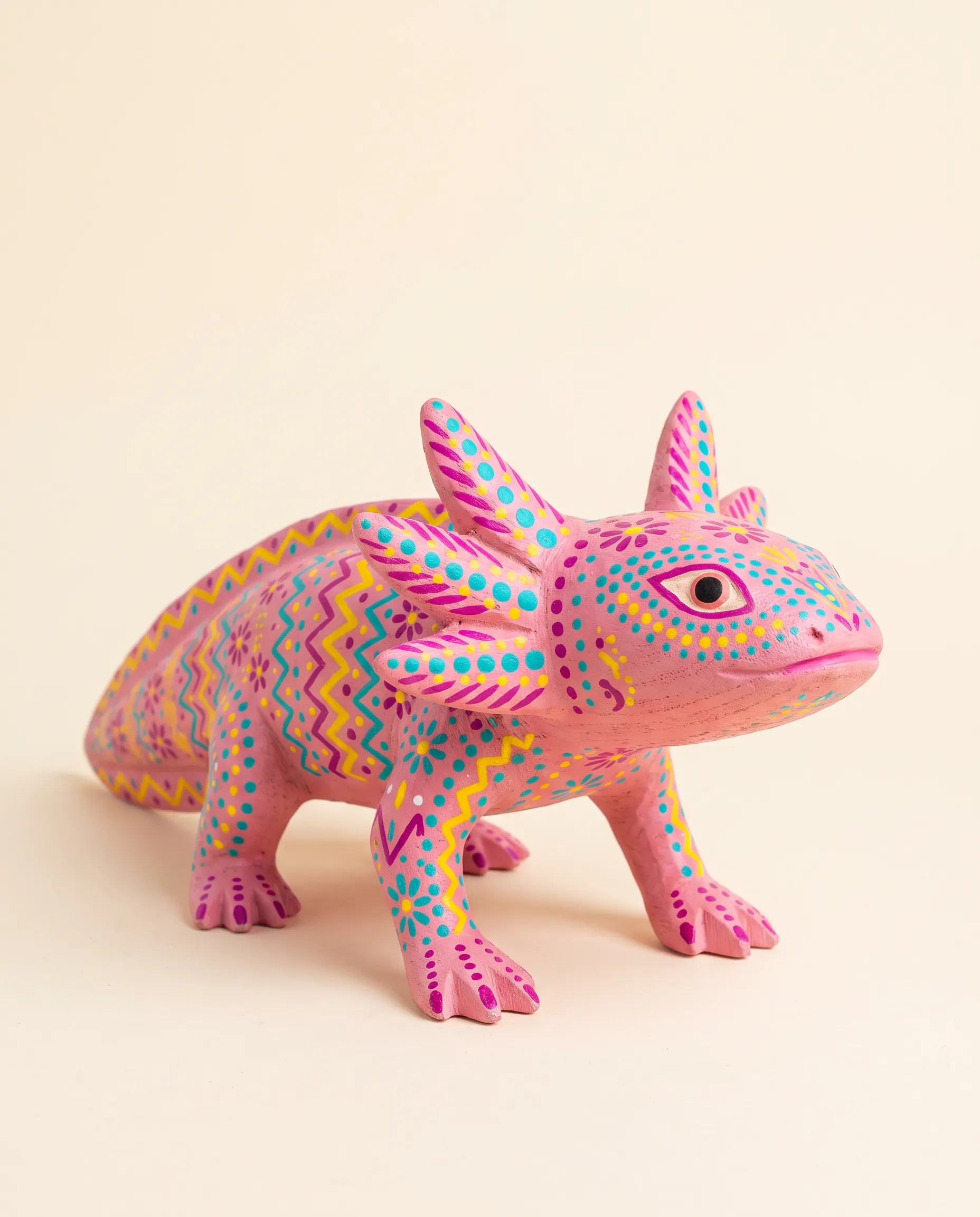
- Copal carving. Oaxacan copal wood carving of a pink axolotl, hand-carved and sanded, painted in bright turquoise, yellow and magenta with dense dots, zigzags and tiny flowers over the whole body, studio photograph on a plain cream background, no text
Common misfires
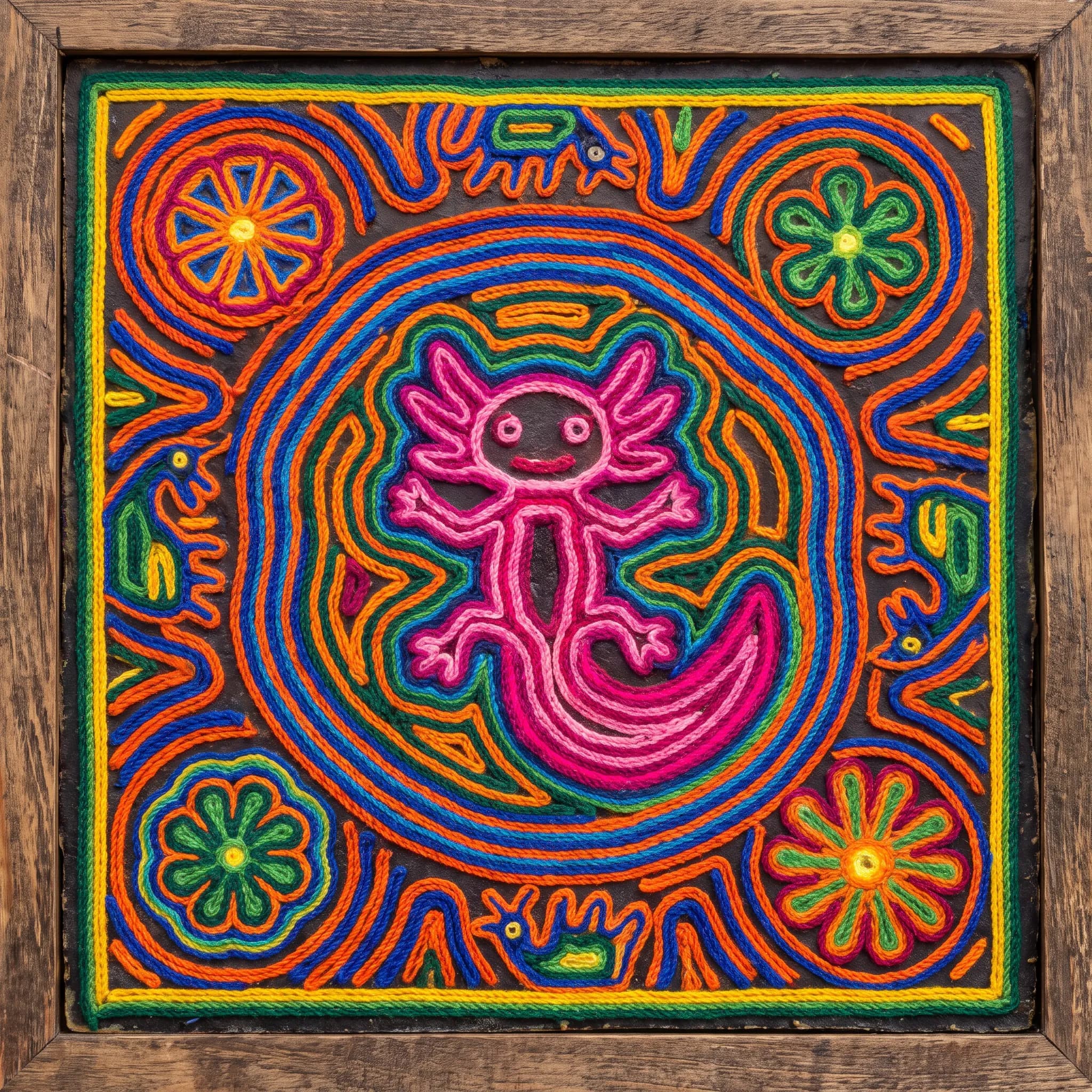
Blending is the big one. A prompt that only says Mexican tends to pile sombreros, piñatas and sugar skulls into one frame, a souvenir collage, so keep one tradition per prompt and add Day of the Dead imagery only on purpose. Blackware sometimes comes back glazed and shiny all over, which unglazed and stone-burnished usually fix. Huichol yarn paintings can slide into embroidery unless the prompt says the yarn is pressed into wax.
Where Mexican art styles work
A papel picado border or a lacquer pattern suits a label for mezcal or hot sauce. Try adding the tradition to the product description. The Bottle Label Maker designs the label from your brand, flavor, product and bottle notes, then shows it flat, wrapped on a photoreal bottle and across matching flavor variants.
Pattern-heavy crafts translate well to textiles and home goods. Print/Pattern Replacement takes a pattern you already have plus a product image and returns one shot of the product wearing that pattern, so a generated tile can be tried on a tablecloth or a dress before sampling.
For anything you sell, consider commissioning or licensing from the artisans whose craft you borrow. Folk art is a living trade. A 2004 Hearst Museum of Anthropology teaching guide put the share of Mexicans who earn a living making and selling folk art and craft at about 8 percent.
Related styles
- Chicano art style, the Mexican American tradition north of the border
- Aztec art style, one pre-conquest civilization up close
- Japanese art styles, a second national family with its own printmaking line
- Chinese art styles, a family where brush and ink lead
FAQs
What is the Mexican art style called?
There isn't one, because the name changes with the period. The public wall painting of the 1920s and 1930s is known as the Mexican mural renaissance. Those two decades are often called Mexico's renaissance more broadly, when collectors began preserving folk art and museums in Mexico and the United States exhibited it.
What are traditional Mexican patterns?
Textiles carry many of them, starting with the sarape, a blanket cape that had become a national symbol by the late 19th century, with its finely woven Saltillo version most popular between about 1830 and 1880. Huichol ceremonial clothing is embroidered in yarn with birds, eagles and a star-like flower called the toto.
What are the different types of Mexican art styles?
Pre-Hispanic art, colonial religious art, folk art and modern painting and printmaking are the broad groups, and folk art alone splits into many crafts. Masks are one, still worn at festivals and dances and most often carved from painted wood. Lacquer is another. It is worked in Michoacán, Guerrero and Chiapas, and a piece can be inlaid, painted or carved, with a top coat scratched away to show a contrasting color underneath.



