
Chicano Art Style, From Community Walls to Fine-Line Drawing
 FLORA
FLORA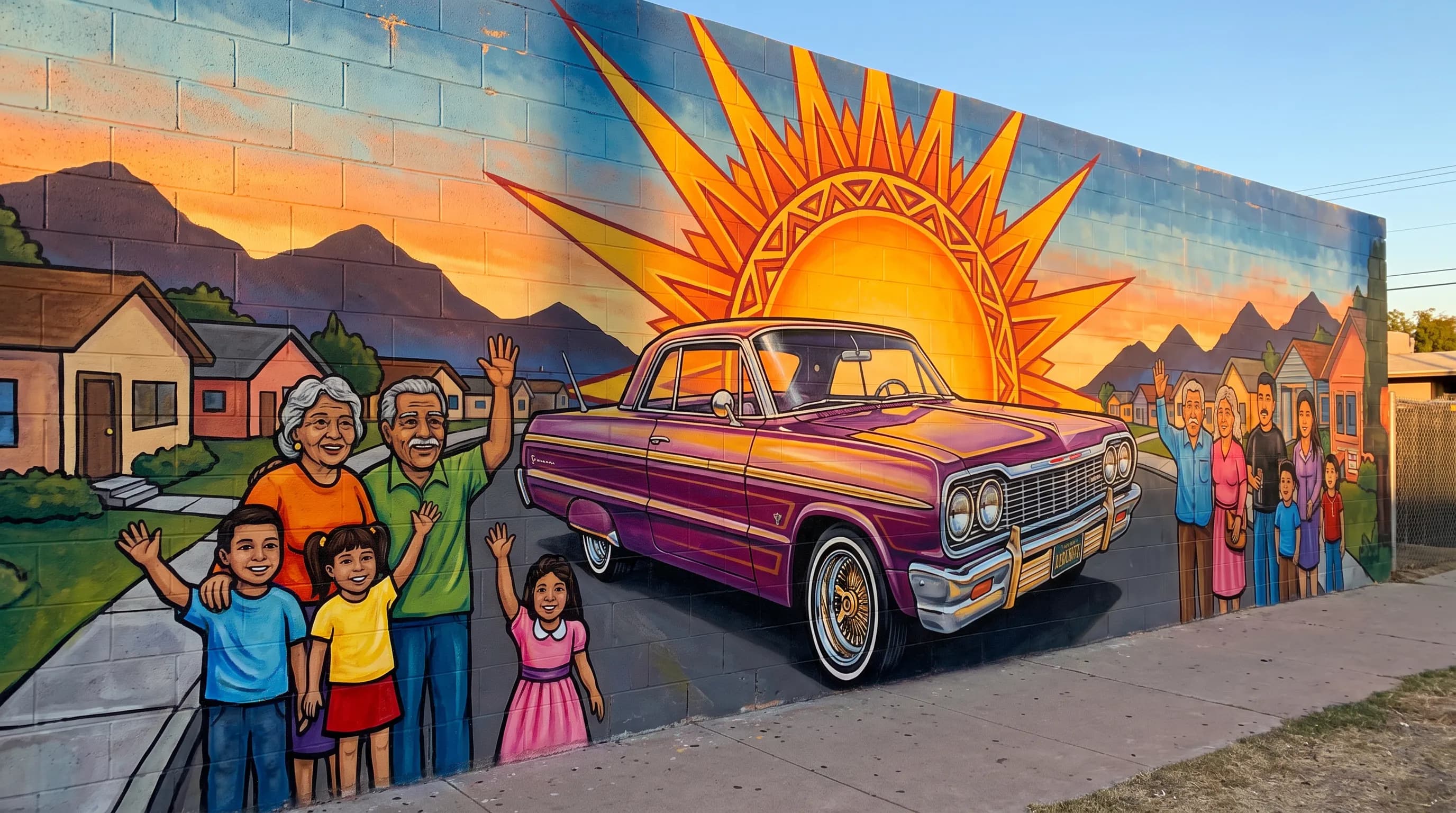
Chicano art style names the visual language of work by Mexican Americans in the United States, rooted in the Chicano Movement of the 1960s and 1970s. Many of its first printmakers came of age in the civil rights, labor and anti-war movements and turned that activism into prints that claimed a new political and cultural identity. Color on paper is flat and loud, laid in hard-edged fields the way a silkscreen leaves ink. Murals blow the same bold figures up to city-block scale. Imagery draws on Mexican and Indigenous history and on the neighborhood itself, and black-and-gray, a fine-line tattoo style with roots in East Los Angeles, shades with watered-down black ink instead of color.
Chicano art style examples made in FLORA
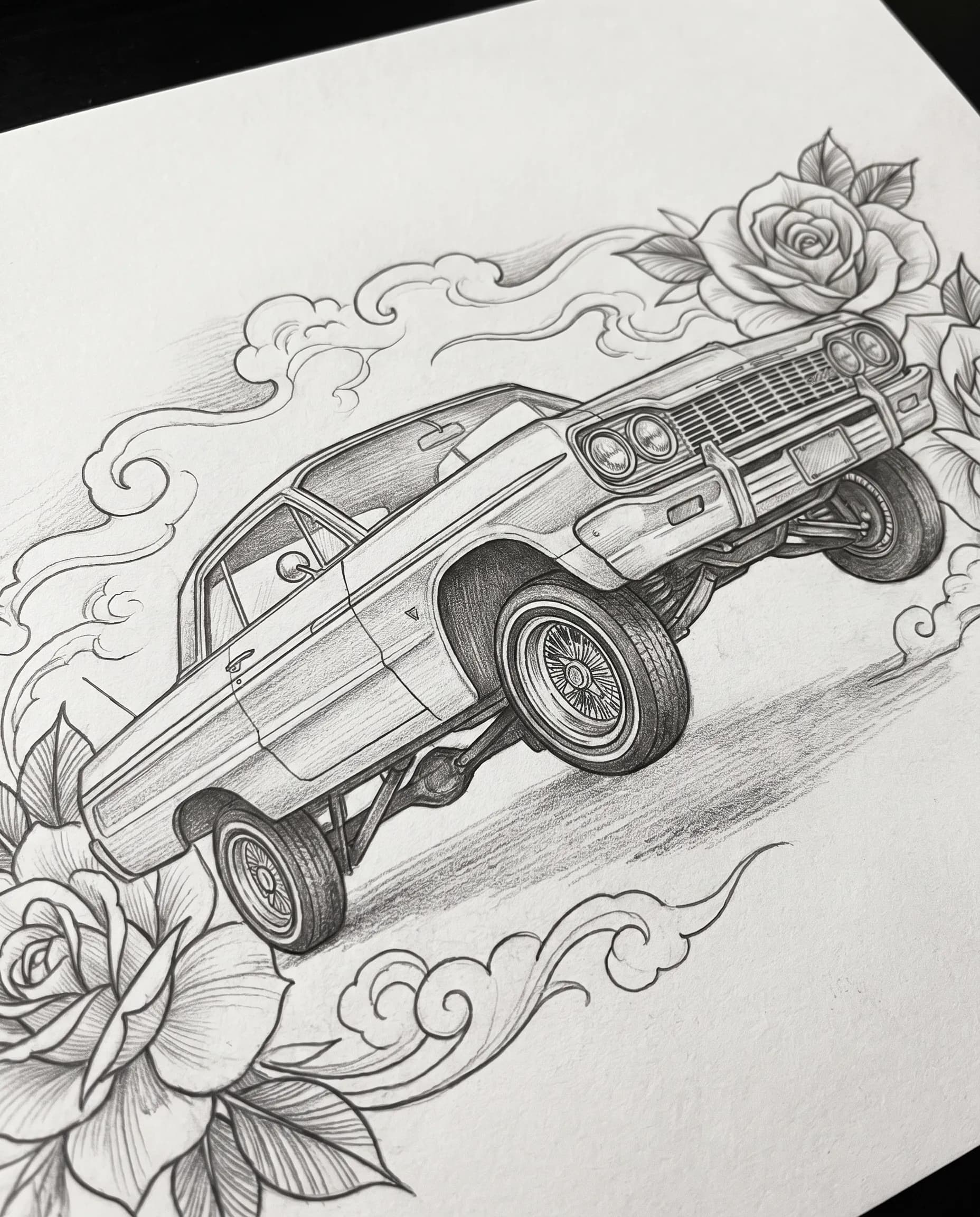
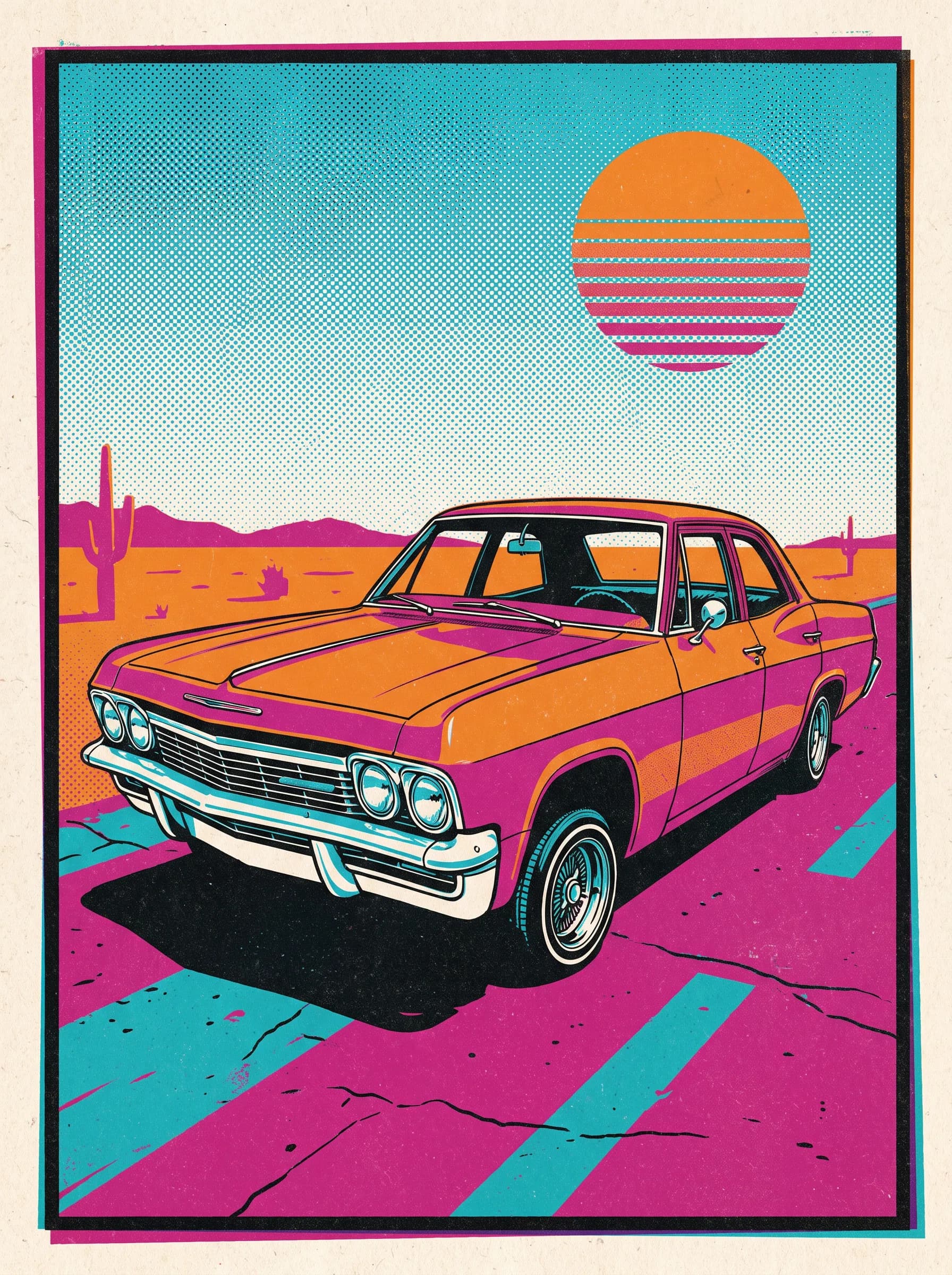
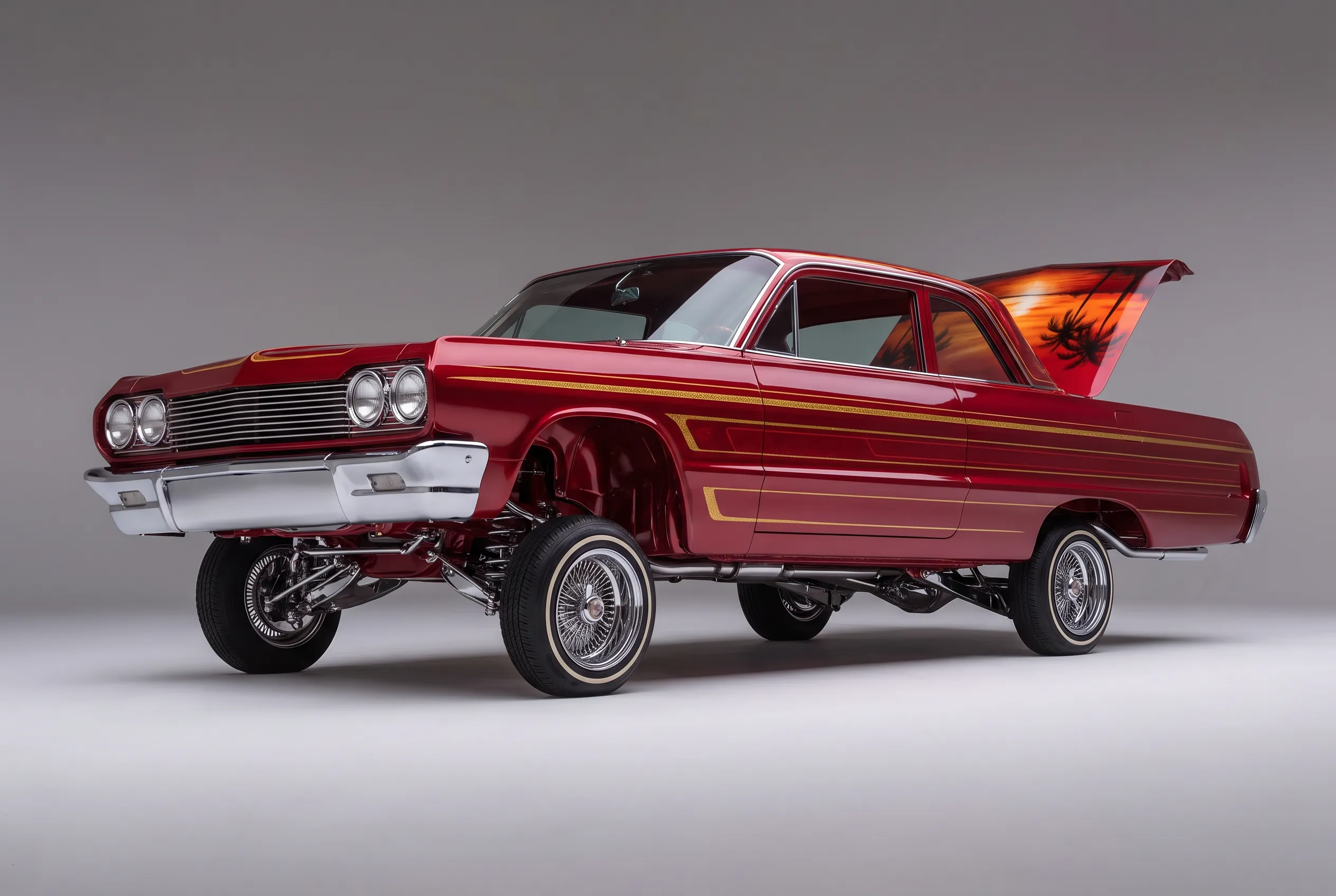
Lowriders carry the gallery. The National Museum of American History describes lowriding as a family and community pursuit, one where paint schemes and upholstery set every car apart. One 1960s sedan passes through eight media below, each rendered by FLORA's AI image generator from the prompt quoted in its caption.
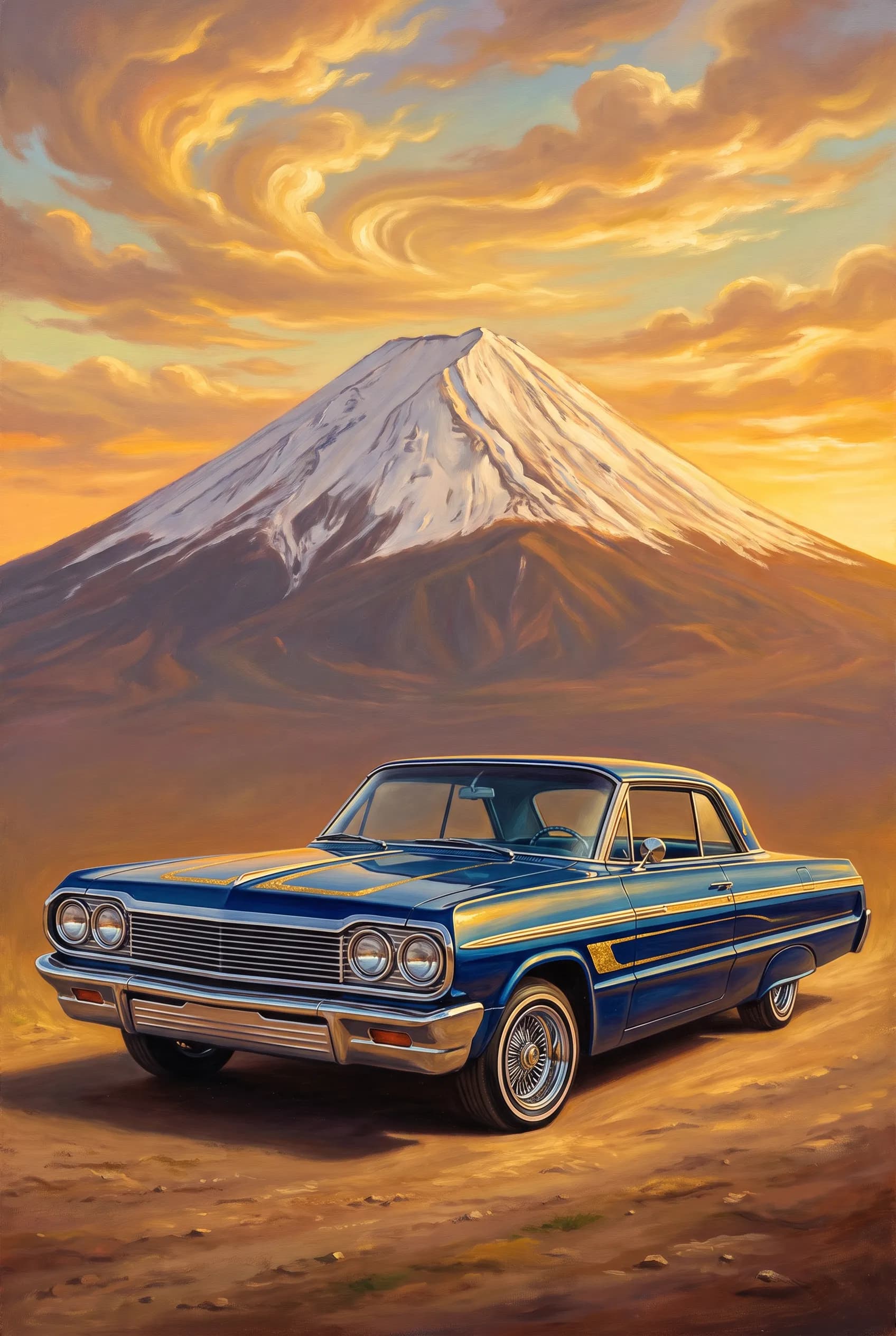
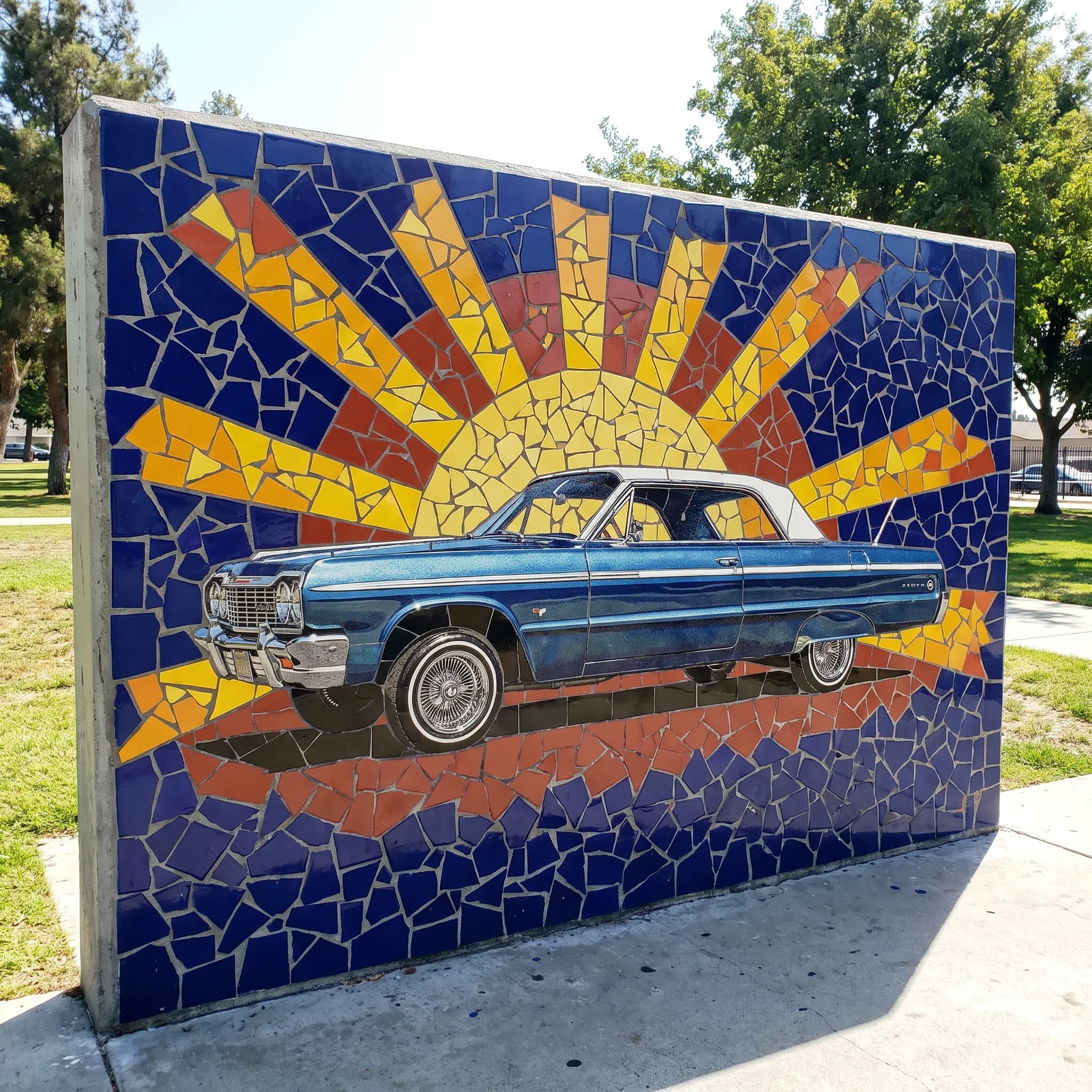
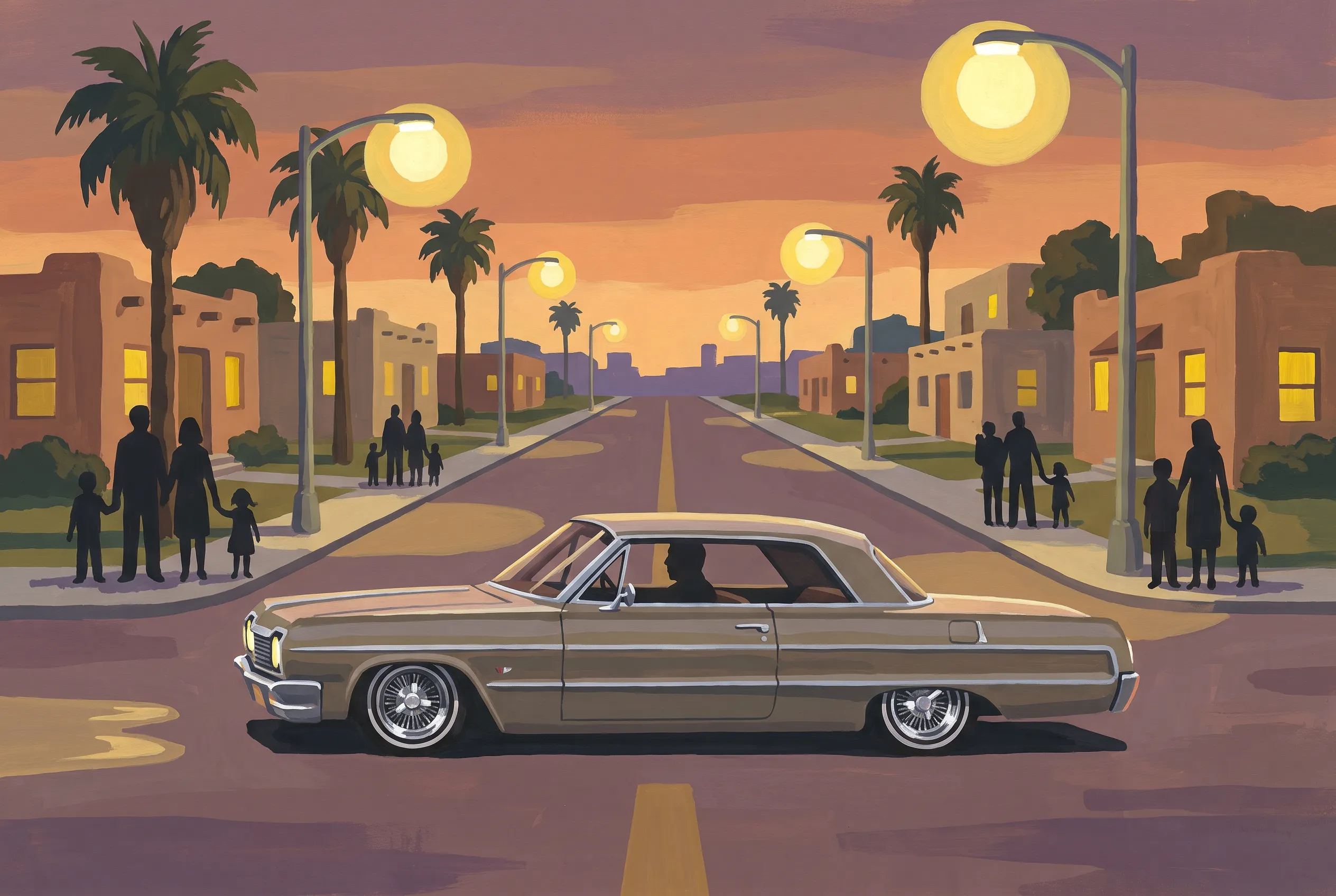
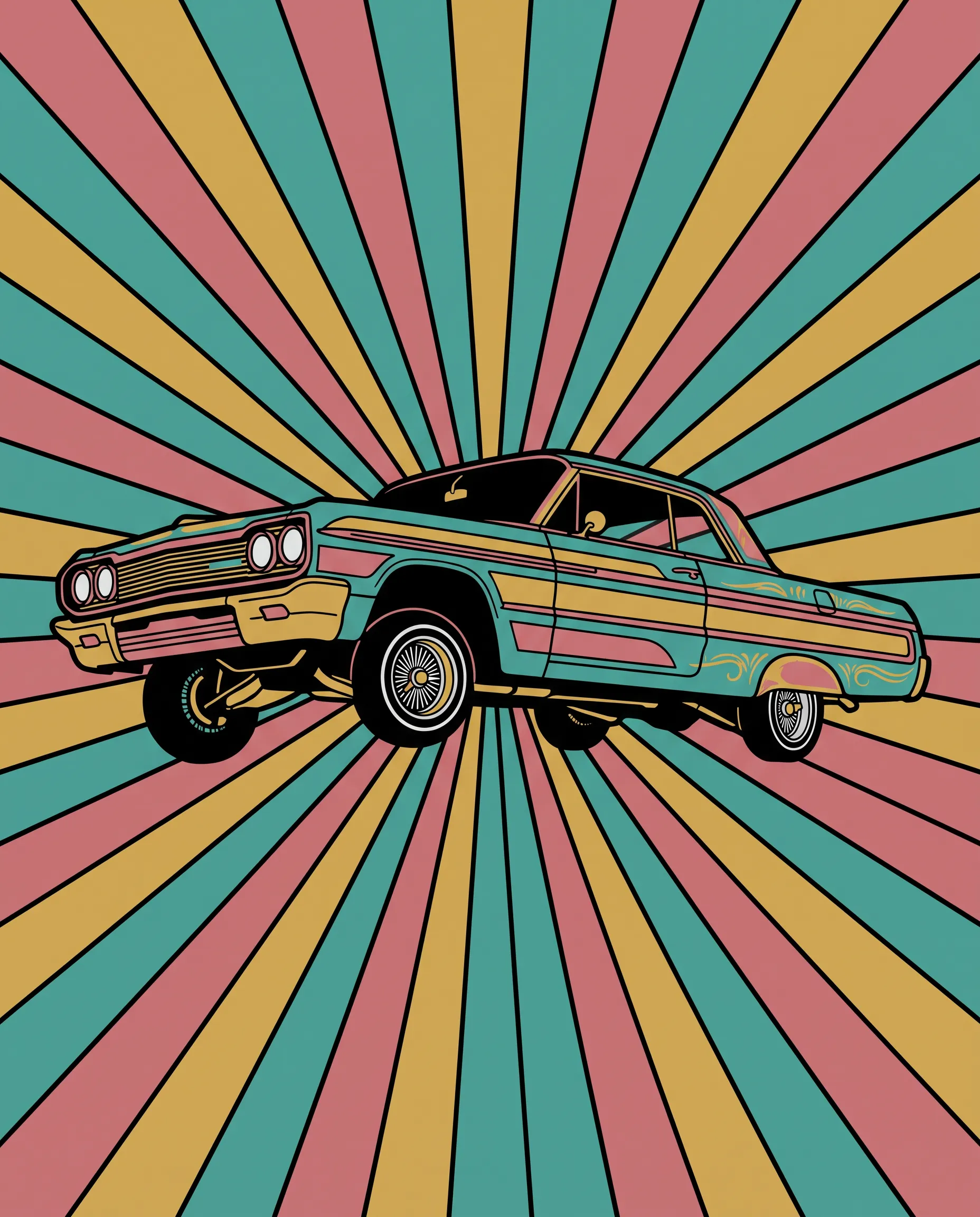
How to prompt for Chicano art style
Pick one branch of the tradition first. Ask for a poster, a wall and a drawing at once and the result usually comes back muddled. Screenprints run on a few flat inks with halftone dots, and a wall needs big shapes and a horizon line, while fine-line drawing drops color altogether. Describe the car the way its builder would, down to the decade and how high it sits on its hydraulics. Name the surface, then the light. A low morning sun suits a mural, and graphite wants one soft source.
Prompts for the wall, the drawing and the poster
- Mural. Community mural on a long cinderblock wall, a 1960s lowrider sedan on chrome wire wheels cruising under a giant stylized sun, families waving from the curb, mountains behind, flat saturated color with bold outlines, Chicano art style, warm morning light, no text
- Black-and-gray. Fine-line black-and-gray drawing of a 1960s lowrider sedan on chrome wire wheels, front end lifted on hydraulics, soft gray gradients built from thin lines, roses and drifting clouds framing the car, graphite only on white paper, Chicano single-needle style, no text
- Screenprint. Four-color screenprint poster of a 1960s lowrider sedan on chrome wire wheels, front three-quarter view, flat magenta, orange, turquoise and black, halftone dots across the sky, hard edges, slight misregistration, bare bumpers, 1970s Chicano poster style, no text
Where it goes sideways
Costume is the worst miss. Given a vague setting, a model may reach for sombreros and cactus, a caricature with no place in this tradition, so name a US city and the decade. Black-and-gray drawings tend to pick up a stray wash of color unless you say graphite only, and posters can drift toward graffiti drips until you ask for flat ink with visible halftone. Cars also sprout badges and plates, which asking for bare bumpers usually clears.
Where Chicano art style works
A mural proposal is easier to discuss once people can see it. Generate the wall at its real proportions so a neighborhood meeting or arts commission reacts to a finished picture before anyone buys paint.
Event posters and shirts go straight to the press. The Smithsonian American Art Museum still counts screen printing as the main method among Chicanx printmakers. Run the generated art through Palette Pull for a palette of its main colors with their HEX codes, then check those against a printed ink guide before mixing.
Flash sheets and framed fine-line pieces can start from a photo of a real car. Photo Wireframe reduces that photo to its contour lines and strips out color and shading, so what remains is a clean base for gray tones added by hand or with the drawing prompt above.
Related styles
- Mexican art styles, traditions from Mexico itself
- Pop art style, flat color with a political edge, as in Rupert García's prints
- Aztec art style, Mexica imagery that turns up in fine-line drawing
- Graffiti art style, another street tradition with its own toolkit
FAQs
How is Chicano different from Mexican?
Chicano art is made in the United States by artists of Mexican descent, while Mexican art comes from Mexico. Chicano artists keep returning to US history, such as the Mexican American War of 1846 to 1848, which handed the Southwest and California to the United States. The two still overlap. Many of those artists grew up with illustrated calendars given out by local shops, inspired by Mexican commercial art of the 1940s and 1950s, and took up the calendar format in the civil rights era.
What are some famous examples of Chicano art?
The Great Wall of Los Angeles is one, a half-mile mural along the Tujunga Wash that Judith F. Baca painted with a team including more than four hundred young people over six summers starting in the late 1970s, and its story of California runs through the 1950s. In print, Rupert García's one-color screenprint Right On!, made during the 1968 student strike at San Francisco State College, belongs to the Smithsonian American Art Museum.
Who has the largest collection of Chicano art?
Cheech Marin, going by the museum that houses his collection. It describes the Cheech Marin Collection as without equal. That museum, The Cheech Marin Center for Chicano Art & Culture, opened in Riverside, California, on June 17, 2022, in a building that began as the city's public library in 1964.



