
Vincent van Gogh Art Style in Color Pairs and Short Strokes
 FLORA
FLORA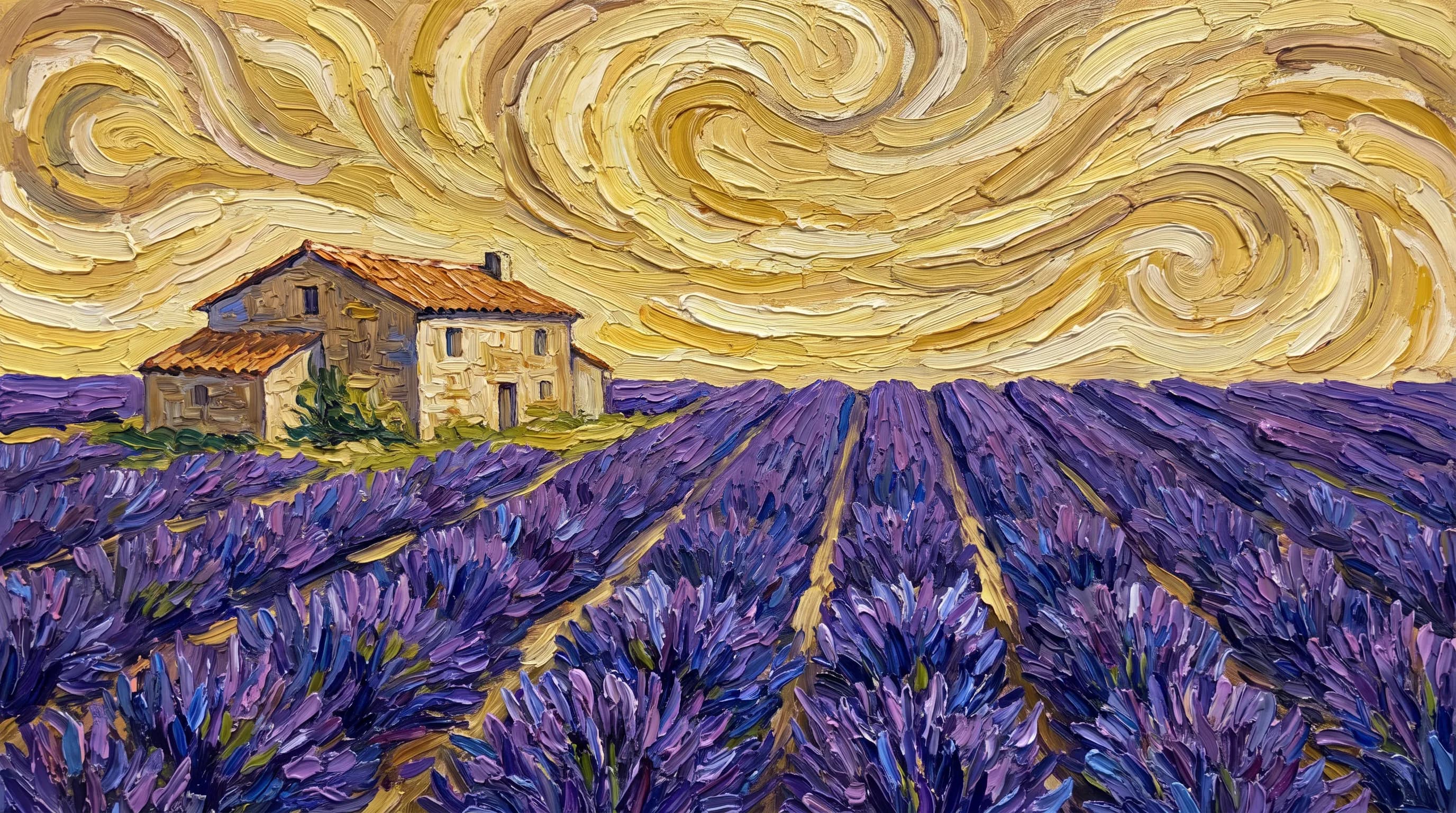
What art style is Van Gogh? Post-Impressionism is the label MoMA attaches to his name, but the Vincent van Gogh art style people want took shape in a few years. The Dutch painter, born in Zundert in 1853, worked in dark, earthy tones until he reached Paris in 1886, where the Impressionists and Neo-Impressionists pushed him toward a brilliant palette. Short, broken brush strokes build up the surfaces. Complementary colors such as yellow and purple sit side by side almost unmixed, while bold outlines and abrupt cropping came from the Japanese woodcuts he and his brother Theo collected. Hills and skies seem to heave instead of holding still.
Vincent van Gogh art style examples made in FLORA
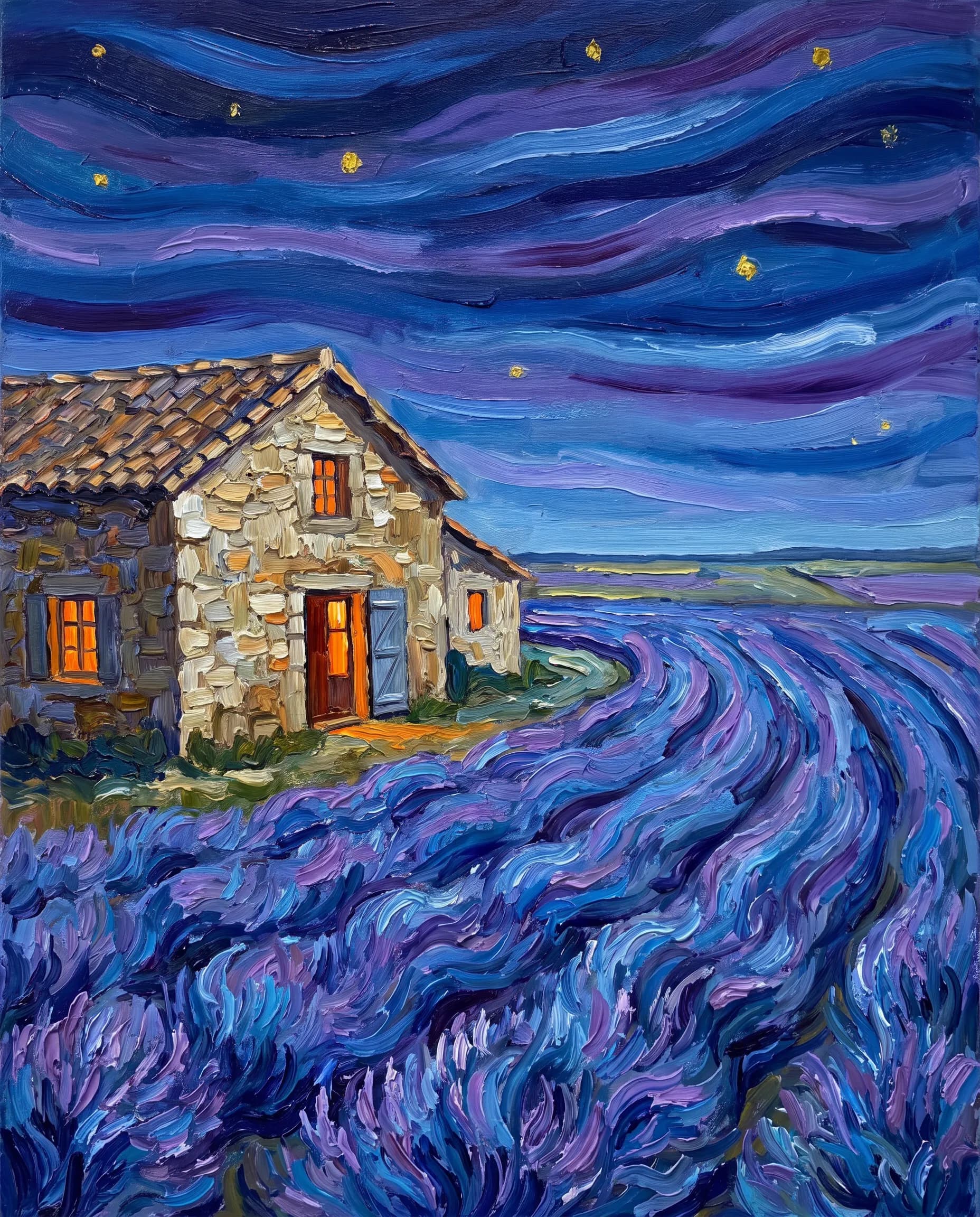
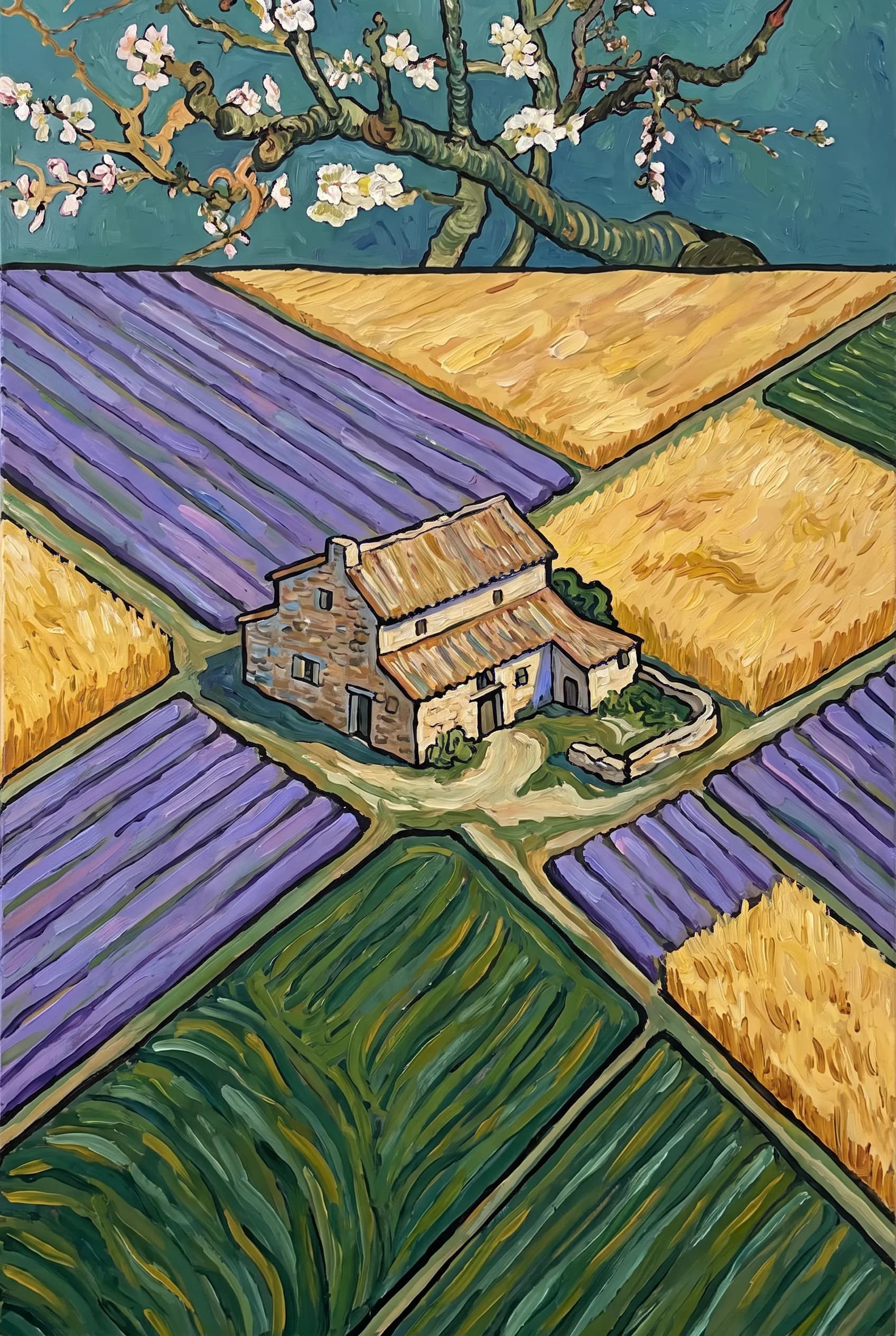
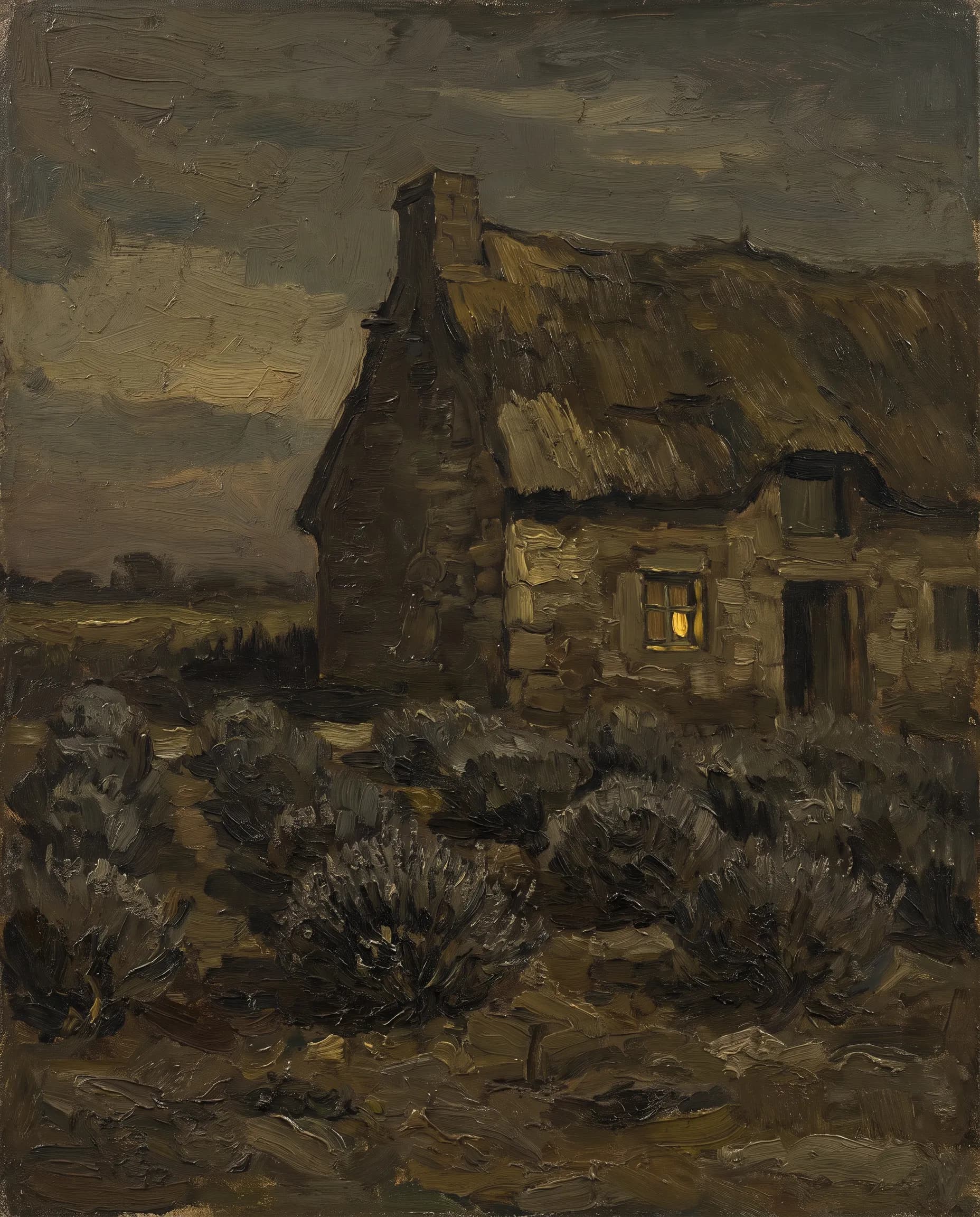
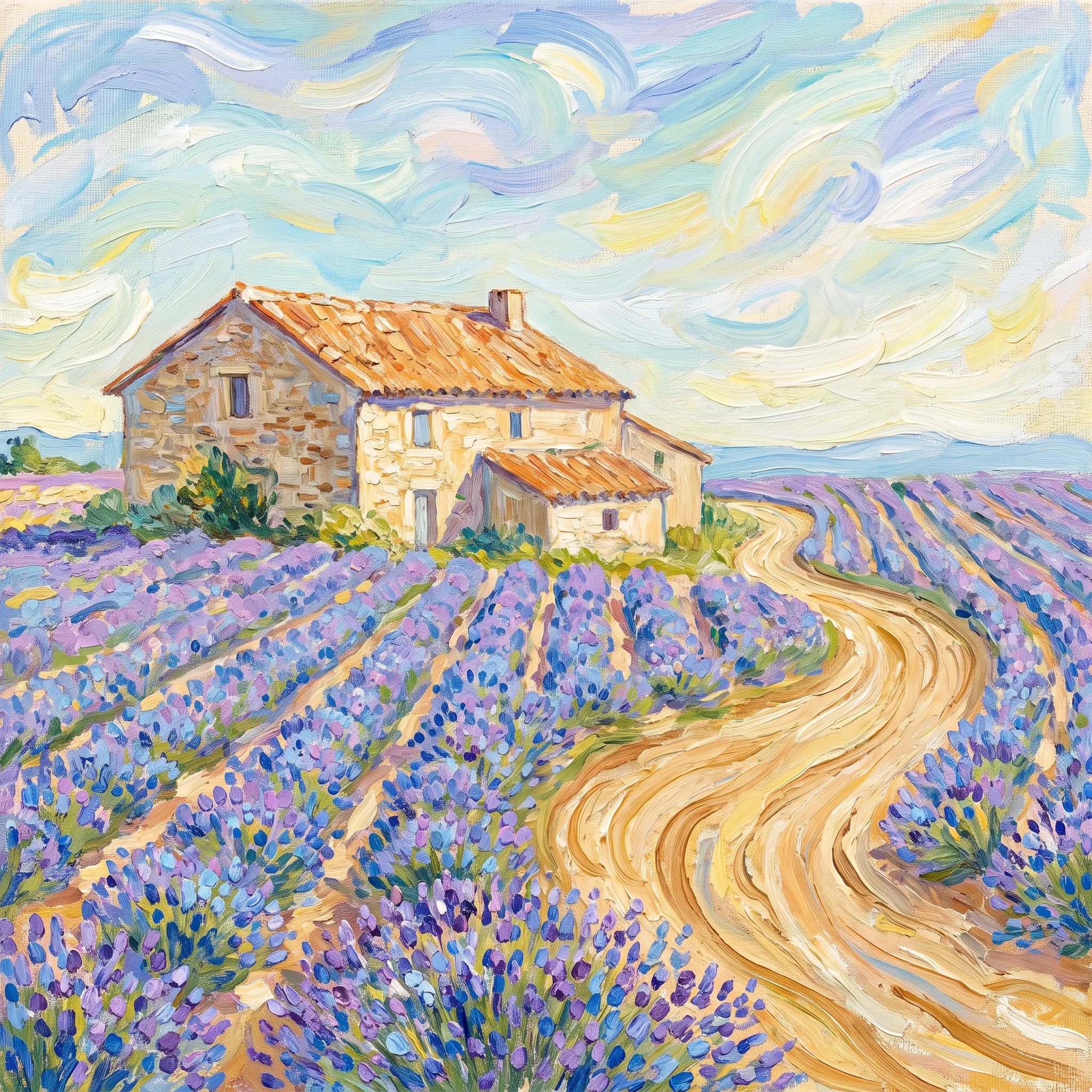
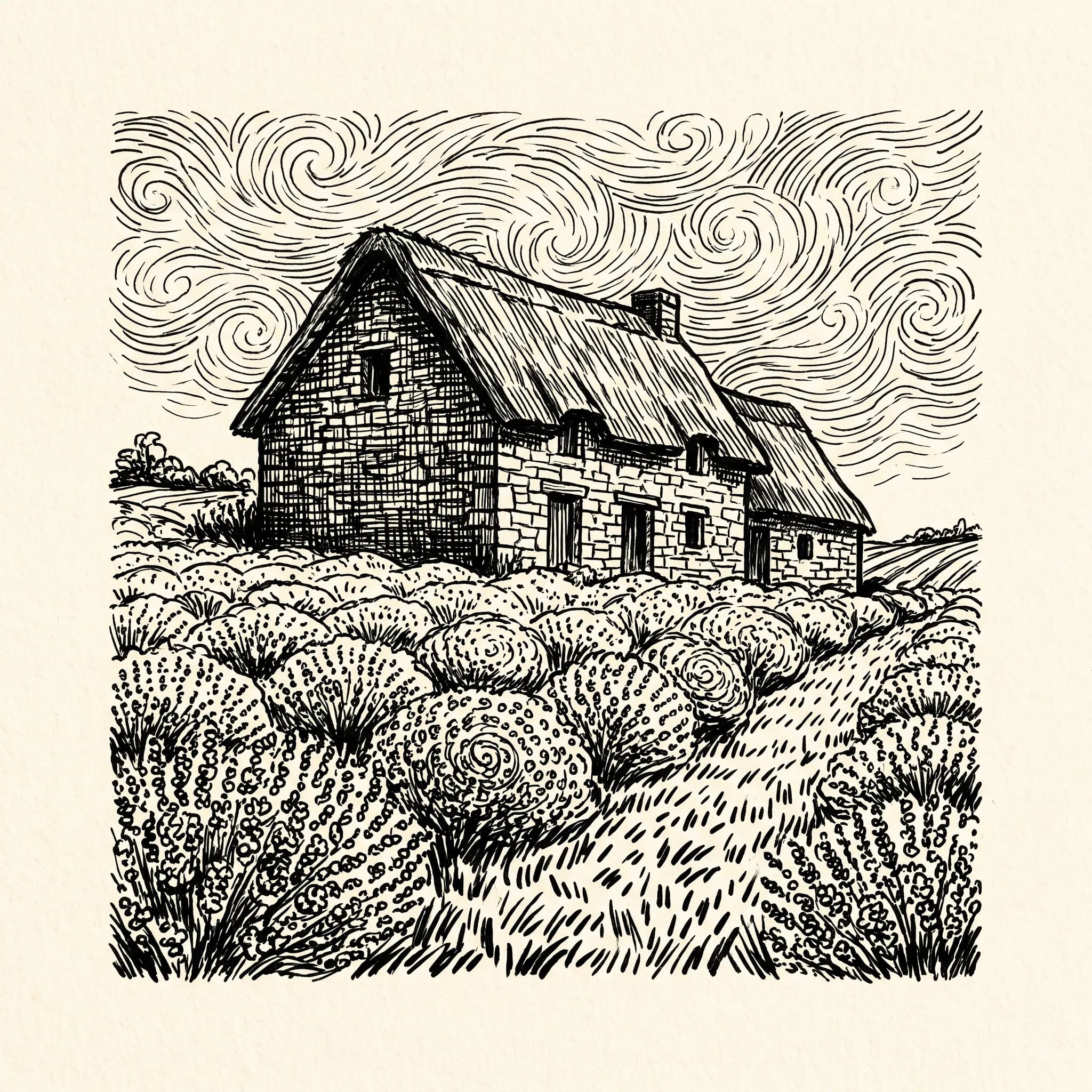
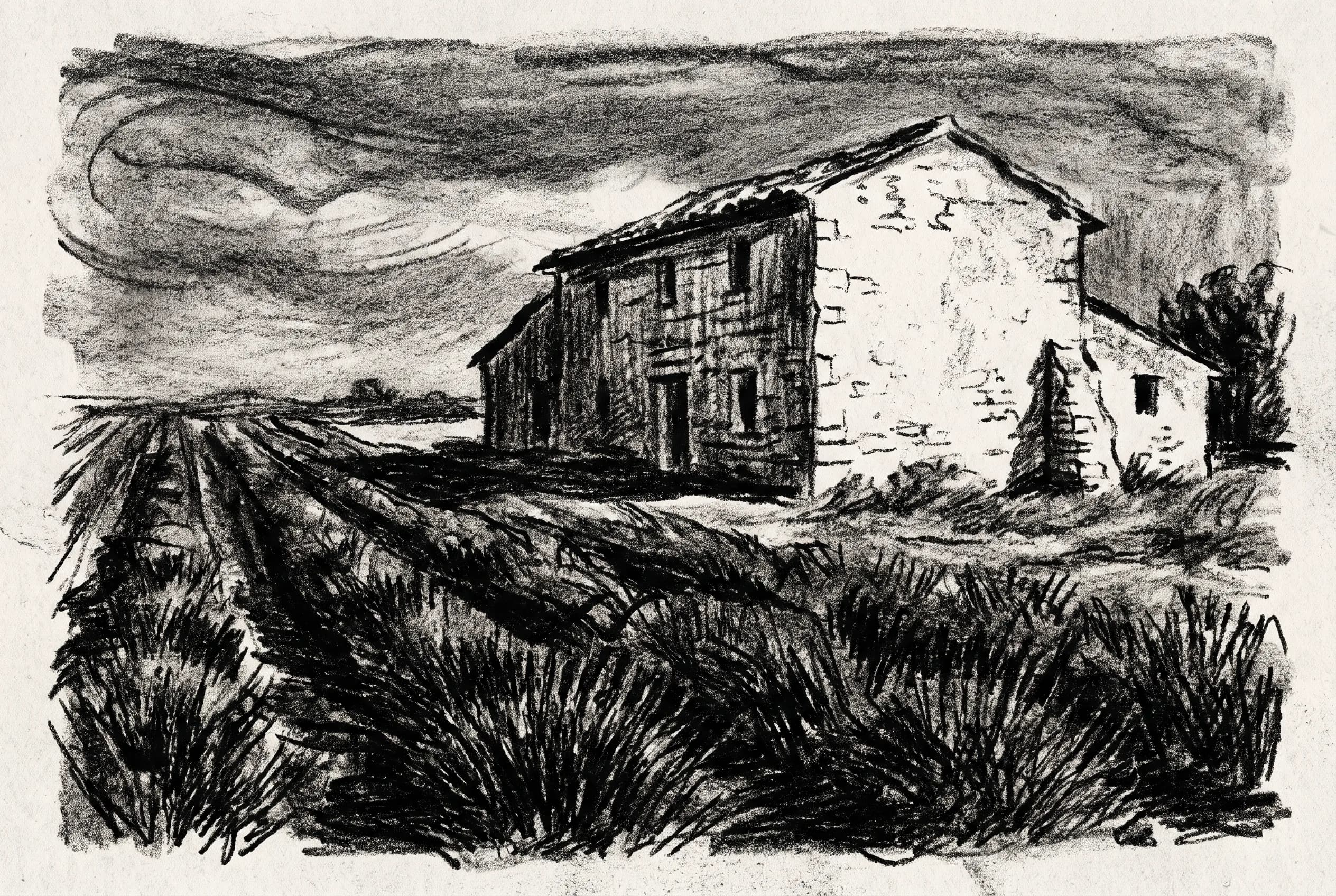
Every picture below shows one invented place, a stone farmhouse beside a lavender field, so none copies a known canvas. FLORA's AI image generator made all eight, each in a different phase of the Van Gogh art style, captioned with its full prompt.

How to prompt for Vincent van Gogh art style
Pick the phase first, since each gives the model its own palette and mark.
- Nuenen, 1883 to 1885, earth browns, with complementary pairs mixed down into mud
- Paris, 1886 to early 1888, a brighter palette and shorter strokes, plus dots of pure color mixed with lines once he had seen Seurat's work in 1886
- Arles, from February 1888, looser handling, pairs at full strength and flat areas taken from Japanese prints
- Saint-Rémy, May 1889 to May 1890, about 150 paintings in a year, olive groves and the walled hospital garden among them
Then name the scene and the mark you want, whether dots, short dashes or long curved strokes. Add one complementary pair (red with green, yellow with purple, blue with orange) and perhaps a cue from the Japanese prints, such as a high viewpoint with no horizon.
Copy one of these
- Arles color. Wide oil painting of a stone farmhouse beside a lavender field in Provence, lavender rows in short directional strokes, yellow sky swirling in long curves, purple against yellow, thick brushwork, in the manner of Van Gogh's Arles paintings, unsigned, no text
- Night in Provence. Oil painting of a stone farmhouse beside a lavender field at night, windows glowing orange, low flat horizon over open fields with no trees or village, blue and violet sky moving in long horizontal bands with a few small stars, in the manner of Van Gogh's Provence paintings, unsigned, no text
- Japanese print influence. Oil painting of a stone farmhouse and lavender field seen from above with no horizon, flat areas of violet, yellow and green, bold dark contours, a flowering branch cropped at the top edge, in the manner of Van Gogh's Japanese-inspired work, unsigned, no text
Where it slips
Next to a night scene, his name often pulls in a cypress, a church spire and a spiral sky you never described, and the picture becomes a copy of his best-known canvas. Describe your own sky and leave those out. Models sometimes sign the corner, so ask for an unsigned canvas. Muddy color is the quieter failure, one he hit himself in Nuenen, and asking for unmixed color keeps the pairs bright.
Where Vincent van Gogh art style works
Small-batch honey, olive oil or lavender soap can carry a painted field on the label. Design a Product Label starts from a product idea and returns print-ready label artwork plus a photoreal packshot of the bottle, so you can check the strokes still read at shelf size.
For a painted music video or short film, generate one key frame in the style and hand it to Storyboard Maker. It turns a single image into nine frames that hold the same color and texture while the camera moves.
Related styles
- Claude Monet art style, the Impressionist color Theo introduced him to in Paris
- Japanese art styles, home of the woodcuts whose outlines and cropping he borrowed
- Henri Matisse art style, flat saturated color with far less brushwork
- Pablo Picasso art style, breaking forms into planes where this one sets them moving
FAQs
Does MoMA have Van Gogh?
Yes. The Starry Night has been at the Museum of Modern Art in New York since 1941, when MoMA acquired it by exchange from the dealer Paul Rosenberg, who had bought it from the Rotterdam collector Georgette van Stolk in 1938. MoMA also owns Portrait of Joseph Roulin and The Olive Trees, both from 1889.
Was Van Gogh successful during his life?
Barely, and only near the end. He sold a handful of works, though in early 1890 Anna Boch bought The Red Vineyard at the Les Vingt show in Brussels, and the critic Albert Aurier had praised him in print. Fame came after his death that July, helped by his sister-in-law Jo van Gogh-Bonger, who lent his paintings to museums and published his letters in 1914.
How did Van Gogh paint Starry Night?
By combining what he saw with what he imagined, in Saint-Rémy in June 1889. Venus, to the right of the cypress, really was bright that spring, but the cypress, the village and the spire could not be seen from the asylum, so he worked them in from studies made elsewhere.
What paints did Van Gogh use?
Oils for the paintings, after his cousin-in-law Anton Mauve taught him the basics of oil and watercolor in The Hague, and because paint was costly he tested color combinations with balls of colored wool kept in a chest before putting any on canvas.



