
Pablo Picasso Art Style, Period by Period
 FLORA
FLORA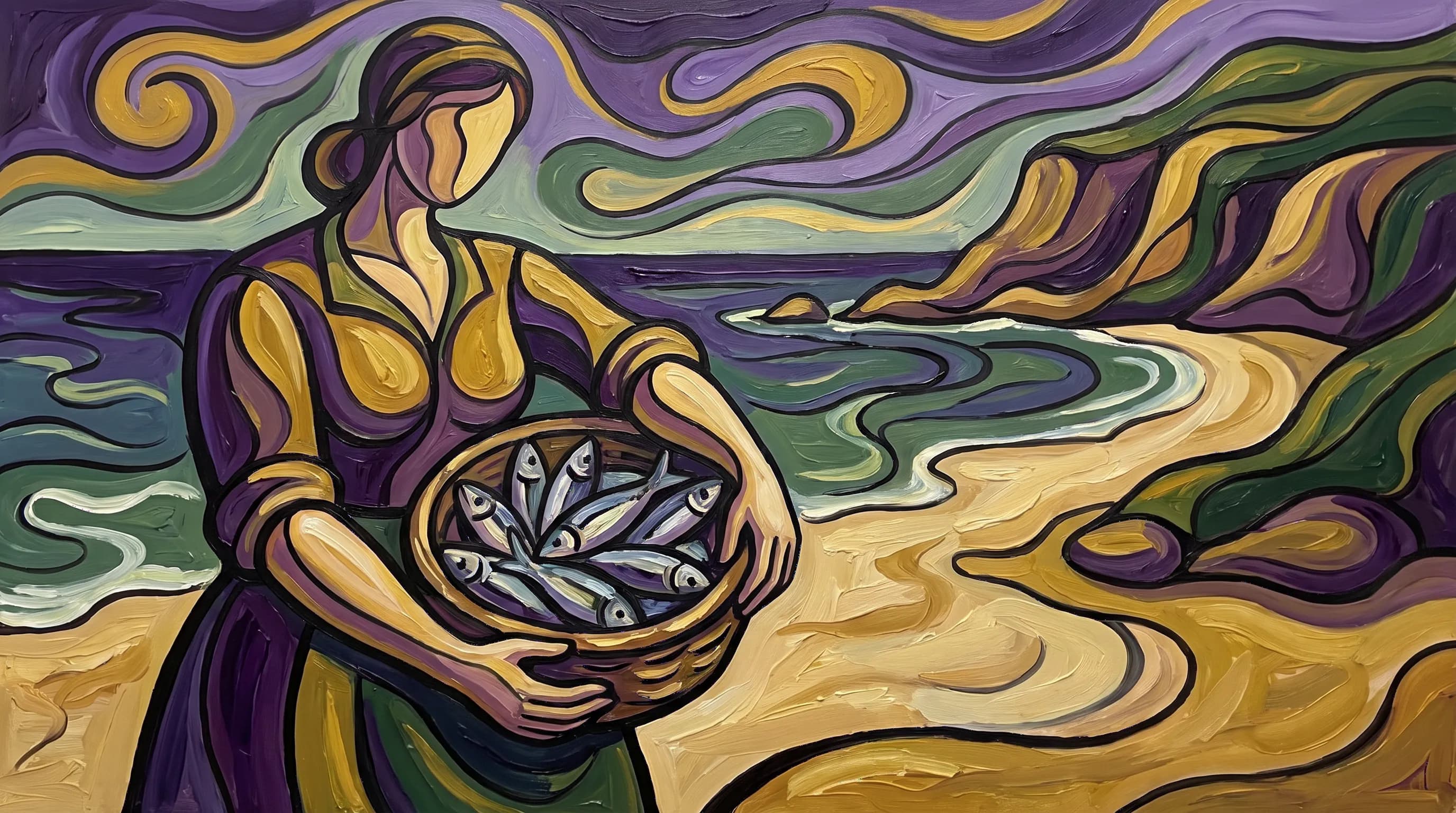
There is no single Pablo Picasso art style, which is worth knowing before you write a prompt. The Spanish painter, born in Málaga in 1881, worked for nearly 80 of his 91 years and changed course every few of them. Most people using the phrase mean the work from 1907 on, where faces turn masklike, a head shows profile and full face together, and the body breaks into flat, outlined planes. To see how far the period moves the picture, we rendered one sitter eight times using the AI image generator inside FLORA.
Pablo Picasso art style examples made in FLORA
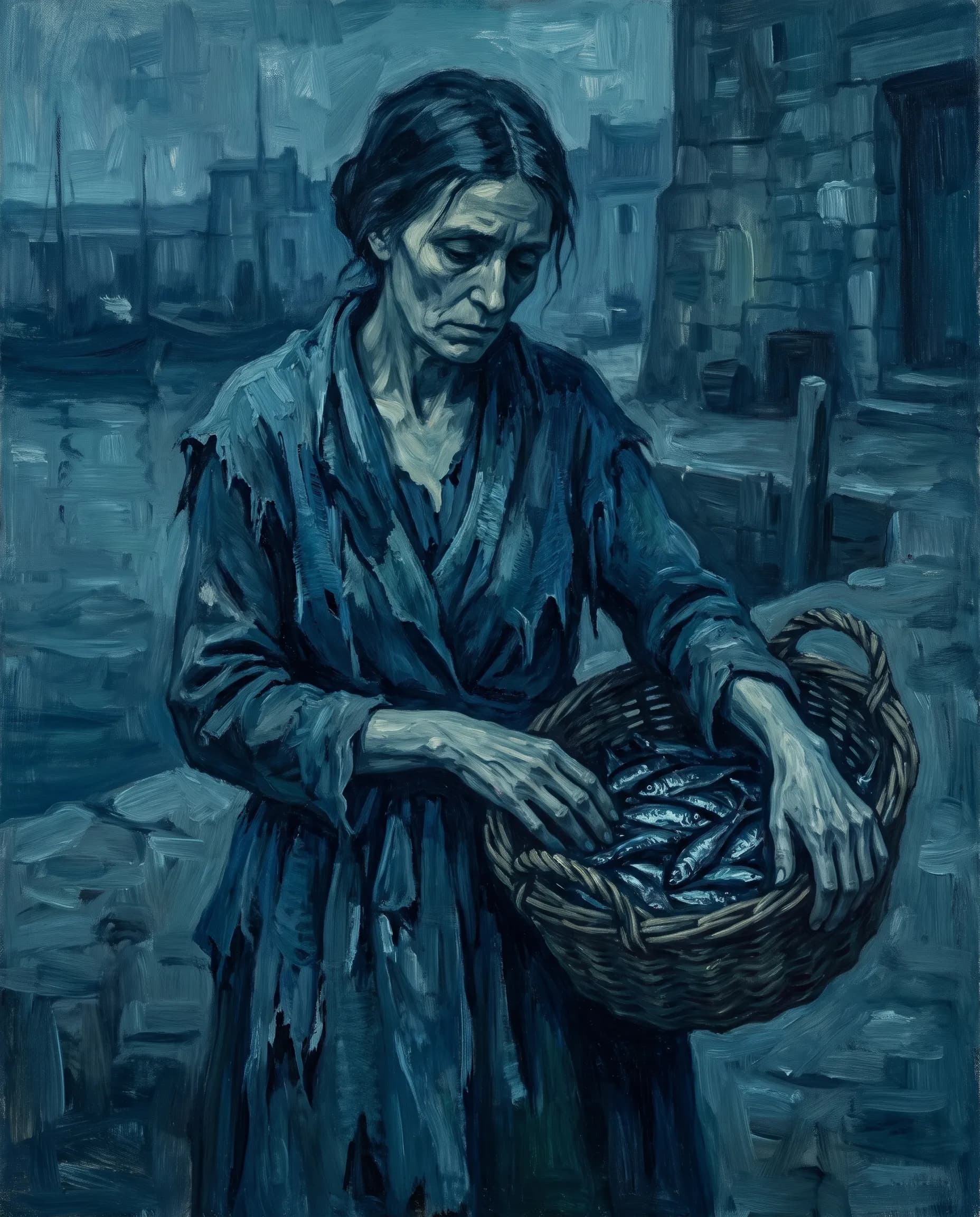
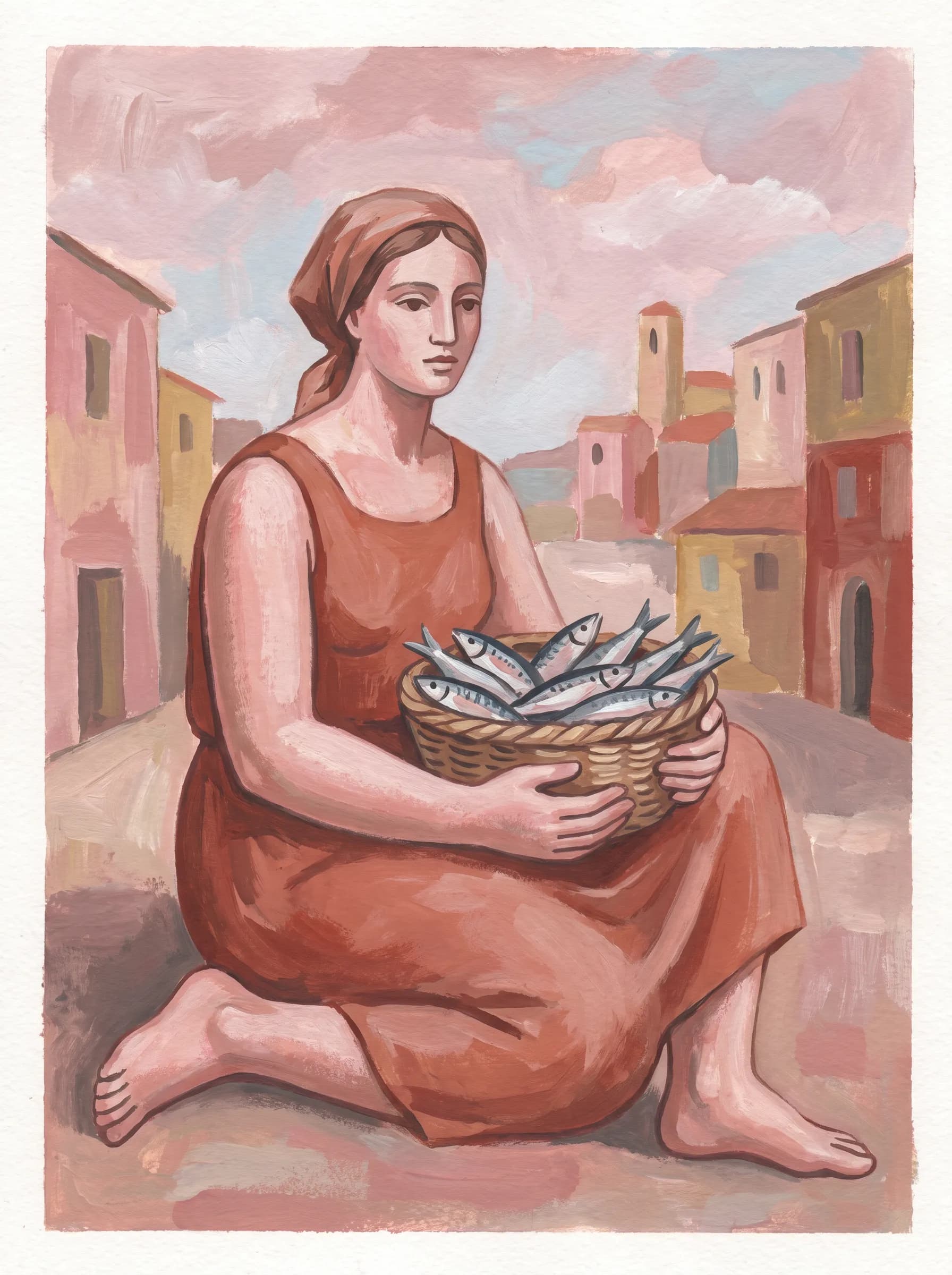
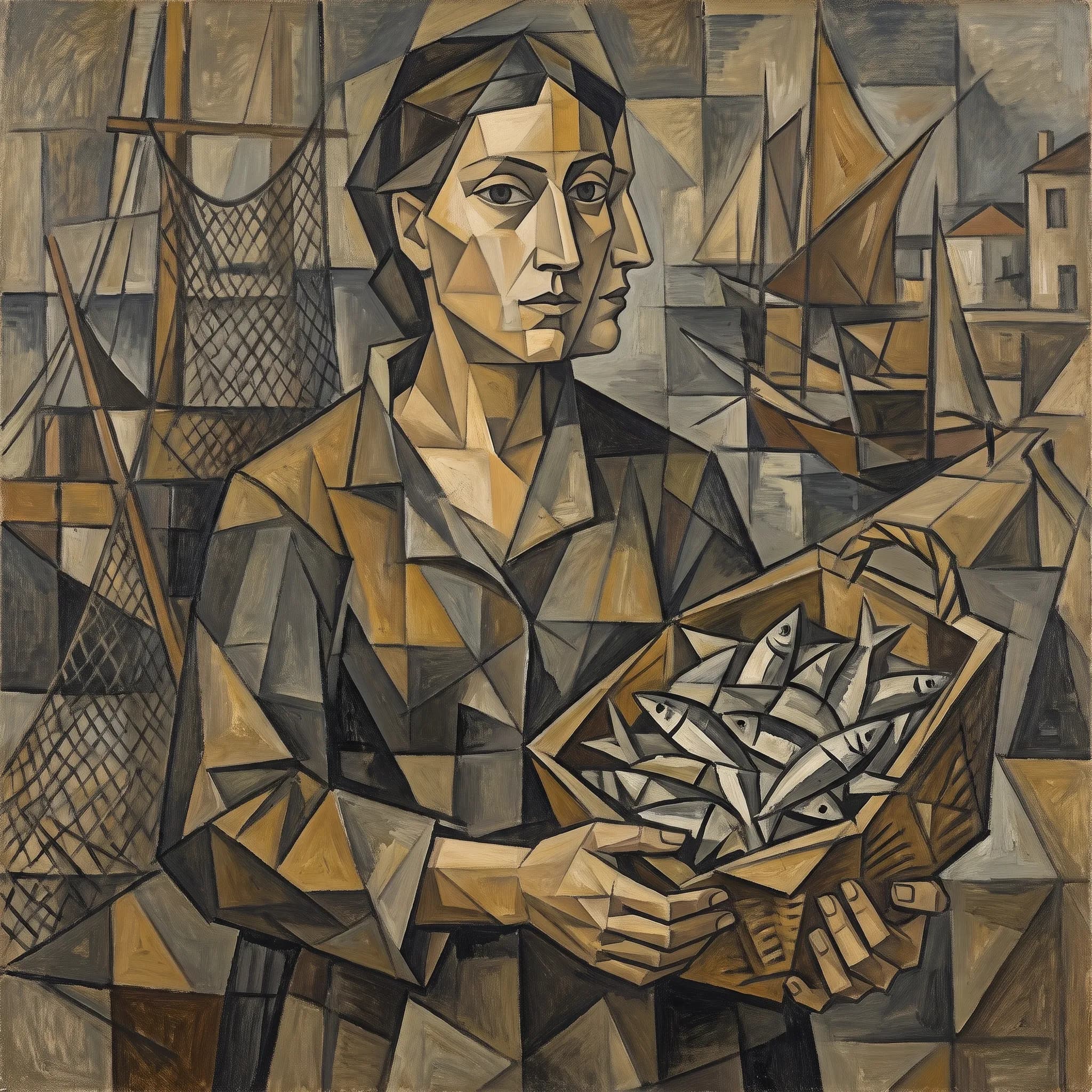
The sitter is invented, a fisherwoman from a Mediterranean harbor with her sardines in a wicker basket. Read the captions in order and you can see how few words it takes to move her out of the Blue Period and into collage.
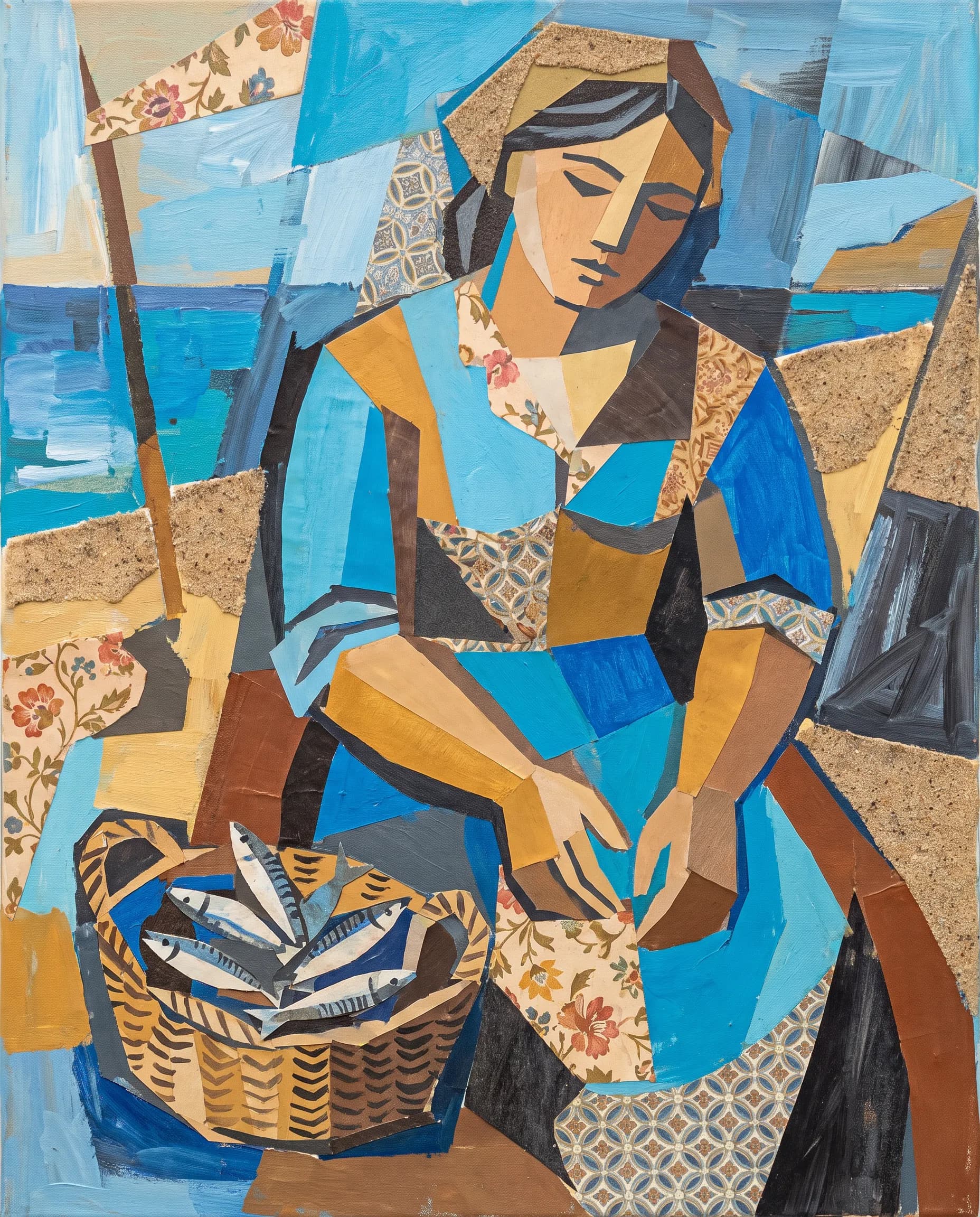
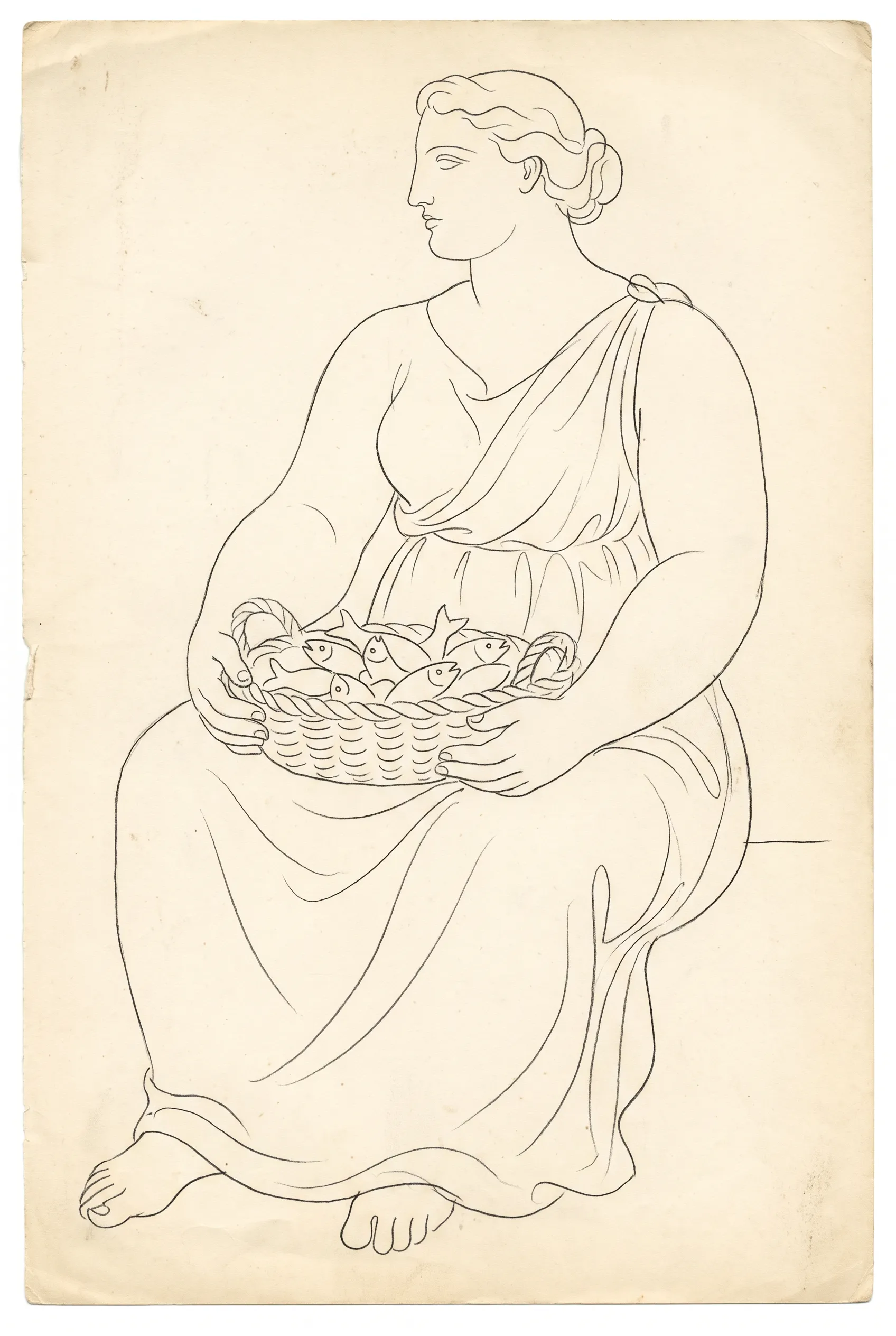
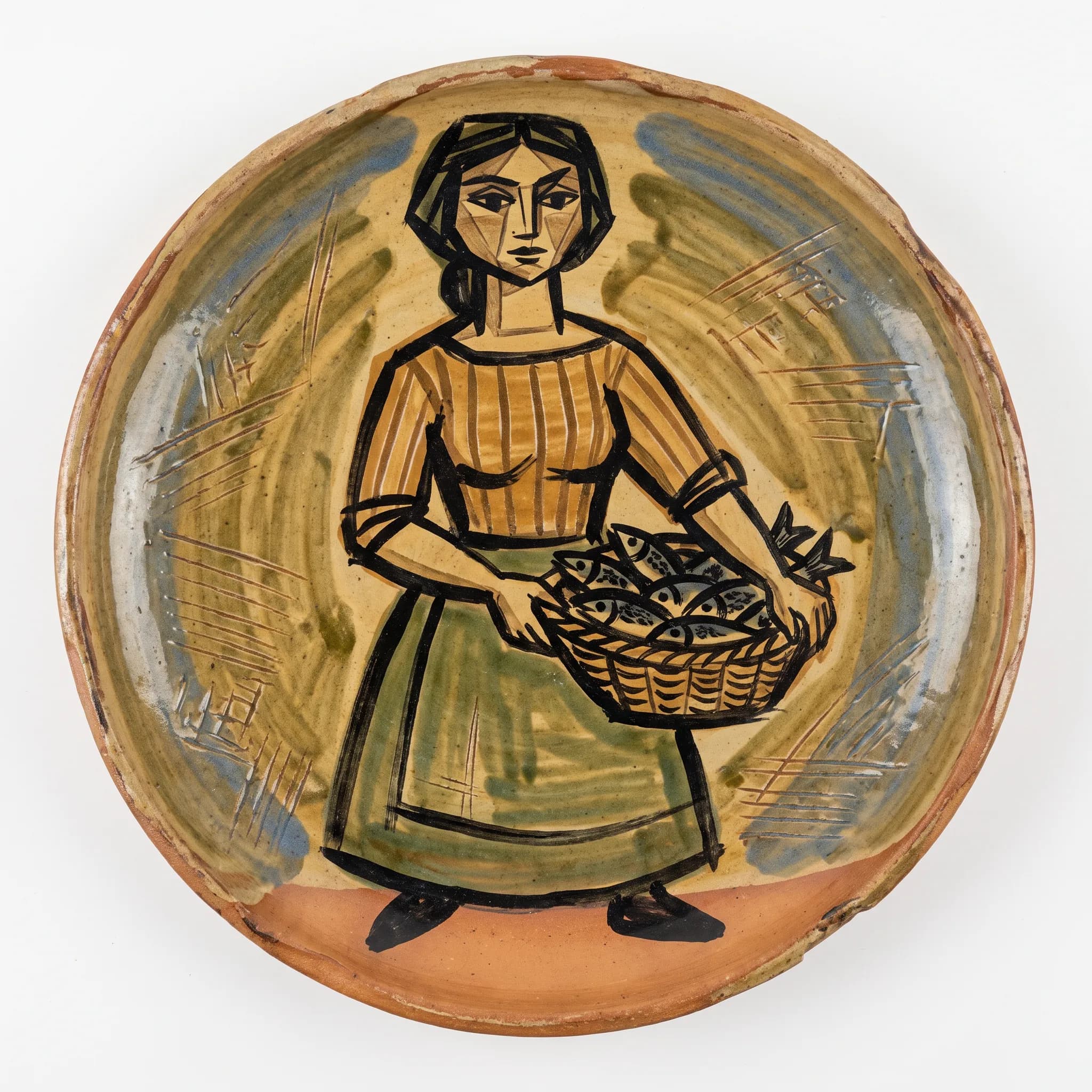
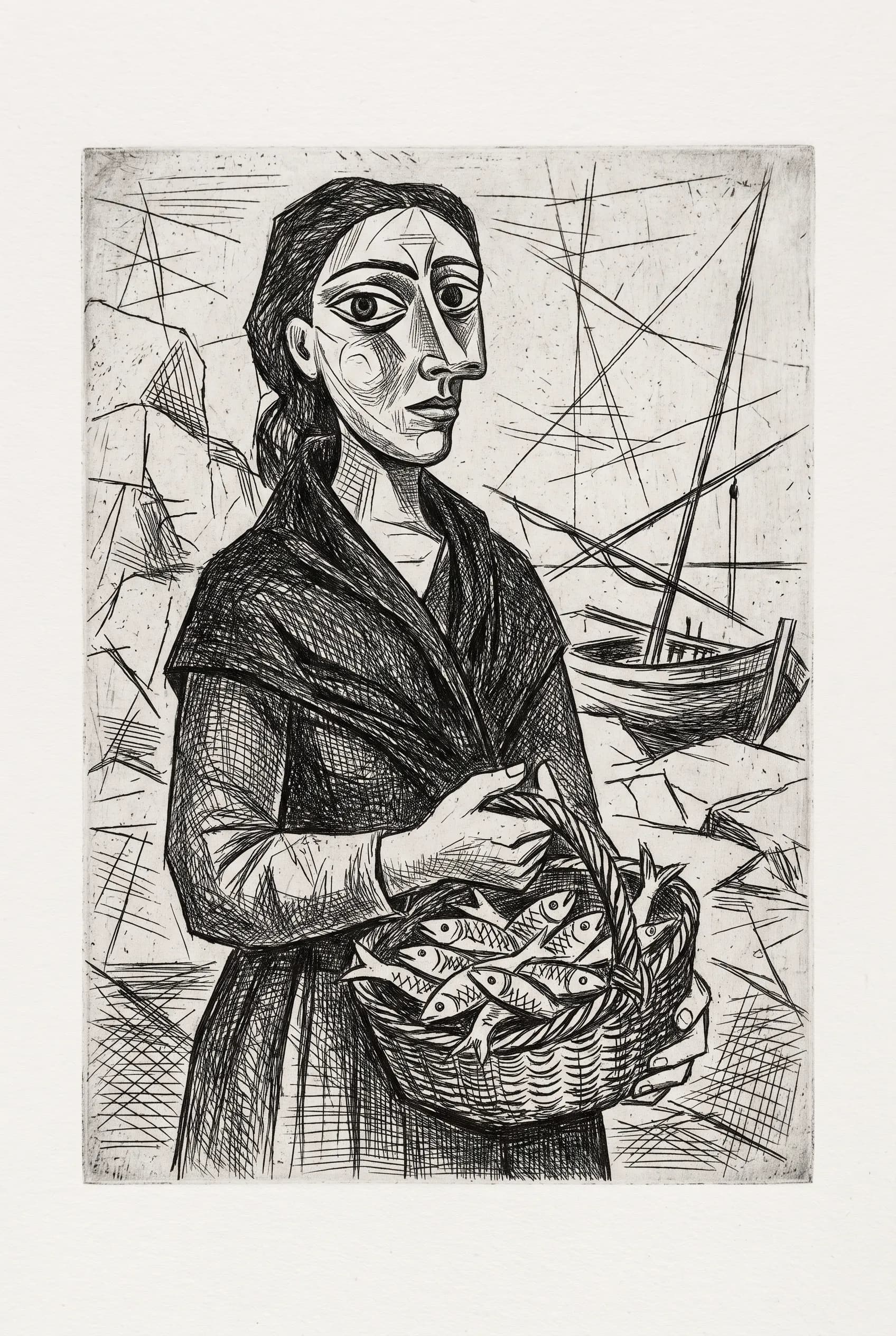
How to prompt for Pablo Picasso art style
Start with the period. Typed alone, Picasso art style tends to return one generic face with both eyes on one side of the nose. Each period has its own palette and handling.
- Blue Period, 1901 to mid-1904, when blue dominated and he painted beggars, the blind and the lonely
- Rose Period, late 1904 to 1906, in the tones of pottery, flesh and earth, often of circus performers
- Analytical Cubism, 1909 to 1912, with ochres, browns and grays and the figure merged with space on a grid
- Synthetic Cubism, 1912 to 1914, when color returned along with pasted paper, sand and printed wallpaper
- A classical turn after 1917, with clearer planes and drawing that looks back to Ingres
- The Surrealist years, late 1920s through the 1930s, with contorted bodies and intense color in flowing forms
After the period, pick a subject. Still lifes and heads were his main Cubist subjects, and both survive any amount of fracturing. Then add cues such as faceted planes, a masklike face or multiple viewpoints, and name the medium up front, because Picasso's art style shifted with his materials as much as with the decade.
Three prompts, three periods
- Blue Period. Oil painting of a thin Mediterranean fisherwoman holding a basket of sardines, elongated hands, downcast face, painted almost entirely in deep blues and blue-greens, in the manner of Picasso's Blue Period, quiet melancholy, visible brushstrokes, no text
- Cubist grid. Analytical Cubist painting of a fisherwoman with a basket of sardines, figure broken into small overlapping planes on a loose grid, face shown in profile and from the front at once, ochre, brown and gray palette, in the manner of Picasso around 1910, no text
- Surrealist years. Wide oil painting of a fisherwoman with her basket of sardines on a beach, the figure simplified into soft flowing curved shapes, heavy black outlines, intense purple, yellow and green, in the manner of Picasso's Surrealist years, no text
When the result looks wrong
The commonest miss is a Cubist request that comes back in bright poster colors, so if you wanted 1910, repeat the ochre and gray colors near the end. Collage prompts invite fake newspaper headlines in garbled letters, which patterned paper and a closing no text prevent. Blue Period prompts fail in a subtler way. Without elongated hands or a lowered gaze, the model paints a pleasant blue portrait that could belong to anyone.
Where Pablo Picasso art style works
If a client asks for the Pablo Picasso style of art on a commercial job, ask which decade they mean before matching period to format.
- Editorial covers suit Analytical Cubism, since a face split into planes reads as a person pulled two ways without any caption.
- Homeware suits the looser later line. Picasso decorated plates and jugs at the Madoura pottery in Vallauris from 1947. AI mockups shows your own ceramic design as photoreal product shots.
- Brand systems can borrow a period palette without using a single face. Lift the rose and terracotta of 1905 with Palette Pull, and the brand extension generator turns a logo, pattern and type sample in those colors into a seven-panel identity board.
Related styles
- For flat, saturated color and cut-paper shapes, see Henri Matisse art style
- For swirling brushwork in place of facets, try Vincent van Gogh art style
- To watch Cubist geometry become 1920s ornament, go to art deco style
- For another movement built on collage, read pop art style
FAQs
What is Pablo Picasso's style of artwork called?
Cubism is the usual answer, and the Picasso style of art most people picture is Cubist, though early critics dismissed those canvases as merely geometric while Picasso and Georges Braque, who developed the style together, saw a new kind of reality in them. He never officially joined the Surrealists either, even as André Breton claimed him as one of their own.
What is Picasso's most famous piece?
Guernica (1937) has the strongest claim. Spain's Republican government commissioned it for the Spanish pavilion at the 1937 World's Fair in Paris. Picasso finished the almost monochrome canvas, roughly 3.5 by 7.8 meters, in just over three weeks. Les Demoiselles d'Avignon (1907), one of the first Cubist works and now at MoMA in New York, is the usual runner-up.
Why is Pablo Picasso's art so special?
Range and influence, mostly. He is thought to have made about 50,000 works across painting, drawing, prints, sculpture and ceramics. Cubism's break with the naturalism Western painters had favored since the Renaissance opened the door to the abstract movements of the 20th century, while he kept experimenting into his final decade, which ended in 1973.



