
The Henri Matisse Art Style in Color, Line and Cut Paper
 FLORA
FLORA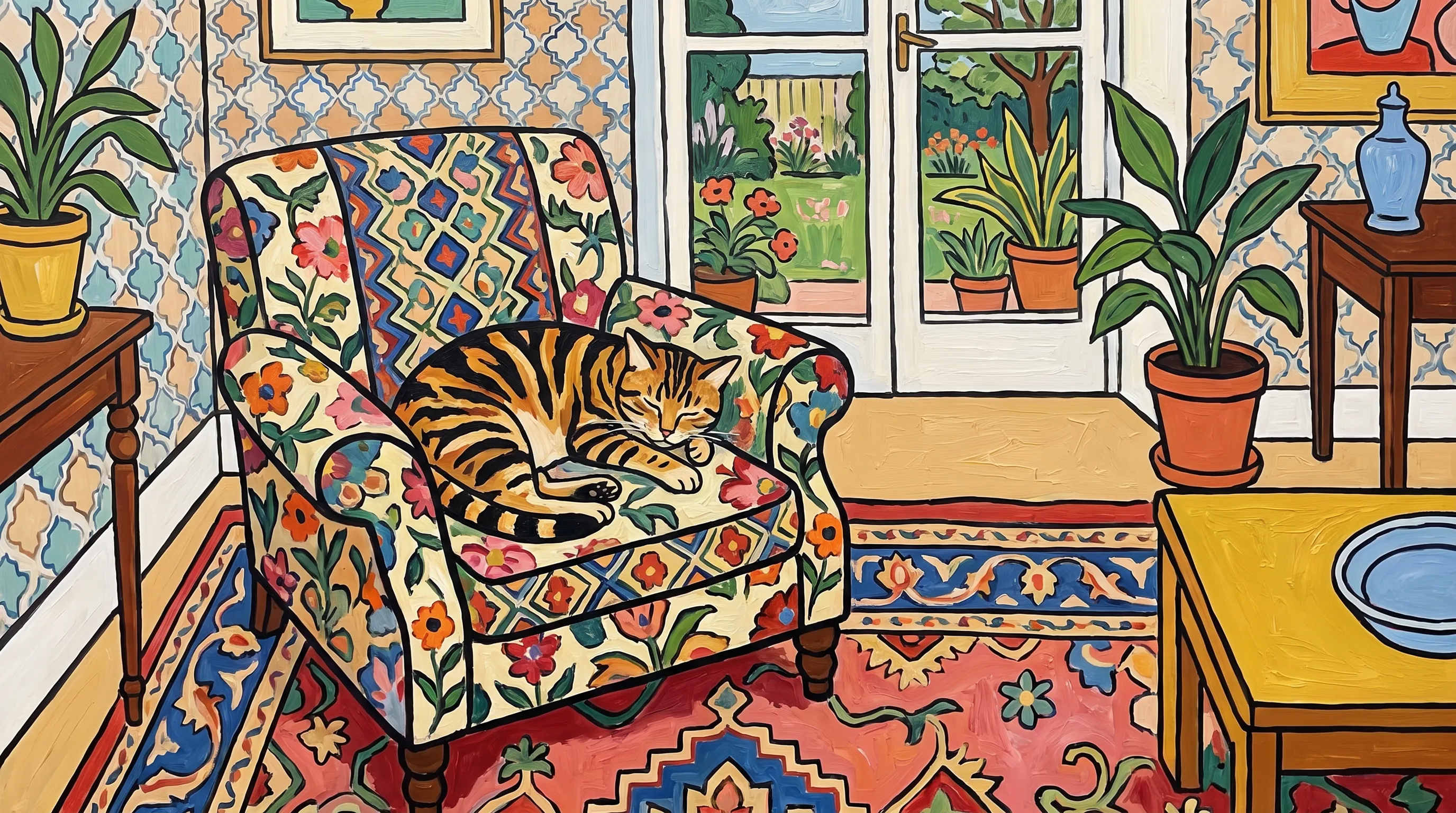
The Henri Matisse art style belongs to the French painter (1869 to 1954) who led Fauvism, the movement named at the 1905 Salon d'Automne when the critic Louis Vauxcelles called its painters les fauves, the wild beasts. His passion for pure color outlasted the group. Forms sit inside heavy, fluid outlines with little detail within them. Color goes down in large, thin patches, shadows nearly vanish, and the space presses flat against the picture surface. In his last years he cut shapes from paper painted with gouache and pasted them into compositions, some of them huge.
Henri Matisse art style examples made in FLORA
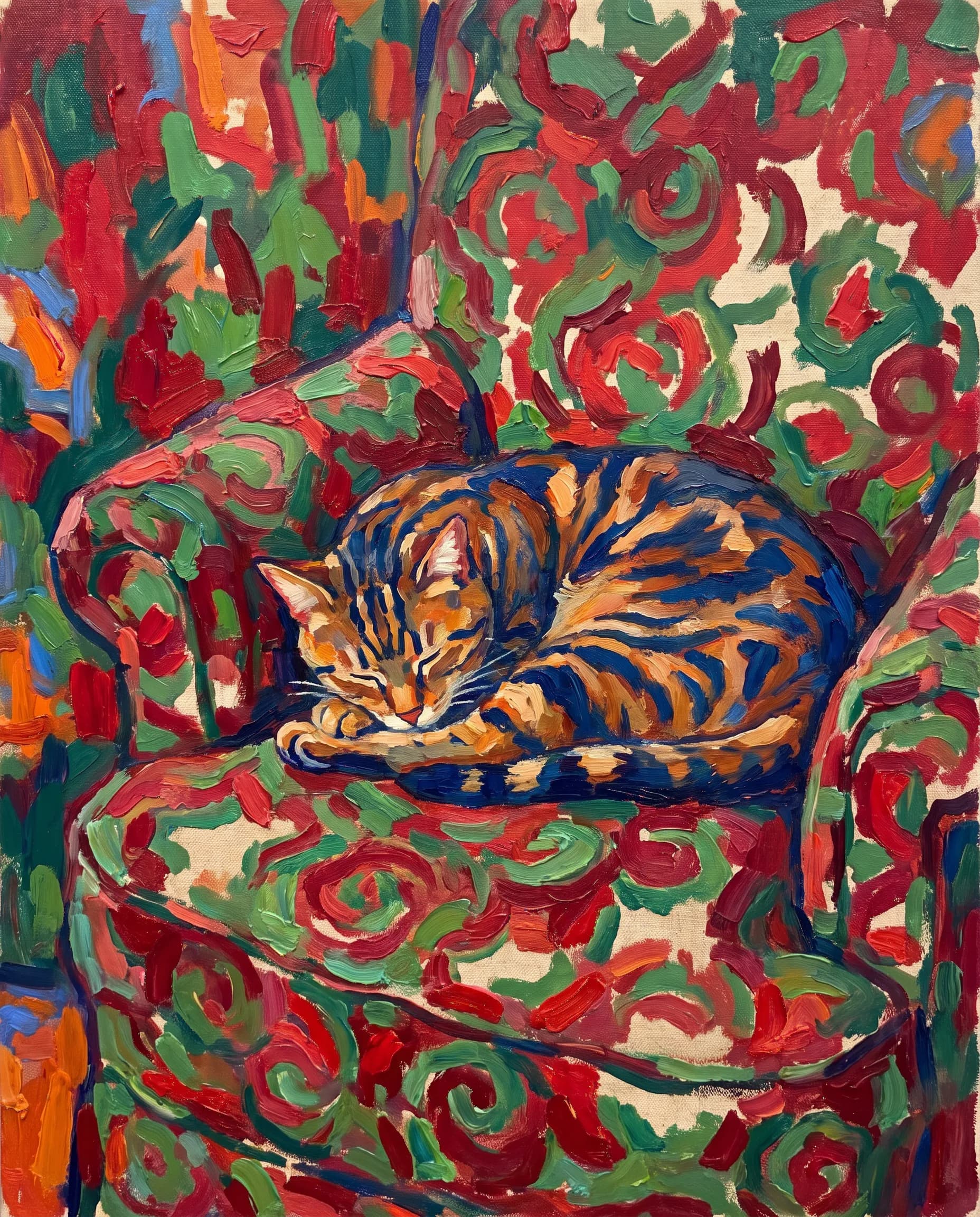
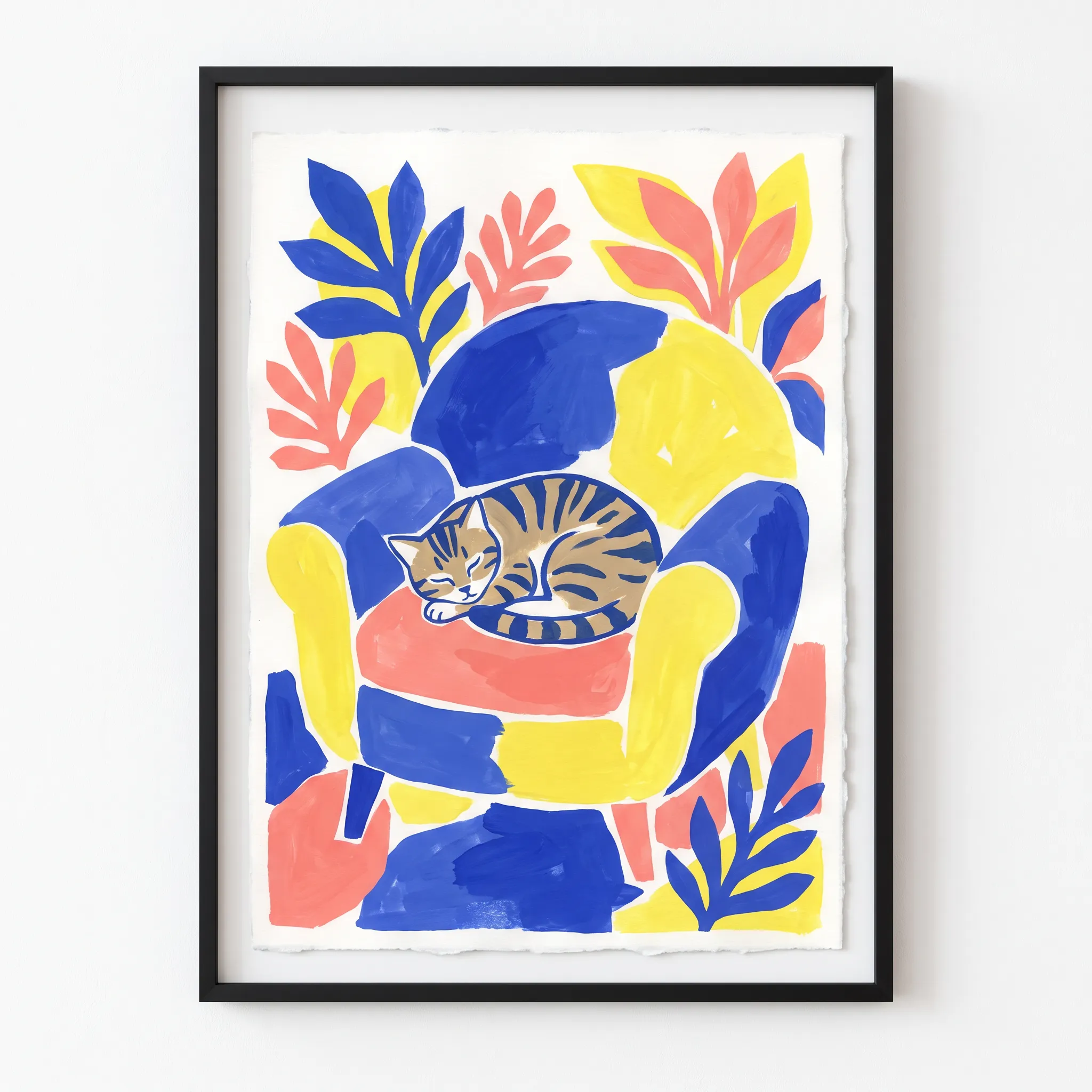
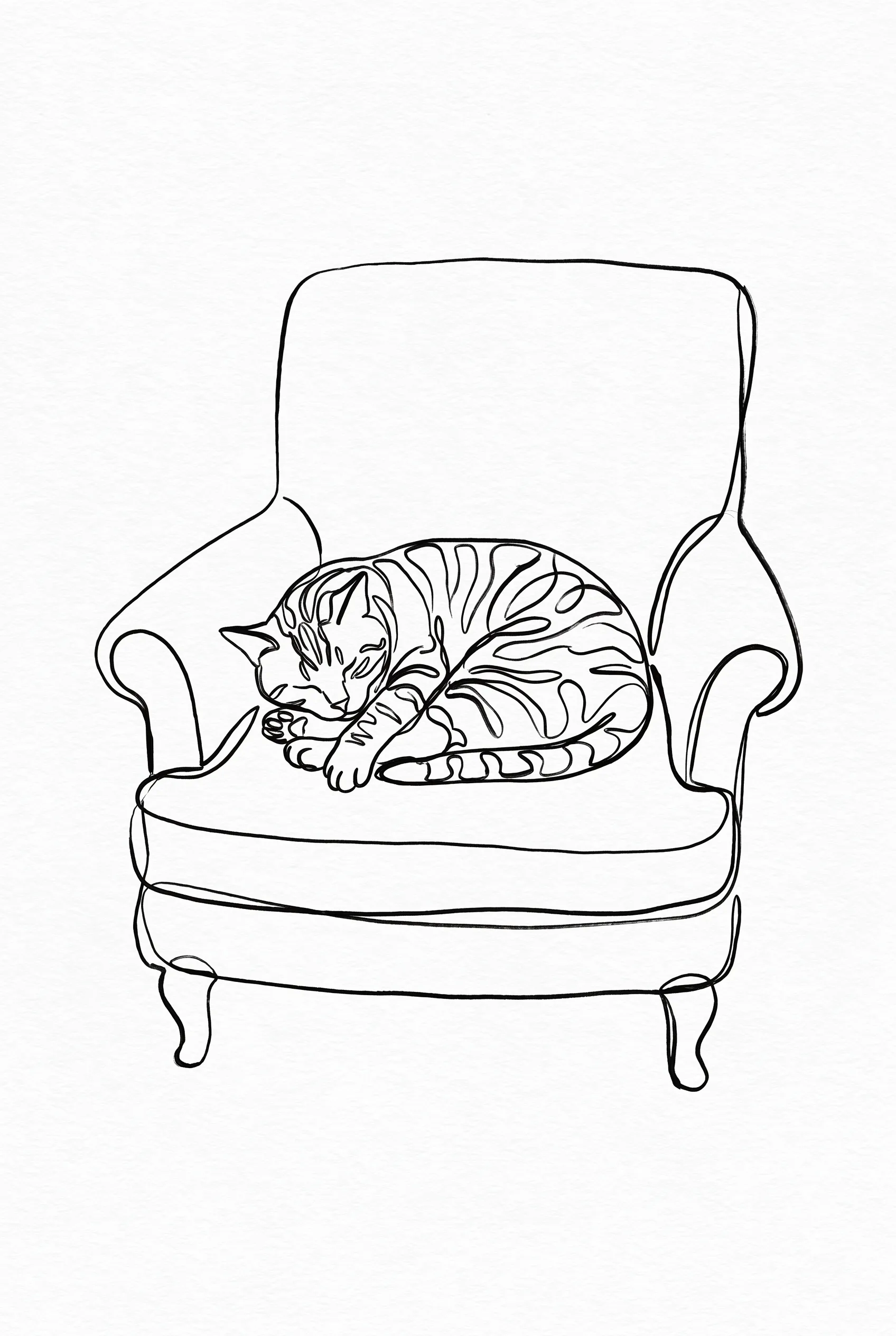
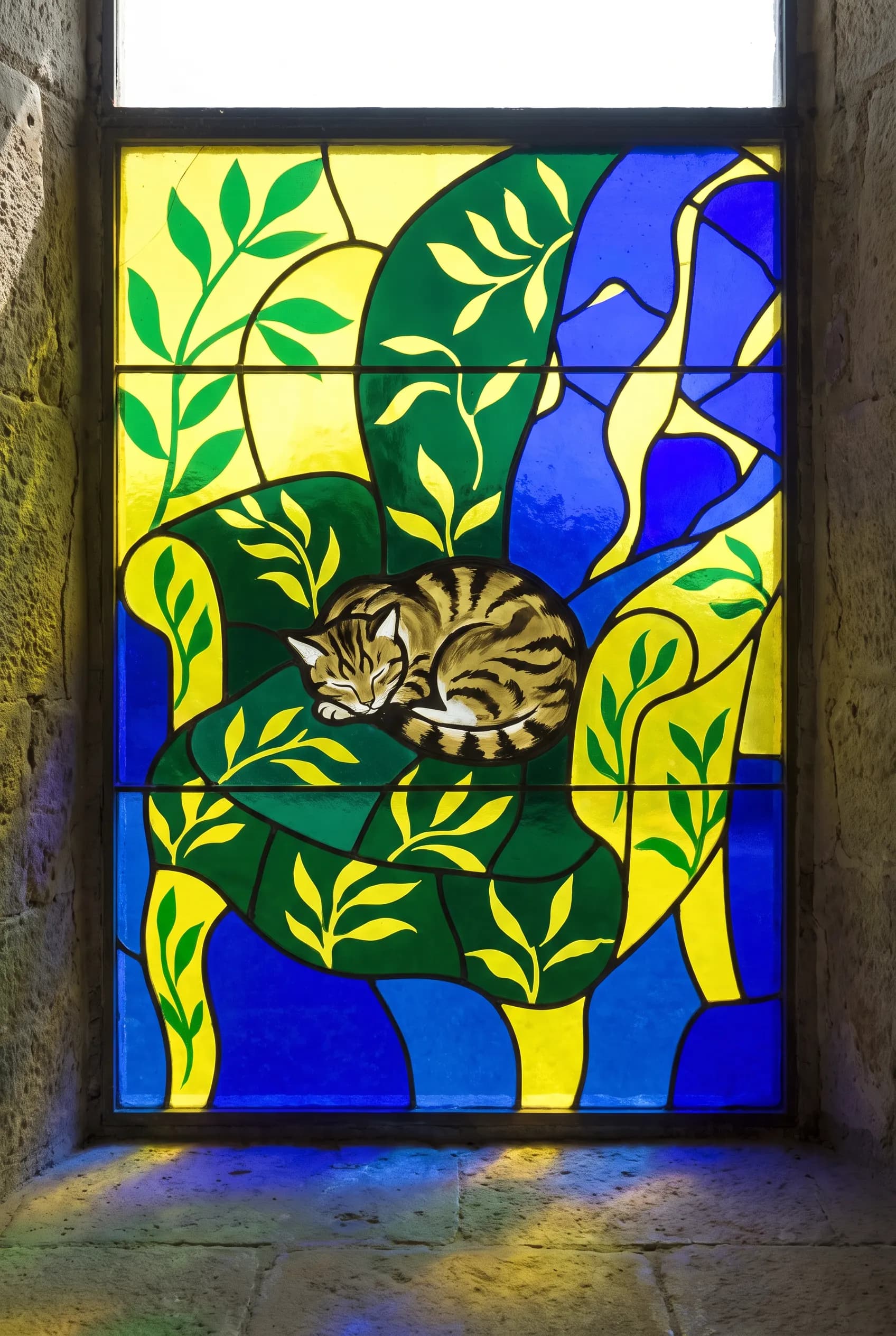
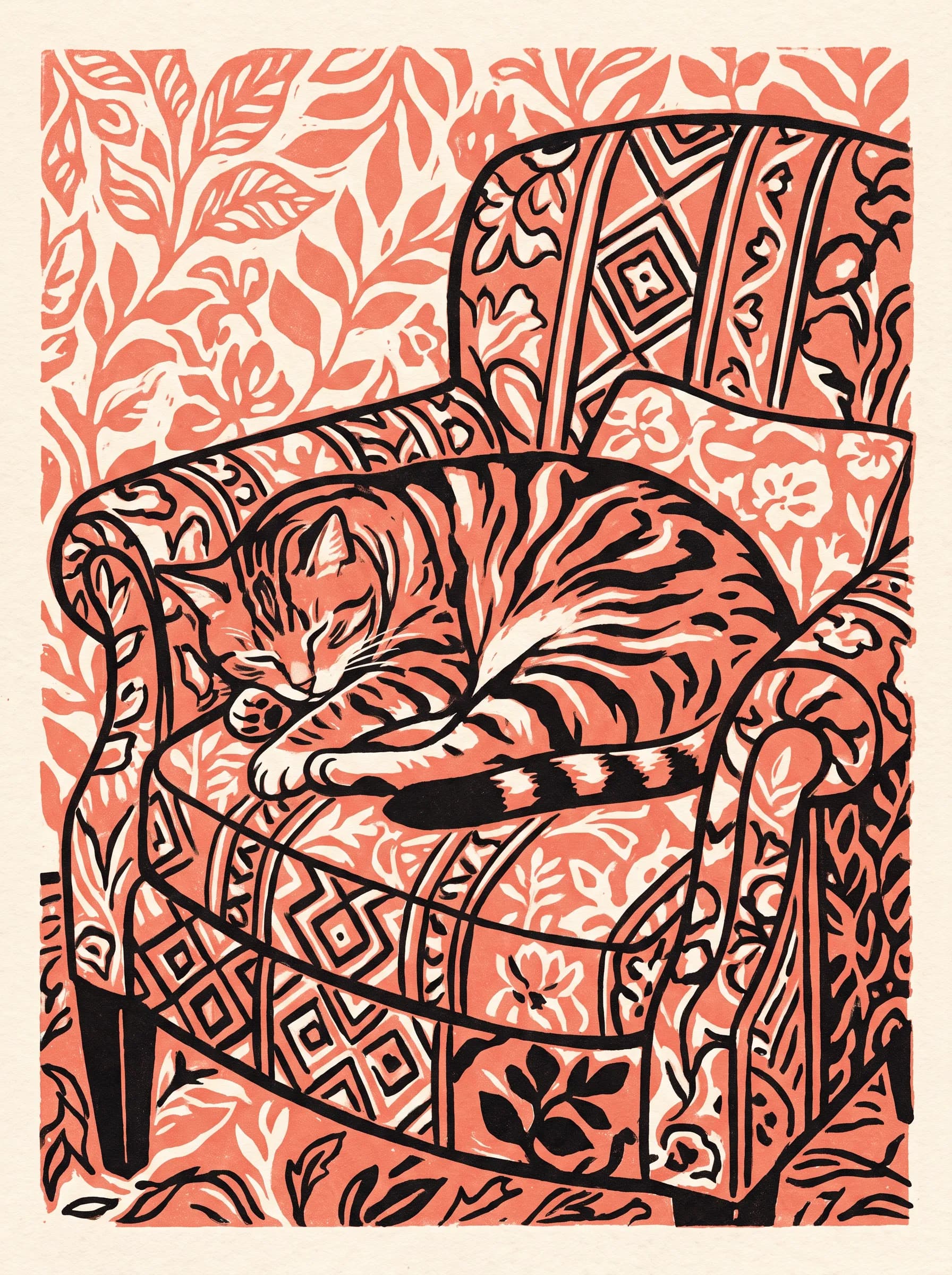
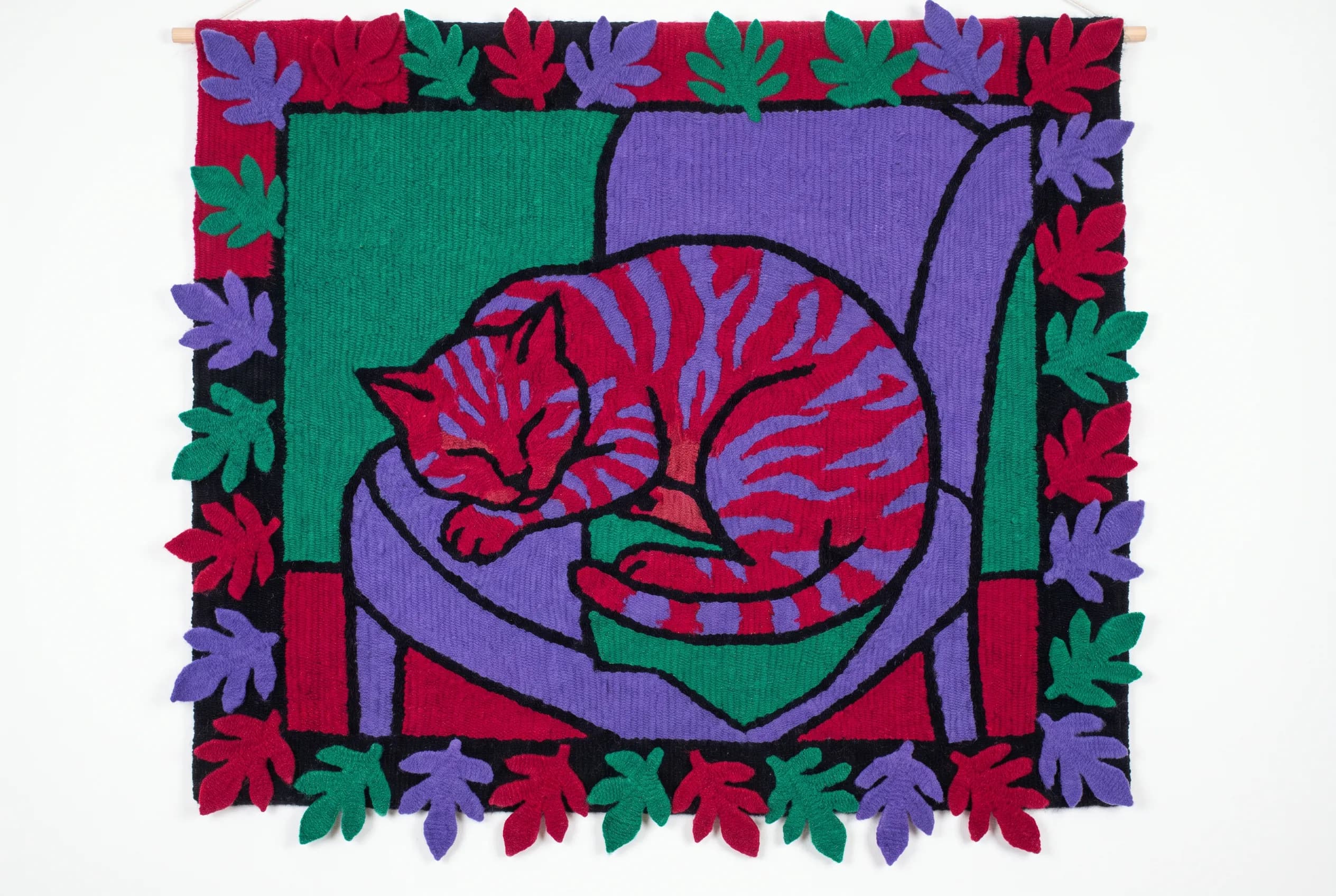
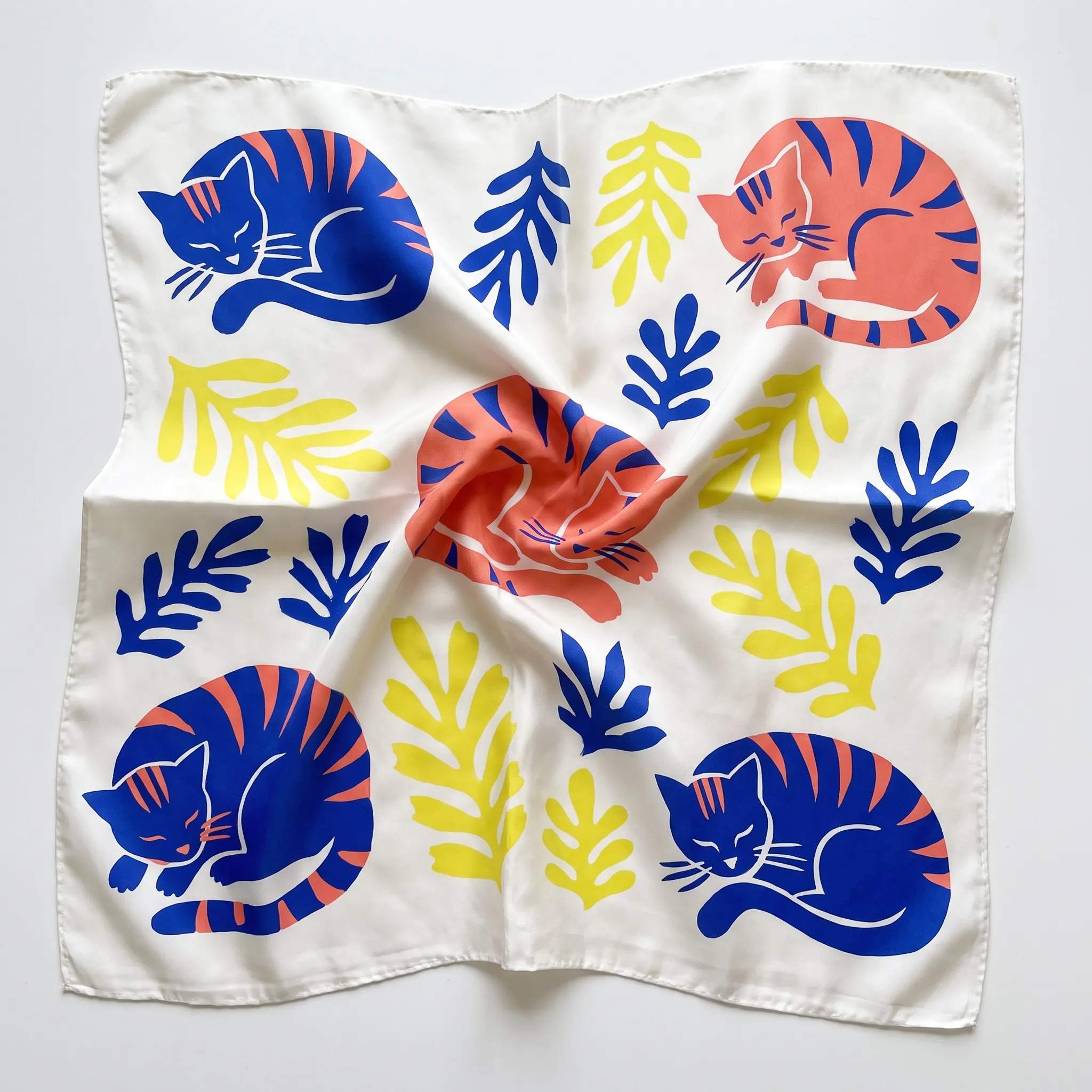
A tabby cat asleep on a patterned armchair appears in every frame, invented so that no image restages one of his canvases. Each caption holds the prompt that generated the picture with FLORA's AI image generator. Between them the cat passes through a 1905-style oil, cut paper, stained glass and five other media.
How to prompt for Henri Matisse art style
At Collioure in the summer of 1905, Matisse let his color split into complementary pairs laid down in swirls and slabs of brushwork, so a prompt aimed at that moment should name the pairs outright, red against green or orange against blue. The paintings that followed need different words. Describe flat patches of color, heavy outlines and a room squeezed so shallow that its patterns sit on the surface like a rug or a printed textile. Cut-out prompts call for other nouns again, such as gouache-painted paper and scissor edges on a plain white ground, so settle on one period before writing anything else.
He mostly painted domestic scenes and figures, so an everyday room with a chair or an animal in it gives the style something to decorate.
One cat across three periods
- Fauve summer. Oil painting of a tabby cat asleep on a patterned armchair, Fauvist color with red against green and orange against blue, quick slabs of brushwork, patches of raw canvas left bare, in the manner of Henri Matisse's Fauve years, unsigned canvas, no text
- Flat interior. Wide oil painting of a sunlit room with a tabby cat asleep on a patterned armchair, flat areas of color, heavy flowing outlines, no shadows, rug and wallpaper patterns pressed into a shallow space, in the manner of Matisse's interiors, no text
- Cut paper. Cut-paper collage of a tabby cat asleep on an armchair, shapes cut with scissors from sheets hand-painted in gouache, ultramarine, lemon yellow and coral on a white ground, leaf forms around the cat, in the manner of Henri Matisse's late cut-outs, no text
Common misses
Leave his famous titles out, since naming one can pull a model toward restaging it, and describe your own scene in full. Shading is the giveaway in the oils, since any modeling on the cat's body turns flat color back into an ordinary painting, and saying no shadows a second time, late in the prompt, helps. Cut-outs drift the other way and can come back as slick digital vectors. Asking for gouache texture and slightly uneven scissor edges usually brings the paper back.
Where Henri Matisse art style works
- Textile prints suit the cut-out look, since flat paper shapes on a plain ground make simple repeats. Generate the tile in FLORA, then take it to Print/Pattern Replacement, which places a pattern you already have onto a product image such as a dress or a cushion.
- Icon sets can borrow the hand-cut look. Make one cut-out image and give it to the icon pack technique as its style reference, with a short description of the icons you need, and it sends back a single image showing a matched set.
- Book covers and posters have a precedent in Jazz, his 1947 book of thoughts on art and life, where the color illustrations were made from cut paper. A plain white ground leaves room for a title set in real type.
Related styles
- Pablo Picasso art style, whose 1920s classical turn matched Matisse's calmer Nice years
- Vincent van Gogh art style, a Post-Impressionist whose approach Matisse tried before Fauvism
- Claude Monet art style, for the Impressionism he discovered in the late 1890s
- Vector art style, clean flat shapes made on screen instead of with scissors
FAQs
What is Matisse art style called?
Fauvism, at least for the work that made his name. The Fauves applied pure color straight from the paint tube. For most of them it was a passing stage. By 1908 many had swapped it for Cubism, pulled by renewed interest in Cézanne. Matisse was the one who stayed.
Is Fauvism a type of expressionism?
They overlap without being the same movement. Fauvism was a French movement, and its expressive use of color resonated with German Expressionism, since both treated art as a form of expression. When the Fauves dispersed, some moved toward Expressionism, while Georges Braque went on to Cubism.
What techniques did Henri Matisse use in his painting?
In 1899 he grew interested in the pointillist idea of placing small dots of color side by side so they mix in the viewer's eye, after reading Paul Signac's manifesto, though he later called it a tyranny. Bedridden for long periods after a 1941 operation, he worked on mural-sized projects from his bed with a crayon fixed to a long pole. He called the cut-paper method drawing with scissors.



