
Video Game Art Styles Tested on One River Crossing
 FLORA
FLORA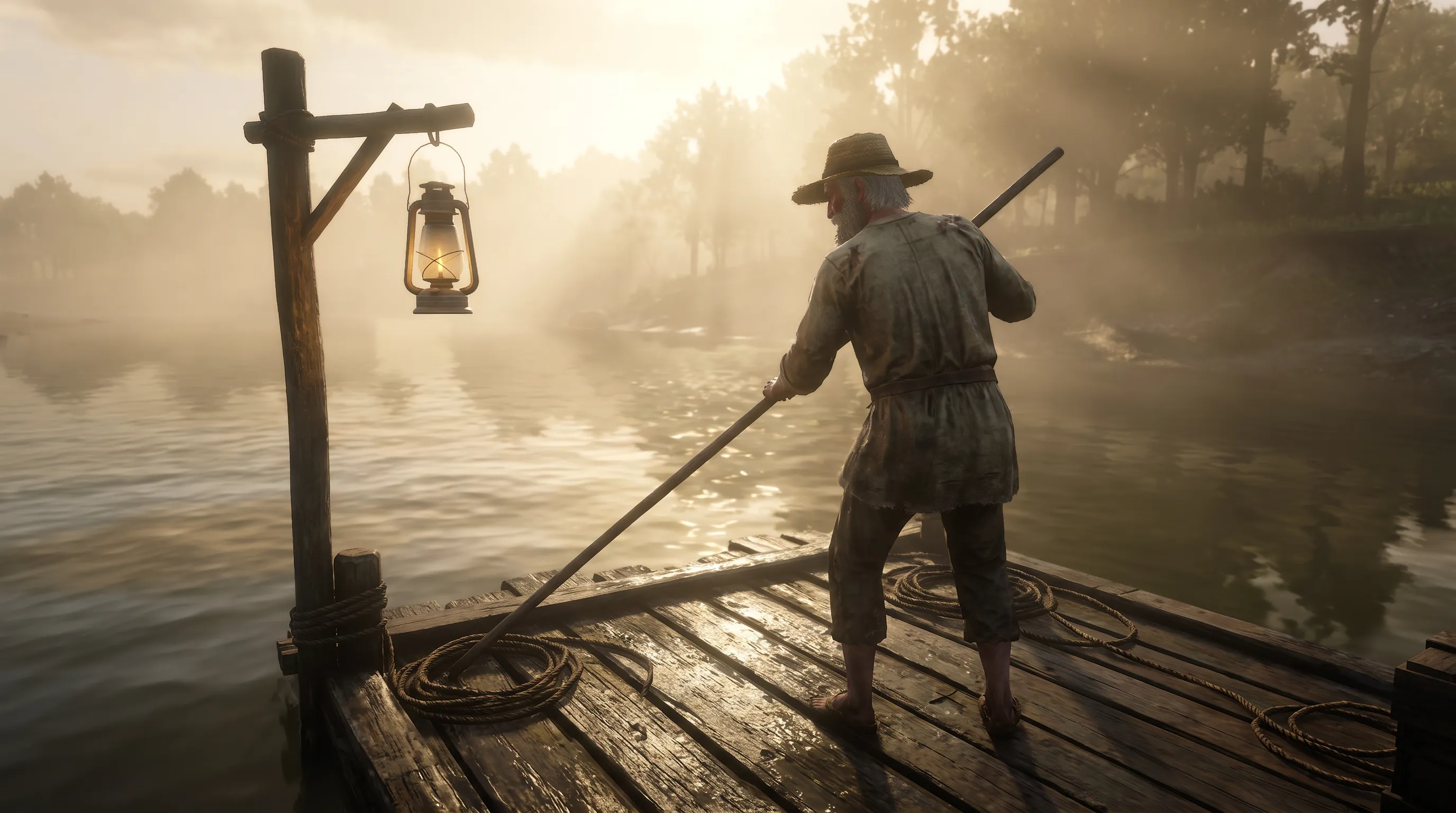
Video game art styles are the visual rules a game commits to, from the way an outline is drawn to how light falls across a wall. For most of the medium's history, hardware wrote those rules. The Smithsonian American Art Museum traced that history in its 2012 exhibition The Art of Video Games, which sorted work into five eras of game technology on twenty systems, with the Atari VCS at one end and the PlayStation 3 at the other. Four traits tell the styles apart in a single frame, namely what shapes are built from (pixels, polygons, cubes or brushwork), whether shading steps or blends, how wide the palette runs and whether edges carry an outline.
Video game art styles examples made in FLORA
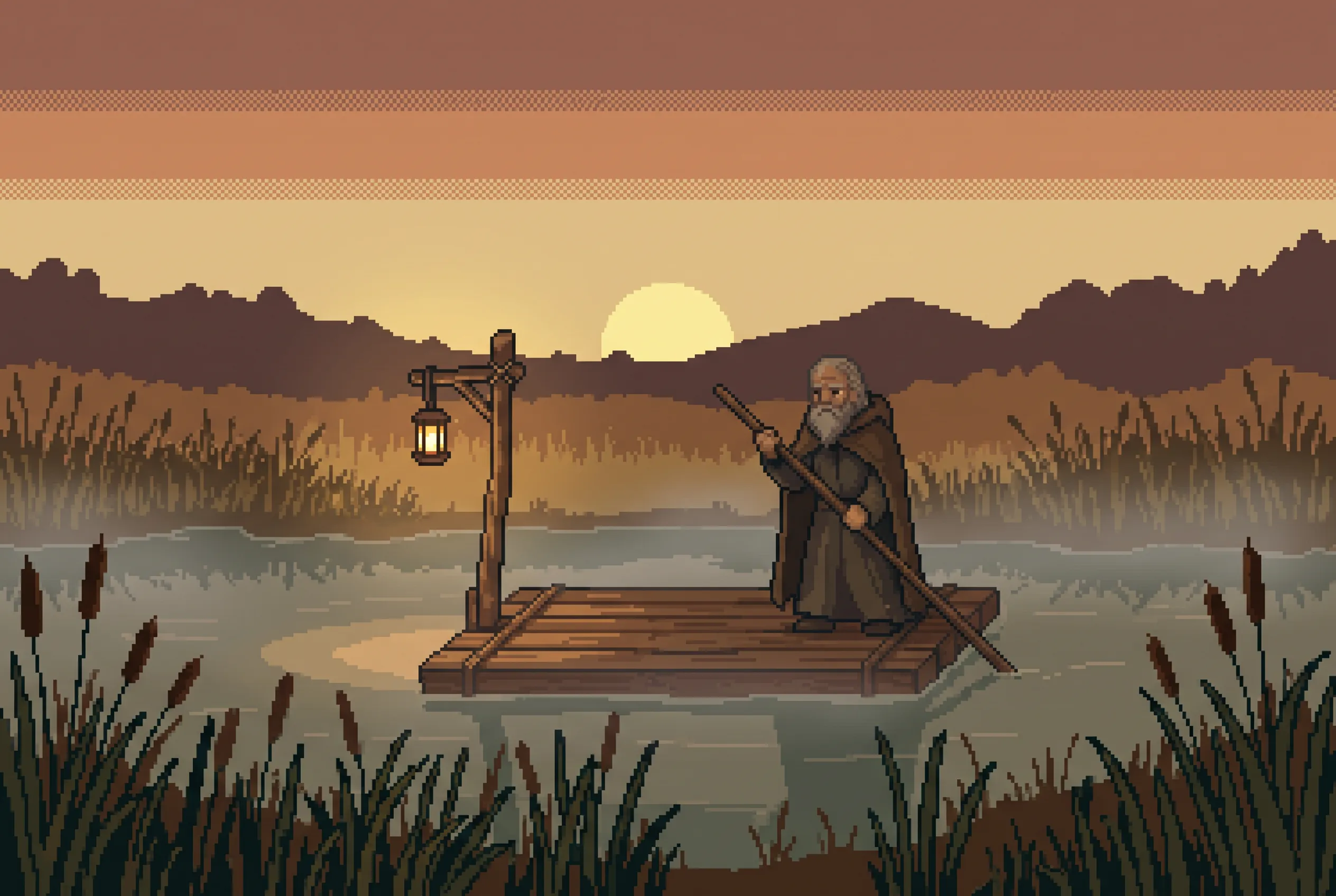
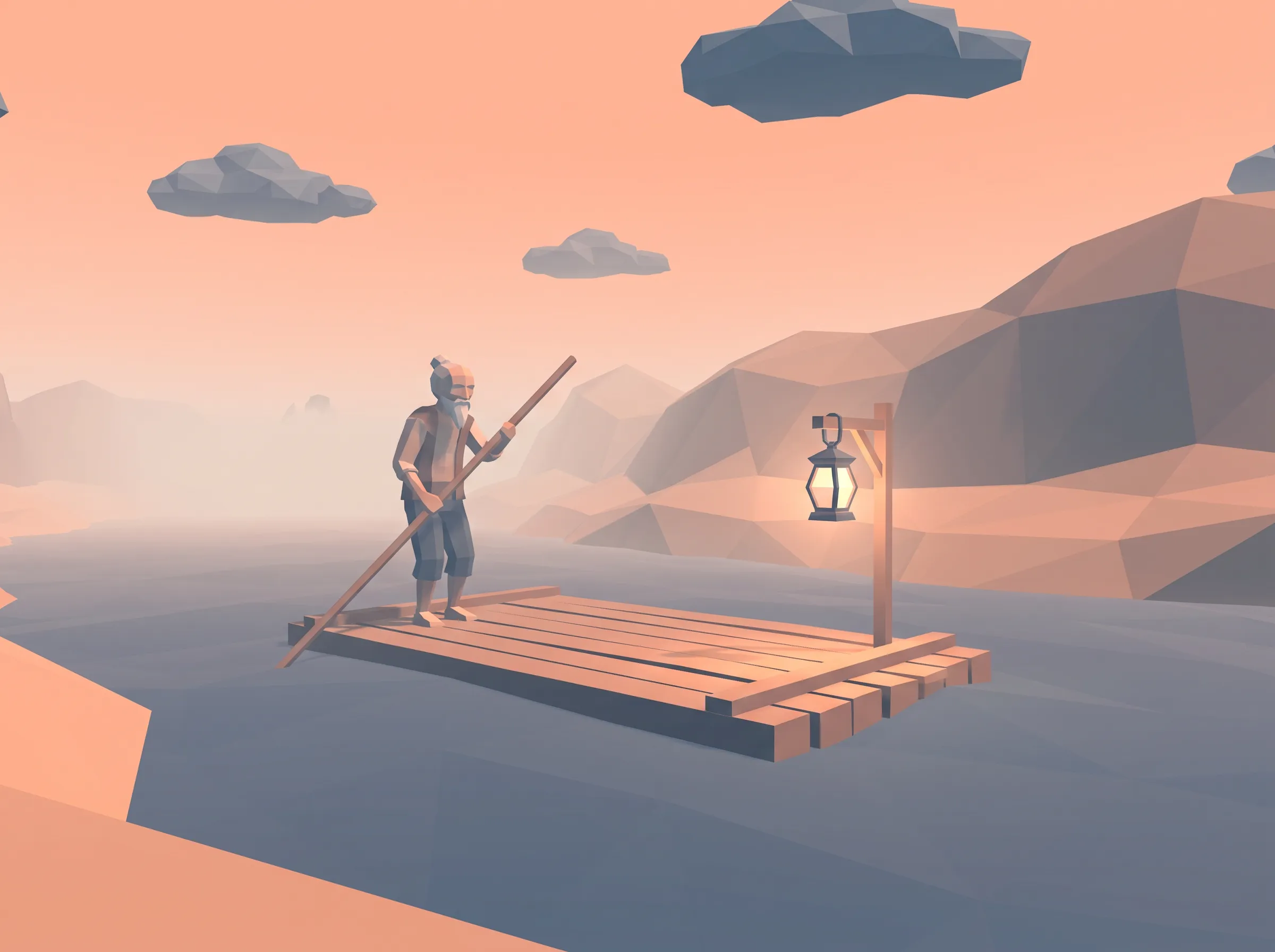
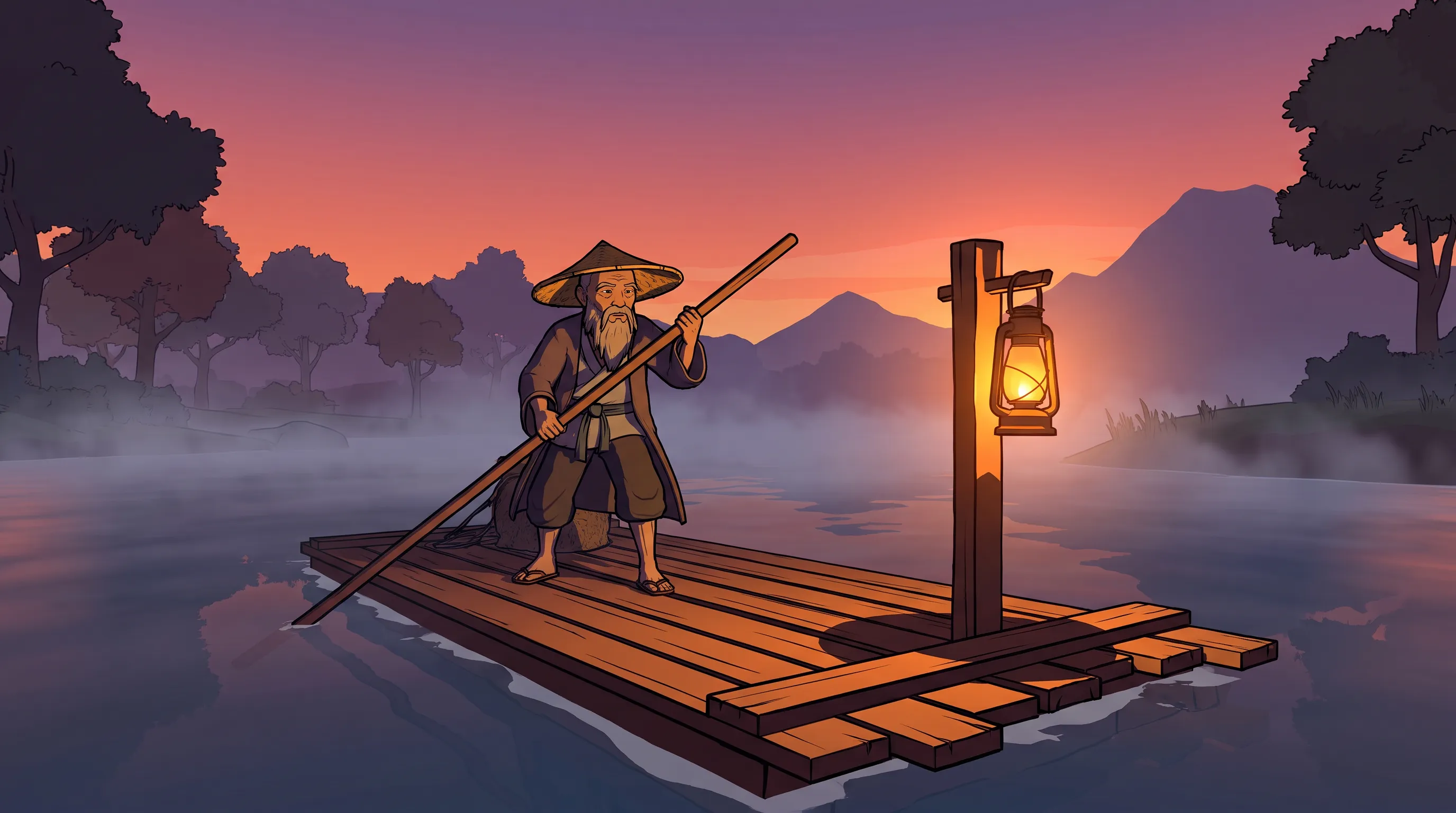
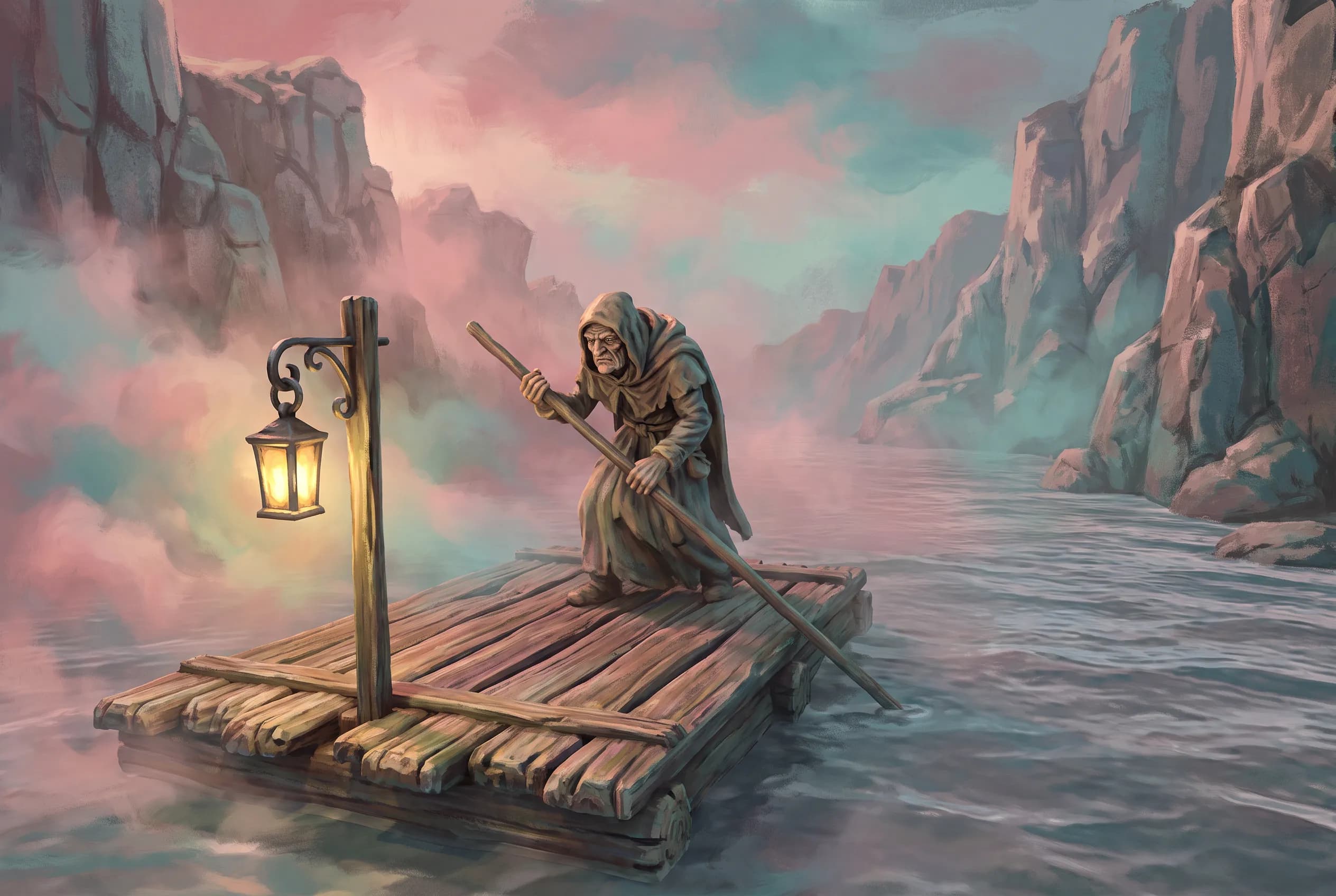
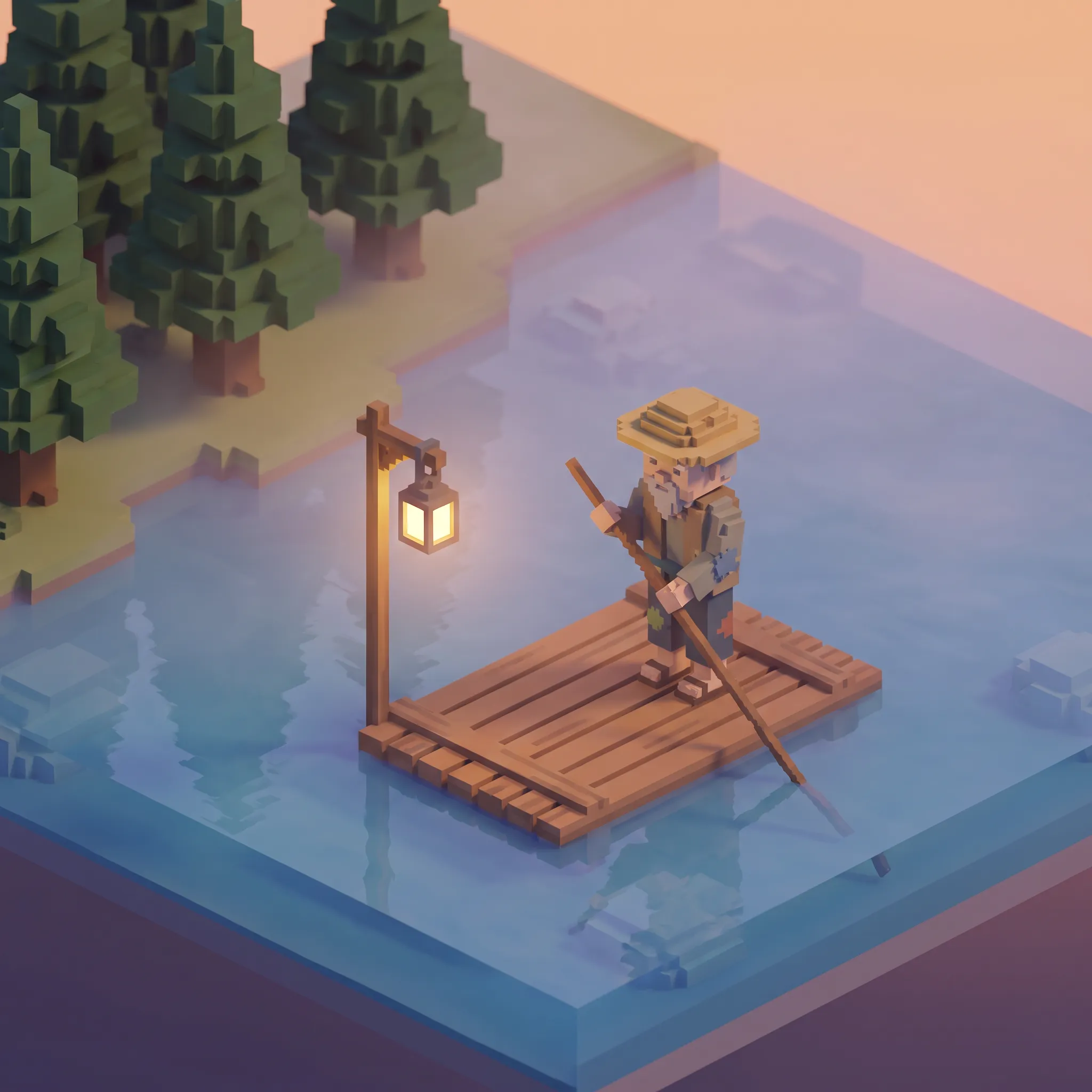
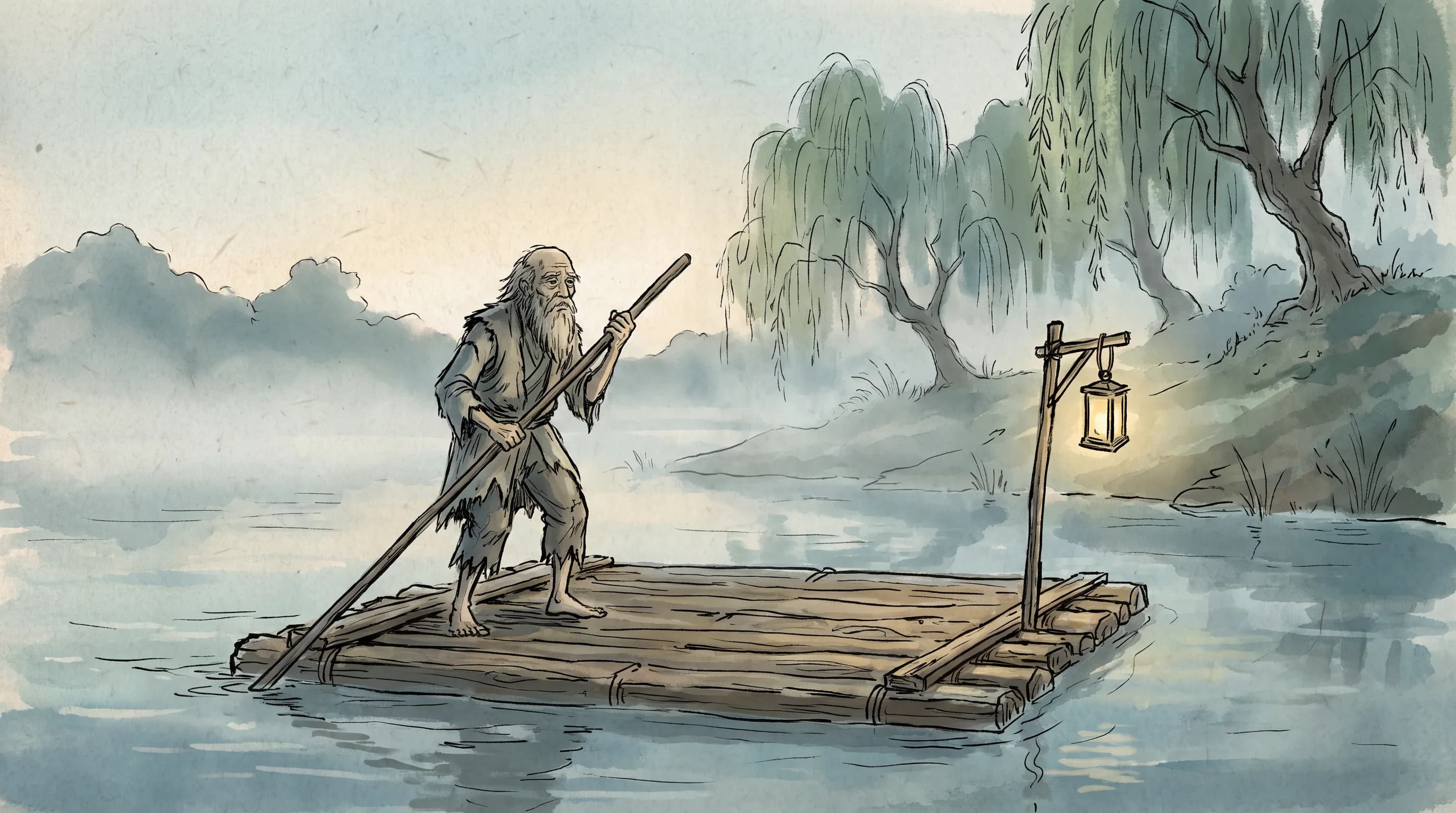
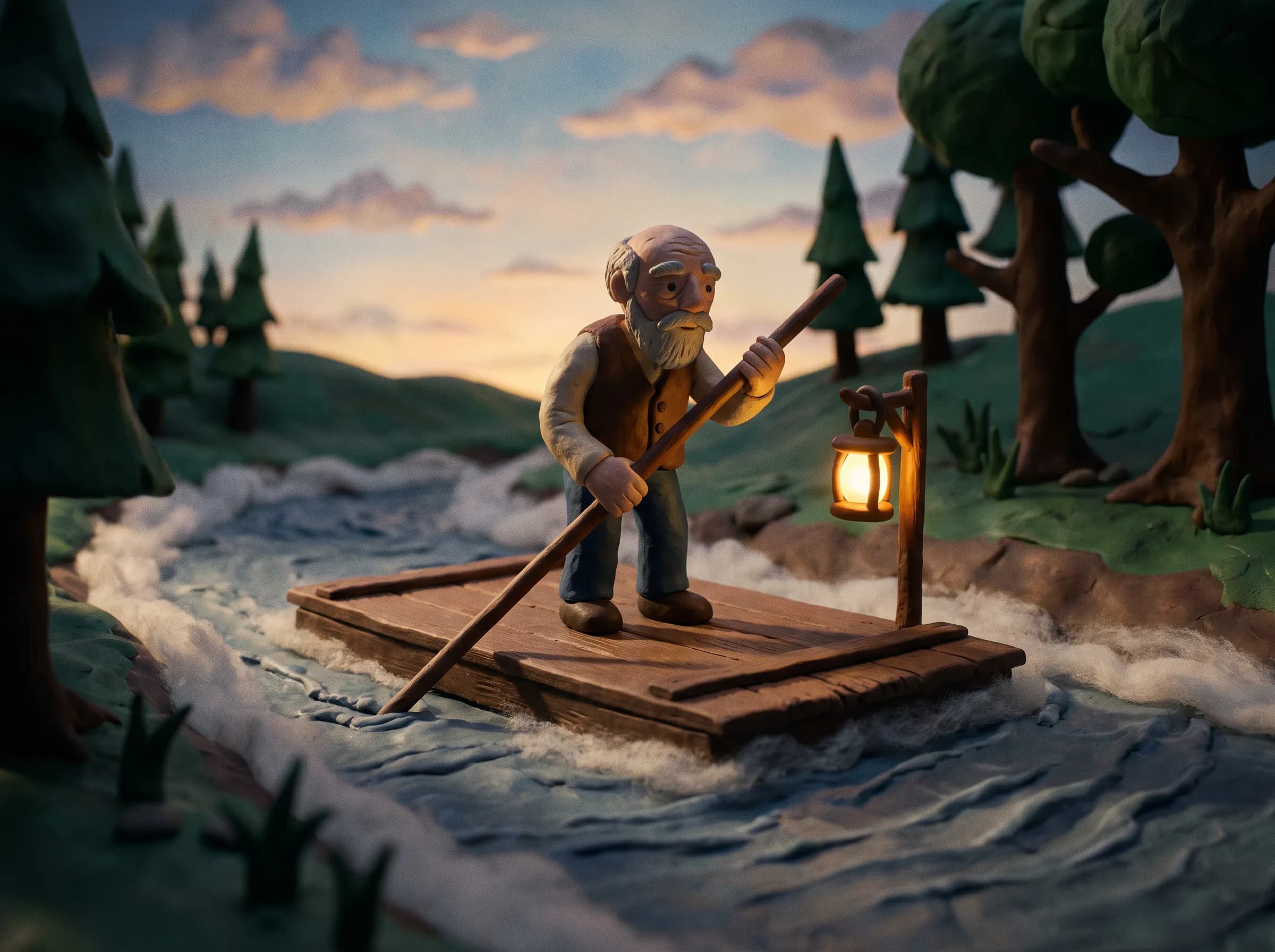
The scene holds still in every frame, an elderly ferryman poling a flat wooden raft across a misty river at dawn with a lantern on a post, while the rendering changes around him. That makes it easy to compare different video game art styles on the same water and fog. FLORA's AI image generator produced each image, and the prompt sits underneath as its caption.
How to prompt for video game art styles
Open with the rendering approach, since that word decides how every surface gets built. Cel shading, also called toon shading, wants flat solid colors and bold outlines under only a few light sources, which is what gives it a sharp break between light and shadow. Realism asks for the opposite, scanned materials and light that fades gradually. Then pick a camera. Side-on reads as a 2D platformer, while a camera low behind the raft feels like a third-person adventure. If health bars or menus creep in, say in the prompt that the frame has no HUD. To weigh art styles for games against each other, keep the subject sentence identical and swap only the style words.
Three looks to paste in
- Cel-shaded. Cel-shaded 3D game still of an elderly ferryman poling a flat wooden raft across a misty river at dawn, lantern on a post, bold black outlines, flat solid colors with one hard shadow step, single warm light source, no text
- Voxel. Voxel game scene of an elderly ferryman poling a flat wooden raft across a misty river at dawn, lantern on a post, every surface built from small cubes, blocky water and pine trees, soft ambient occlusion, isometric camera, no text
- Photoreal. Photorealistic in-engine game render of an elderly ferryman poling a flat wooden raft across a misty river at dawn, lit lantern on a post, scanned wood and wet rope textures, volumetric fog, low golden sun, third-person camera behind the raft, clean cinematic frame without HUD or interface, no text
Where styles bleed together
Neighboring game art styles merge more often than distant ones. A cel-shaded frame can flatten into a 2D anime illustration with no sense of volume, and a hard shadow step on rounded forms usually restores it. Voxel scenes can slide toward smooth low poly unless the prompt insists on small cubes everywhere. Photoreal renders tend to come back glossy and plastic, so add wear, dirt and one clear light source.
Where video game art styles work
Picking a game art style is partly a budget decision. Writing for Creative Bloq, Joe Foley warns that 3D realism eats production time, is seldom an option for a developer working alone and can look dated fast once technology moves on. A row of test frames in different game art styles lets a team weigh that before building a single asset. If realism stays in the running, the realistic AI image generator takes a subject, a scene and a second scene in three text fields and returns a photoreal hero shot, the same subject in the new scene and a filmic grade.
The winner should carry through to the studio's public face. For a devlog channel, the YouTube banner maker builds a hero banner, a matching avatar and a color variant at YouTube's 2560x1440 size, all of which should match the game.
Related styles
- Pixel art styles break the sprite branch into 1-bit, 8-bit, 16-bit, isometric and HD.
- 3D art styles cover modeled looks in general, games included.
- Cartoon art styles share their round shapes and flat fills with toon-shaded games.
- Character art styles zoom in on the figures who live in these worlds.
FAQs
What are the different styles of video games?
Sorted by look instead of genre, a Creative Bloq guide from August 2025 lists 3D realism, pixel art, vector, low poly, cel-shaded, hand-drawn and monochromatic as seven of the most popular. Vector games date back to 1962 and Spacewar! Fantasy realism, which renders invented worlds as believably as real ones, is sometimes split out as a style of its own.
What are some iconic video game art styles?
Creative Bloq holds up the cel-shaded The Legend of Zelda: The Wind Waker as a standout, and points to Cuphead for its take on 1930s animation. For a crowd-picked list, the 80 games in the Smithsonian's The Art of Video Games topped a 2011 public vote in which 119,000 people in 175 countries cast more than 3.7 million ballots.
What are the different types of 3D art?
For games, 3D covers realism, low poly, cel or toon shading and hand-modeled clay, among others. Clay starts as physical models, which are 3D scanned with a camera before being retopologized, rigged and animated, often through motion capture. Harold Halibut and The Midnight Walk are two recent games built around them.



