
Pixel Art Styles, From Two Colors to Thousands
 FLORA
FLORA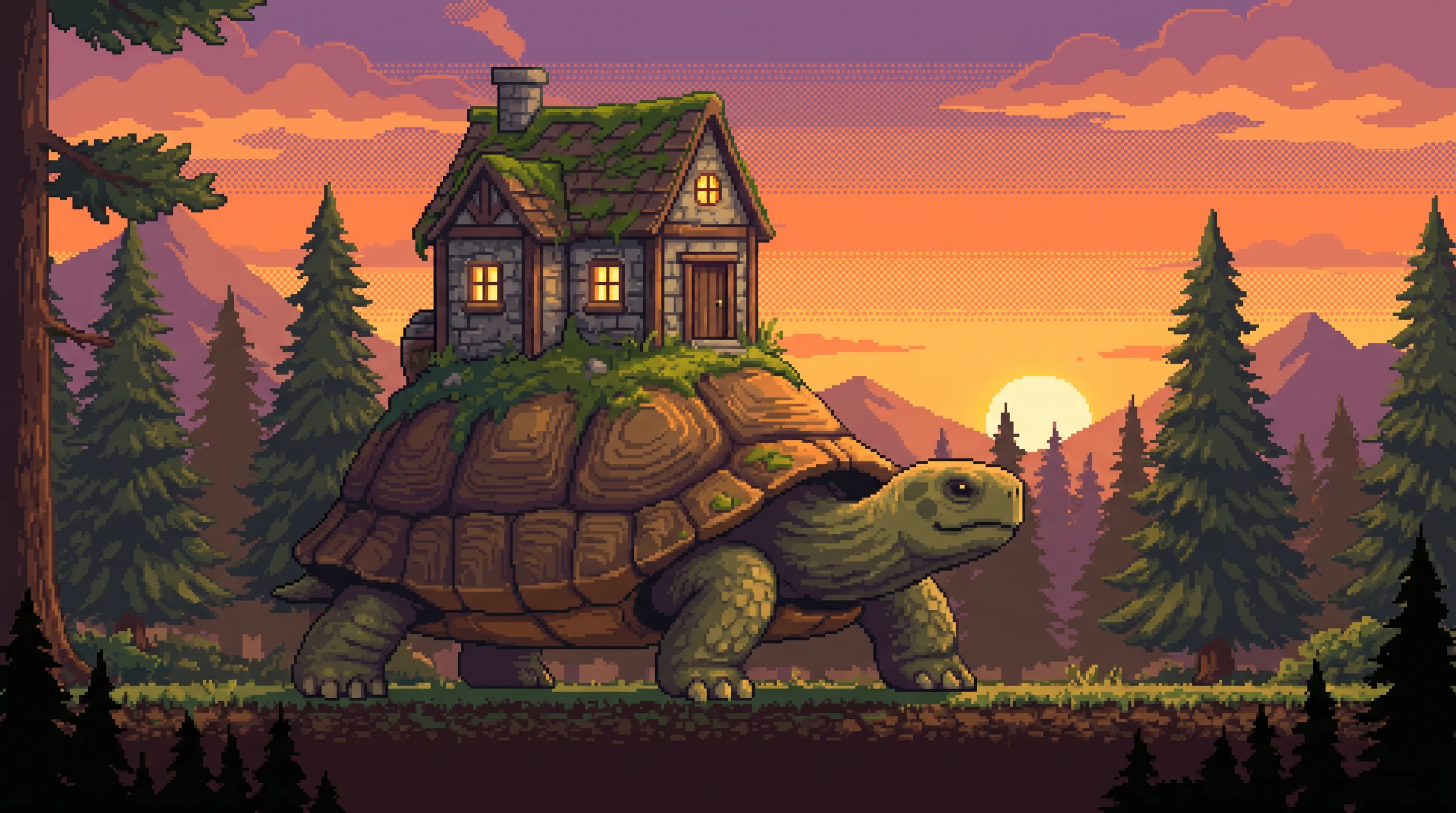
Pixel art styles share one rule, that the image is assembled from visible squares and every square sits where the artist put it. The practice dates back at least to 1972 and Richard Shoup's SuperPaint system at Xerox PARC, the lab where Adele Goldberg and Robert Flegal first put the term in print in a 1982 journal letter. The look most people picture comes from arcade games such as Space Invaders (1978) and Pac-Man (1980). Curves turn into staircases at the edges. Palettes stay deliberately short, at the extreme just two colors, and a checkerboard of two tones can stand in for a shade the palette lacks.
Pixel art styles examples made in FLORA
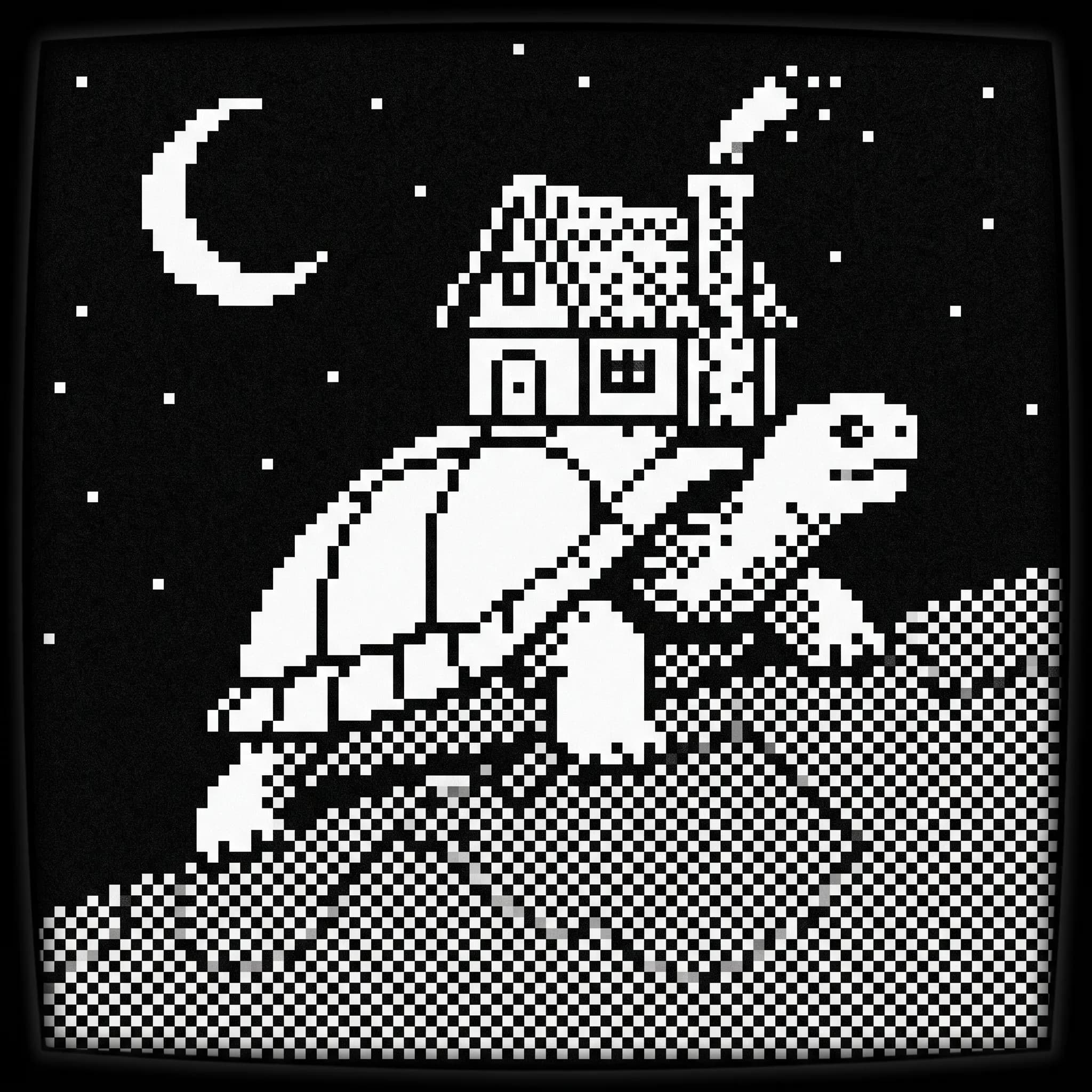
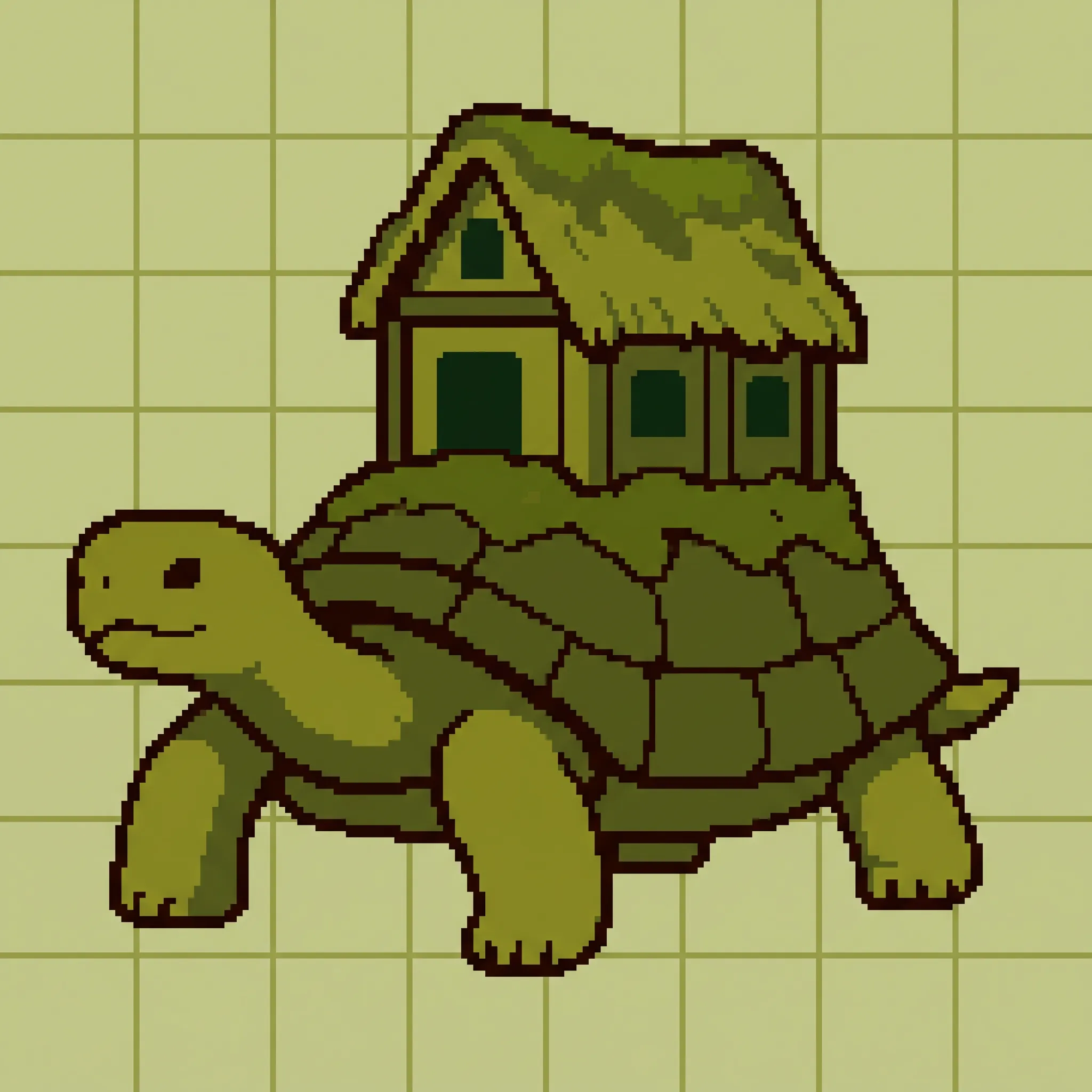
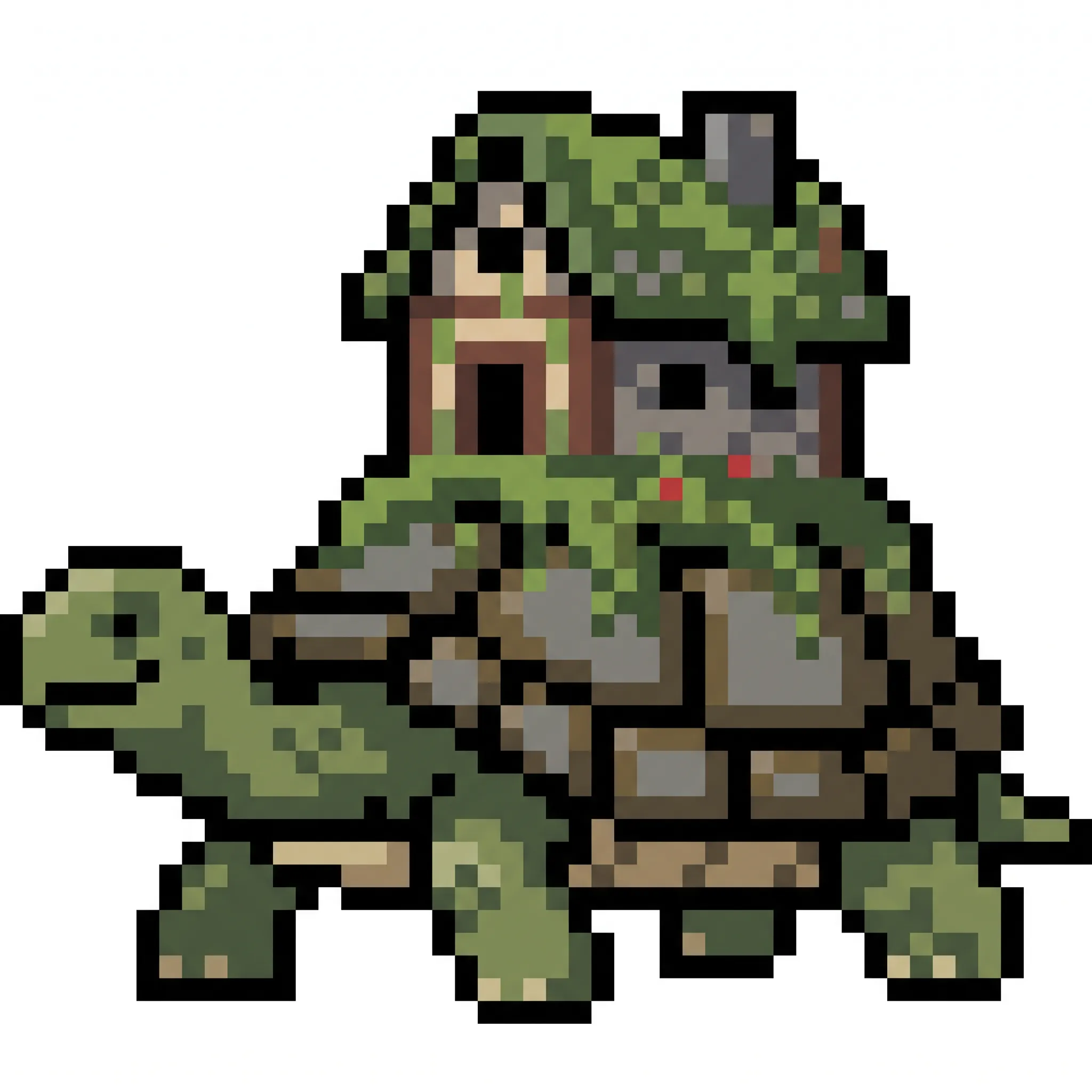
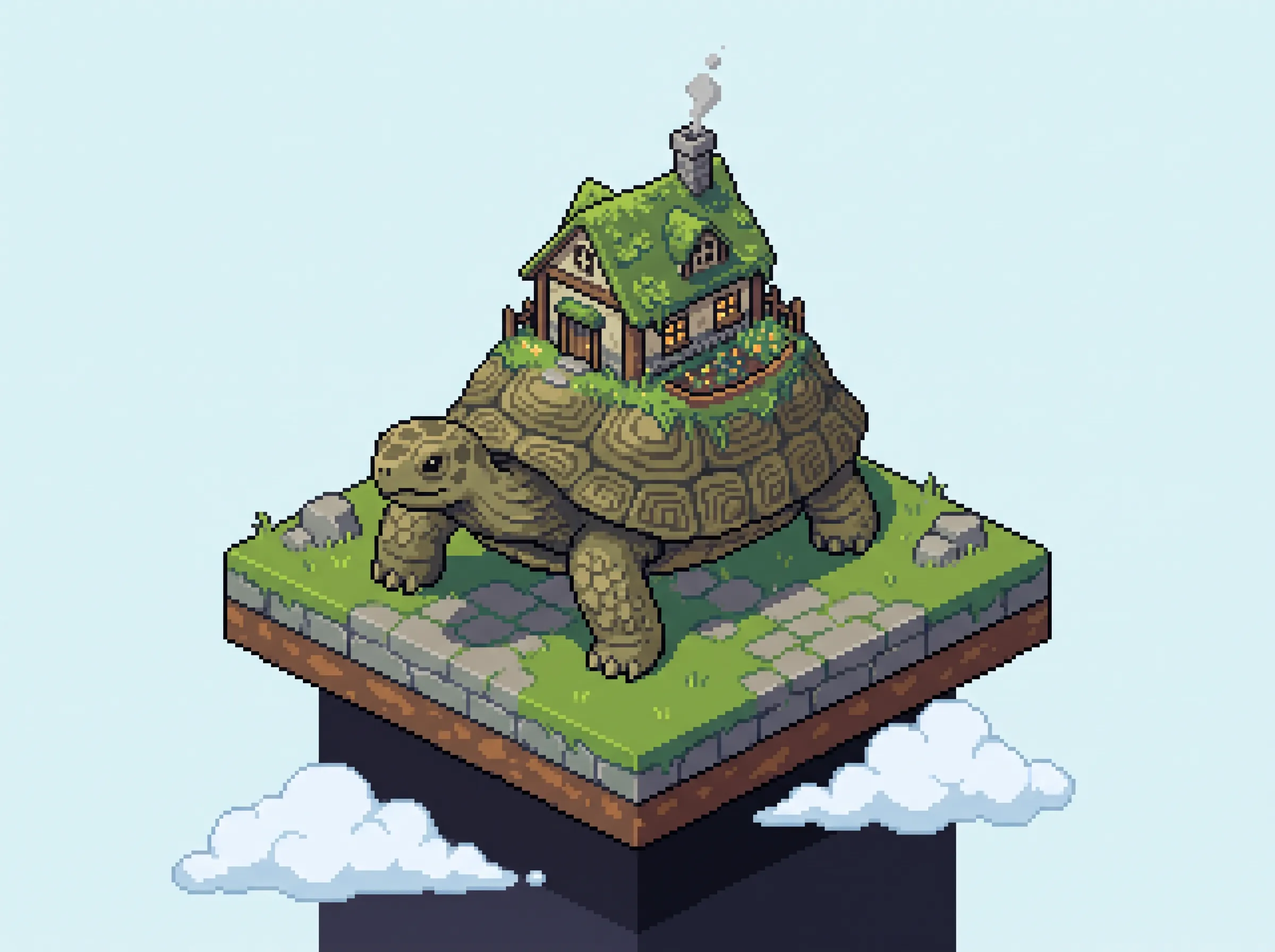
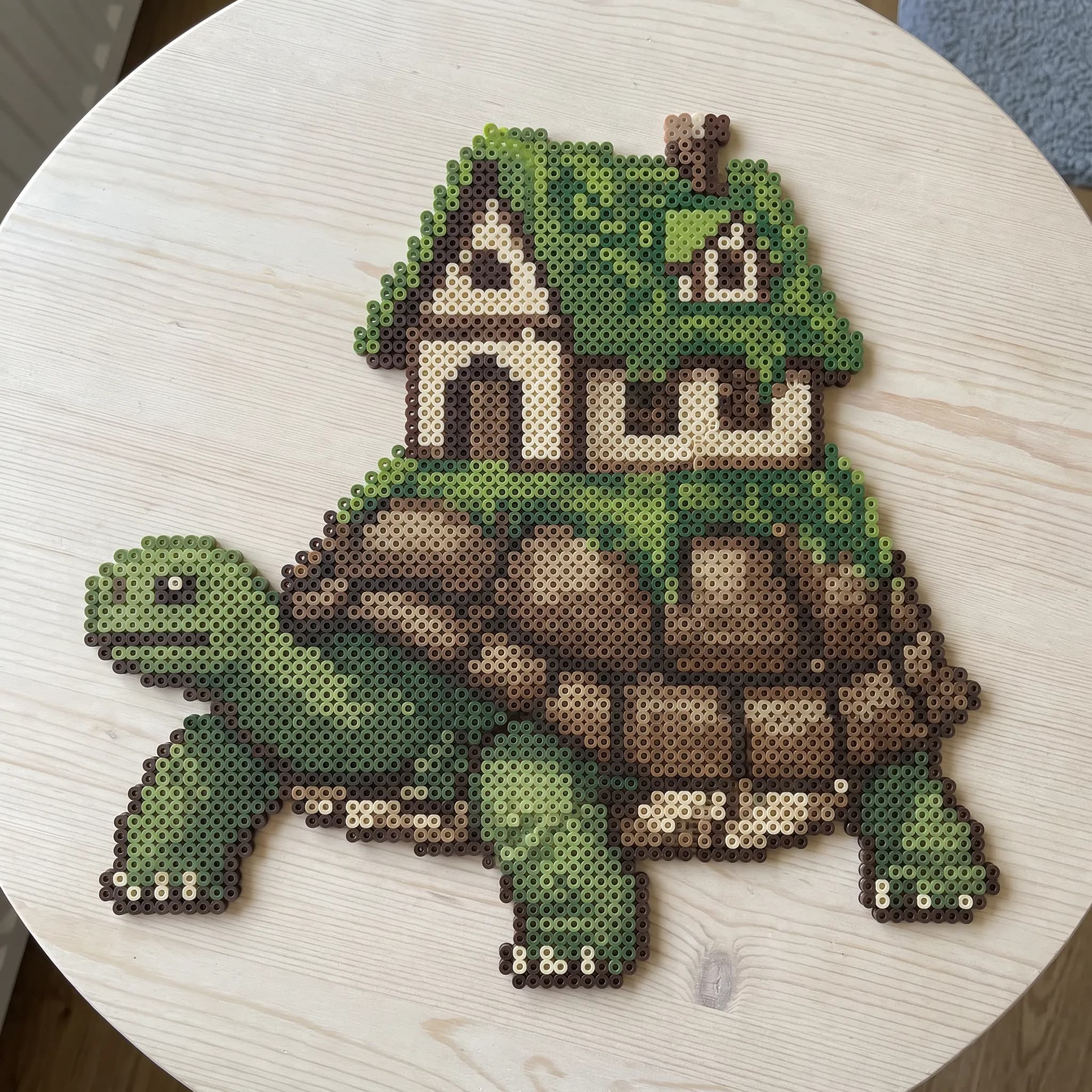
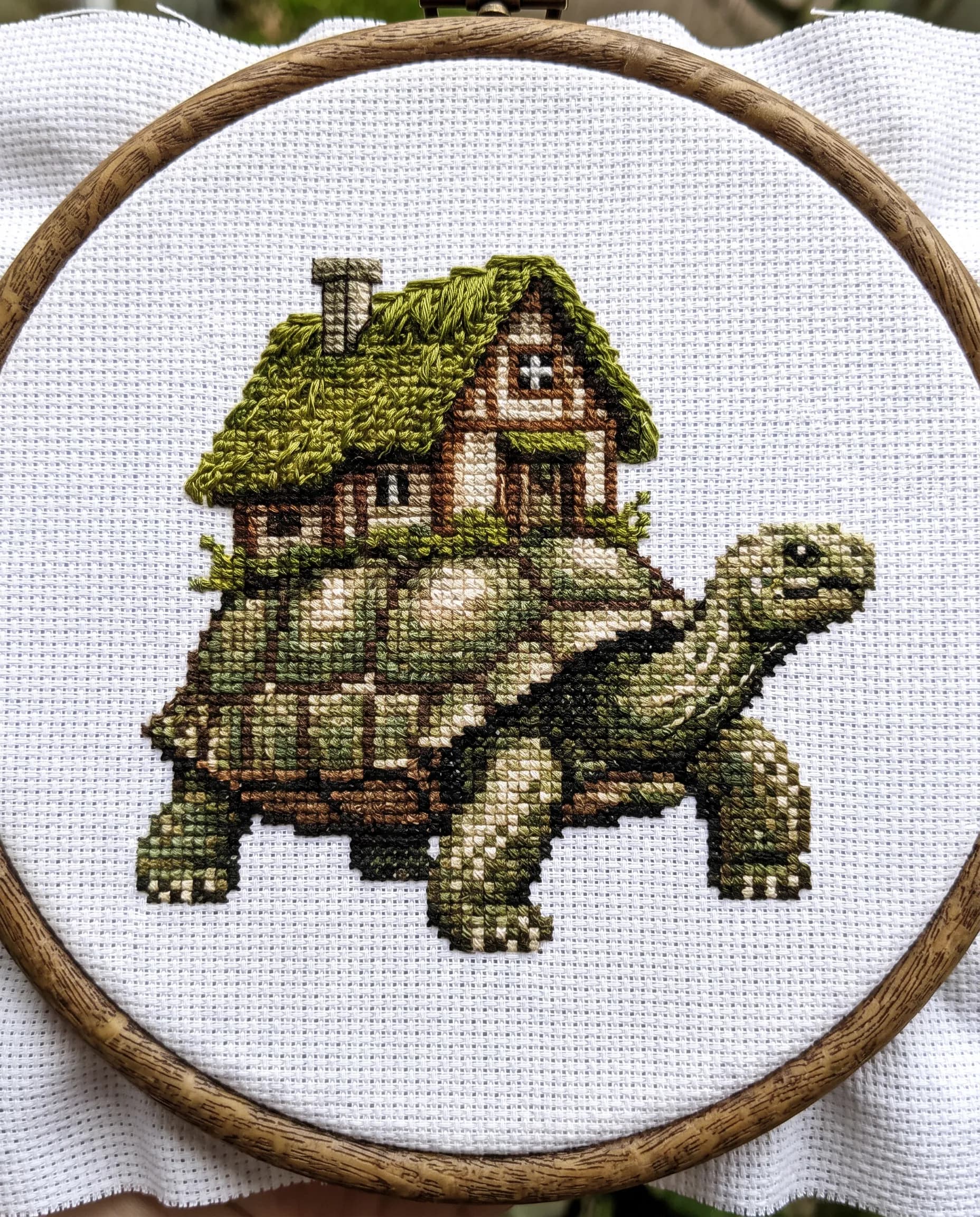
A giant tortoise with a moss-roofed cottage on its shell starts under the tightest limits, gains colors frame by frame, and ends up in beads and thread. Tracking one creature through different pixel art styles makes each change easy to spot. FLORA's AI image generator made all eight, with the full prompt as each caption.

How to prompt for pixel art styles
Put a number where an era name would usually go. The original Game Boy drew 160 by 144 pixels in four colors and the Commodore 64 drew 320 by 200 in sixteen, so four shades of olive green or a 16-color palette gives a model a real ceiling. Pick the view next. Sprites usually sit side-on, and isometric scenes follow lines that rise one pixel for every two across. Then say how tone gets built, whether through dithering or through the soft light and bloom that HD pixel work lays over low-resolution sprites, a hybrid many 2010s pixel games adopted.
Prompts for 8-bit, isometric and HD
- 8-bit. 8-bit pixel art sprite of a giant tortoise carrying a moss-roofed cottage on its shell, side view on a plain white background, chunky square pixels, thick dark outline, tiny fixed palette of flat colors, no text
- Isometric. Isometric pixel art diorama of a giant tortoise carrying a moss-roofed cottage on its shell, standing on a floating tile of grass and stone, 2:1 dimetric pixel lines, 16-color palette, clean outlines, soft daylight, no text
- HD pixel. HD pixel art of a giant tortoise carrying a moss-roofed cottage on its shell at dusk, detailed high-resolution sprites, warm lantern glow from the cottage window, soft bloom, drifting fireflies, blurred background layers, no text
Where the grid breaks
Image models often return something merely pixel-flavored. Squares come in mixed sizes, edges blur, and gradients appear that no early palette could hold. One stated resolution and one color count usually pull it back to a single grid. Exports cause trouble too. JPEG compression smears hard edges, so pixel artists keep files in a lossless format such as PNG, and nearest-neighbor scaling keeps each pixel square when enlarged.
Where pixel art styles work
Small game teams need every frame to match the first, and once the tortoise works as one sprite, the AI pixel art generator turns that hero sprite into a matching walk cycle and item kit locked to one palette.
eBoy built its reputation on isometric pixel art, much of it used in advertising, and a campaign series like that needs its colors settled first. Palette Pull reads a reference image and returns one palette image with each color's HEX code printed on it, ready to type into each prompt.
Merchandise works because a pixel can be one unit of almost any material, so a small sprite doubles as a fuse bead chart or a stitch pattern without redrawing.
Related styles
- Video game art styles set sprite work beside voxel, low poly and cel-shaded 3D.
- 3D art styles cover the polygons that made flat sprites look dated once 1990s consoles could draw them.
- 80s art style covers the arcade decade from its neon side.
- Cute art styles include a pastel take on the grid.
FAQs
What do you call pixel art?
It is sometimes called dot art, especially by Japanese artists, or pixel pushing. Making pixel graphics for a game has its own name, spriting, after the sprite, a small 2D bitmap used as one building block of a larger scene.
Why does pixel art look good?
Nostalgia explains part of it and an appreciation of form explains the rest, the conclusion Michelle Parnett-Dwyer, chief curator at The Strong National Museum of Play, reached in a 2015 post for the museum. She cites the developer Jason Rohrer, who calls it "digitally native cartooning" and felt that less detail made his game Passage easier to engage with.
What is the difference between pixel art and mosaic art?
Mosaic is physical and pixel art is digital. Both build pictures from small units of color, and mosaic, cross-stitch and beadwork can be seen as offline ancestors of the digital form. On screen, intent is the test. A blurry low-resolution photo shows pixels too, but nobody placed them. The French street artist Invader works across the line with urban pixel art mosaics that have drawn notice worldwide.
Are there different styles of pixel art?
Yes, and cluster size, meaning how big each patch of touching same-colored pixels gets, is one of the main ways to tell them apart, with large clusters and geometric shapes leaning toward cubism or suprematism and scattered single pixels giving a grainy surface closer to pointillism. Pixel art is really a medium, and genres such as isometric scenes, sprites and pixel dolls run through all of it.



