
Cartoon Art Styles Compared on One Character
 FLORA
FLORA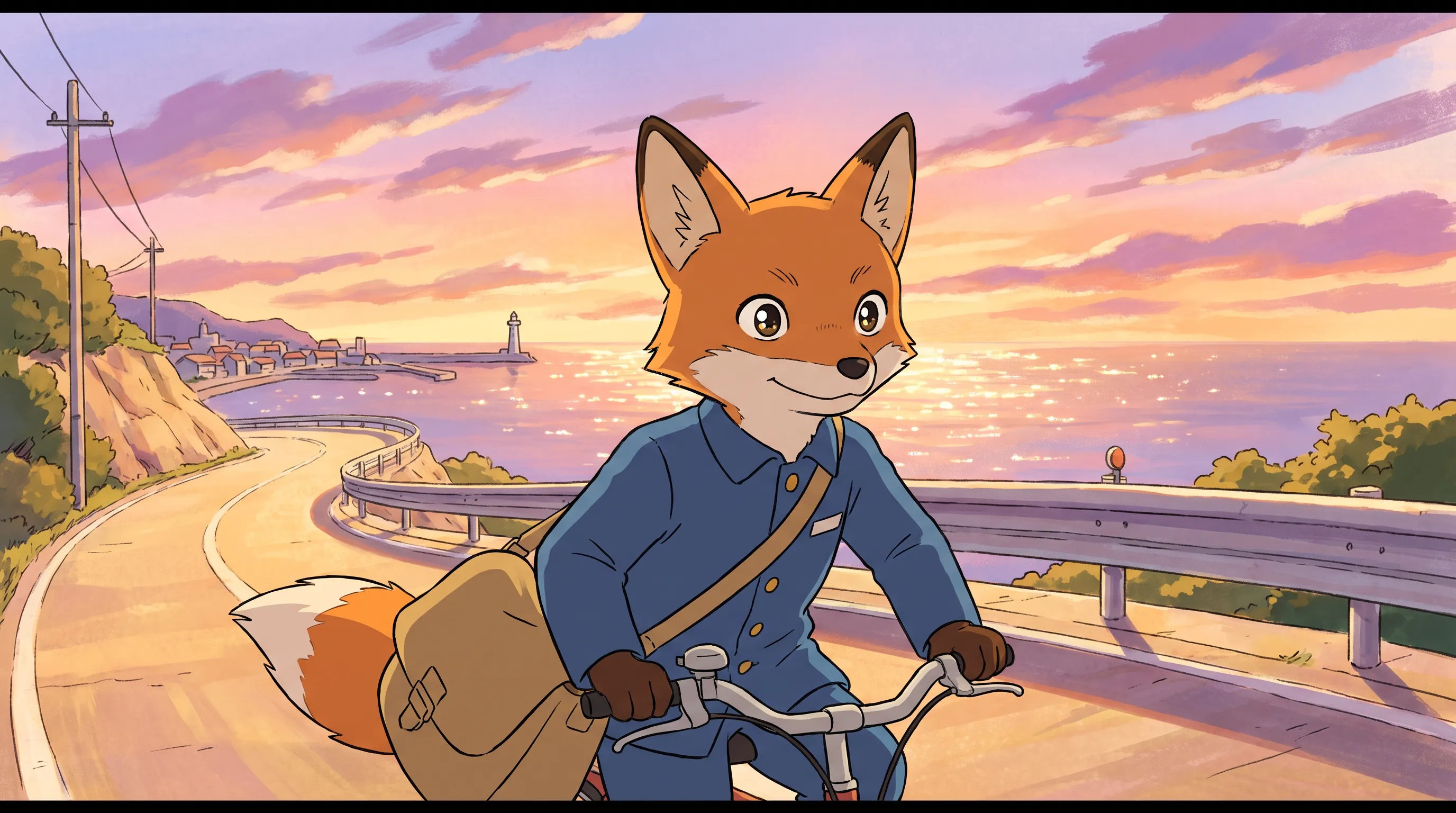
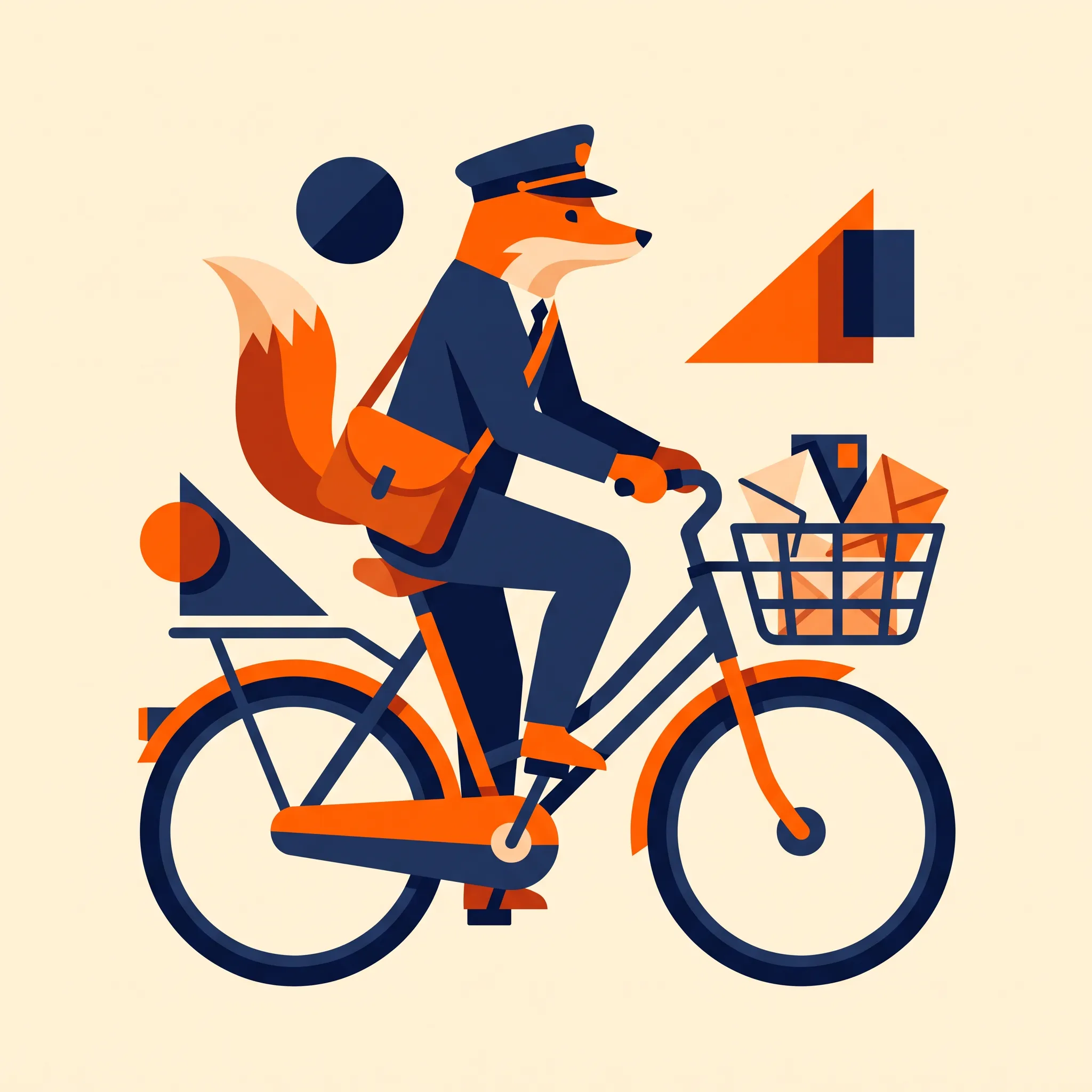
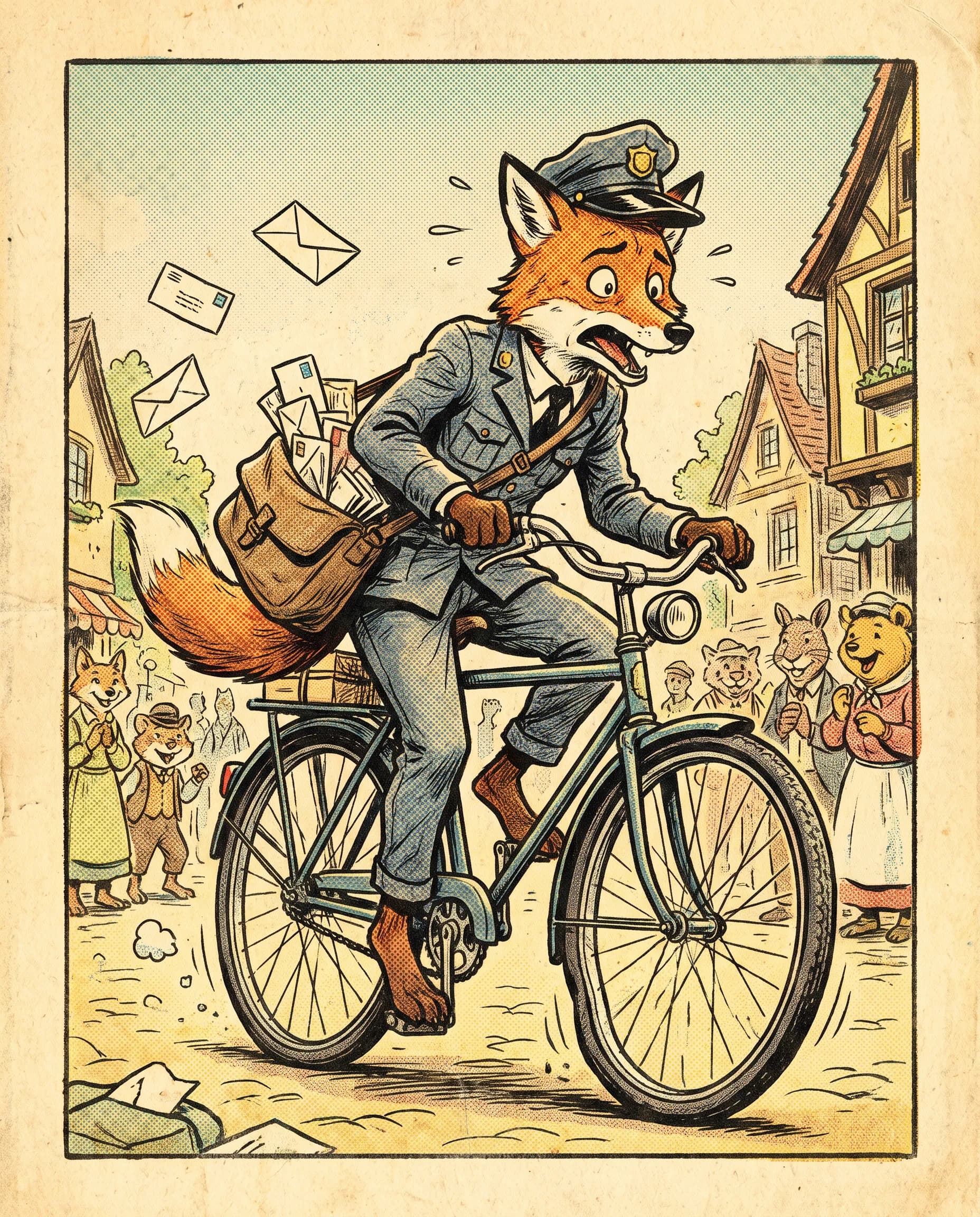
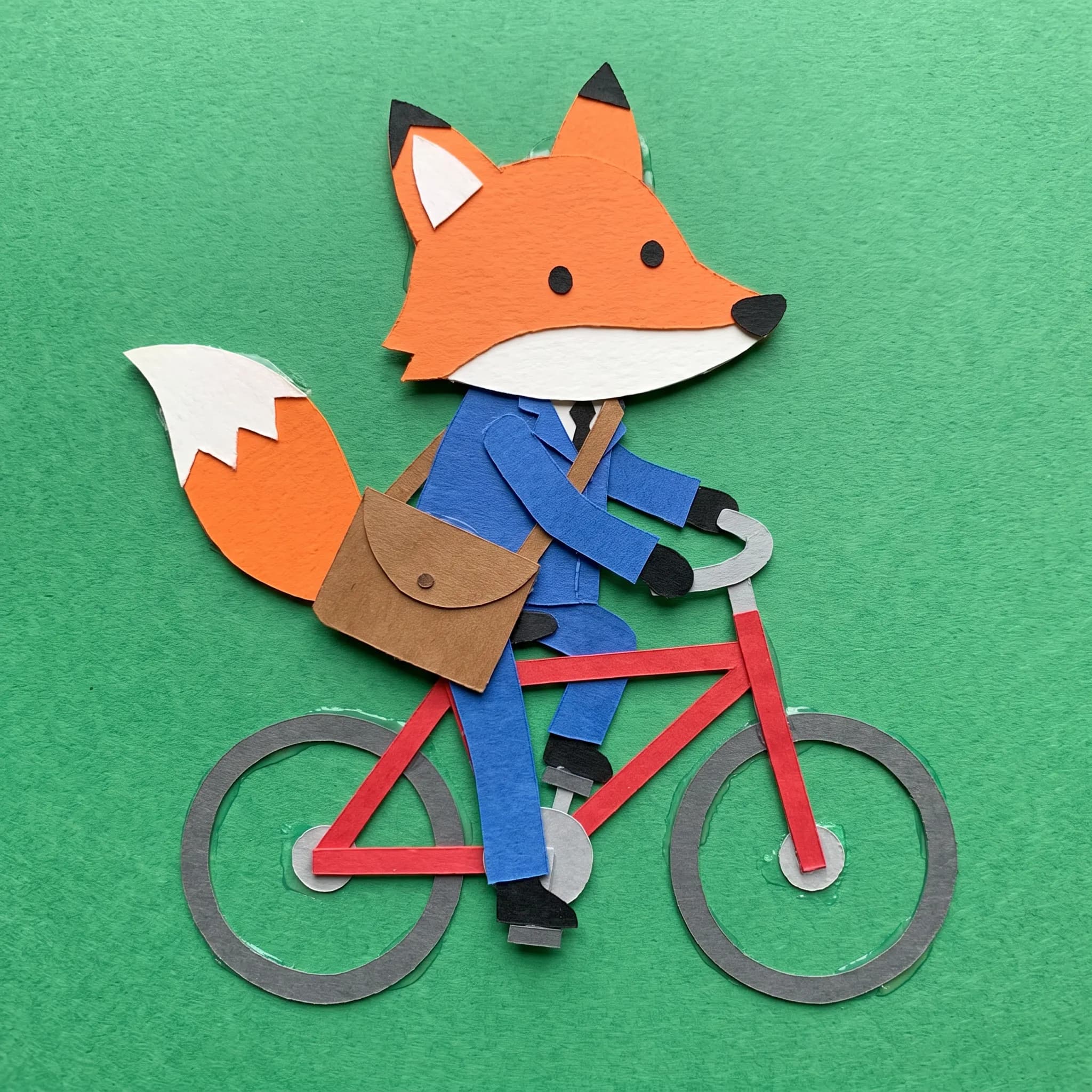
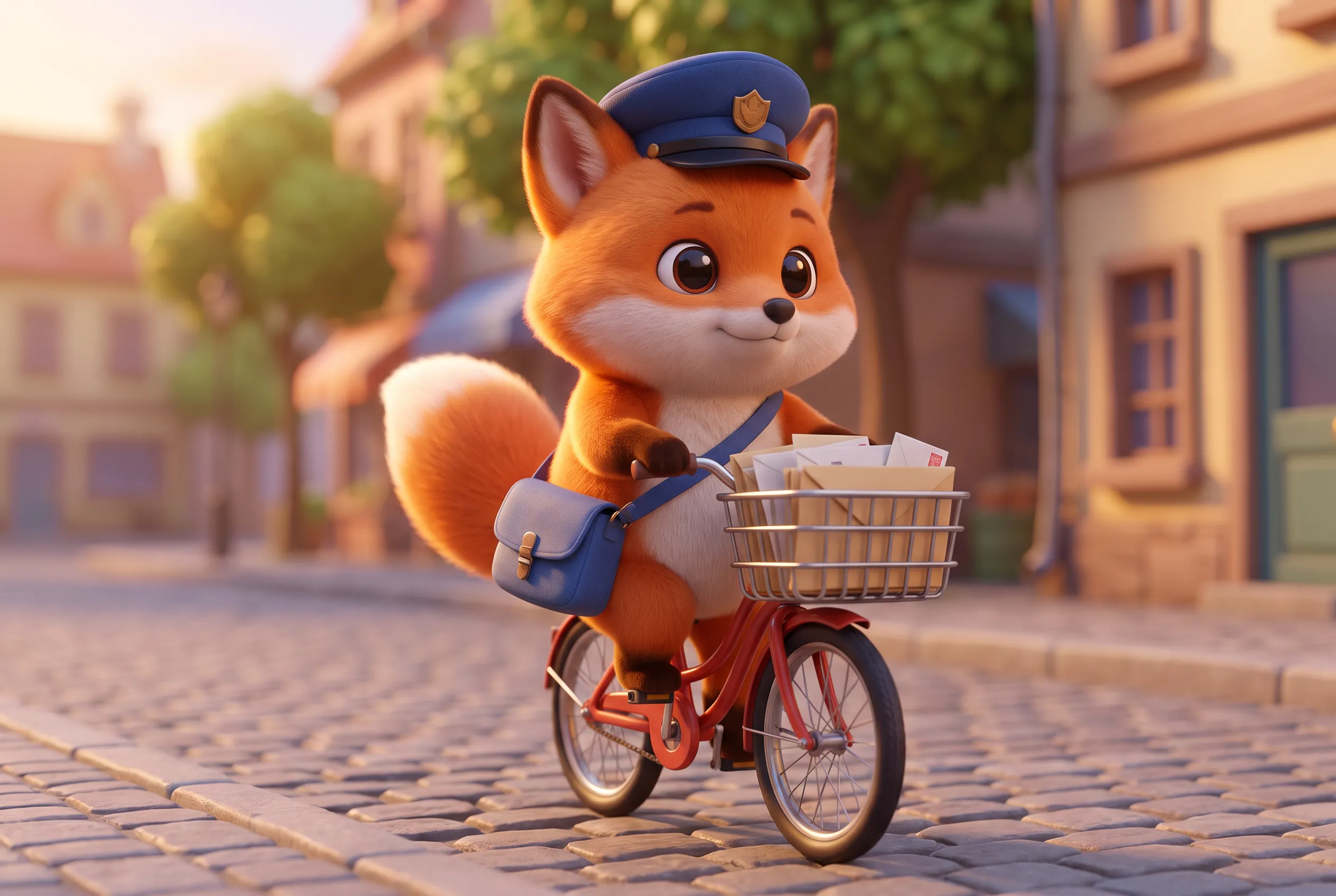
Cartoon art styles trade realism for speed of reading. Heads turn into circles, eyes get bigger and color drops to a few flat fills, so a character registers in a glance and holds together when it moves. A lot of that grammar traces back to Felix, the black cat Otto Messmer designed for maximum flexibility and facial expression, a round-headed, big-eyed rubber ball on legs that took little effort to draw. Studios have bent the formula ever since, so a 1930s theatrical short and a 1950s TV series both count as cartoons and share almost nothing on the surface. The gallery below walks one original character, a fox mail carrier on a bicycle, through eight different cartoon art styles in FLORA's AI image generator.
Cartoon art styles examples made in FLORA
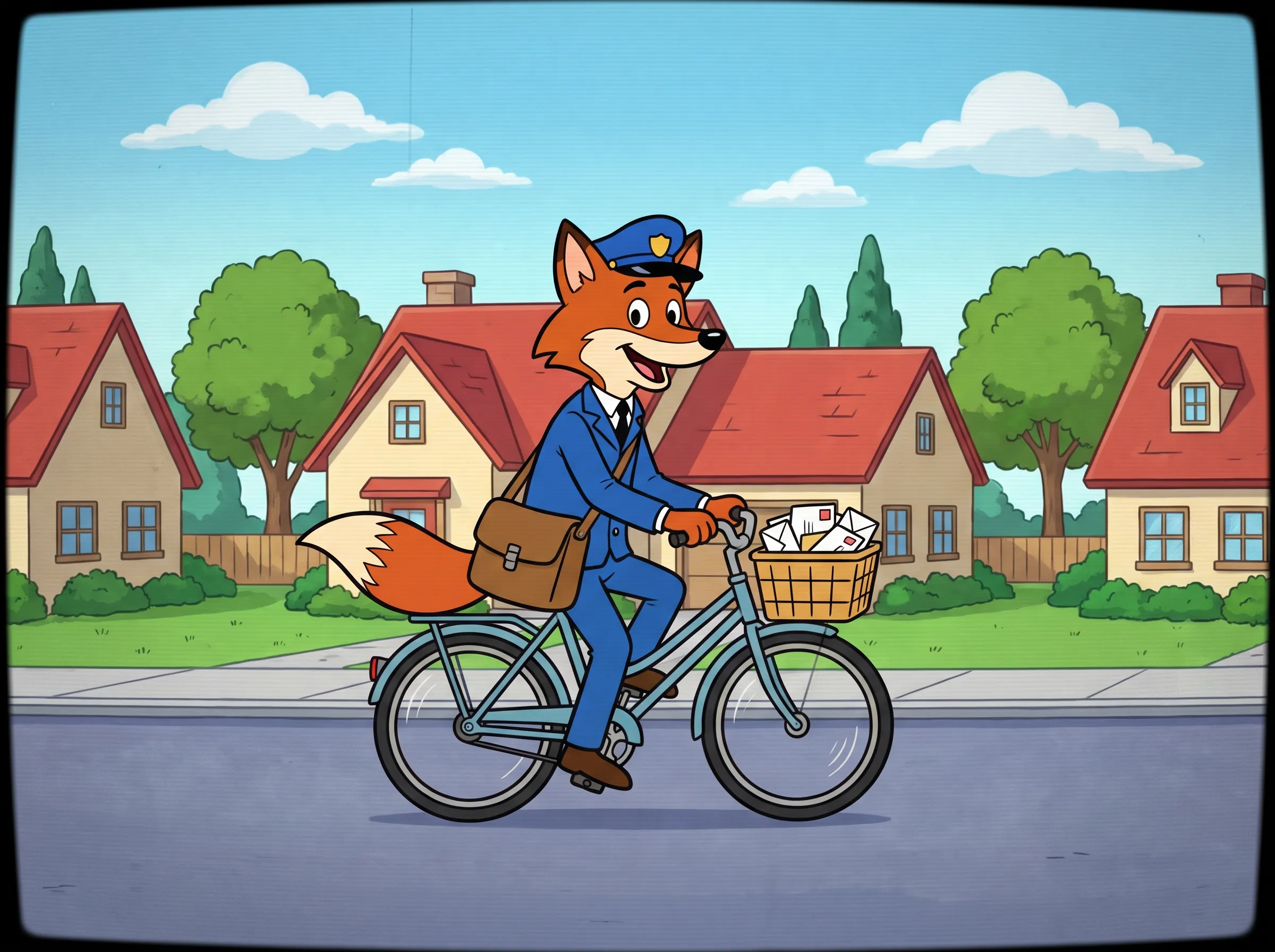
The fox, bike and satchel stay fixed while the tradition and medium change. Each caption is the full prompt behind its image.
How to prompt for cartoon art styles
Type the word cartoon on its own and you usually get a glossy, generic mascot, because the model averages every tradition it has seen. Name a single sub-style instead and back it with the visual tells that define it. For rubber hose those are bendy limbs with no elbows, a round head and white gloves, and for mid-century flat it is geometric shapes with no shading anywhere. Keep the subject short. Then add a palette that fits the era (black and white for a 1920s look, a few flat inks for TV work) and a medium such as a film cel or a 3D render. Lighting matters mostly for anime and 3D.
Most of these looks began as a production limit, and naming the era brings the limit along. After John Hubley joined United Productions of America in 1945, he drew in a stripped-down manner without the shading and depth effects Disney relied on, which is what mid-century flat means in a prompt today. Television pushed costs lower once William Hanna and Joseph Barbera pioneered American TV animation in the 1950s. Anime had two parents, the dense, novelistic look of Japanese manga and the cut-rate methods developed for TV production in 1960.
Three prompts to copy
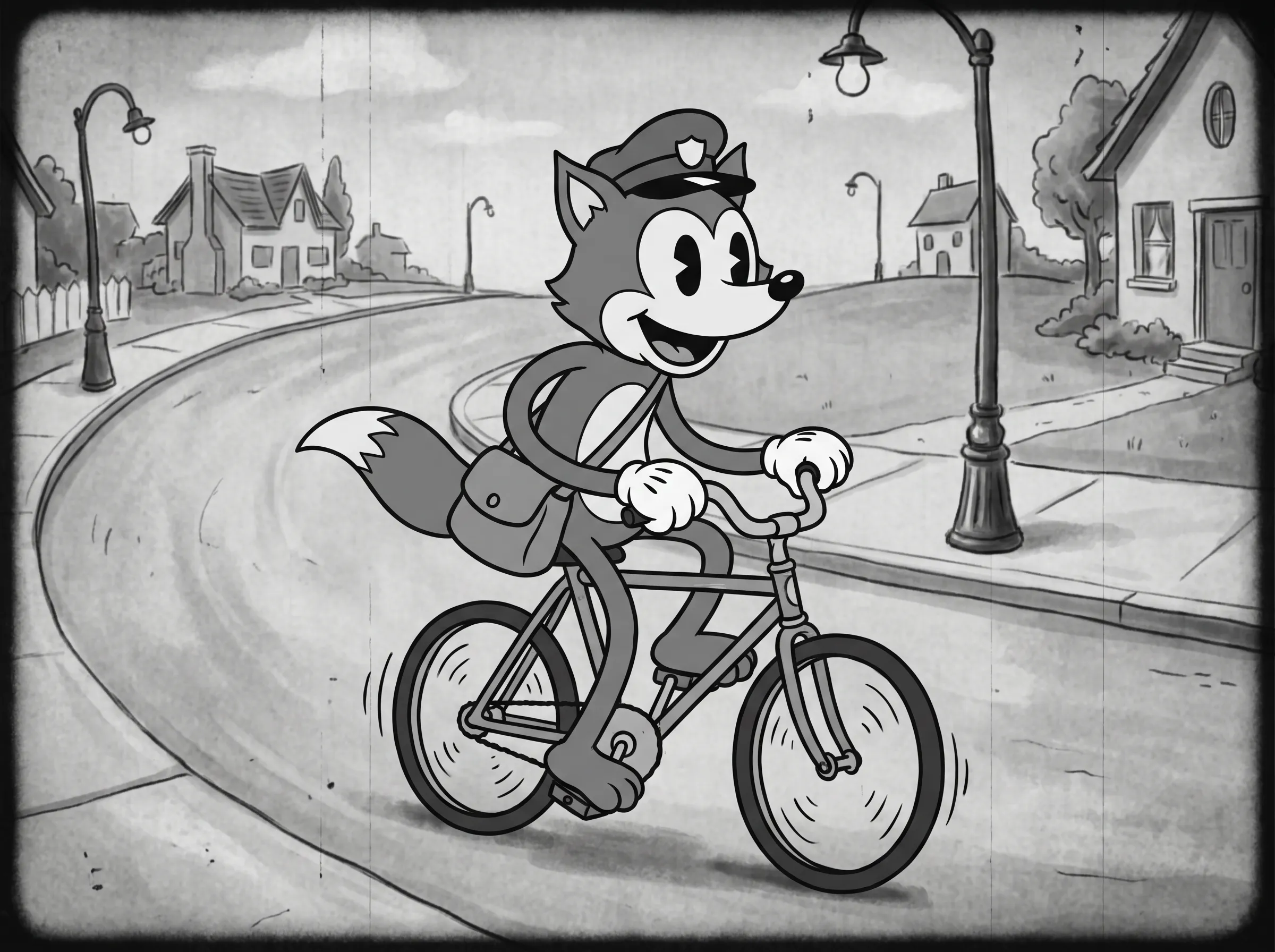
- Rubber hose. Rubber hose cartoon of a fox mail carrier pedaling a bicycle, round head, big white pie-cut eyes, bendy noodle limbs with no elbows, white gloves, black and white 1920s animation cel, slight film grain, no text
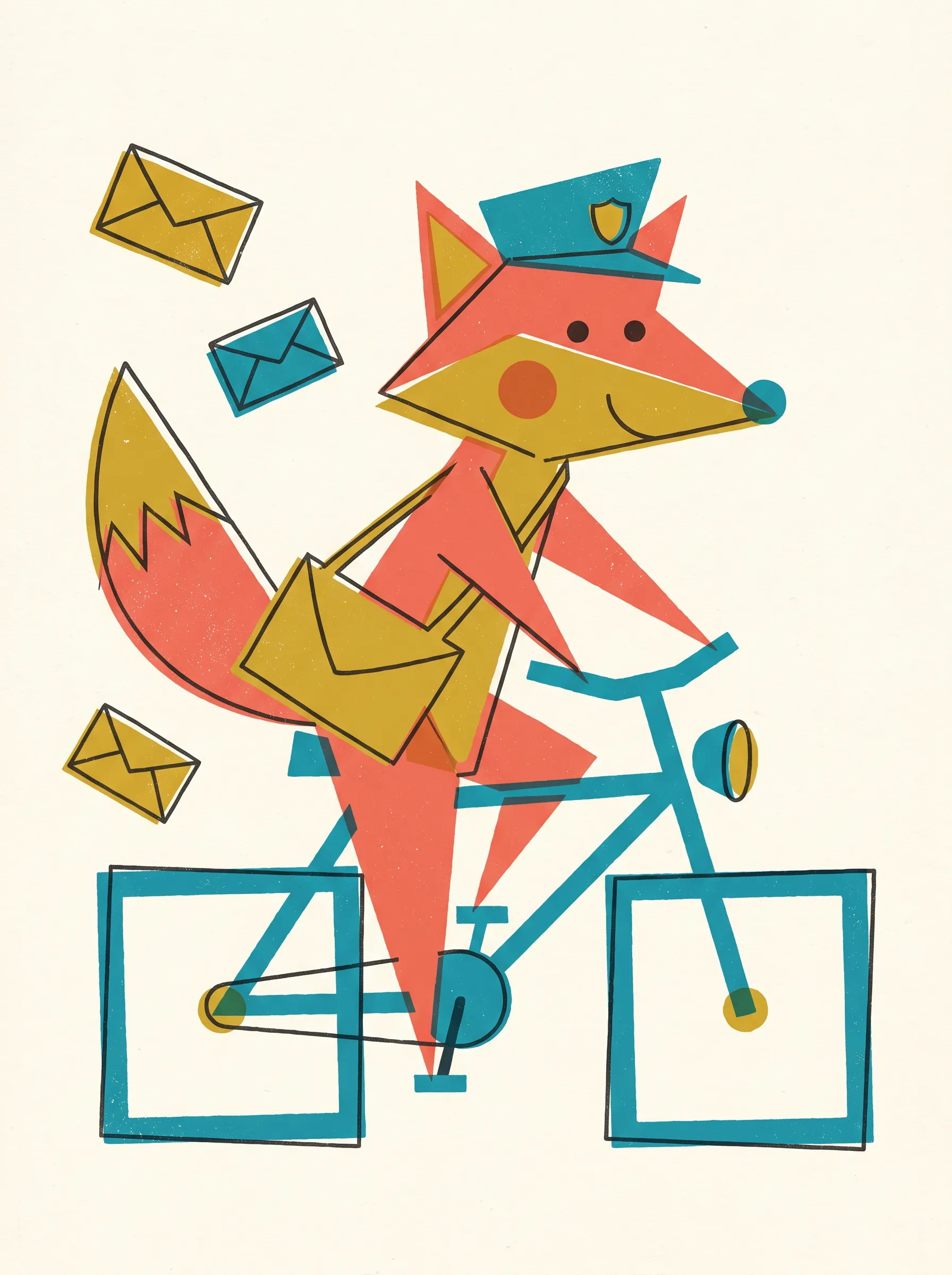
- Mid-century flat. Mid-century flat cartoon of a fox mail carrier on a bicycle, simplified geometric shapes, no shading or depth, mustard, teal and coral inks, loose offset linework, screen-printed poster texture, no text
- Anime-influenced. Anime-influenced key frame of a fox mail carrier cycling along a seaside road at golden hour, large expressive eyes, clean line art, cel shading, detailed painted sky, wide cinematic shot, no text
What tends to go wrong
Run several sub-styles back to back and the character slips first, so a fox in one frame becomes a corgi in the next unless you paste the exact subject phrase into every prompt. Shading creeps in after that. Models reach for soft airbrushed gradients by default. That ruins the older, flatter looks, so write flat color with no shading into the prompt. Comic panels and TV frames also attract speech balloons full of invented lettering, the reason every prompt here ends with no text.
Where cartoon art styles work
Animation teams settle a look early with side-by-side tests like this one. Once the client points at a frame, the Moodboard Maker turns it into a board that briefs everyone else.
A brand mascot lives or dies on its range of expressions. Pick the sub-style first, then let the sticker pack generator turn one character description into a base pose, six expressions and a pack cover, which doubles as a quick character sheet. Flat looks survive die-cutting best. For merch, describe the character in the print brief for Design a Shirt, which returns tee artwork, colorways and an on-model shot.
Related styles
- Cute art styles push the proportions further.
- Japanese art styles put anime next to the much older woodblock print and ink painting traditions of Japan.
- Corporate art style is flat vector as brand language.
- Pop art style took its imagery from popular and commercial culture.
FAQs
What are the five types of cartoons?
There is no official list, but sorted by look, five popular cartoon art styles cover most of what people mean, namely rubber hose, mid-century flat, Saturday-morning TV, anime and computer-animated 3D. The last of those became its own category in 1995, when Toy Story arrived as the first entirely computer-animated feature.
What are other styles than Ghibli?
Several, even within anime. Kon Satoshi's Perfect Blue, a violent study of a media-damaged personality, came out in 1997, the same year as Miyazaki Hayao's Princess Mononoke. Outside anime, the gallery above runs through rubber hose, mid-century flat and Saturday-morning TV, each a tradition of its own. In a prompt, describe what you like, such as painted skies, and leave the studio name out.
What are 20 different animation styles?
Lists of twenty usually mix looks with techniques, and the techniques alone make a much shorter list of hand-drawn cel, stop motion, cutout, rotoscope and computer animation. Max and Dave Fleischer invented rotoscoping, which traces live-action footage and redraws it as a cartoon, for their Out of the Inkwell series (1919 to 1929). Stop motion is older, already in use for the 1907 short Haunted Hotel.



