
A Cozy Guide to the Room Game Low Poly Art Style
 FLORA
FLORA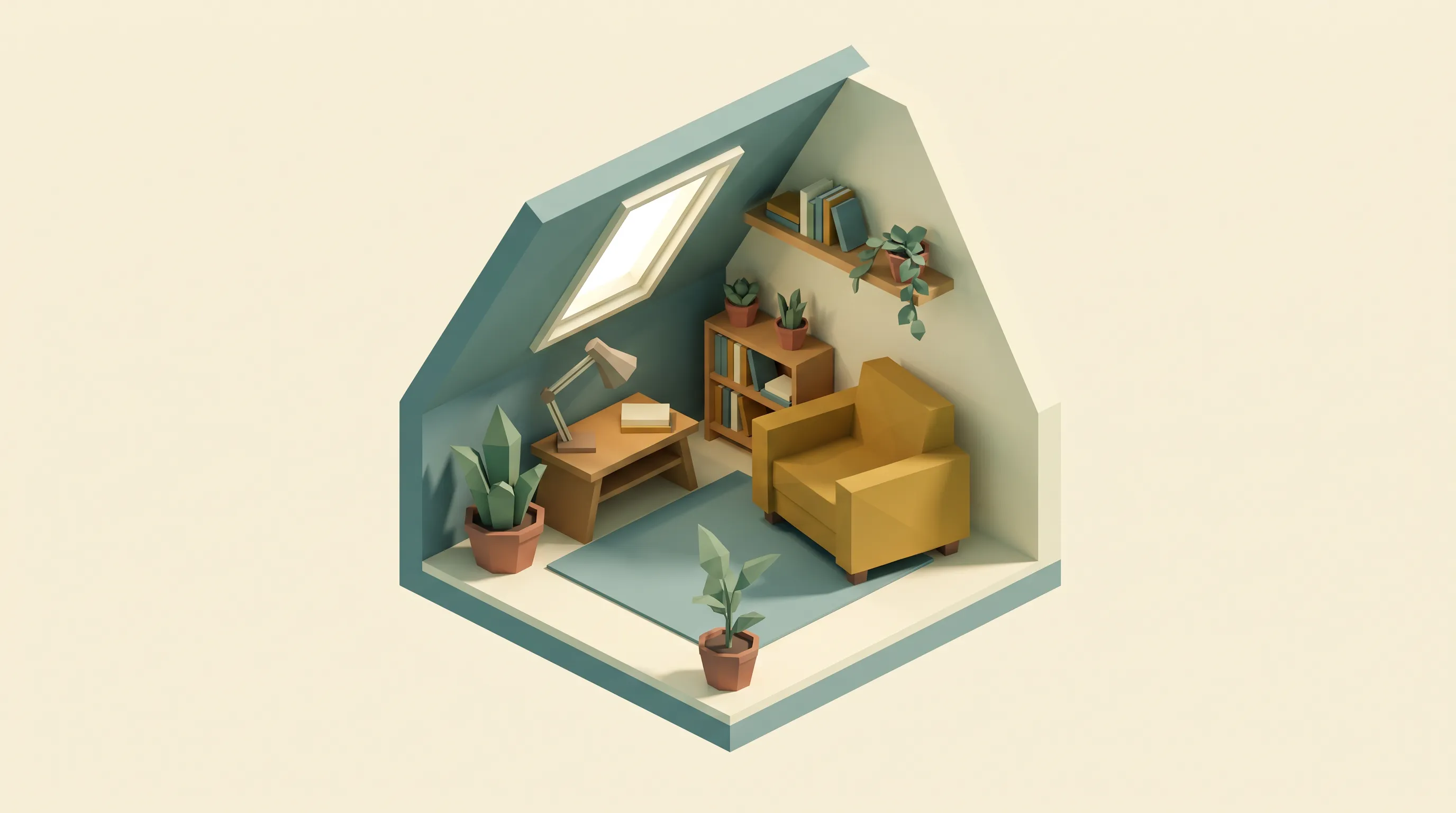
The room game low poly art style is the look of one small interior built from a handful of flat polygons and shown as a cutaway diorama. The phrase names a type of scene, common in indie devlogs, asset stores and Pinterest boards. Its roots are technical. Fifth-generation consoles, among the first able to draw 3D at all, had to keep polygon counts low, and by the early 2010s, illustrators such as Timothy J. Reynolds were treating a low count as a choice that puts the attention on shape and light. In a room that means visible triangular facets, flat shading, five or six colors, soft baked-in light and an isometric camera.
The room game low poly art style examples made in FLORA
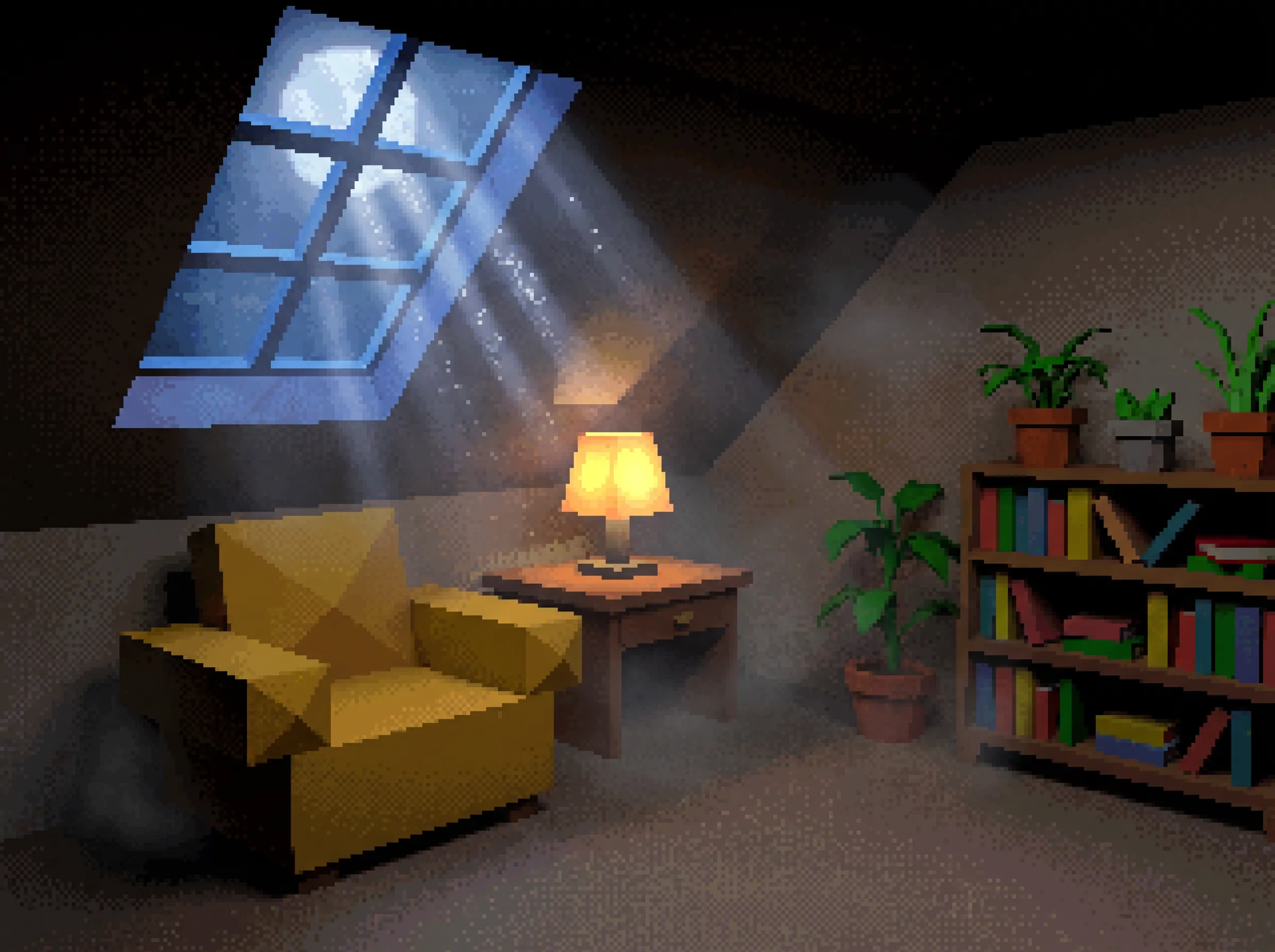
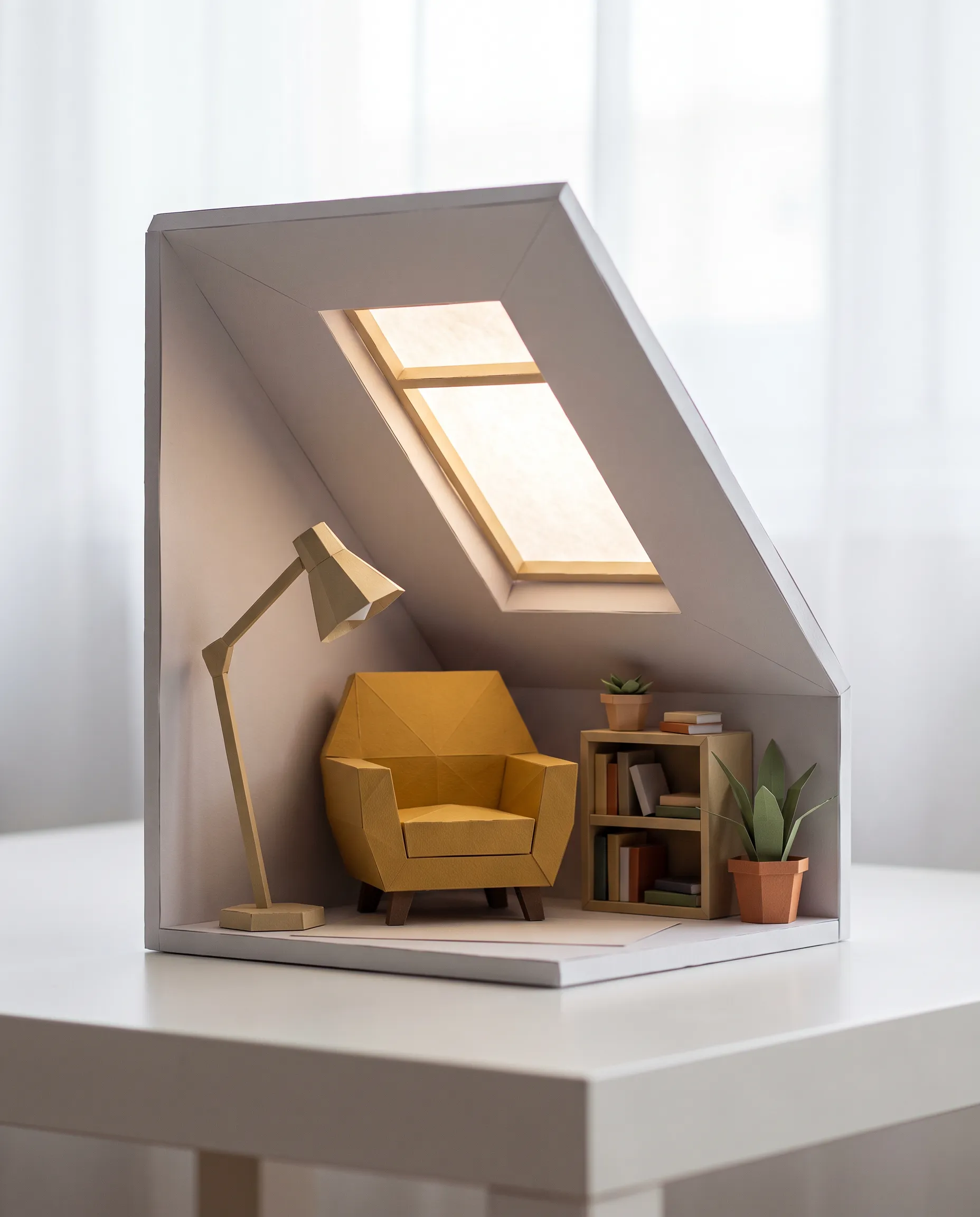
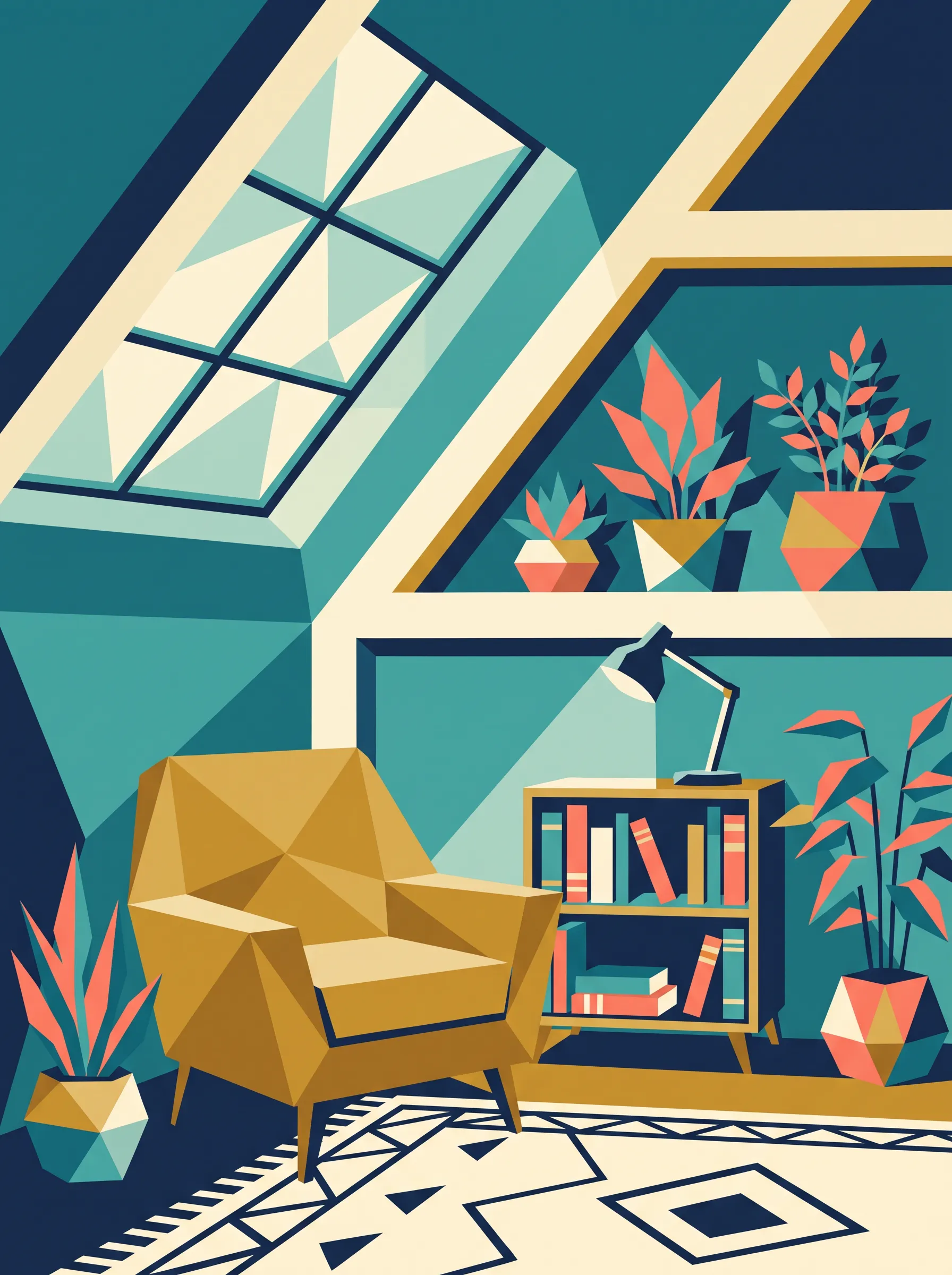
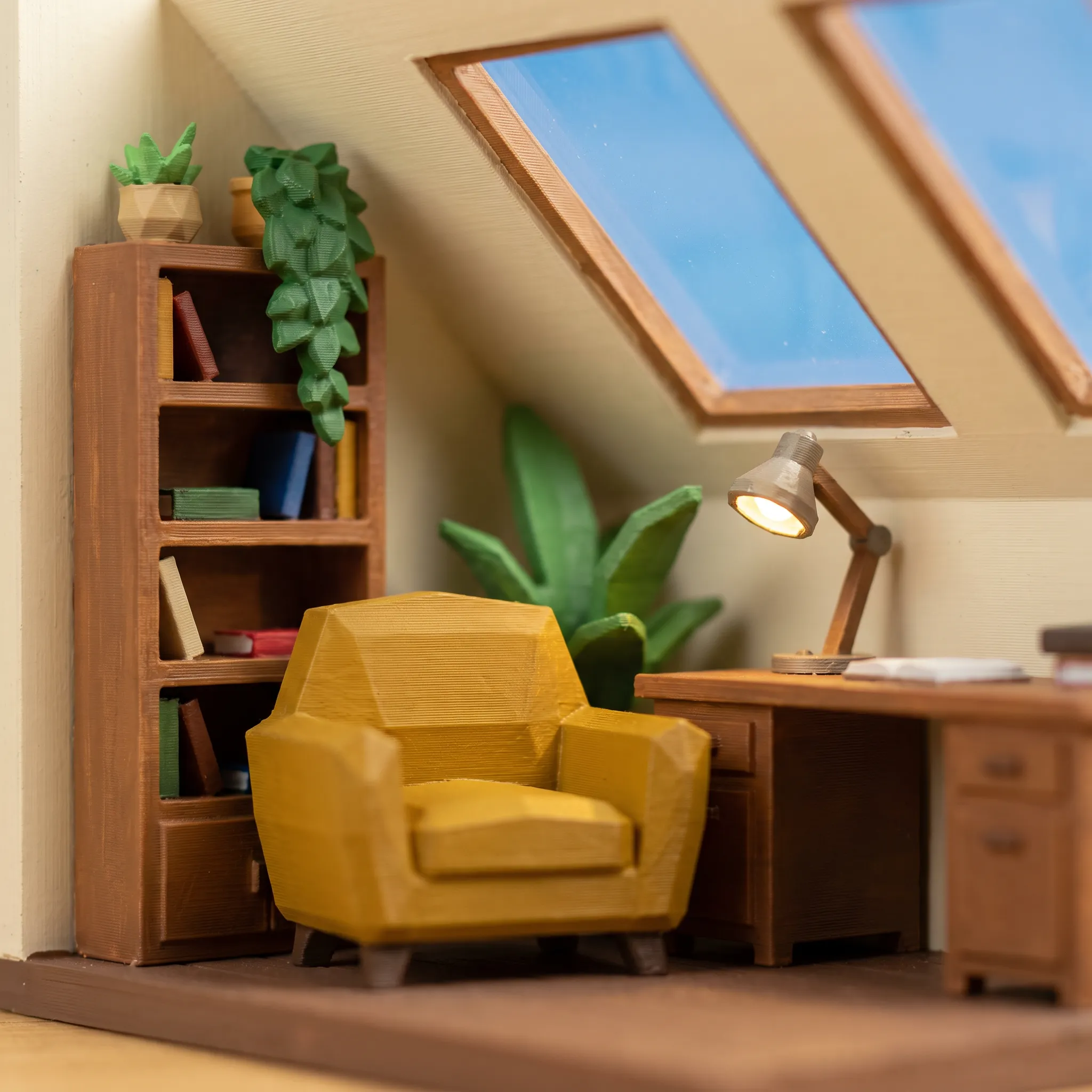
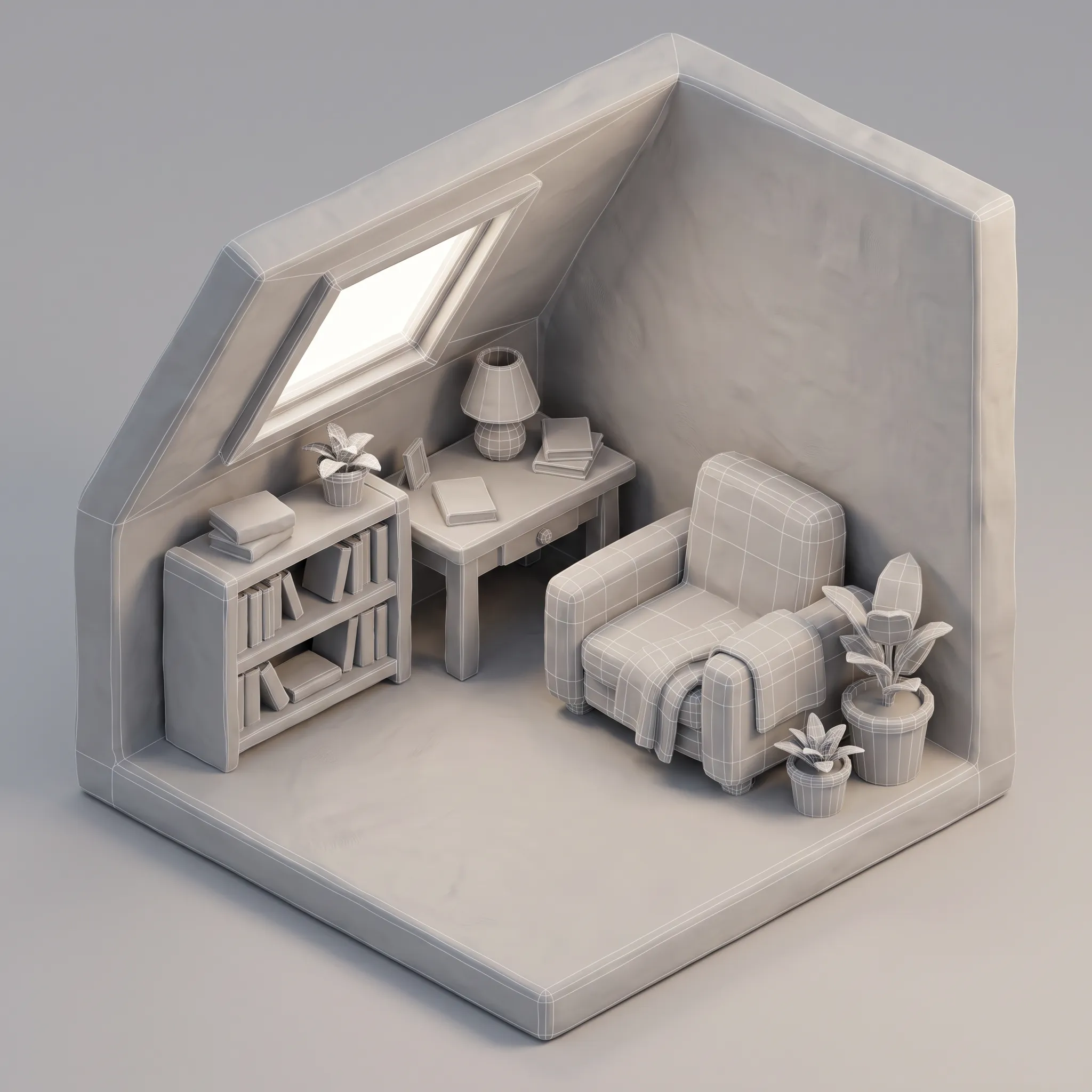
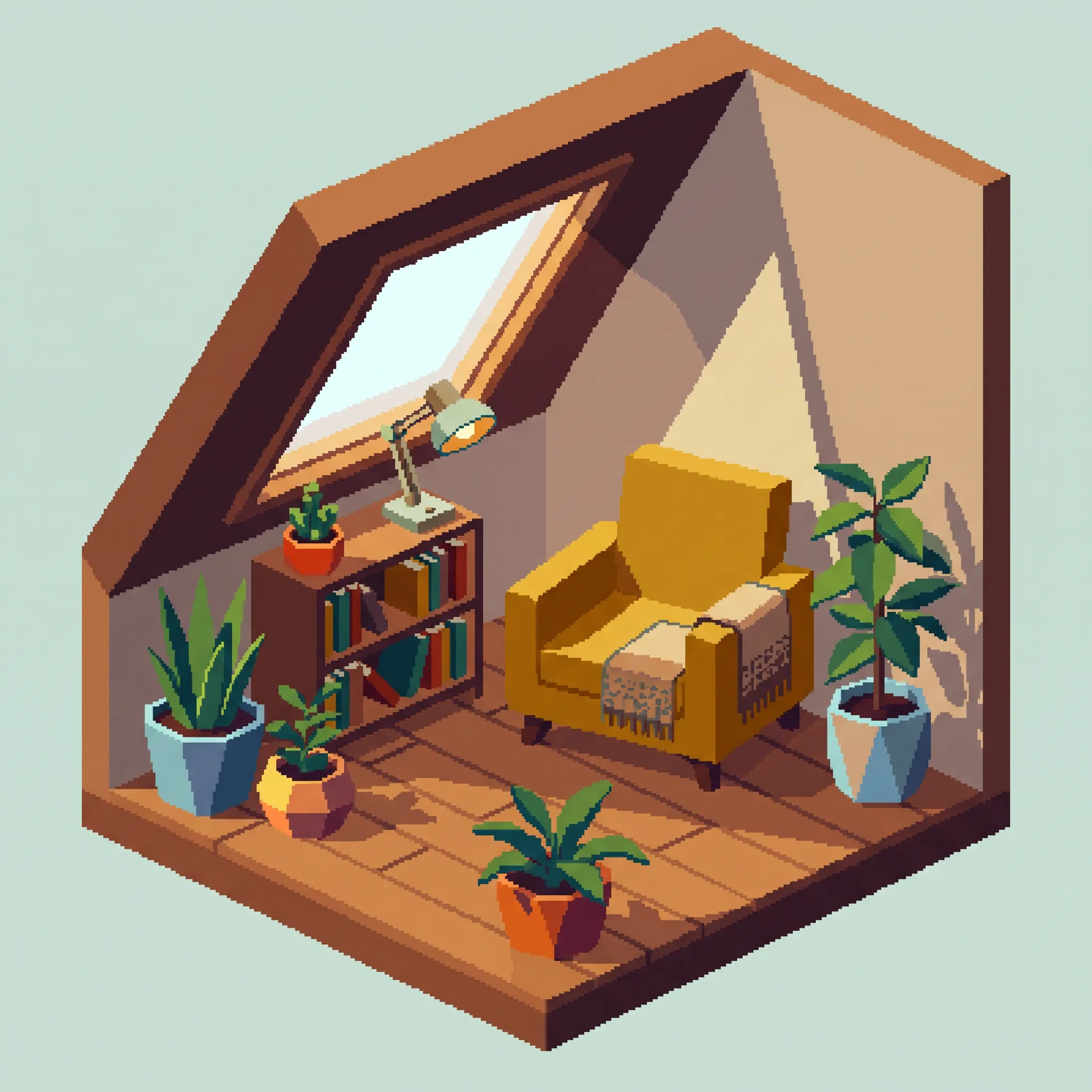
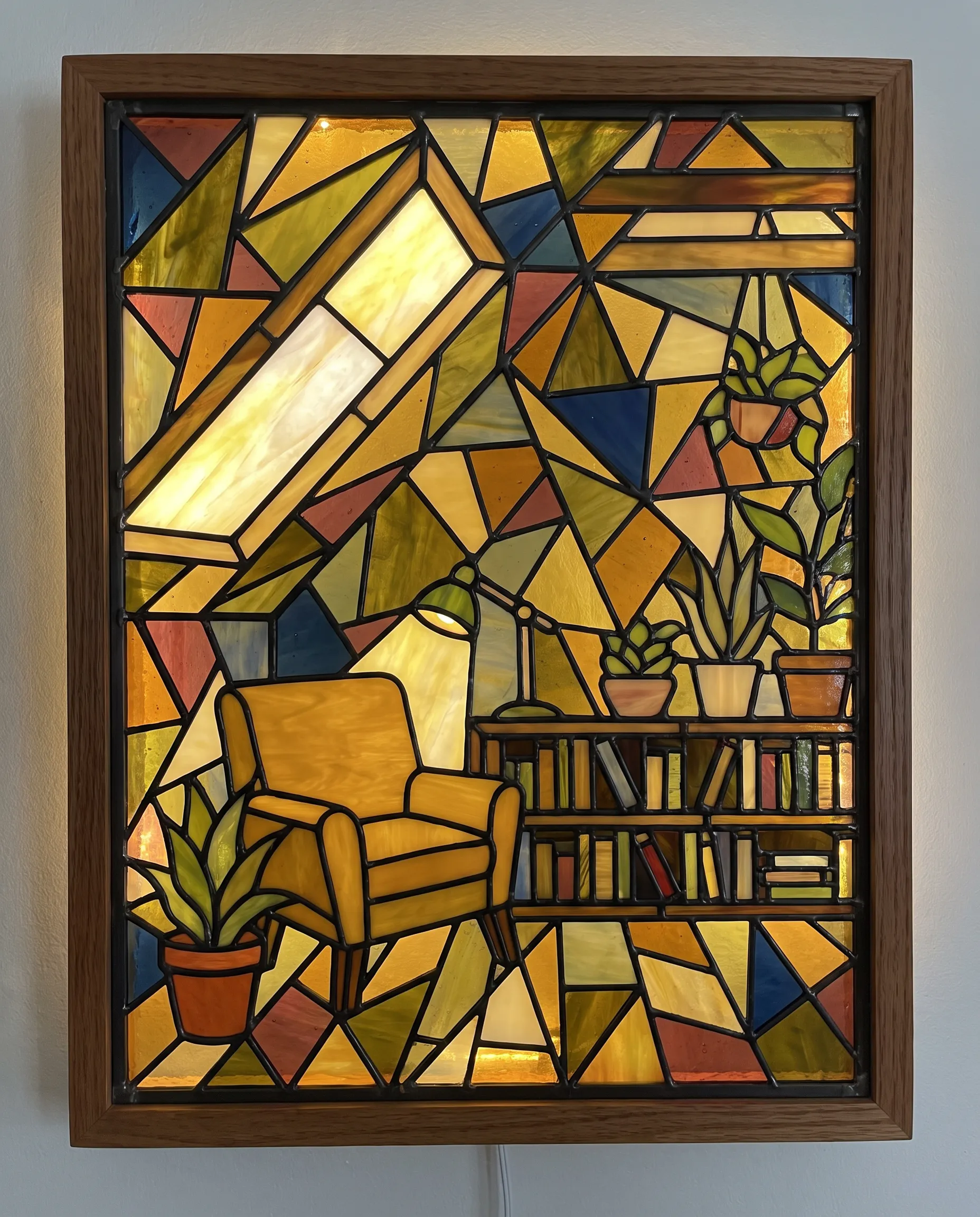
All eight images show the same made-up attic reading nook, with a slanted skylight, a mustard armchair, a desk lamp, a small bookshelf and a few potted plants. FLORA's AI image generator made each one, and the caption under it is the prompt.
How to prompt for the room game low poly art style
Put the geometry words up front. "Low poly" and "flat shading" belong together, and adding "visible facets" helps keep edges hard where a model might otherwise smooth them. Fix the camera next. An orthographic isometric view with two walls cut away gives the dollhouse read that many of these scenes share, and a plain backdrop leaves the room floating like a game tile. Keep the furniture to four or five objects. Palette and light finish the job. Name five or six colors, then ask for soft baked lighting with one warm source such as a lamp or a window.
Low poly comes in two common flavors. The clean modern one uses untextured faces in pastel or muted color. The retro one imitates the fifth and sixth console generations with small pixelated textures, dithering and a little fog, so say which you want or the model may split the difference.
Ready-to-paste prompts
- Isometric cutaway. Isometric low poly 3D render of a cozy attic reading nook, cutaway with two walls removed, slanted skylight, mustard armchair, desk lamp, small bookshelf, potted plants, flat shading with visible triangular facets, muted teal, mustard and cream palette, soft baked lighting, floating on a plain pale background, no text
- Retro console. Retro low poly game screenshot of a cozy attic reading nook at night, moonlight through a slanted skylight, mustard armchair, glowing desk lamp, small bookshelf and potted plants, chunky polygons, tiny pixelated textures, dithered shading, light fog, late-1990s console look, no text
- Papercraft. Papercraft model of a cozy attic reading nook in low poly style, folded matte card facets with visible creases, slanted skylight, mustard armchair, desk lamp, small bookshelf and paper plants, soft window light, photographed on a white table, no text
Where rooms go wrong
Smoothing is the slip to watch for. Asked for something cozy, a model can round every edge and add bevels until the room looks like a plastic toy; repeating "flat shading" and "hard edges" usually pulls the facets back. Perspective drifts next. If the walls start to converge, ask for an orthographic camera by name.
Where the room game low poly art style works
A low poly room can pitch a level's mood before anyone opens a 3D package. When a prop matters, photograph a real one and run it through the AI 3D model generator, which returns orthographic views, a clay wireframe render and a 360° turntable to model against. None of its outputs is a mesh file, so the low poly build itself stays with your 3D artist.
If you have a floor plan of a real café or studio, Room Render turns it and a style reference image into one furnished interior render, which you can then describe in the isometric prompt above.
Related styles
- 3D art styles, where low poly sits beside clay, voxel and toon-shaded rendering
- Pixel art styles, its flat 2D cousin
- Video game art styles, the full spread of looks that games ship in
- Borderlands art style, a game look that leans on ink lines over geometry
FAQs
What is low poly in gaming?
In games, low poly means models with few enough polygons to draw quickly. The term now also names a deliberate art direction. MirrorMoon EP, a space exploration game released on Steam in September 2013, is one early example built around the look.
Is 1000 polygons low poly?
It can be, since low poly has no fixed threshold and depends on the hardware, the object and the detail it needs. Super Mario 64 looked astonishing on its 1996 release and would read as low poly now. One low poly model of an elephant uses just 346 triangles, against 1.89 million in a smooth version.
Why is low poly art so popular?
Part of the answer is efficiency, since a low poly game can look distinctive on modest hardware and take less time to produce, which has made indie games its stronghold. Nostalgia helps as well, because the style recalls the Nintendo 64, the original PlayStation, the Dreamcast, the PlayStation 2 and the GameCube.
What are some examples of low poly game styles?
Superhot, Totally Accurate Battle Simulator, Ravenfield and BattleBit Remastered are among the best-known low poly games released since the late 2010s. Earlier, in 2014, Richard Whitelock released Into this Wylde Abyss, a brief survival game built around its story.



