
Keith Haring Art Style, Built from One Continuous Line
 FLORA
FLORA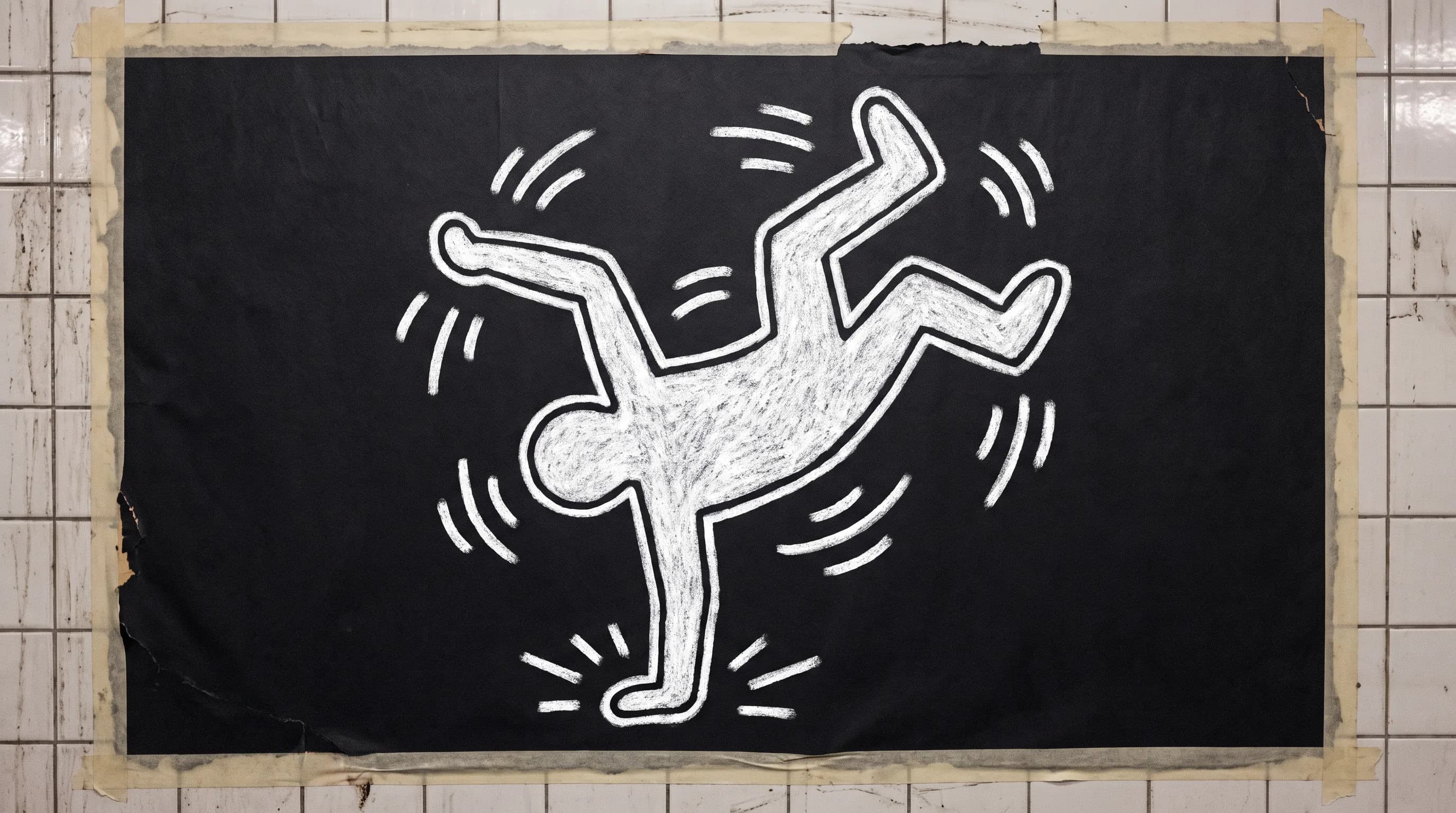
Keith Haring art style is the graphic language Keith Haring (1958 to 1990) worked out in New York in the 1980s. It began as white chalk drawings on the black paper covering empty subway advertising panels. His father taught him to cartoon, and the simple contours he admired in Disney cartoons carried into his own line. Outlines hold one even weight around flat silhouettes with no faces. Short dashes radiate around anything in motion, figures crowd the surface edge to edge, and any color is a single flat fill. Every image here came from FLORA's AI image generator.
Keith Haring art style examples made in FLORA
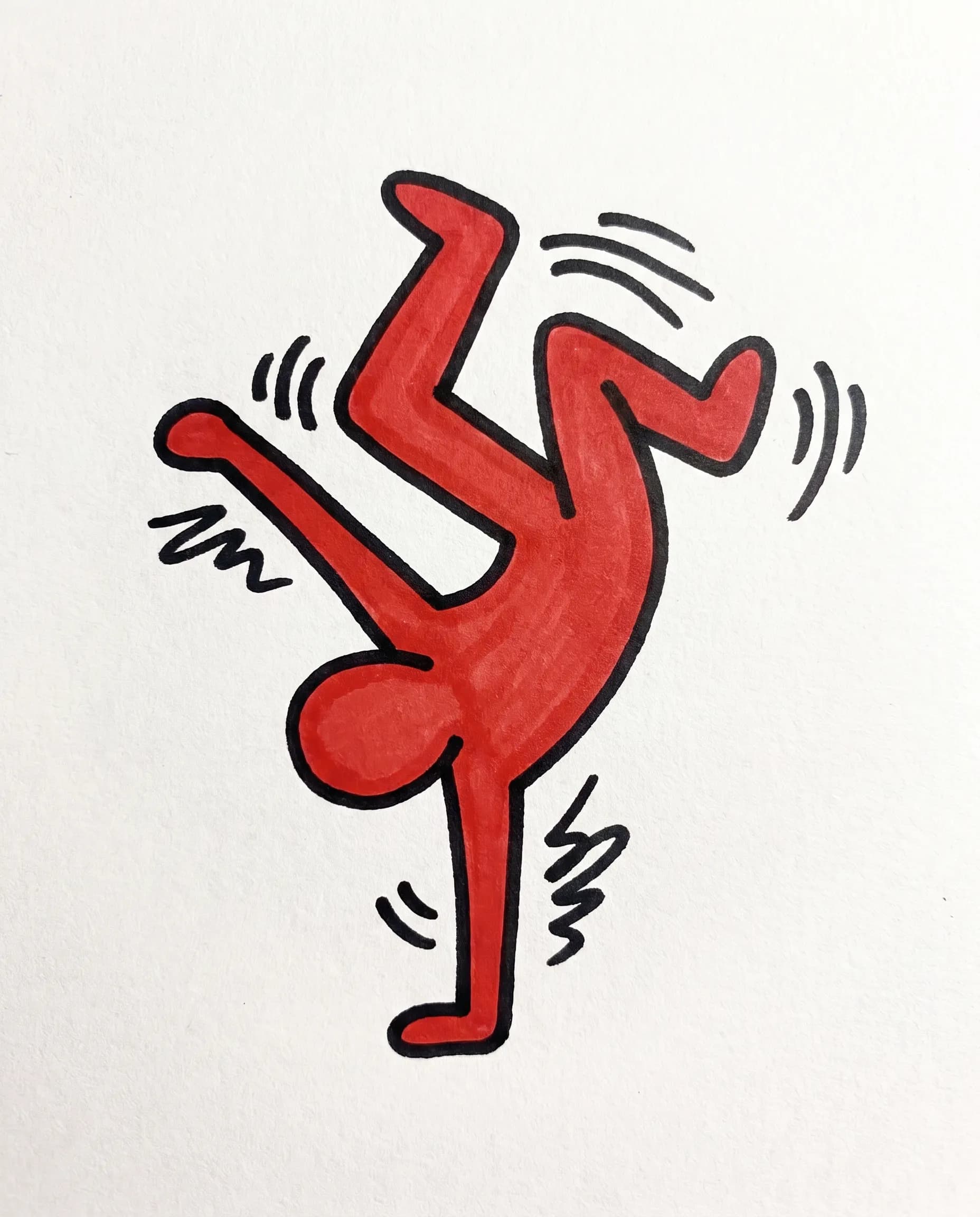
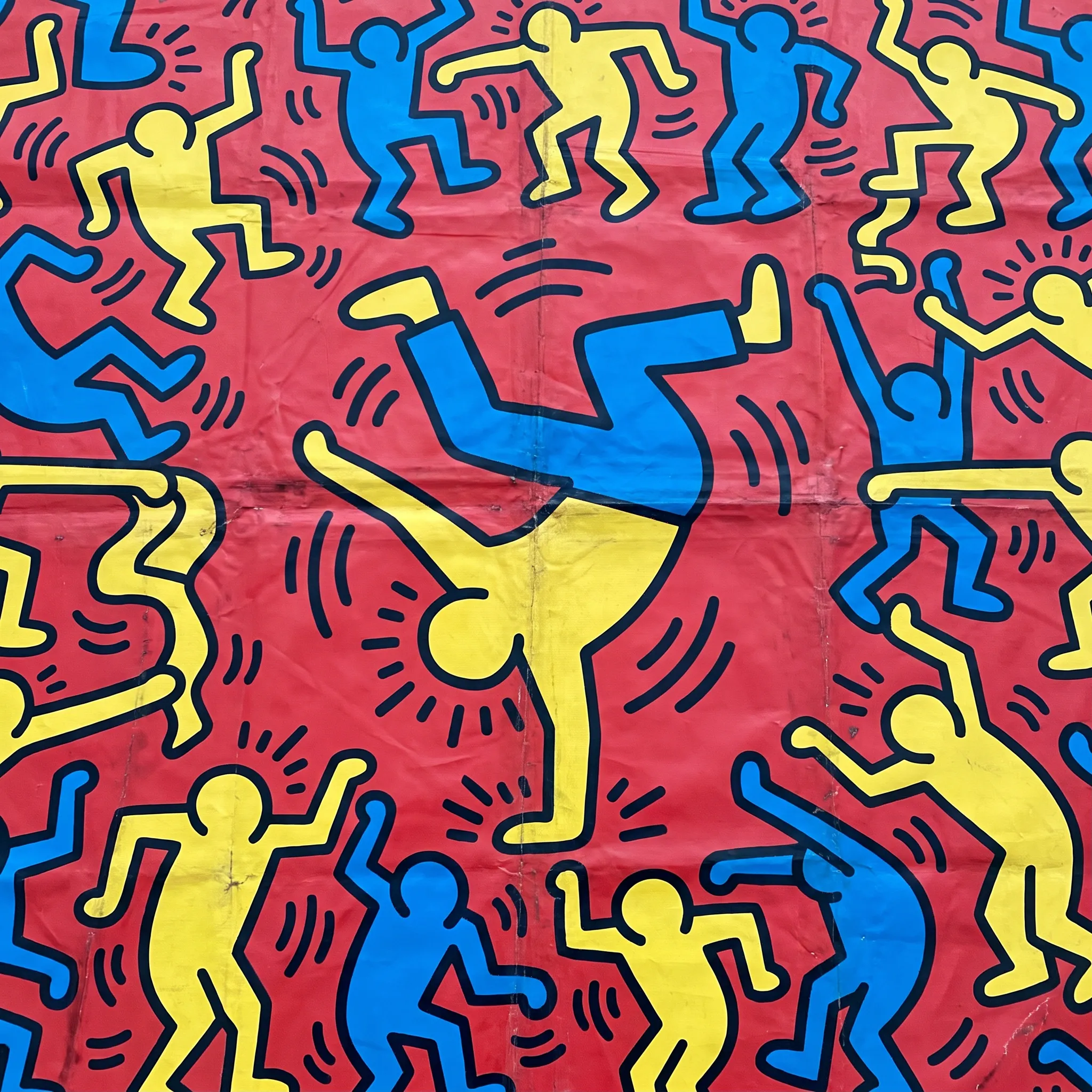
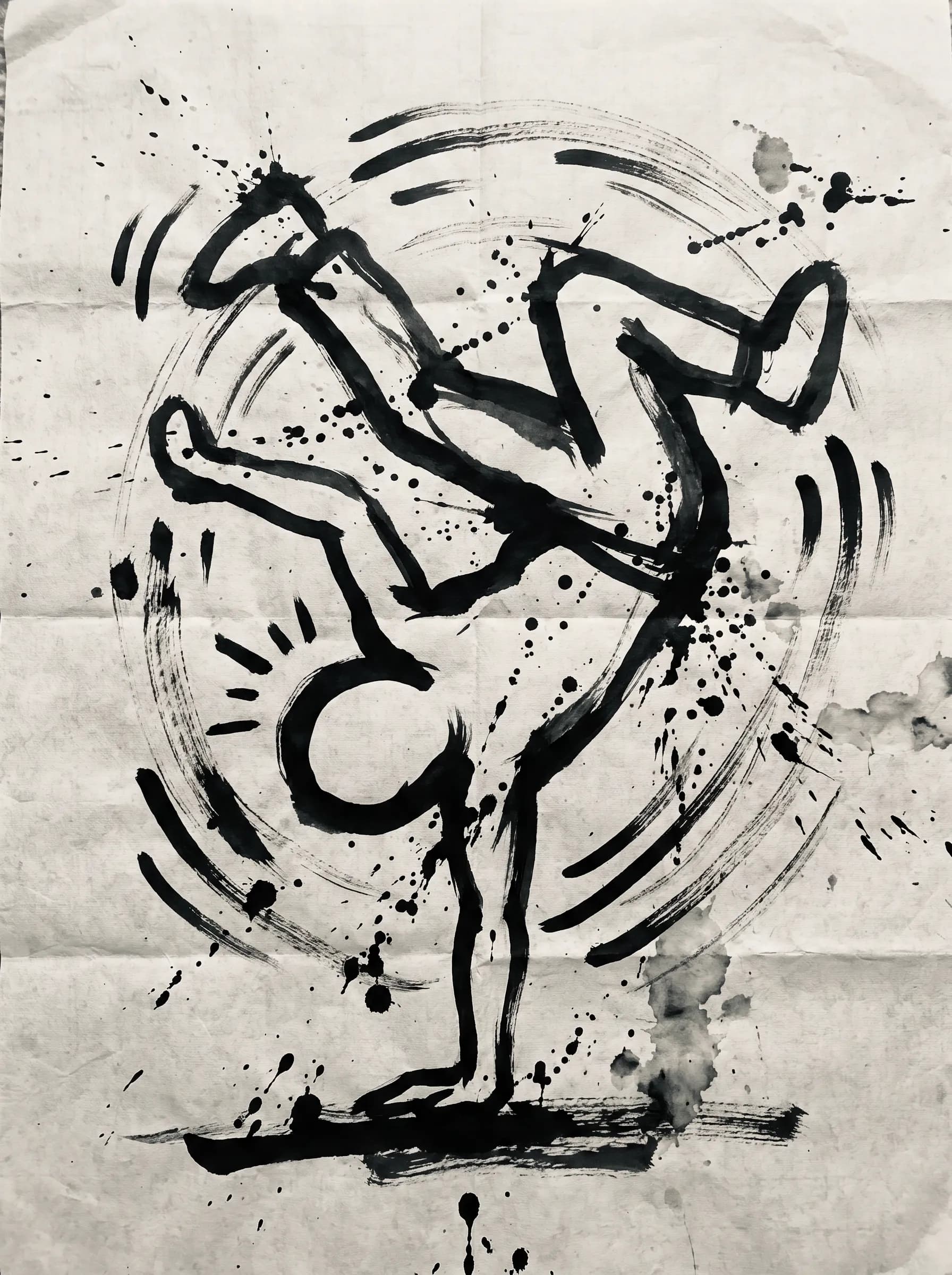
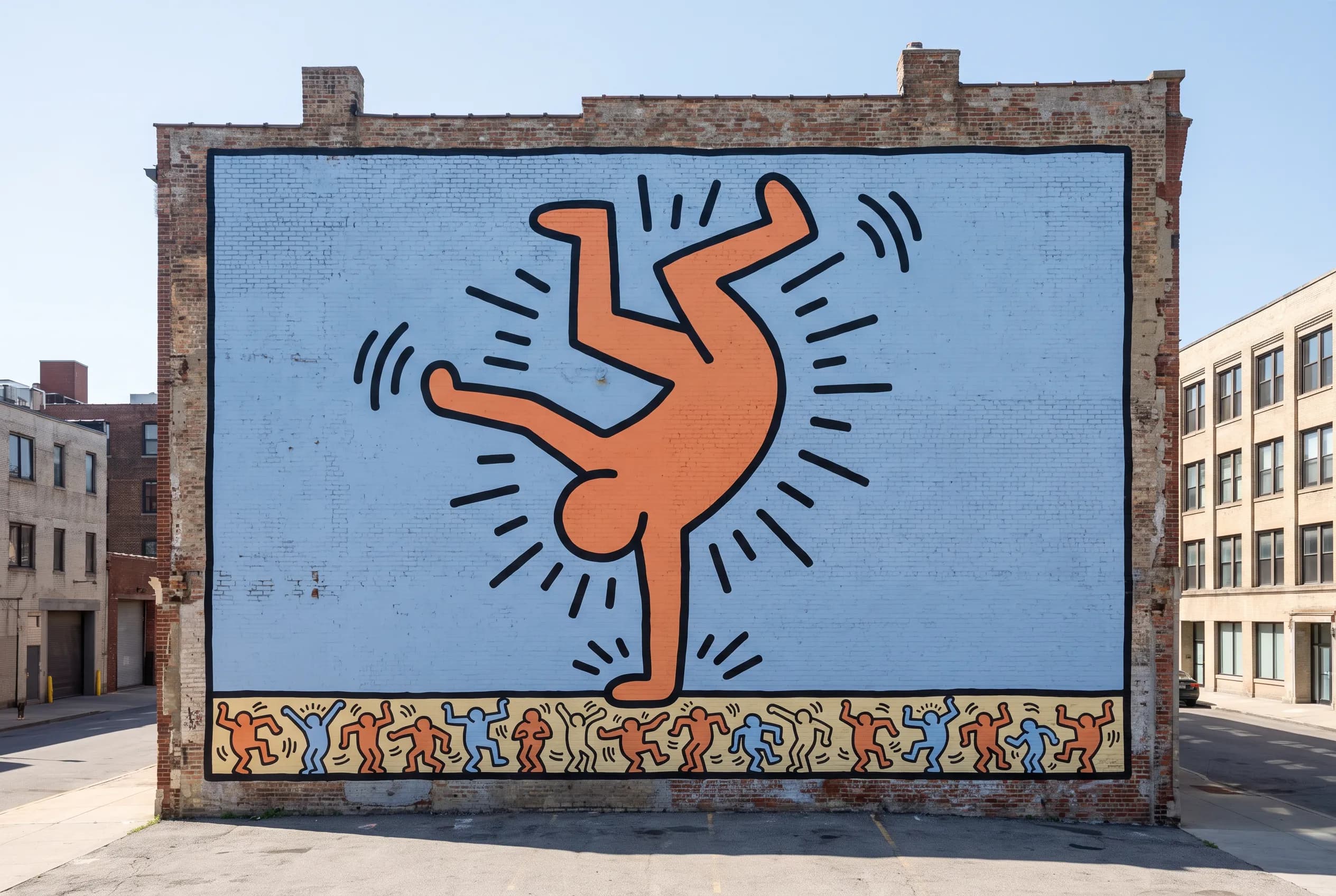
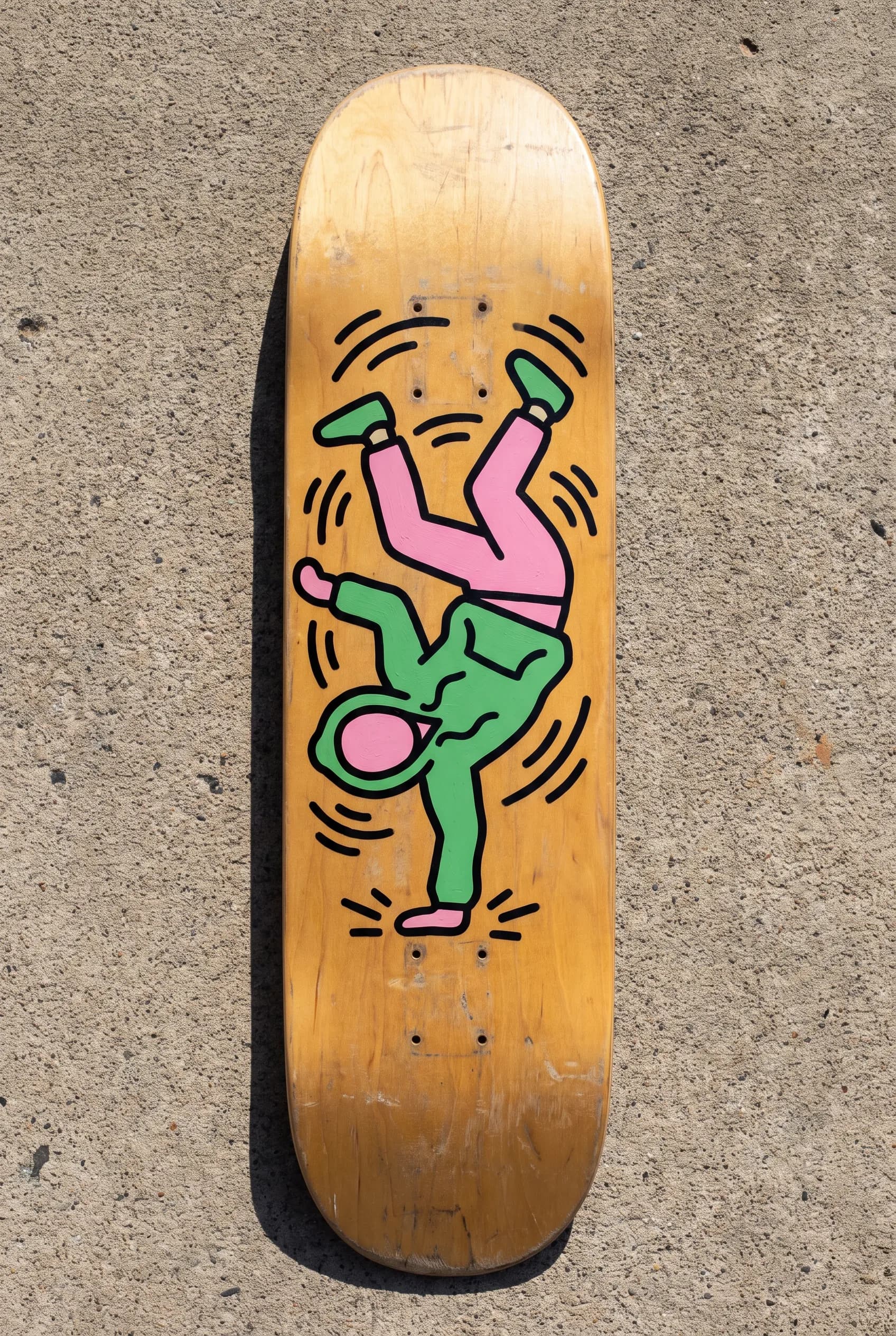
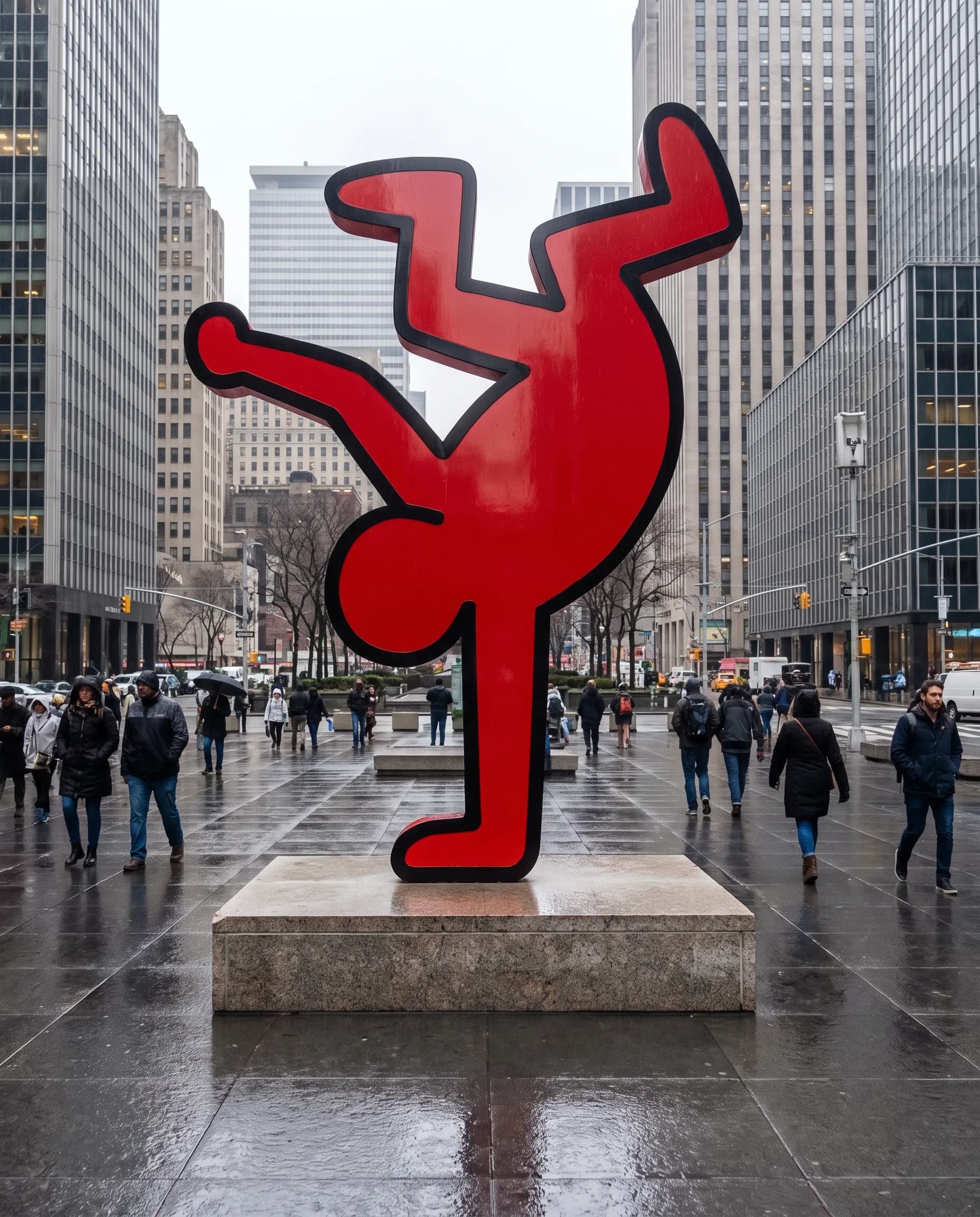
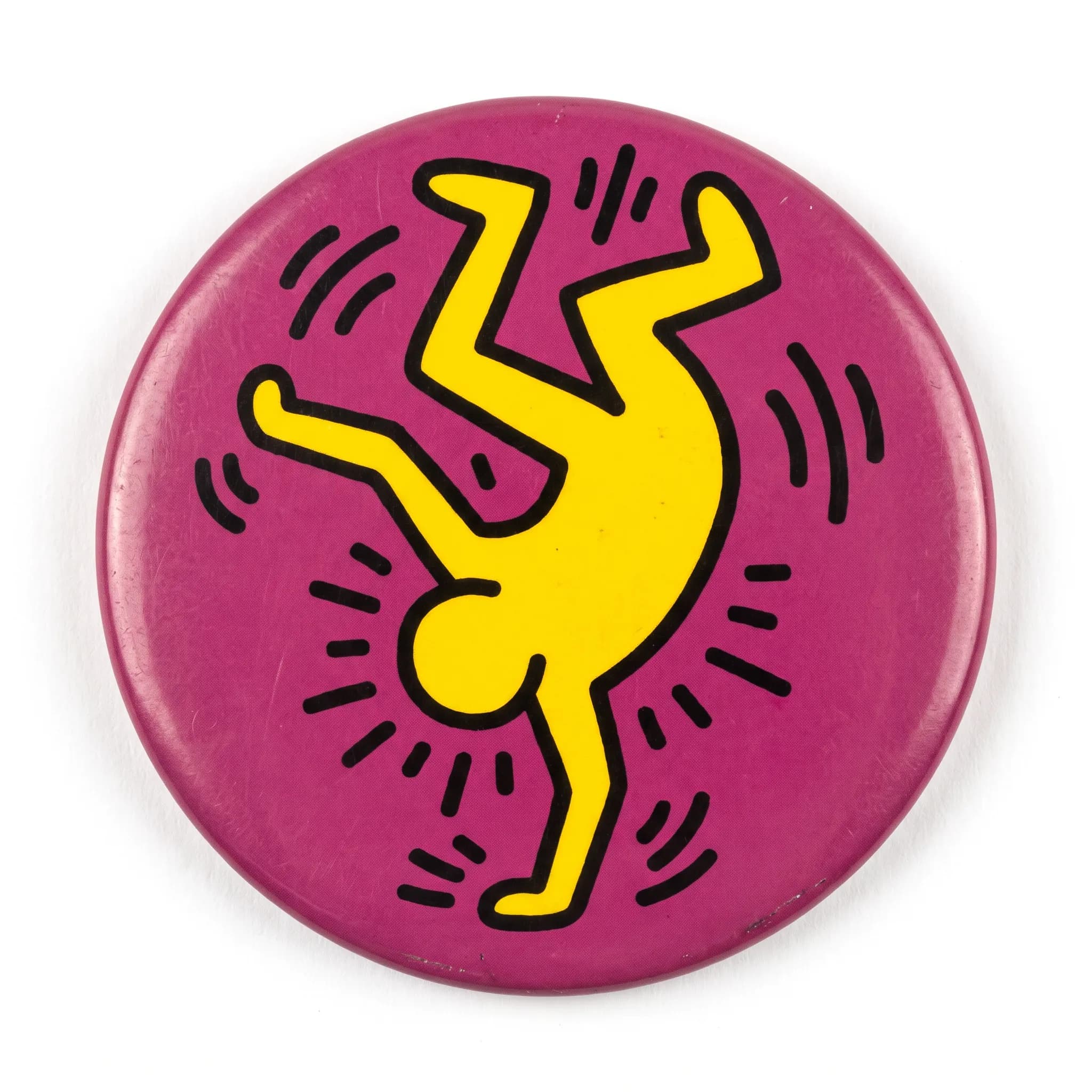
An invented breakdancer, frozen mid-spin on one hand, appears in all eight frames, a pose that gives the motion marks plenty to do. Beneath each image is the prompt that made it.
How to prompt for Keith Haring art style
Kenny Scharf remembered Haring painting one stroke at a time to the rhythm of the music, and a prompt should ask for that steadiness. Describe the line before the figure, asking for a thick, even outline that never breaks and nothing drawn inside the shape. A bent-knee, arms-flung pose gives radiating dashes a reason to exist, so list them as their own cue. One or two flat colors with a black outline tend to beat a full rainbow. The surface goes last, since chalk, marker, brushed ink and paint on vinyl each change the edge.
Which Haring line do you want? An essay on his foundation's website separates three kinds, the crisp felt-tip contour, a dripped sumi ink line that recalls Chinese calligraphy, and a gestural, distorted figure. Naming one tends to work better than asking for the Keith Haring style of art in general.
Prompts for one breakdancer
- Subway chalk. White chalk drawing on a matte black subway paper panel, an original breakdancer spinning on one hand, thick unbroken outline, faceless silhouette, short radiating motion dashes, Keith Haring art style, no text
- Felt-tip marker. Felt-tip marker drawing of an original breakdancer balanced on one hand, crisp even-weight black contour, no facial features, motion lines at the elbows and knees, flat red fill on white paper, in the manner of Keith Haring, no text
- Vinyl tarpaulin. Painting on red vinyl tarpaulin of an original breakdancer spinning on one hand among smaller dancing figures, bold black outlines, flat yellow and blue fills, crowded all-over composition, in the manner of Keith Haring, no text
When the line breaks down
A bare name can pull in the pictographs Haring repeated for a decade. Describe a figure of your own. Faces creep in too, and no facial features usually clears them. Models like to taper and sketch. A hairy, broken contour reads as a doodle, so repeat even and unbroken. Soft gradients and 3D shading are the last drift, and flat fill fixes both.
Where Keith Haring art style works
Between 1982 and 1989 Haring made more than 50 public artworks, and he lent his figures to literacy drives and other public service campaigns. Outlined figures still suit cause campaigns because they register from across a street. Give Banner Maker the campaign image with its headline, call to action, brand name and palette, and it builds a master banner and matching sizes around them.
Merchandise is the other natural fit, and Haring's Pop Shop, opened in Soho in April 1986, sold T-shirts, toys, posters, buttons and magnets printed with his images. Generate an original character in black plus one color, then give Image Recolor a palette per colorway, and it swaps the colors while shape, texture and lighting stay put.
He also ran drawing workshops for children in New York, London, Tokyo and other cities. For a class handout, photograph a student mid-dance and Photo to Drawing Guide returns a step-by-step drawing page with sketch-style lines.
Related styles
- 80s art style covers the decade's wider graphic looks
- Graffiti art style, the street culture around his chalk work
- Pop art style, mass-market subjects in flat color a generation earlier
- Cartoon art styles trace the cartoon contours he learned from as a boy
FAQs
What is Keith Haring's style called?
His work is filed under pop art and street art. It grew out of New York's graffiti scene before reaching galleries. Tate lists him under graffiti art. In 1980 he showed paintings at The Times Square Show, a graffiti art exhibition where he and Jean-Michel Basquiat drew particular notice.
What technique did Keith Haring use?
He drew directly and never erased or corrected a mark, and between 1980 and 1985 he sometimes finished as many as forty subway drawings in a single day. He also painted on vinyl tarpaulin, the sheeting break dancers spread on the street to perform on.
What is Keith Haring's most famous art piece?
Crack is Wack is probably the best known. He painted it in 1986 beside New York's FDR Drive, sized for drivers on nearby roads to read, and his foundation calls it a landmark. The same year he painted part of the Berlin Wall in the German flag's colors. That mural was destroyed in 1989 as the wall came down.
Did Keith Haring support LGBTQ?
Yes, openly. He was gay and made the struggles of LGBTQ people and the fight for gay rights part of his subject matter. After his AIDS diagnosis in 1988 he made posters such as Ignorance = Fear for AIDS education, and in 1989 he founded the Keith Haring Foundation to fund AIDS groups and children's programs.



