
What Makes the Frida Kahlo Art Style Recognizable
 FLORA
FLORA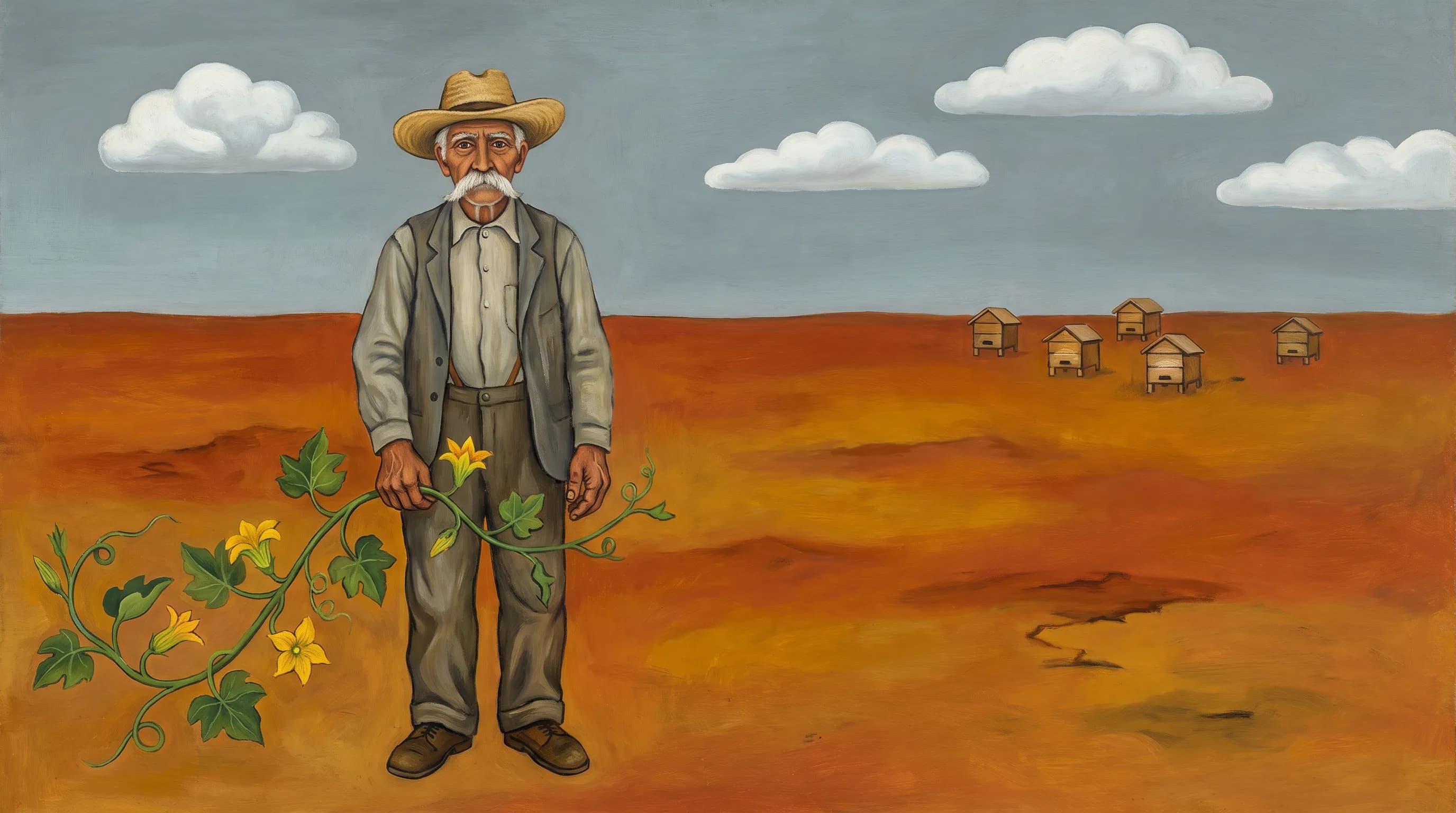
The Frida Kahlo art style takes its cues from the self-portraits the Mexican painter made between 1926 and her death in Coyoacán in 1954. She taught herself to paint while bedridden after a bus crash in 1925, and once she married the muralist Diego Rivera in 1929 she turned toward Mexican folk art and her figures grew flatter. The color is brilliant. Faces hold a steady, impassive gaze, and clothing carries meaning, above all the Tehuana dress she adopted as a trademark, with its flowered headdress, gold jewelry and long ruffled skirt.
Frida Kahlo art style examples made in FLORA
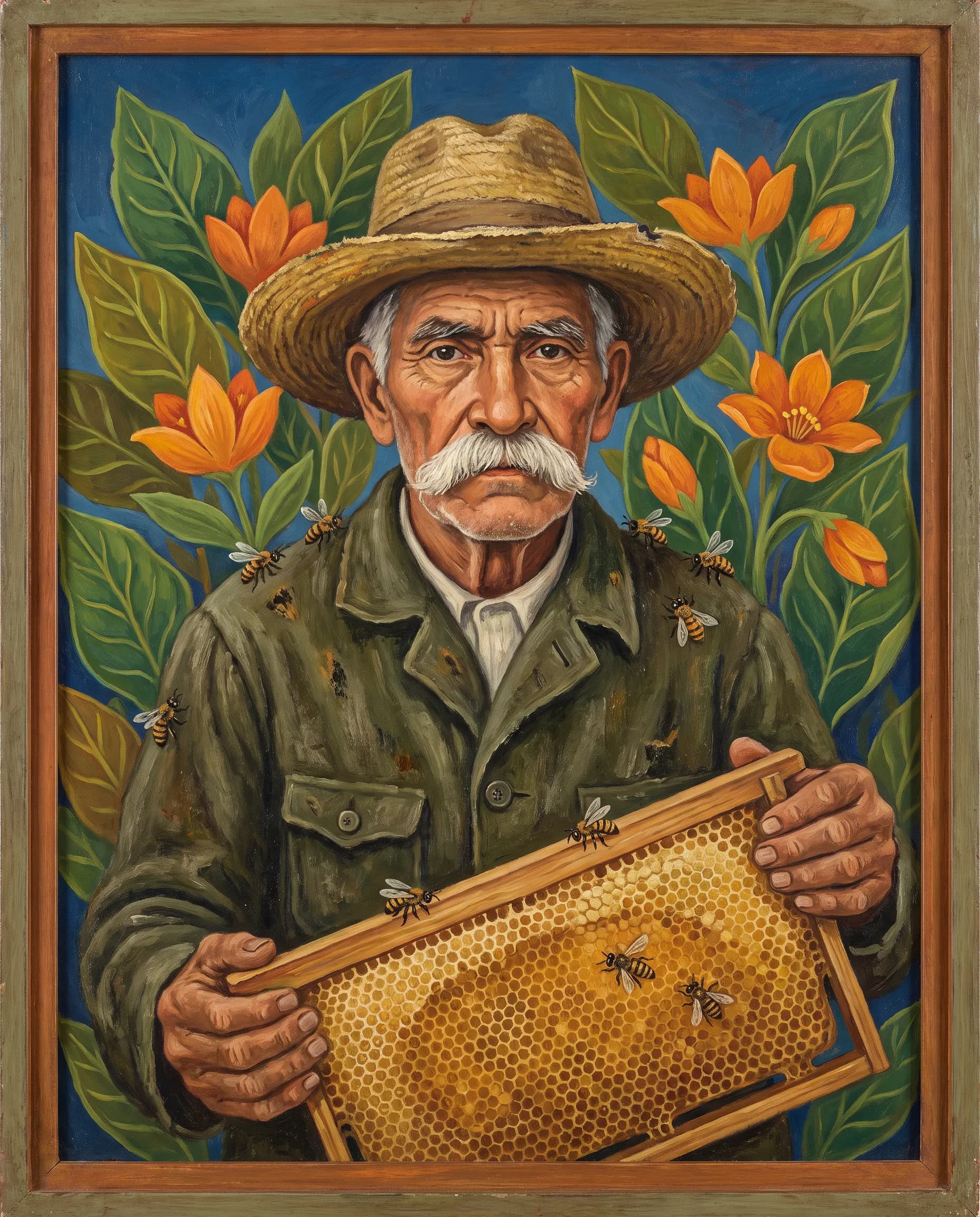
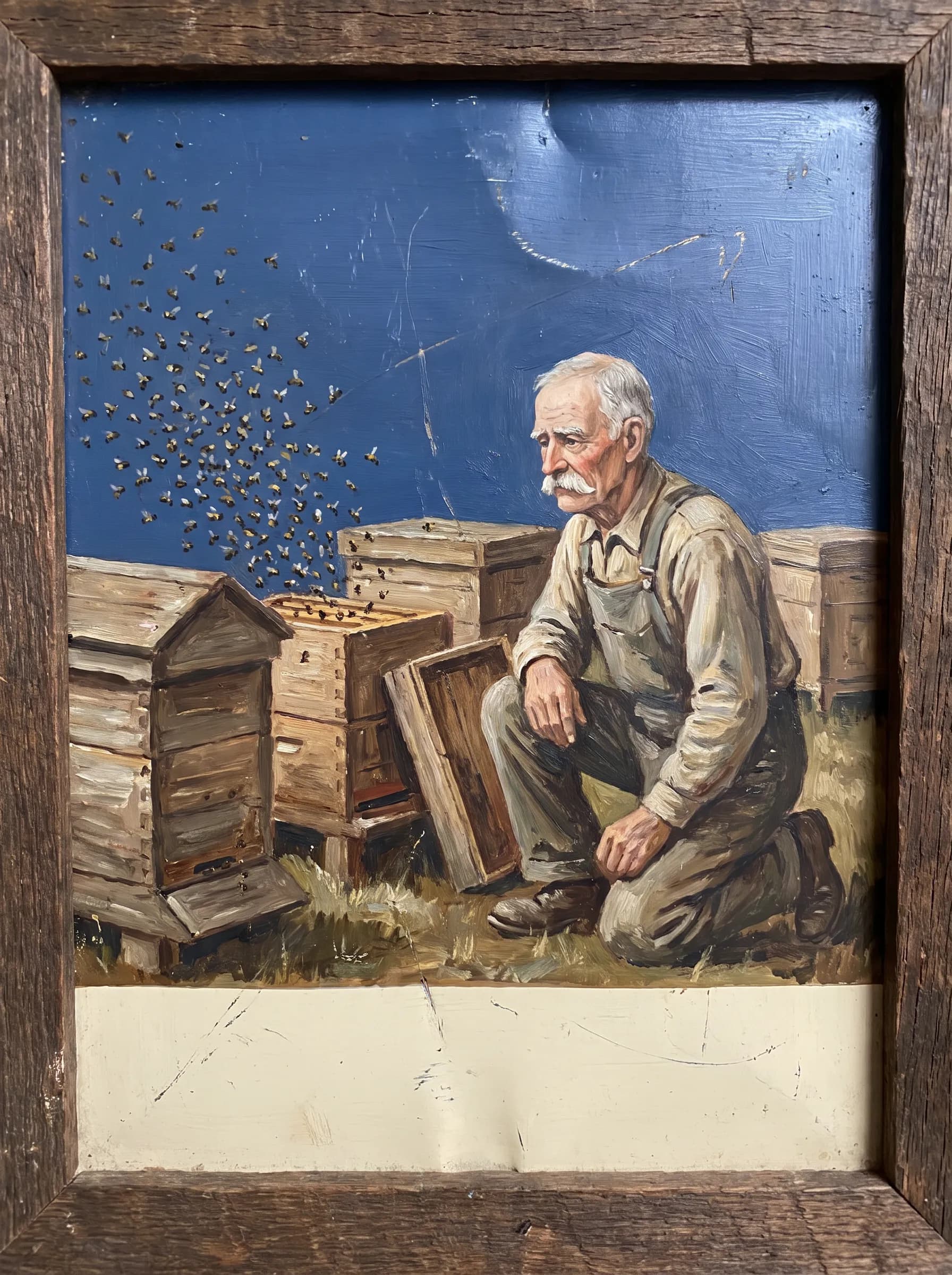
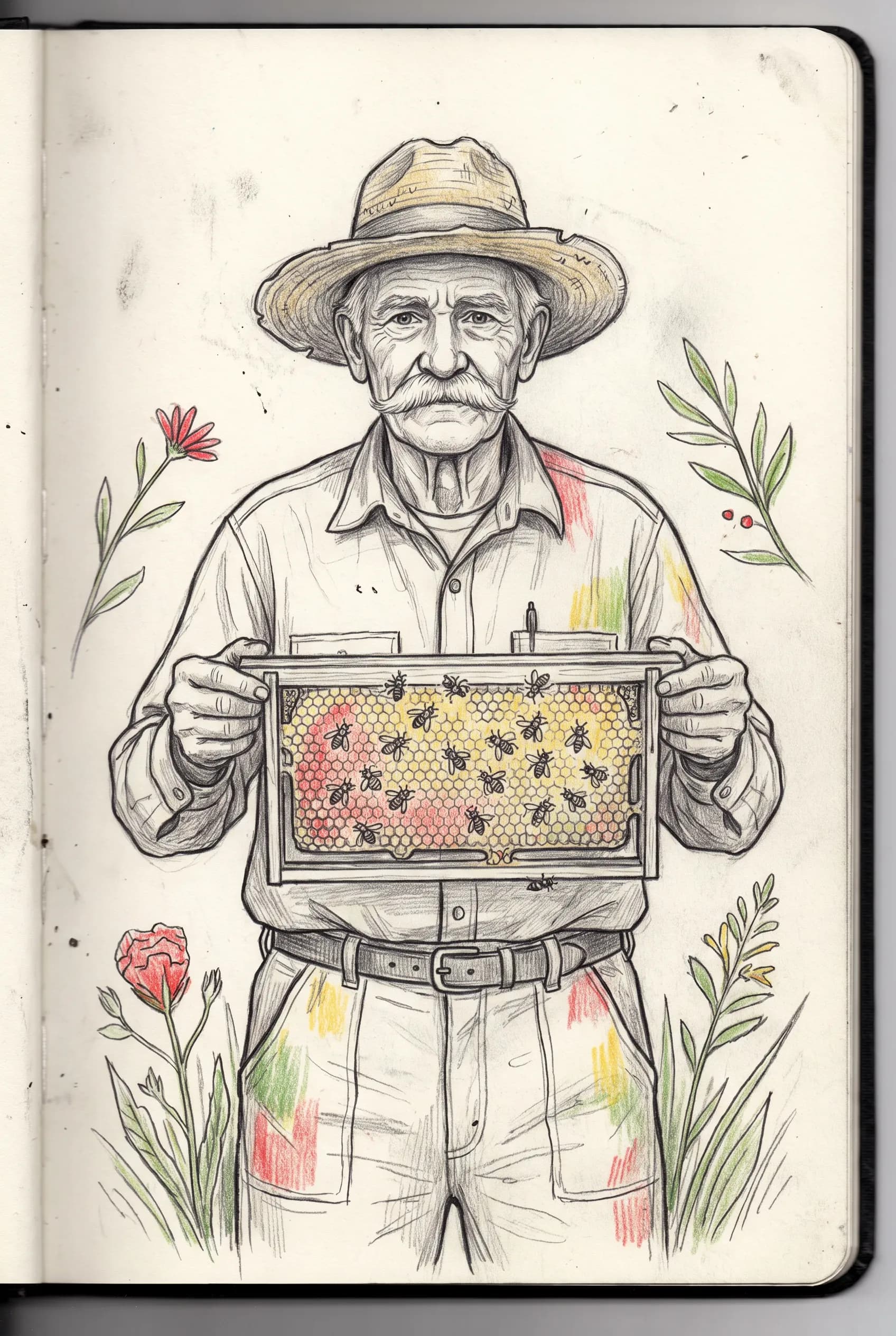
None of the eight images shows Kahlo. The sitter is invented, an elderly beekeeper with a white mustache and a honeycomb, and each caption gives the exact prompt behind him, run through the AI image generator in FLORA. We gave him the mustache and the straw hat on purpose, since a vague sitter can slide toward her face.
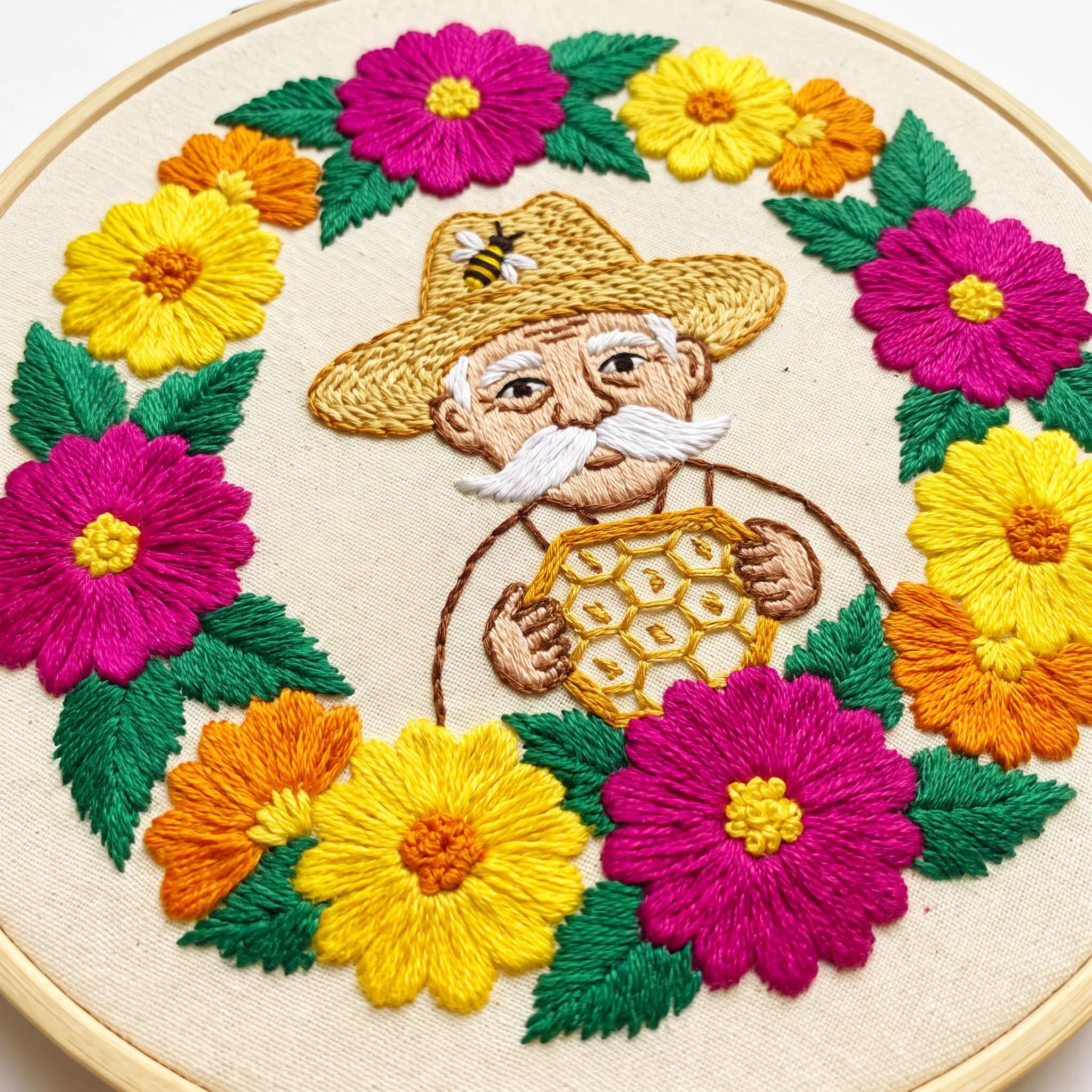
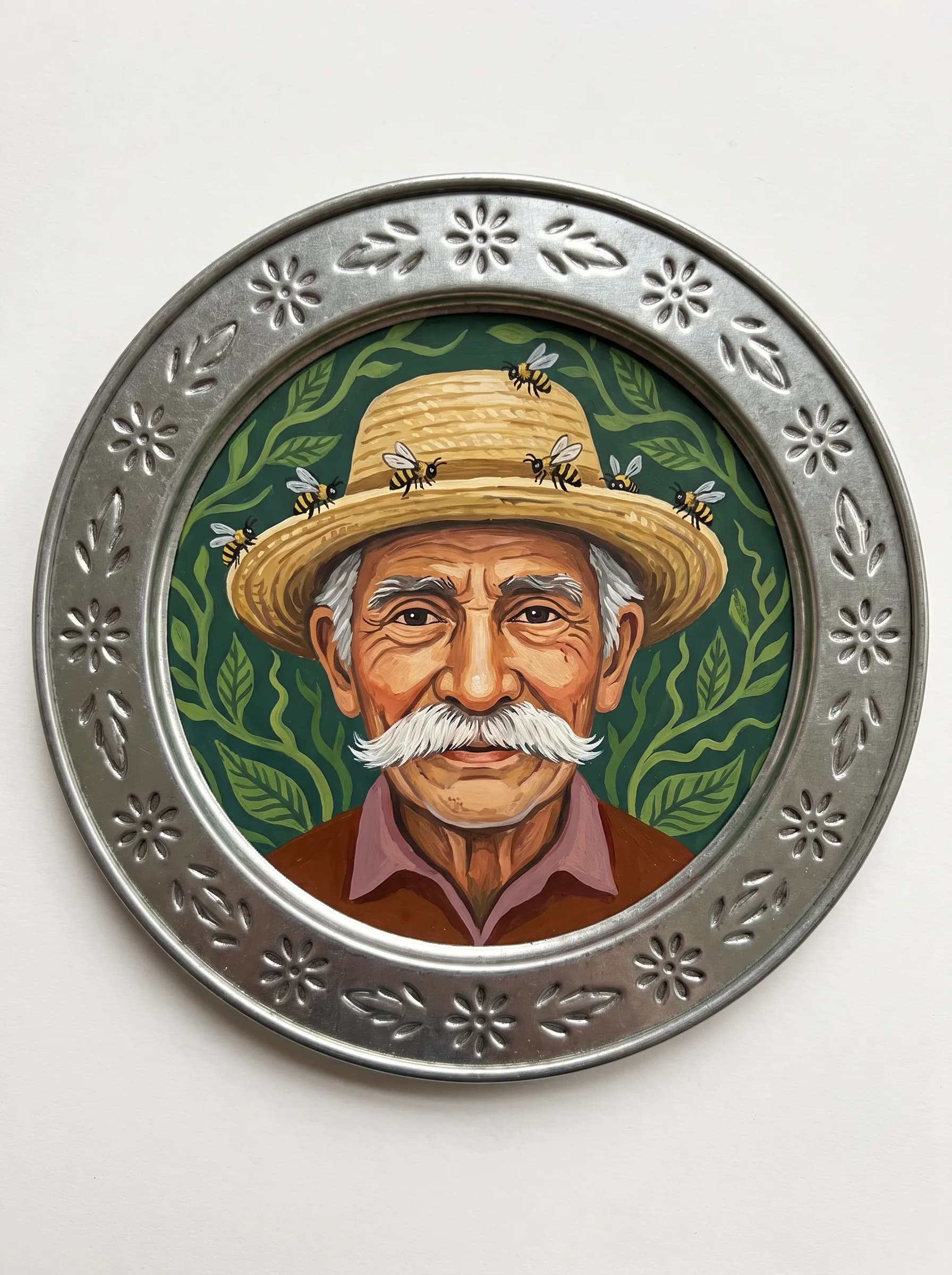
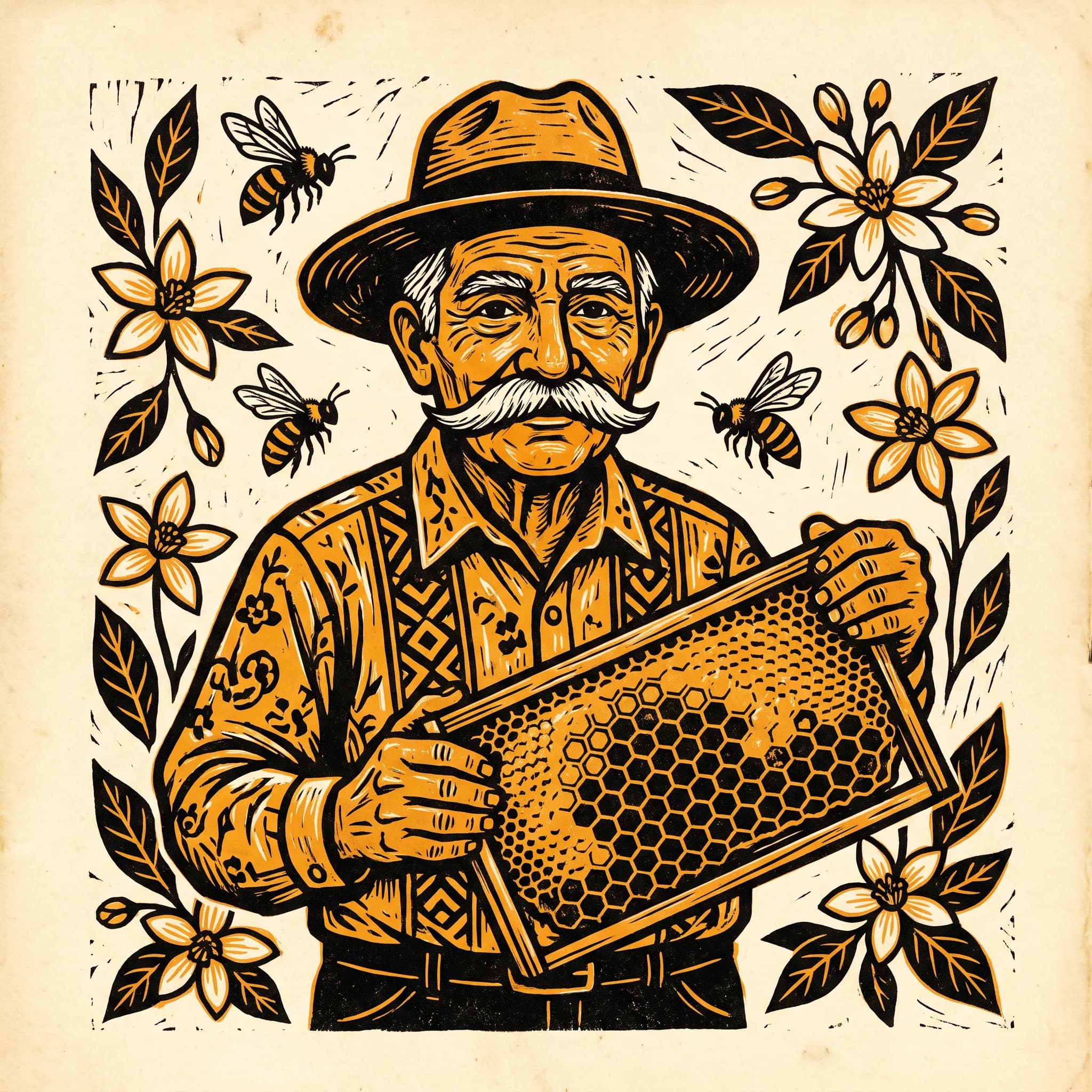

How to prompt for Frida Kahlo art style
Describe the sitter closely enough that nobody could mistake them for the painter, and frame them waist-length with their eyes on the viewer. Around the figure, place two or three objects, plants or animals that say who this person is. Her own self-portraits change hairstyle, dress and iconography while the gaze stays the same. Name the support too. Oil on masonite names the hardboard she painted on late in life, and a tin sheet points the model at a folk source she collected. Finish with flat, brilliant color and a stylized background, such as a wall of leaves or an empty plain.
That source is the ex-voto, a small Mexican painting on metal made to give thanks after surviving some danger. Kahlo collected them. A stairwell in her house in Mexico City is lined with the ones she owned, and since the written story usually runs along the bottom, a prompt can keep that band and leave it blank.
Three supports, three prompts
- Masonite portrait. Oil on masonite portrait of an elderly beekeeper with a white mustache and a straw hat, waist-length and facing the viewer, holding a honeycomb, bees around his shoulders, steady impassive gaze, flat brilliant color, stylized leaves and orange blossoms behind him, in the manner of Frida Kahlo's portraits, no text
- Ex-voto on tin. Small oil painting on a dented tin sheet in the Mexican ex-voto tradition, an elderly beekeeper with a white mustache kneeling beside his hives as a swarm lifts away, naive perspective, flat cobalt sky, blank cream band along the bottom edge, in the manner of Frida Kahlo, no text
- Open landscape. Wide oil painting of an elderly beekeeper with a white mustache standing alone in a bare ocher landscape, his hives small on the horizon, a squash blossom vine curling into his hand, flat sky with stylized clouds, crisp edges, in the manner of Frida Kahlo, no text
When the portrait goes wrong
Most misses start with the face. Leave the sitter loose and a model may paint a woman with dark braids and joined brows, a likeness of Kahlo herself, so spell out age, hair and clothing every time. Soft blending and hazy light are the next risk, since both erase the folk-art flatness. Clutter comes last. Two objects with a clear meaning usually hold up better than eight.
Where Frida Kahlo art style works
Book jackets and editorial portraits are the closest fit. One figure with a direct gaze survives being shrunk to a thumbnail, and the objects around it can hint at a memoir's subject before a single line is read. Generate the portrait in FLORA and set the title in real type afterward.
Labels can borrow the ex-voto layout, with a painted scene on top and a plain band underneath for the product name and required copy, so describe the product and that layout to Design a Product Label. It returns print-ready label artwork plus a photoreal packshot of the bottle.
Related styles
- Mexican art styles covers the folk traditions behind her flat color
- Chicano art style is a Mexican American tradition with its own murals and portraits
- Pablo Picasso art style belongs to another painter the Surrealists claimed as their own
- Henri Matisse art style takes flat color further, with pattern instead of symbols
FAQs
What is Frida Kahlo's style called?
Her work is often identified as Surrealist, although she denied the connection. André Breton, the Surrealist leader, helped organize her first solo show at Julien Levy's New York gallery in 1938 and introduced her in the brochure as a self-taught Surrealist. Her work was also included in the International Exhibition of Surrealism in Mexico City in 1940.
What did Frida Kahlo use to make her art?
She painted in oil, on canvas and on masonite board. Self-Portrait with Thorn Necklace and Hummingbird (1940) is oil on canvas, and Viva la vida, dated 1954, is oil on masonite. Her eye for detail came earlier, from helping her father, a professional photographer, in his studio.
What was Frida Kahlo's identity?
Kahlo was Mexican, born to a German father of Hungarian descent and a Mexican mother of Spanish and Native American descent, and her paintings often split that ancestry into a colonial European side and an Indigenous Mexican side. The Two Fridas (1939) shows the pair as twin figures holding hands, one in a European wedding dress and the other in Tehuana clothes.



