
The Glossy Jelly Art Style for Digital Portraits
 FLORA
FLORA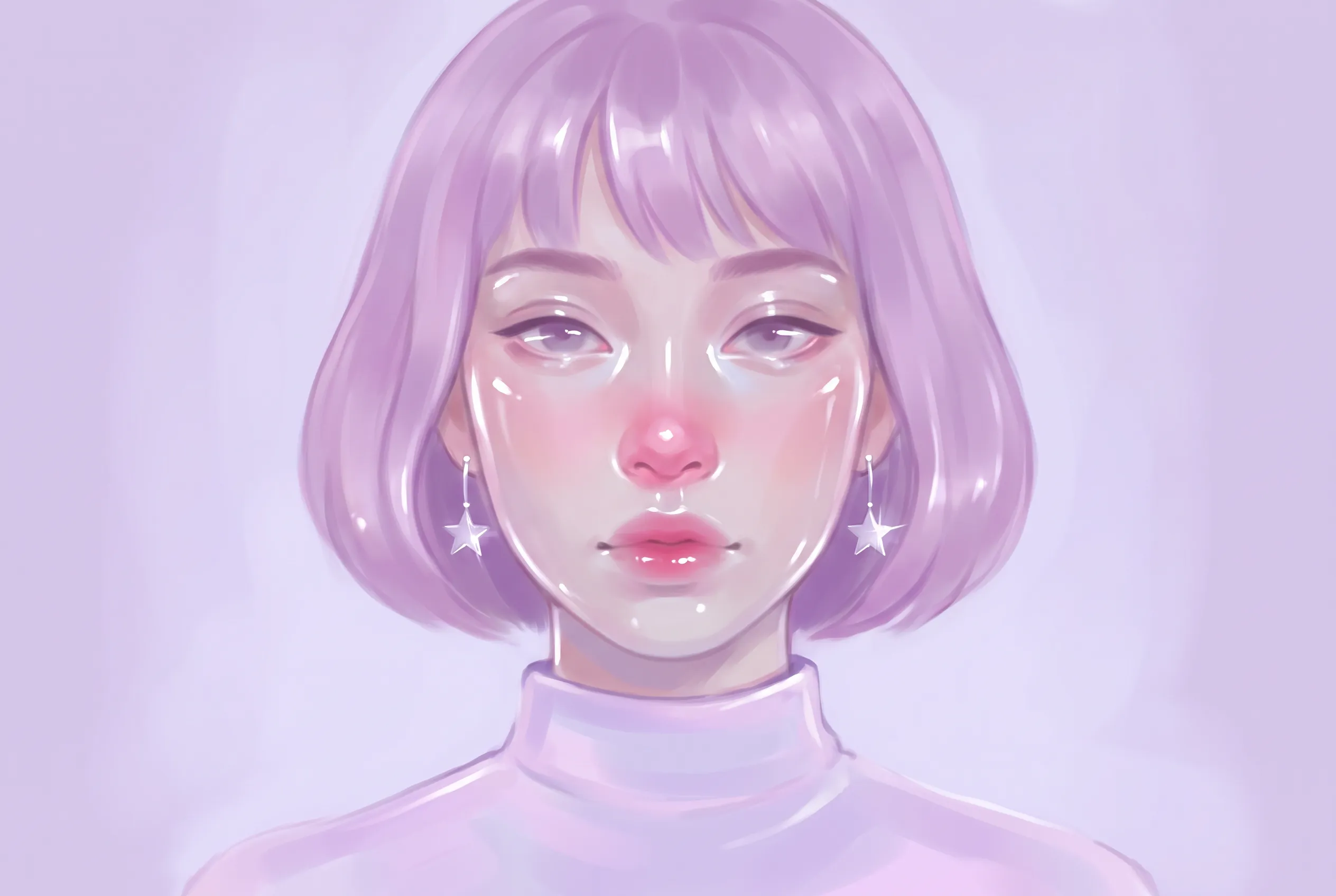
The jelly art style is a way of painting digital portraits so the skin looks glossy and slightly wet, like the surface of a gummy candy. It has no textbook entry, so its working definition comes from YouTube tutorials, Pinterest boards and Reddit critique threads, and Instagram's tag for it held about 26,000 reels in October 2026. Across those sources the face starts from an anime base but gets a more realistic nose and lips. The eyes are oversized and finished with hard white highlights, pink is brushed onto the nose, lips and under-eyes, and the features are pushed toward near-perfect symmetry. All eight images below came from FLORA's AI image generator.
Jelly art style examples made in FLORA
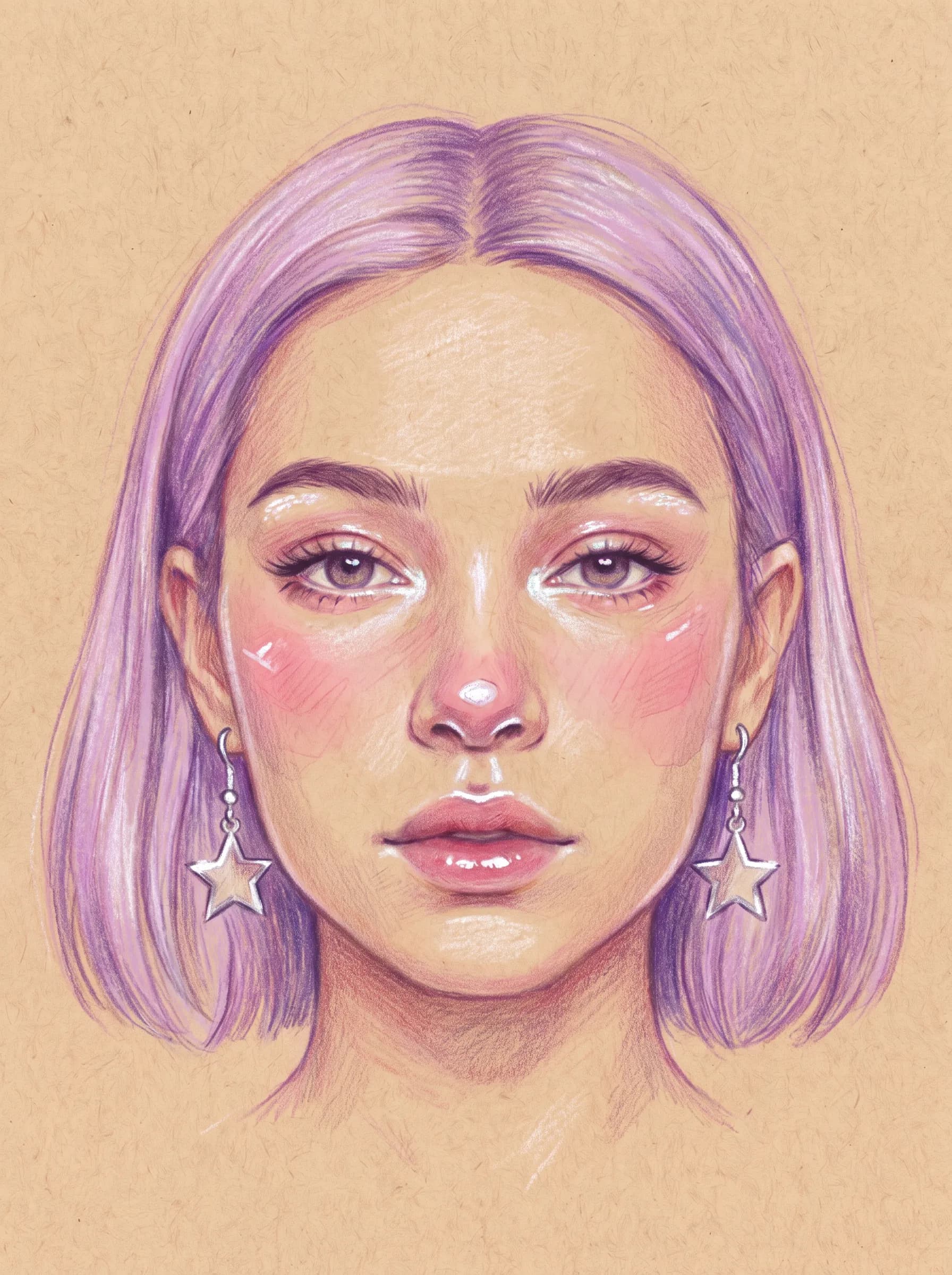
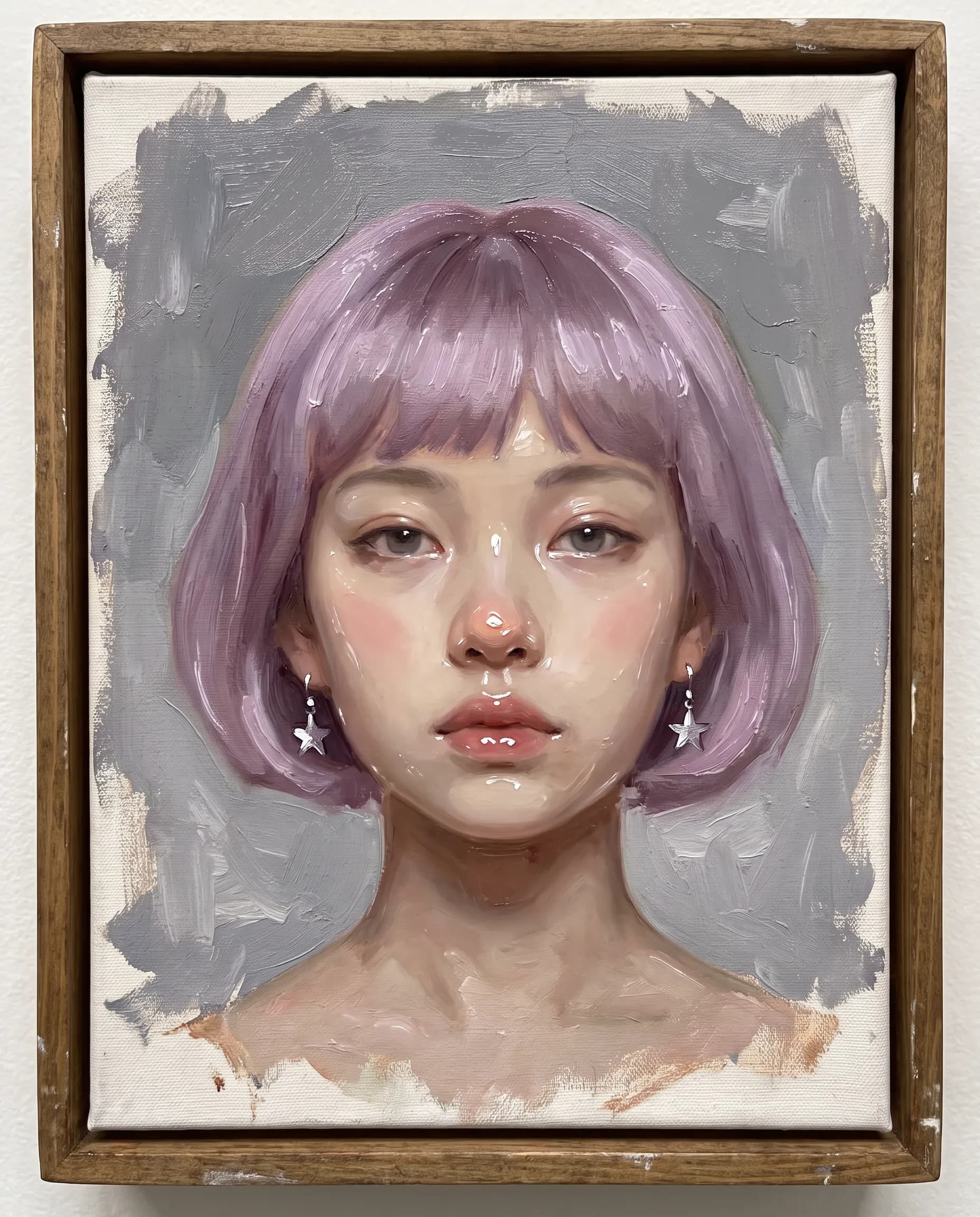
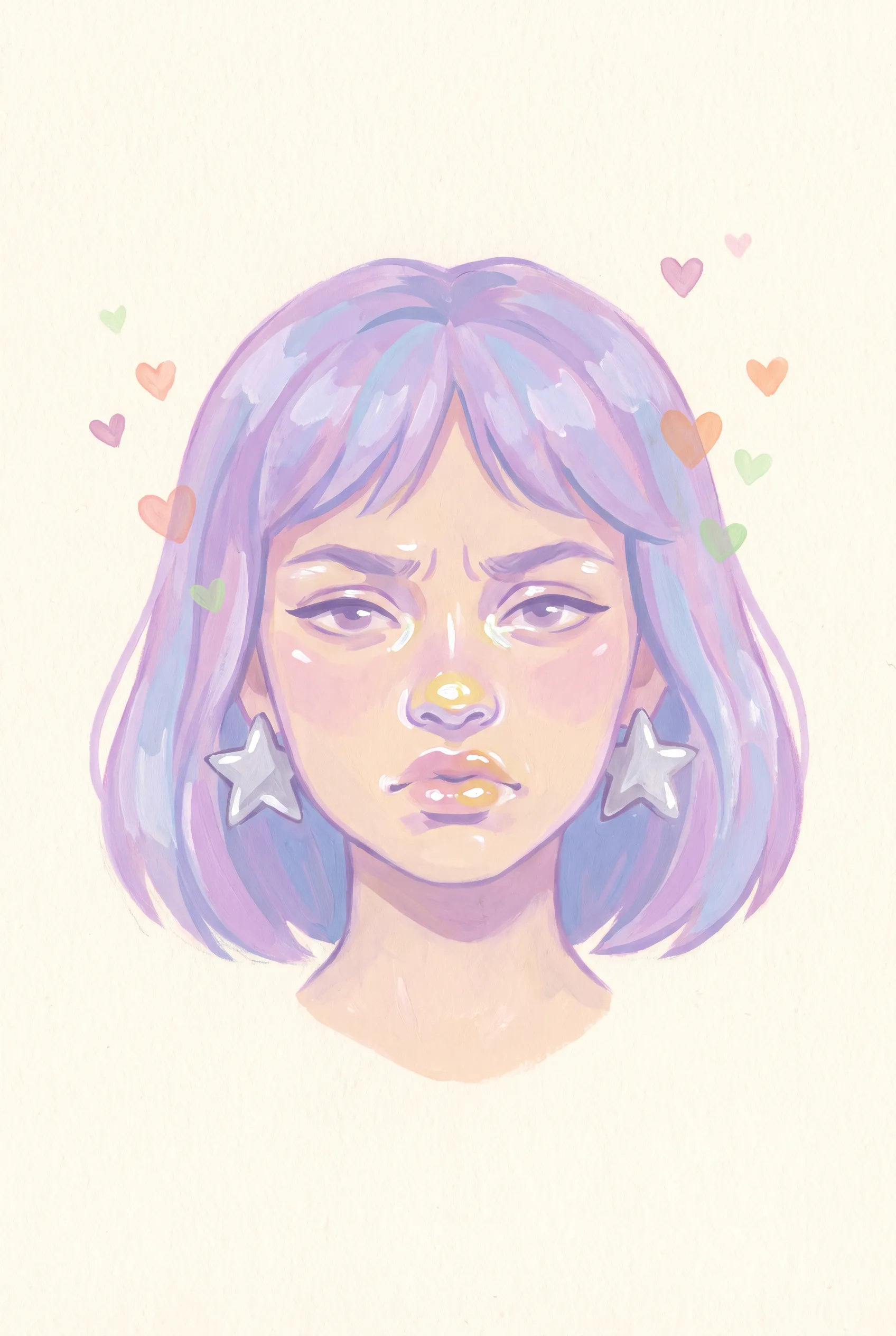
Read each caption as a recipe, since it is the full prompt behind the picture. The test is whether a young woman with a lilac bob and silver star earrings keeps her glossy finish in colored pencil, oil paint and vinyl as well as in digital brushwork.
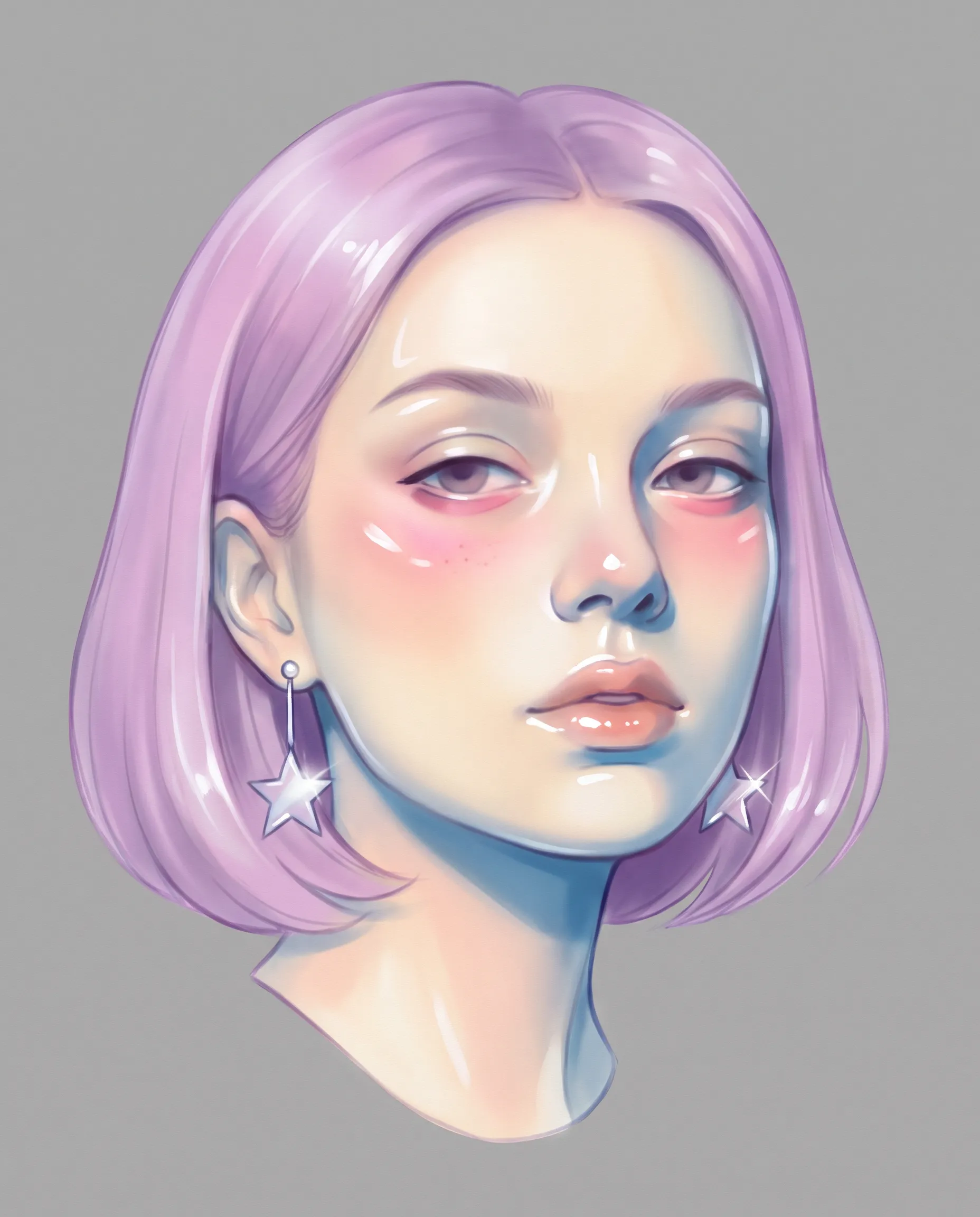
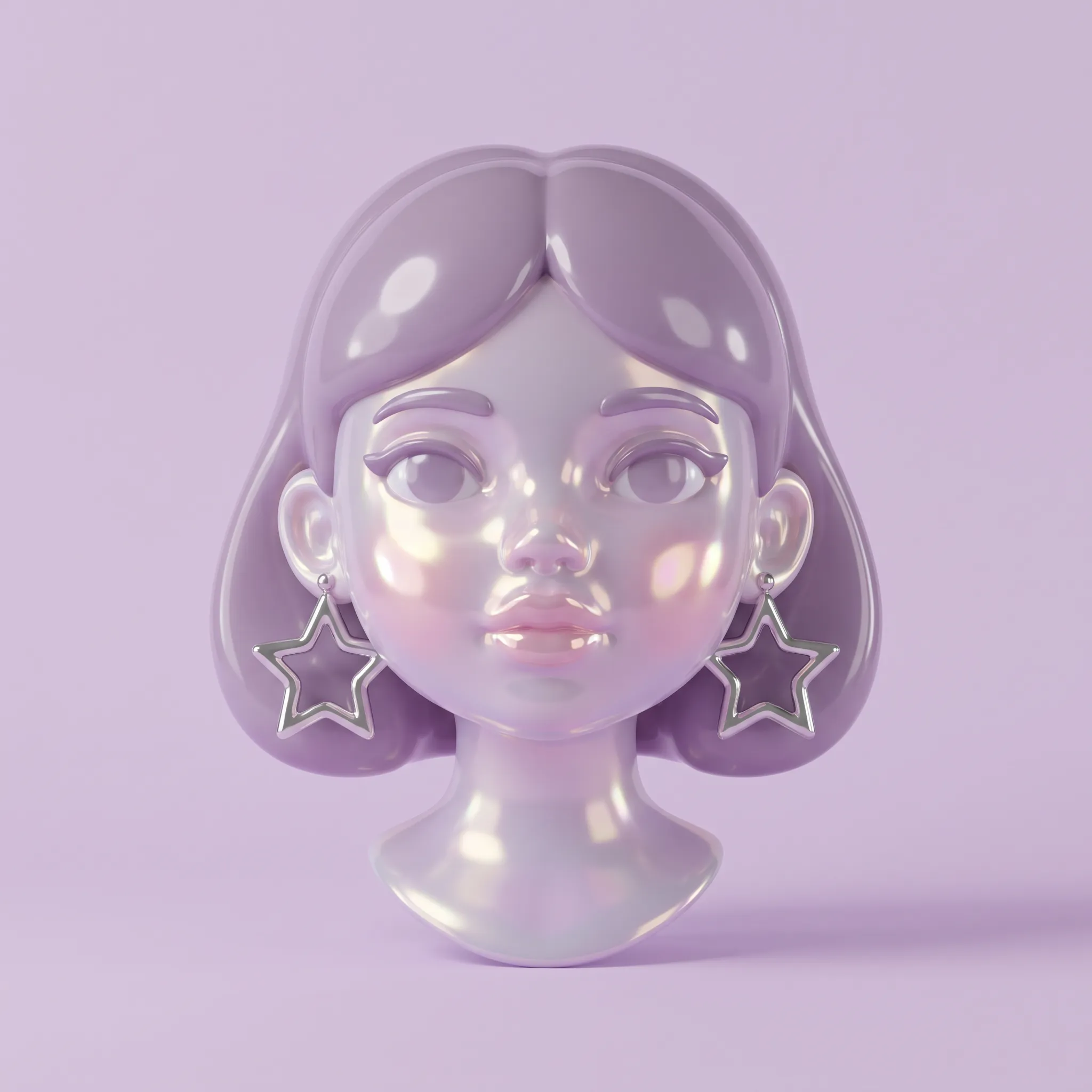
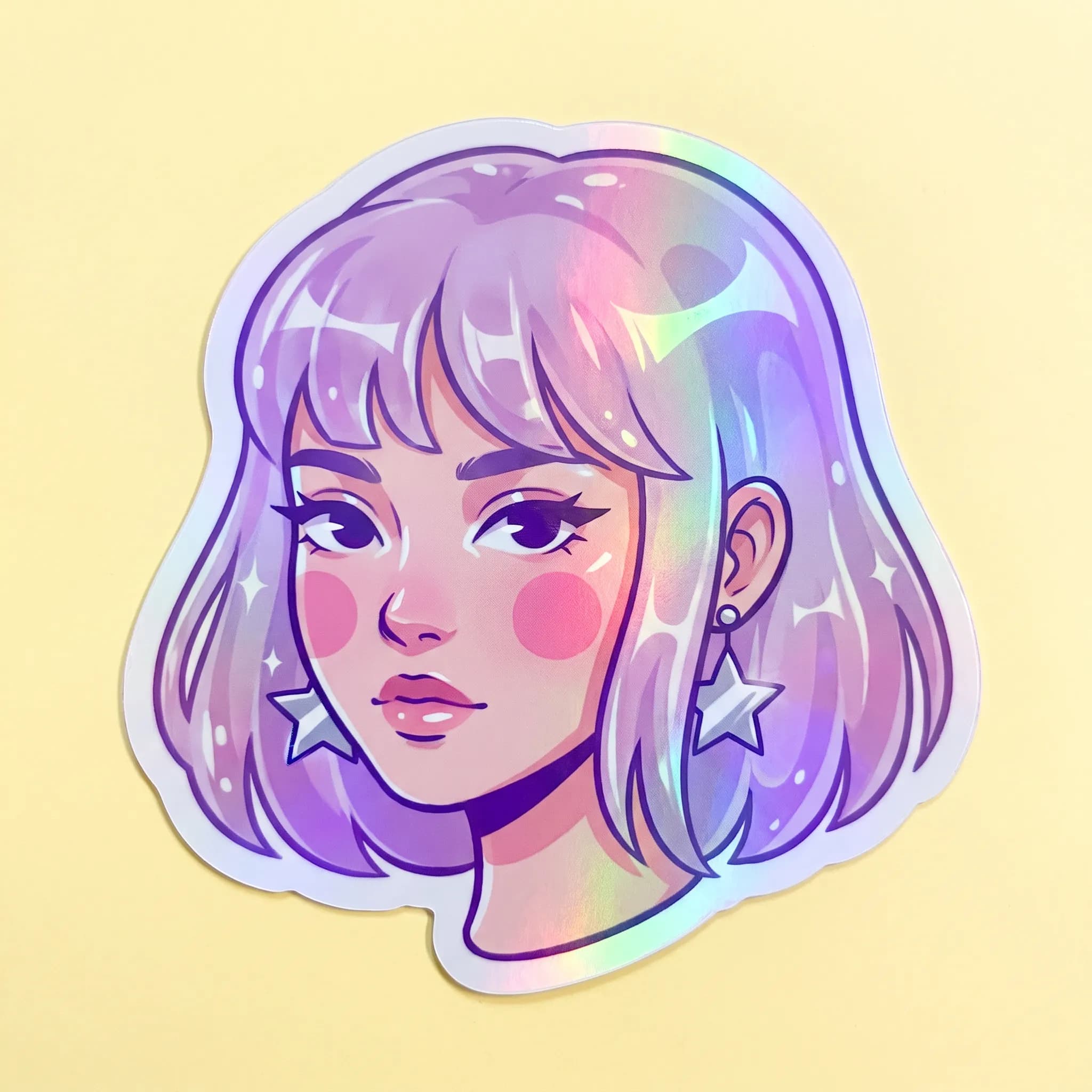
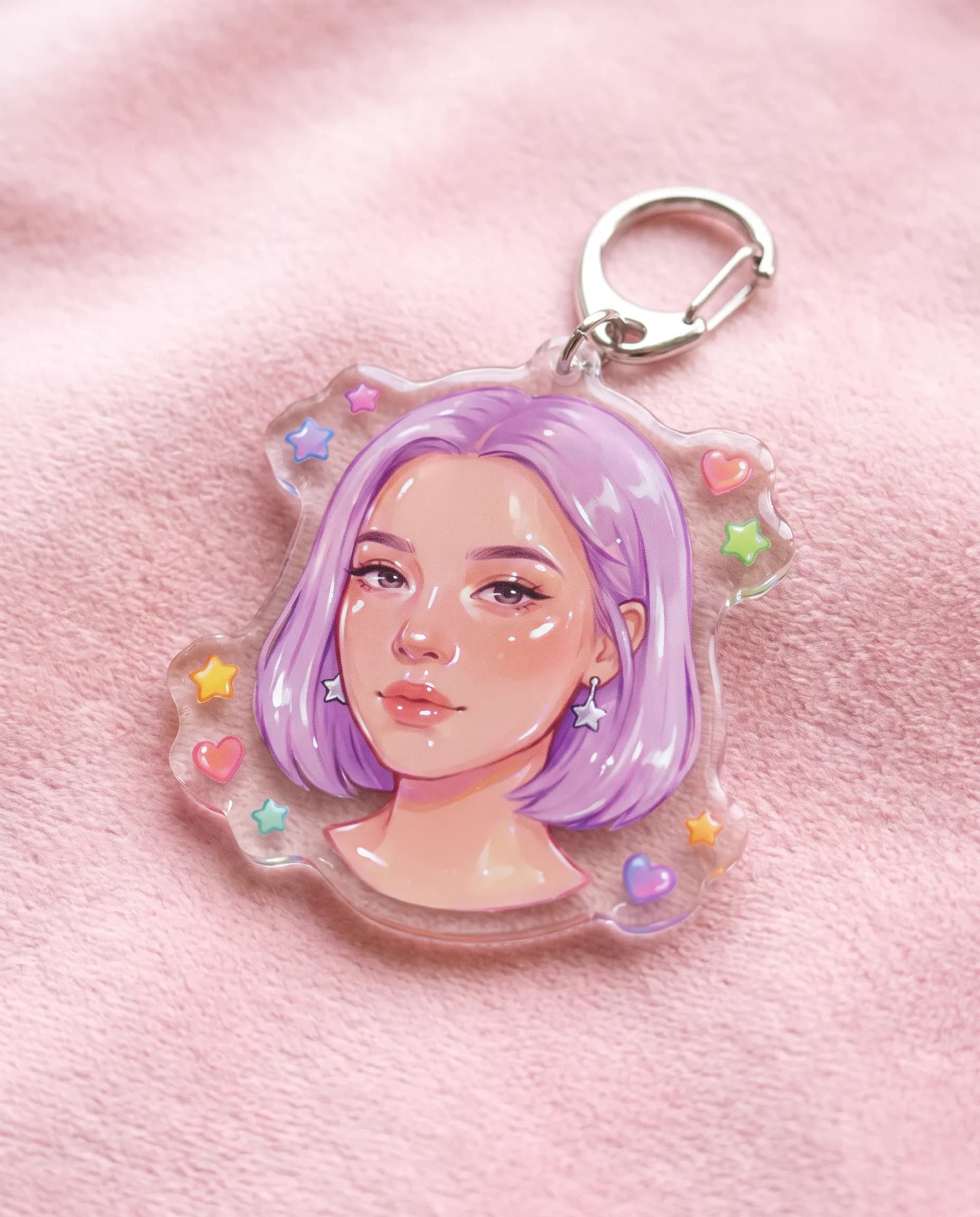
How to prompt for jelly art style
Expect plain cel-shaded anime if the prompt leans on the name. Spell out the finish instead, roughly in this order.
- A head-and-shoulders subject, ideally with an accessory or two such as earrings, piercings or a hair clip. Nearly every tutorial example is a bust.
- The finish in plain words, which means glass skin, soft airbrushed blending, a sharp highlight on the tip of the nose, glossy lips and puffy lower eyelids.
- A palette of pale skin, a pink flush, cool blue in the shadows and pastel hair or clothing.
- A medium. Digital paint is the default, and colored pencil or gouache work too if you ask for white highlights on top.
- Soft frontal light and a plain mid-gray or pastel background, so the highlights land where the style expects them.
Keep the expression blank or faintly annoyed. That is how most of the reference art looks, and a big smile pulls the image toward ordinary anime.
Three prompts to copy
- Digital bust. Jelly art style digital painting of a young woman with a lilac bob and silver star earrings, head and shoulders, glossy glass skin, pink flush on nose and lips, sharp white eye highlights, symmetrical face, airbrushed blending, pastel lavender background, no text
- Colored pencil. Colored pencil drawing on toned tan paper of a young woman with a lilac bob and silver star earrings in jelly art style, layered pink blush, white gel pen highlights on the nose, lips and lower eyelids, symmetrical face, no text
- Acrylic charm. Clear acrylic keychain charm printed with a young woman with a lilac bob and silver star earrings in jelly art style, glossy rendered face, small star and heart icons around her, silver ring clasp, product photo on soft pink fabric, no text
What tends to go wrong
One YouTube artist admitted an attempt at the style looked like a mannequin staring back, and generated faces can land there too. A loose strand of hair or a slight frown breaks the spell. The other failure is mush, where airbrushing every edge melts the nose and lashes into the skin, so ask for crisp lash lines next to the soft blending. Models also like to sign a name in the corner, which is why each prompt above ends with no text.
Where jelly art style works
Character merchandise suits it best. A glossy bust crops cleanly to a square or a circle and still reads on a two-inch sticker, an acrylic charm or a phone case. Before anything goes to print, run the portrait through AI mockups to see it as photoreal product shots.
Skincare and cosmetics visuals are the second fit, because the whole style is built around skin that catches light. An illustrated face also gives a brand a recurring character for social posts. Run a photo of the packaging through the Moodboard Maker first, then generate against the board it returns so the blush and highlights match the line.
Related styles
- Cute art styles, the family whose big eyes and soft shapes jelly borrows
- Semi-realistic art style, for rendering that leans further toward life
- Eye art styles, since the eyes carry most of this look
- Japanese art styles, where the anime base face comes from
FAQs
Is jelly art edible?
Only the dessert is. Gelatin art, which some bakers sell as jelly art, is made by drawing or injecting colored petals into clear gelatin or agar. It shares search results with this drawing style.
How do you draw an anime face easily?
Jelly tutorials start from a plain anime head. Then the eyes grow, a small fold goes under each one, and the nose and lips are pulled closer to real proportions than standard anime allows. The sketch is the easy part. Most of the remaining time goes into rendering and into making both halves of the face match.
What are realistic drawings called?
Lifelike work is usually called realism, or photorealism when it copies the look of a camera. The jelly art style sits partway there, since skin, lips and hair are rendered almost like life while the eyes and proportions stay stylized, and one step-by-step guide describes its hair as semi-realistic.



