
How can creative directors use AI to pitch concepts?
Write each creative territory as one sentence, then turn each into a key frame so the room reacts to pictures instead of adjectives. In FLORA, three territories for a coffee launch came back as three 16:9 frames in under 30 seconds for $0.165. A second frame for the chosen route, made with the first as its reference, cost $0.064.
Key takeaways
- One frame per territory is enough to start a pitch conversation; more frames go to the route the client picks.
- Our three territory frames ran in parallel and finished 28 to 29 seconds after submission, $0.055 each.
- A second frame made with the first as a reference kept the light and look of the route for $0.064.
- Keep the idea and the line in your own words; let the frames show the world around it.
- All frames sit on one FLORA canvas, so the team can branch a route without losing the others.
At a glance
| What it does | Turns written creative territories into key frames for a pitch |
|---|---|
| Works in | The FLORA canvas, or any agent with the FLORA MCP |
| Model | GPT Image 2.5 Flare, text-to-image and image-to-image |
| Inputs | A brief and one line per territory |
| Outputs | One 16:9 key frame per territory, then more frames per chosen route |
| Typical cost | $0.055 per first frame, $0.064 per follow-on frame |
| Typical time | About 30 seconds for a set of frames run in parallel |
What you need
- A brief and a sentence for each creative territory.
- A FLORA project, or an agent with the FLORA MCP installed.
- For agencies pitching across many clients, FLORA's agency page covers team workflows.
Key features
- Parallel territories: Every territory goes to FLORA in one batch, so three frames take about as long as one.
- Referenced follow-ons: A new frame can take an earlier frame as its reference to keep the route's look.
- Branching canvas: Each territory is its own node, so a route can grow without overwriting the others.
- Many models: Image, video, audio and 3D models sit on the same FLORA canvas for later stages of the pitch.
Best for
- Showing three or more creative territories in a first pitch meeting
- Building out the route a client picks into a short sequence of frames
- Replacing borrowed reference images in a mood board with frames made for the brief
- Testing casting, setting and light before booking a shoot
- Aligning an internal team on a direction before the big presentation
Step by step
Step 1: Write each territory as one line, plus its look
Name the territory, say what happens in the frame, and give the light, lens and palette. Keep the strategic line and the copy out of the image prompt; those belong on the slide.
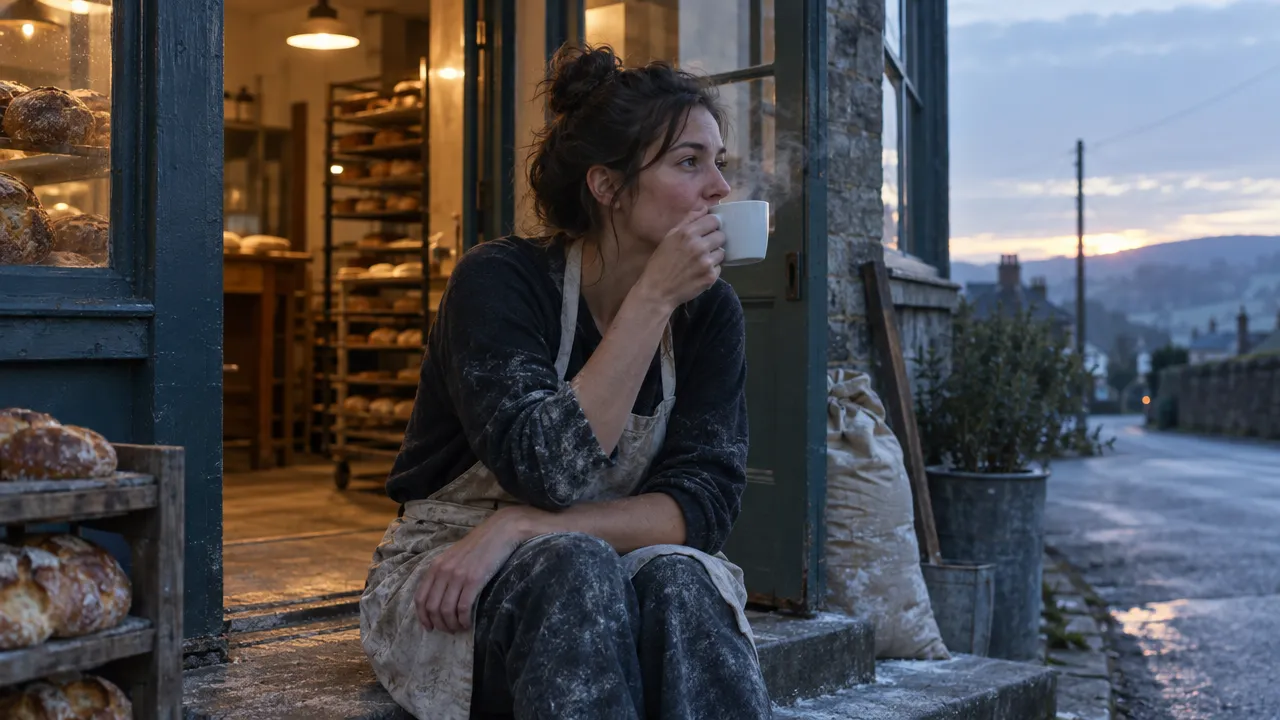
Concept frame, direction A "First light": launch campaign for a small-batch coffee roaster. A baker in a flour-dusted apron drinking coffee on the back step of a bakery at dawn, steam rising from a plain white cup, cool blue early light mixing with warm light from the open door behind. Documentary photography, natural muted color, 35mm, no text, no logos.Step 2: Run every territory at once
Send all the territory prompts together, at the same aspect ratio and quality, so the frames compare fairly. Our run sent three: First light, The ritual and Origin.
Step 3: Pick a route and add a second frame from the first
Wire the chosen frame into an image-to-image node as the reference and describe the next shot. The light and look carry over, so the route reads as one campaign.
Second frame for the same campaign direction, matching the reference's documentary look, dawn light mix of cool blue and warm doorway glow, muted natural color. Close-up: the baker's flour-dusted hands wrapped around the plain white cup, steam rising, apron texture visible, the bakery doorway softly out of focus behind. No text, no logos.Step 4: Lay the frames out with the words
Put each territory's name, line and frame on its own slide, in the same order every time. Present the frames as direction, and say what the shoot or final production will change.
What did pitch key frames look like when we made them in FLORA?
On October 16, 2026, we wrote three territories for a fictional small-batch coffee roaster: "First light" (a baker's first coffee on the back step at dawn), "The ritual" (an overhead pour-over on a walnut counter) and "Origin" (a farmer's hands holding ripe coffee cherries). One flora_create_generations call sent all three with t2i-gpt-image-2-5-flare at 16:9, quality high, resolution 1k.
The three frames finished 28 to 29 seconds after submission, at $0.055 each, so $0.165 for the set. Each one matched its line: a woman in a flour-dusted apron with a white cup in a bakery doorway at blue hour; a pour-over mid-pour beside a kraft bag of beans; weathered hands full of red cherries in front of a misty hillside.
We picked First light and sent one more call with i2i-gpt-image-2-5-flare at 16:9, the first frame wired in through reference_node_ids. It finished in 34 seconds and cost $0.064, bringing the run to $0.229. The dawn color, apron and cup carried over, so the two frames read as one campaign.
What went wrong: the prompt asked for a close-up of the hands, but the model framed the lower half of the baker's face with the cup, cut off at the eyes by the top edge. For a hands-only shot, add "frame from the chest down, no face" and rerun that one frame.
- Model
- GPT Image 2.5 Flare (text-to-image, then image-to-image)
- Tools called
- flora_create_generations, flora_list_generations
- Cost
- $0.165 for 3 territories, $0.064 for the follow-on frame
- Time
- 28 to 29 s for the territories, 34 s for the follow-on
| Territory | What the frame shows | Light |
|---|---|---|
| First light | A baker's first coffee on the back step at dawn | Cool dawn with a warm doorway |
| The ritual | Overhead pour-over on a walnut counter | Soft window light from one side |
| Origin | A farmer's hands holding ripe coffee cherries | Overcast, diffuse |
How many frames should a pitch have?
One strong frame per territory for the first meeting, then three to five for the route the client picks. More frames per territory early on spread attention thin and make the room compare details instead of ideas.
How do I keep a route consistent across frames?
Make the first frame, then use it as the reference for every frame that follows. Repeat the same light, lens and palette words in each prompt. If one frame drifts, rerun only that frame with a specific note.
What should I say about AI frames in the room?
Say what the frames are for: they show direction, casting, setting and light. Say which parts the shoot or final production will make, so the client judges the idea and not a draft image.
Frequently asked questions
Can AI frames replace a mood board?
They can sit beside one. Frames made for the brief show the exact scene the territory describes, which borrowed reference images rarely do.
Can I turn a frame into a moving concept?
Yes. In FLORA you can wire a frame into a video model such as Seedance 2.5 to animate it. Video costs more per item than images, so animate the route the client picks.
How much did the pitch frames cost?
Three territory frames cost $0.165 and one follow-on frame cost $0.064, $0.229 in total on GPT Image 2.5 Flare.
Can the whole team work on the same frames?
Yes. A FLORA project is a shared canvas, so writers, designers and producers see every territory and every follow-on frame in one place.