
Can an AI agent check images against brand guidelines?
Yes. An agent connected to FLORA can run the flora-brand-consistency-audit skill: you turn the guidelines into checkable rules, and a vision model describes each image, transcribes its text and rules pass or fail with evidence. In our run it passed three on-brand images and failed one off-brand tin, for $0.041 in total.
Key takeaways
- The audit cost $0.01 to $0.011 per image and took 16 to 32 seconds each, run in parallel.
- It passed 3 reference-based images and failed the 1 image made without a reference, on product identity and palette.
- Every verdict came with evidence, such as "the tin body and lid are dark forest green rather than terracotta".
- Rules work only when written down: four checkable rules drove every verdict in our run.
At a glance
| What it does | Judges a set of images against written brand rules, with evidence per rule |
|---|---|
| Works in | Claude, ChatGPT, Cursor and Codex through the FLORA MCP |
| Skill and model | flora-brand-consistency-audit with i2t-gemini-3-7-flash-i2t as the judge |
| Inputs | Image links or canvas images, plus your rules in plain words |
| Outputs | Per image: description, transcribed text, pass or fail per rule, evidence |
| Typical cost | $0.01 to $0.011 per image |
| Typical time | 16 to 32 seconds per image, in parallel |
Key features
- Describe before judging: The judge writes what it sees and transcribes the text before it rules on anything.
- Evidence per rule: Each pass or fail quotes what in the image caused it.
- Set-level view: The skill compares the whole set for drift and clusters, not just one image at a time.
- Severity and fix: Findings come back as reject, fix or flag, each with a rerun instruction.
Best for
- Checking a generated batch before a client review
- QA before images go to an ad platform or a product page
- Brand teams who review agency or freelancer output
- Catching sets where each image looks fine but the set does not match
Step by step
Step 1: Turn the guidelines into checkable rules
Write rules two people would apply the same way. Mark anything the guidelines do not cover as not specified.
Step 2: Point the agent at the images
Give it image links or the FLORA project that holds them, and ask it to run the audit skill with your rules.
Run the flora-brand-consistency-audit skill on these four images. Rules: (1) round terracotta tin with a cream label reading HEARTH TEA in a simple serif and a small leaf mark; (2) warm neutrals only, terracotta, cream and oat, no dominant greens, blues or cool greys; (3) single soft window light from camera left, no flash; (4) linen, oak or wool surfaces only. Describe each image and transcribe its text before judging. Report pass or fail per rule with evidence.Step 3: Read the set verdict first
Start with failures that share a cause, such as every image made without a reference. Fix the workflow, then the single images.
Step 4: Rerun only what failed
Regenerate the failed images with the fix the audit names, then audit those again.
What happened when an agent checked images against brand rules in FLORA?
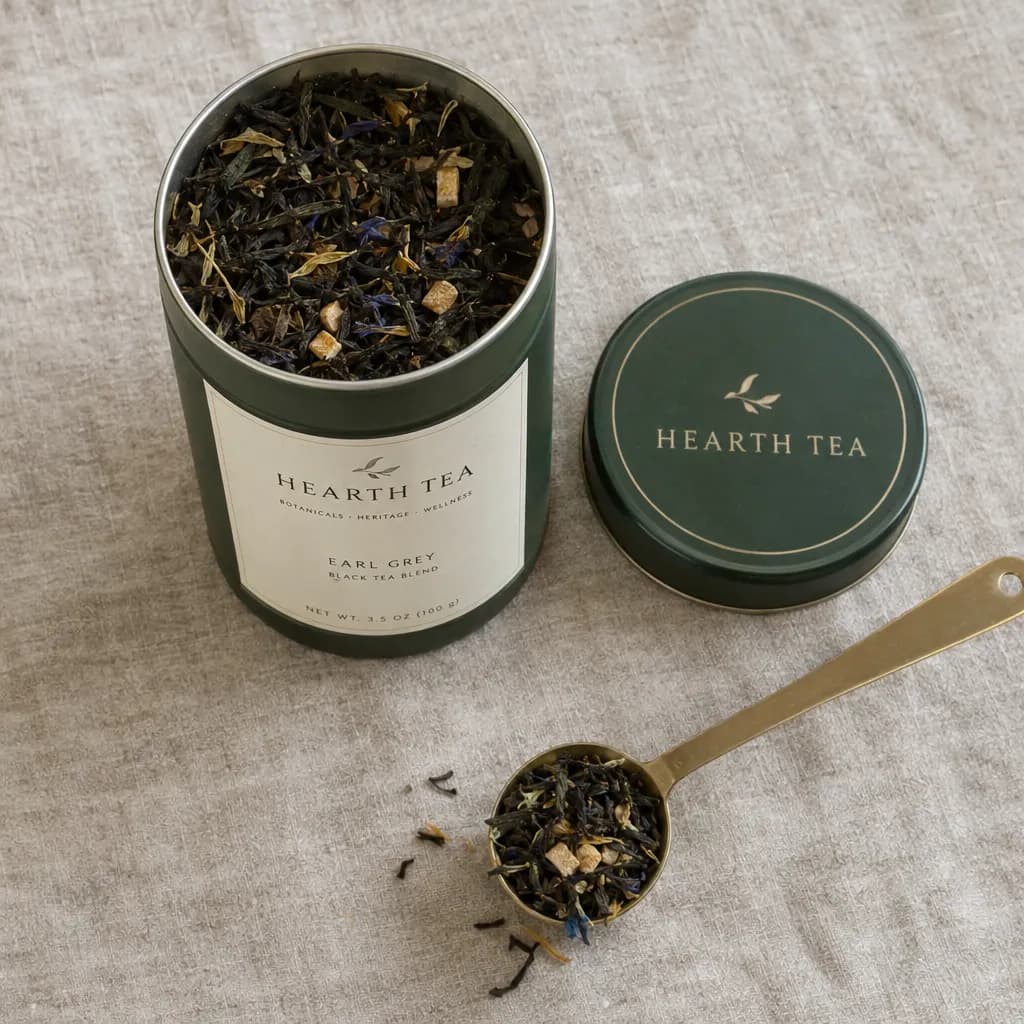
On October 16, 2026, we audited four images of a made-up tea brand. Three were made with is2i-gpt-image-2-5-flare from an approved reference plate: a 16:9 banner, a 9:16 story and a 1:1 flat lay. The fourth was the same flat lay request sent to t2i-gpt-image-2-5-flare with no reference. We wrote four rules first: product identity, palette, lighting and surfaces.
Following the skill, the agent sent four text generations in one flora_create_generations call with model i2t-gemini-3-7-flash-i2t, each image in params.image_urls and the rules in the prompt. The prompt asked for an observed description and the label text before any verdict. They finished in 16 to 32 seconds and cost $0.01 or $0.011 each, $0.041 in total.
The three reference-based images passed all four rules. The judge transcribed HEARTH TEA and the smaller label lines on each, which shows it read the actual pixels. The no-reference image failed product identity and palette, with the evidence "the tin body and lid are dark forest green rather than terracotta-colored". It also transcribed the label as EARL GREY and BOTANICALS · HERITAGE · WELLNESS, copy no one had approved. Lighting and surface passed on all four.
What went wrong: our rules said nothing about label copy, so lines like SMALL BATCH • NATURAL INGREDIENTS passed on every image even though nobody wrote them. The skill calls that a flag, a choice the images made for you. The fix is a fifth rule with the exact label wording. The judge also passed a pewter kettle in the banner as warm palette; agree palette tolerance in writing before the audit.
- Skill
- flora-brand-consistency-audit
- Judge model
- i2t-gemini-3-7-flash-i2t
- Cost
- $0.041 for 4 images
- Time
- 16 to 32 s per image, parallel
- Result
- 3 pass, 1 fail (identity and palette)
| Image | Identity | Palette | Light | Surface |
|---|---|---|---|---|
| 16:9 banner, from reference | Pass | Pass | Pass | Pass |
| 9:16 story, from reference | Pass | Pass | Pass | Pass |
| 1:1 flat lay, from reference | Pass | Pass | Pass | Pass |
| 1:1 flat lay, no reference | Fail | Fail | Pass | Pass |
Vision judge or human review: pros and cons
Pros
- Vision judge: about a cent per image, so a dozen images cost less than $0.15.
- Vision judge: applies the same written rules to every image without tiring.
- Human review: catches taste and context a written rule never covered.
Cons
- Vision judge: only as good as the rules; vague rules give vague verdicts.
- Vision judge: passed a pewter kettle in our banner as within the warm palette.
- Human review: slow on large sets, and drift across a set is easy to miss one image at a time.
What makes a brand rule checkable?
Two people applying it to the same image reach the same verdict. "Warm and inviting" is not checkable. "Terracotta, cream and oat only, no dominant greens or blues" is. If the guidelines do not cover a dimension, write "not specified" and treat what the images did there as a decision to make, not a defect.
- Product identity: shape, color, label wording.
- Palette: allowed and banned dominant colors.
- Light: direction and quality.
- Framing: how much of the frame the product fills.
- Logo and type: position and clear space.
- Output spec: sizes and ratios per channel.
Why ask the judge to describe the image first?
A judge that rules first tends to repeat the rule back as a pass. Asking for a description and the exact text first forces it to look. If it cannot transcribe the label you know is there, it is not reading the image, and its verdict is worthless.
Can it check images FLORA did not make?
Yes. Give the agent public links to any images, such as agency deliveries or old campaign shots. The judge reads the pixels the same way.
Frequently asked questions
How much does a brand audit cost?
About a cent per image in our run: $0.041 for four images.
How long does it take?
16 to 32 seconds per image, with all images checked in parallel.
Can it check text and logos?
It transcribes visible text, so it can check wording against a rule. Write the exact copy and logo position into the rules.
Does it fix the images?
It names the fix for each finding. Ask the agent to rerun the failed images with that fix, then audit them again.