
Can AI turn an image into a 3D model?
Yes. FLORA sends one product image to an image-to-3D model such as Rodin v2.5 and returns a textured GLB you can orbit, drop into a scene or hand to a 3D artist. In our run, a teapot photo became a 500,000-triangle textured model in 2 minutes 49 seconds for $0.48, with the spout, lid and bamboo handle intact.
Key takeaways
- One image is enough: our single three-quarter view of a teapot became a full textured 3D model.
- Rodin v2.5 took 2 minutes 49 seconds and cost $0.48 through FLORA.
- The GLB came back with 500,000 triangles, PBR textures and a 32 MB file size.
- FLORA lists 18 image-to-3D models, from $0.021 to $2.52 per run at catalog prices.
At a glance
| What it does | Turns a photo or render of an object into a textured 3D model |
|---|---|
| Works in | The FLORA canvas, or Claude, ChatGPT, Cursor and Codex through the FLORA MCP |
| Models | Rodin v2.5, Meshy 7.1, Tripo H3.1, Hunyuan3D v3.1, Trellis 2 and more |
| Inputs | One clear image of the object, or several views for multi-view models |
| Outputs | GLB with PBR textures |
| Typical cost | $0.48 for Rodin v2.5 at its default tier |
| Typical time | About 3 minutes |
What you need
- An agent with the FLORA MCP, or the FLORA canvas. Claude setup is in the Claude install guide.
- To try image-to-3D with no setup, use the AI 3D model generator technique on flora.ai.
- One clear image of the object.
Key features
- Many 3D models: Image-to-3D models from several providers sit behind one FLORA account.
- Multi-view input: Multi-view models take front, side and back images for objects with hidden detail.
- Remesh and retexture: Model-to-model tools lower the triangle count or repaint the texture after generation.
- 3D viewer: Orbit the result on the FLORA canvas or open the GLB link from your agent.
Best for
- Product teams who need 3D for web viewers or AR from existing photos
- Designers blocking out a scene before modelling by hand
- Game and film artists who want a starting mesh for props
- Ecommerce shops turning a catalog shot into a spinnable product
Step by step
Step 1: Start from a clean image
Use a three-quarter view of the whole object on a plain background, in focus, with soft light. Props and busy backgrounds end up in the mesh.
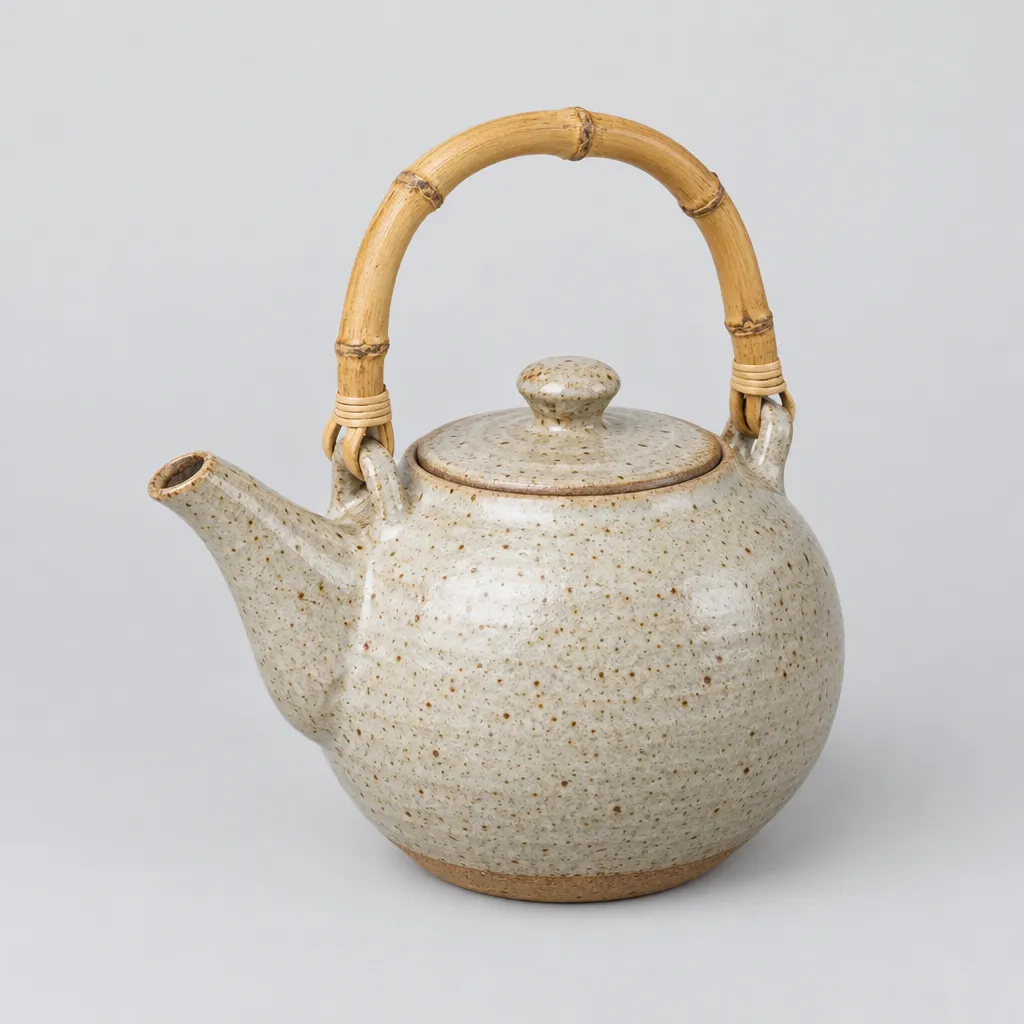
Clean product photo of a hand-thrown stoneware teapot with a speckled oatmeal glaze and a bamboo handle, three-quarter view, isolated on a plain light grey seamless background, soft even studio light, whole object in frame with margin, no props, no text.Step 2: Pick a 3D model
Name the model, or ask the agent to list image-to-3D models with prices. Set the mesh density for where the model will be used.
Turn this image into a 3D model with Rodin v2.5 through FLORA, PBR material. Quote it first.Step 3: Check it from every side
Orbit the model in the FLORA viewer or a GLB viewer. The back of the object was never in the photo, so check it first.
Step 4: Lighten it for the web
For a web or AR viewer, ask for a lower triangle count, or run a remesh model on the result.
What happened when we turned an image into a 3D model in FLORA?
On October 16, 2026, the agent first made the source image with t2i-gpt-image-2-5-flare at 1:1: a speckled stoneware teapot with a bamboo handle on a plain light grey background. It took 32 seconds and cost $0.055.
The agent then called flora_create_generations with type model3d, model i3d-rodin-i3d and the image URL in params.image_url, leaving Rodin's defaults: tier Gen-2.5-High, PBR material, mesh quality auto. It polled flora_list_generations until the run completed: 2 minutes 49 seconds, charged $0.48. FLORA returned a GLB link, an asset id, a triangle count of 500,000 and a bounding box.
flora_view_model3d returned the GLB but no preview images, so we downloaded the file and rendered the geometry from three angles. The round body, lid and knob, spout, foot ring and the bamboo handle with its wrapped bindings are all there. The back, which the photo never showed, came out smooth and plausible. The GLB has 287,606 vertices and three texture images.
What went wrong: the file is 32 MB, heavy for a product page or AR viewer. The fix is to set Rodin's mesh quality to a lower option, such as 20K Triangle, before running, or to run a remesh model such as Tripo Remesh on the result.
- Model
- Rodin v2.5, id i3d-rodin-i3d
- Settings
- Gen-2.5-High, PBR, mesh quality auto
- Cost
- $0.48 (plus $0.055 for the source image)
- Time
- 2 min 49 s
- Output
- GLB, 500,000 triangles, 3 textures, 32 MB
| Model | Model id | Catalog estimate |
|---|---|---|
| Rodin v2.5 | i3d-rodin-i3d | $0.48 (charged $0.48 in our run) |
| Hunyuan3D v3.1 Rapid | i3d-hunyuan3d-v3-i3d | $0.27 |
| Tripo H3.1 | i3d-tripo-h3-1-i3d | $0.36 |
| Trellis 2 | i3d-trellis-2 | $0.36 |
| Meshy 7.1 | i3d-meshy-7-1-i3d | $1.44 |
| Hi3D v3.0 | i3d-hi3d-v3-0-i3d | $2.52 |
Single image or multi-view: pros and cons
Pros
- Single image: one photo is enough, and our teapot came back whole.
- Single image: works from an image you generated in FLORA a minute earlier.
- Multi-view: the model sees the back and sides, so less is invented.
Cons
- Single image: the model guesses the sides it never saw.
- Multi-view: needs consistent front, side and back images first.
- Both: high-detail defaults make large files for web use.
What image works best for 3D?
A single object, whole, in focus, on a plain background, seen from a three-quarter angle so the model gets the front and one side. Soft light keeps shadows out of the texture.
- Whole object in frame with some margin.
- Plain, light background with no props.
- Three-quarter view rather than straight on.
- Soft, even light with no hard reflections.
What can I do with the GLB?
Open it in Blender, a game engine, a web 3D viewer or an AR viewer. GLB keeps geometry and textures in one file. For the web, lower the triangle count first.
Can I make 3D from text instead?
Yes. FLORA also has text-to-3D models. Making an image first gives you more control, because you approve the look before paying for geometry.
Frequently asked questions
How much does image-to-3D cost?
Our Rodin v2.5 run cost $0.48. FLORA's catalog lists image-to-3D models from $0.021 to $2.52 per run, and the agent can quote any model before it runs.
How long does it take?
Our teapot took 2 minutes 49 seconds.
What file format do I get?
A GLB with PBR textures, linked from the agent and saved on your FLORA canvas.
Does it model the back of the object?
Yes. From one photo the model fills in the unseen sides. Ours was smooth and plausible. For exact backs, use a multi-view model with a back photo.