
FLORA

The best AI video generators 2026 has produced are a genuine leap over last year's, and this guide compares the ones worth your time. We weighed each on what matters to creative teams: output quality, creative control, how well it fits a real workflow, and the true cost of shipping a finished clip. If you have spent the week sorting through the best text to video AI tools 2026 has delivered, this is the shortlist to trust.
One thing becomes clear quickly: there is no single winner. Each model is strongest at a particular job, and the best creative teams reach for several rather than betting everything on one. That is where FLORA earns the top spot. It is not another generator, it is the creative environment that runs every model on this list in one place, so you can compare them on your own work and scale the best result into a finished set of assets.
Below, we rank the best AI video generators 2026, starting with the workspace that ties them together and then breaking down each leading model in turn. Try FLORA free if you want to follow along on your own canvas.
Quick answer
The short version: In 2026 the best AI video generators are no longer single models you choose between. Runway, Google Veo 3, Kling, Pika, and Seedance each win a specific job, with OpenAI Sora still in the mix for narrative even though its standalone app has been wound down. FLORA ranks first because it runs them all on one infinite canvas, so your team can ideate, compare outputs side by side, and scale the winner into hundreds of production assets without switching tools.
The best AI video generators of 2026 at a glance
Here are the best AI video generators 2026 has to offer, ranked by how they perform for working creative teams.
Rank | Tool | Best for | Starts at |
1 | FLORA | Pro teams running every model on one canvas | Free, then $18/seat/mo |
2 | Runway (Gen-4.5) | Advanced creative and camera control | From $12/mo |
3 | Google Veo 3.1 | Cinematic realism with native audio | $19.99/mo (Google AI Pro) |
4 | OpenAI Sora 2 | Narrative storytelling | $20/mo (ChatGPT Plus) |
5 | Kling 3.0 | Photoreal human motion at low cost | From $6.99/mo |
6 | Pika | Fast social and short-form video | From $8/mo |
7 | HeyGen | Avatars, training, and localized video | From $29/mo |
8 | Seedance 2.0 | Multimodal, audio-native video. | From $29.90/mo |
How we ranked the best AI video generation tools 2026
A year ago these tools produced short, silent, single-shot clips. The 2026 field adds native audio, 4K output, and multi-shot consistency, so we judged each platform on four things creative professionals care about, not on raw novelty:
Output quality: prompt accuracy, motion coherence, and how often a clip is usable without three more tries.
Creative control: camera moves, reference images, character consistency, and editability.
Workflow fit: collaboration, iteration speed, and how a single idea scales into a full set of assets.
Real cost to ship: the price of getting a finished, on-brand clip, not the headline subscription.
The result is less a leaderboard and more a map of which of the top AI video generation tools 2026 produced is right for which job.
1. FLORA: the best AI video generator for teams working across models

FLORA is not another text-to-video model. It is the creative environment that holds them all. On a single infinite canvas you can prompt Veo 3.1, Kling 3.0, Runway Gen-4.5, Pika, and Ray 2 side by side, compare their takes on the same concept, and then branch the winner into hundreds of production-grade variations.
That design solves the problem every other entry on this list creates. Instead of paying for five subscriptions and rebuilding your prompt in five interfaces, your team ideates, iterates, and scales in one place, with real-time collaboration built in. Studios like Pentagram, Lionsgate, and Nike already work this way inside FLORA.
Standout: one canvas, more than 50 models, and a workflow that turns a single idea into a finished campaign.
Watch-outs: it rewards teams with a real creative process more than it rewards a one-off five-second clip.
Pricing: free to start, paid plans from $18 per seat each month, with enterprise options for teams at scale.
If you only test one thing from this guide, open a board in FLORA and run the same prompt through three video models at once. The side-by-side comparison makes the rest of this list feel like extra browser tabs.
2. Runway (Gen-4.5): best for advanced creative control

Runway remains the director's choice, and the top AI video generator for anyone who thinks in shots rather than prompts. Gen-4.5 gives you reference-image support, genuine camera control, and the most consistent character handling of any standalone model, which is why it shows up in real commercial and film work. Its Aleph tooling extends that control into editing, so a generated shot can be refined instead of regenerated from scratch.
Standout: camera and character consistency that holds up in client work.
Watch-outs: the craft ceiling is high, and so are the credit costs at volume.
Pricing: the Standard plan from about $12 a month unlocks Gen-4.5 alongside access to several other models.
3. Google Veo 3.1: best for cinematic realism with native audio
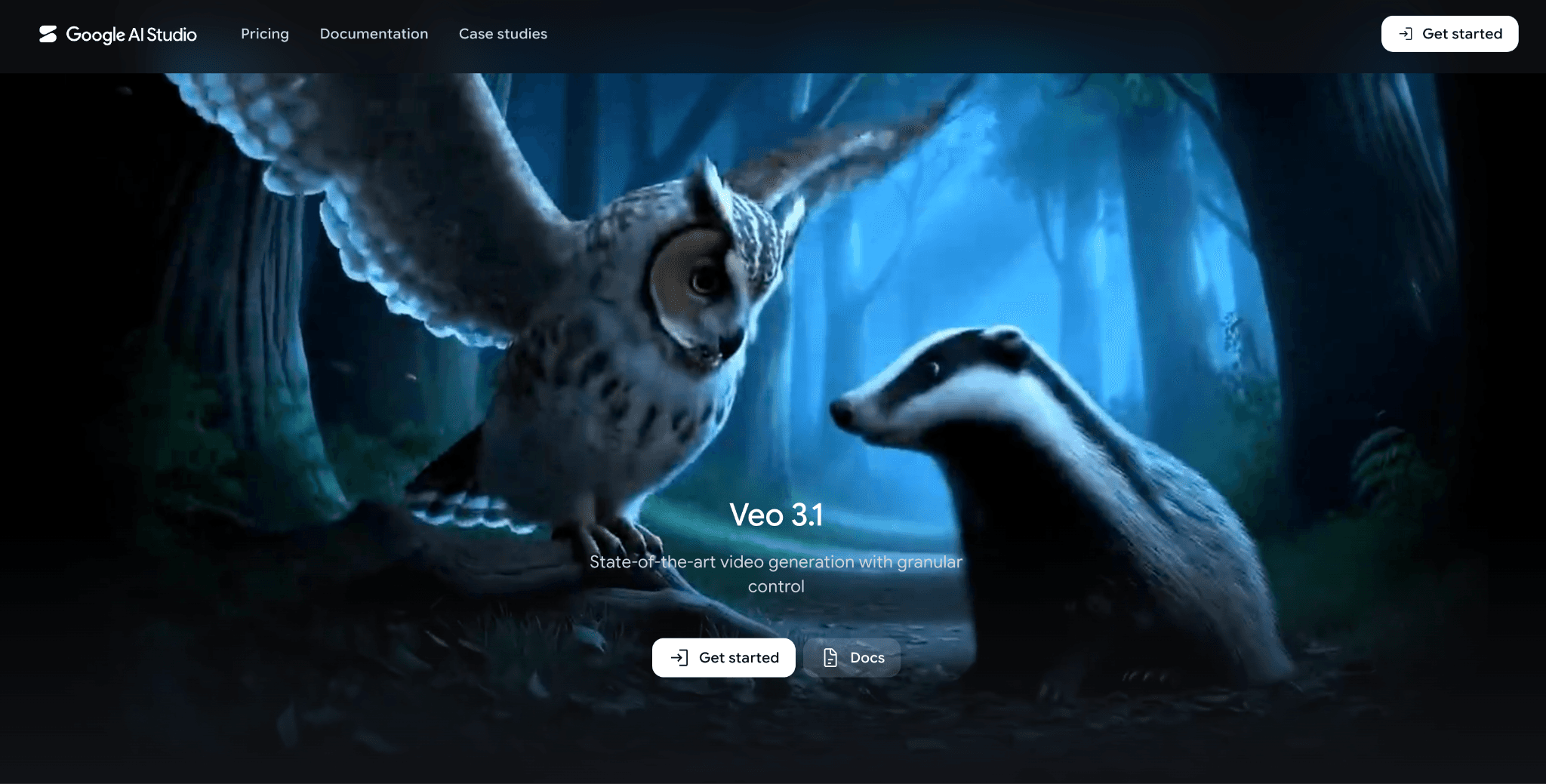
Veo 3 changed the bar by generating sound along with the picture. Veo 3.1 produces high-fidelity clips up to 4K with natively generated dialogue, ambient noise, and synchronized effects, all reachable through the Gemini app and API. For a hero shot that needs to feel finished, it is hard to beat.
Standout: native audio and cinematic realism in a single pass.
Watch-outs: eight-second clips mean you assemble longer pieces from parts.
Pricing: Google AI Pro at $19.99 a month includes monthly credits, and the Ultra tier scales up for heavy users.
4. OpenAI Sora 2: best for narrative storytelling
Sora 2 still sets the standard for coherent, story-driven sequences and physically believable motion. The catch in 2026 is access: the standalone Sora app was wound down, and most creators now reach the model through ChatGPT or the API rather than a dedicated product.
Standout: narrative coherence and world consistency across a shot.
Watch-outs: access is in flux, so build it into a workflow you control rather than a single app.
Pricing: included with ChatGPT Plus at $20 a month, with Pro tiers that extend length and resolution.
5. Kling 3.0: best photoreal human motion for the money

Kling 3.0, released early in 2026, is the value pick that does not feel like one. It handles complex human motion beautifully from a reference still, added native 4K, and supports multi-shot sequences with subject consistency. For YouTube, longer narratives, and high iteration counts, it is the best video AI generator on a budget.
Standout: photoreal motion and multi-shot consistency at a fraction of premium pricing.
Watch-outs: the interface assumes you know what you want before you start.
Pricing: a free Basic tier, with paid plans from $6.99 a month (Standard, 660 credits); Kling 3.0 video uses about 8 to 12 credits per second of 1080p depending on audio.
6. Seedance 2.0: best for multimodal, audio-native video
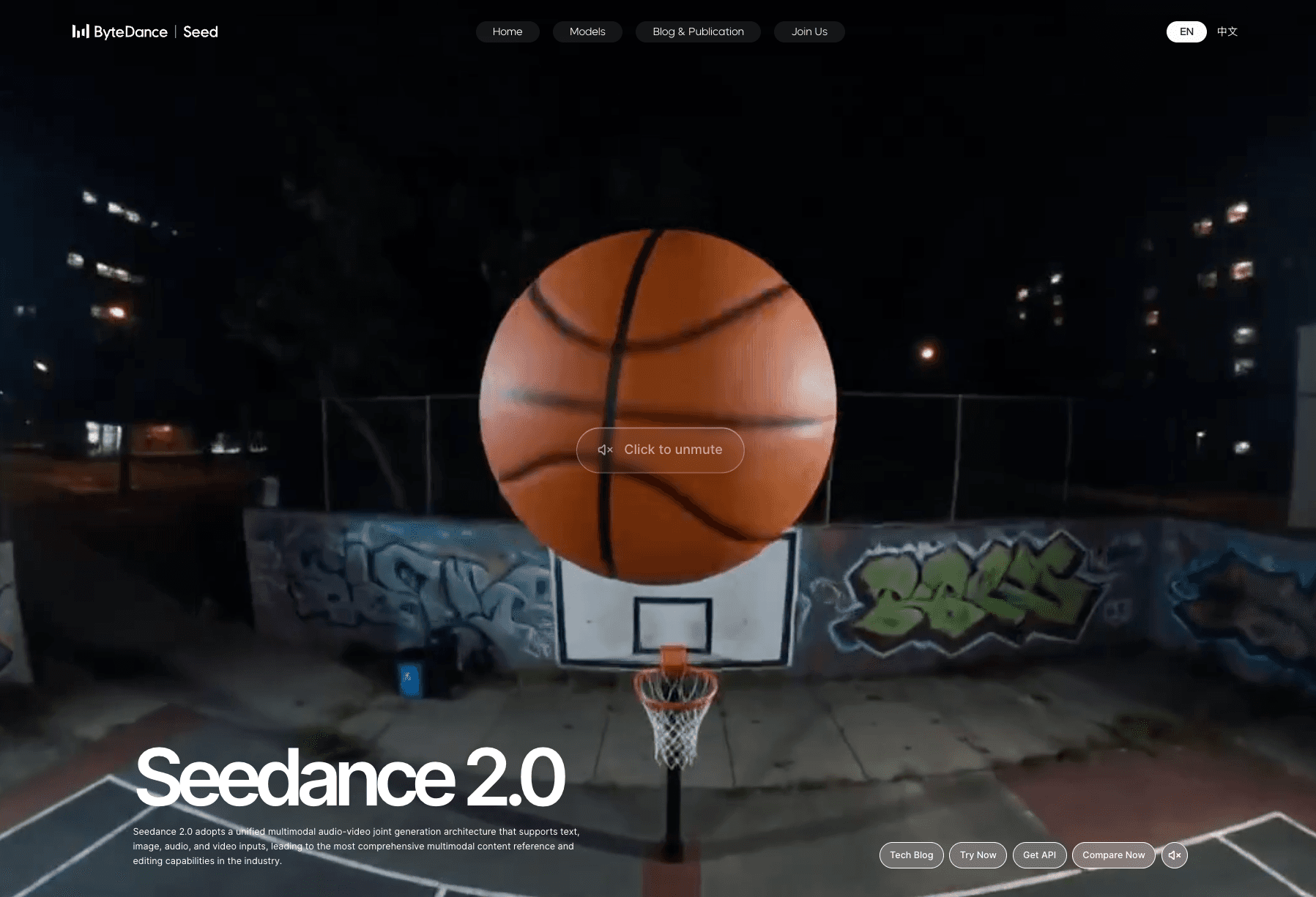
Seedance 2.0, from ByteDance, is the strongest newcomer of the year. Released in early 2026, it generates 2K video with native audio in a single pass and accepts text, image, video, and audio as inputs, with full support for realistic human footage. For teams that want sound and picture generated together without a premium bill, it is a serious value pick.
Standout: 2K output with native audio from multimodal inputs, including audio-driven generation.
Watch-outs: the lowest-cost official plans run through ByteDance apps with a less polished English experience.
Pricing: a free daily allowance through Dreamina and CapCut, with paid plans from about $9.60 a month and API access around $0.08 to $0.10 per second.
7. Pika: best for fast social and short-form
Pika is built for the content loop that feeds Reels, TikTok, and Shorts. Its Pikaffects and frame-control tools make eye-catching short clips quickly, and it is the friendliest entry point for anyone new to AI video tools.
Standout: speed and playful effects tuned for social.
Watch-outs: built for short, snappy output more than long-form polish.
Pricing: from around $8 a month, with the fastest generation times on this list.
8. HeyGen: best for avatars, training, and localized video
When the job is a talking presenter rather than a cinematic scene, HeyGen leads. Realistic avatars and one-click translation make it the default for training, onboarding, and localized marketing at scale.
Standout: lifelike avatars and fast localization across more than 175 languages.
Watch-outs: purpose-built for presenter video, not open-ended creative shots.
Pricing: the Creator plan starts at $29 a month, with a Pro tier at $49 for 4K export.
How to choose the right AI video generator for you
There is no single winner here, and that is the point. The right tool depends on what you are making, so it helps to start from the job rather than the brand name.
If you are producing film, ads, or polished client work, lead with Runway for control and finish hero shots in Veo 3.1 where native audio earns its keep. If you are telling a story across several shots, Sora 2 gives you the most coherence to build a longer edit around. When budget and volume matter more than a single premium take, Kling 3.0 and Seedance 2.0 deliver strong results without the premium bill, with Seedance adding native audio. And for social, Pika is the fast pick, with HeyGen stepping in whenever you need a presenter on screen.
The honest takeaway from comparing this year's best AI video tools is that no single model wins every job. The best AI generated video usually comes from using the right model for each shot, which only stays practical when those models live together on one canvas.
The verdict
If you are a solo creator chasing one capability, pick the specialist: Runway for control, Veo 3.1 for audio-ready realism, Kling for value, Pika for social. If you are a team that ships real creative work, the best AI video generator 2026 has to offer is not a model at all. It is the environment that runs every model, compares them honestly, and scales the winner. That is FLORA.
Open a canvas and test three models on one idea. Start free on FLORA.
FAQs about AI video generators
What is the best AI video generator in 2026?
It depends on the job. Runway leads on creative control, Veo 3.1 on cinematic realism with native audio, Sora 2 on narrative, and Kling 3.0 on value. For teams, FLORA ranks first because it runs all of these models in one place, so you can compare them and scale the best result without switching tools.
Are there free AI video generators?
Most leading platforms offer a free tier or trial credits before moving to subscription or usage-based pricing. FLORA is free to start, which also lets you test several paid models from one workspace before committing budget to any of them.
What is the difference between an AI video model and a platform like FLORA?
A model, such as Veo 3.1 or Kling 3.0, produces the clip. A platform gives you the canvas, collaboration, and workflow to run many models, compare them, and turn one concept into a finished set of assets.
Which AI video generator is best for social media?
Pika is the fastest option for Reels, TikTok, and Shorts, and HeyGen is best when you need a talking avatar. Inside FLORA you can storyboard, generate, and version social cuts alongside the rest of your creative work.
How long does it take to make an AI video?
A short clip generates in under a minute on most tools, with Pika among the fastest. The real time goes into iteration and editing, which is where running models side by side on one canvas saves the most.


"/><stop offset="1" stop-color="rgba(15, 15, 15, 0)"/></linearGradient></defs><path d="M 899.729 124.429 L 931.177 124.429 L 931.177 108.467 L 946.905 108.467 L 946.905 44.616 L 884.001 44.616 L 884.001 92.504 L 868.274 92.504 L 868.274 124.429 L 852.554 124.429 L 852.554 140.392 L 836.826 140.392 L 836.826 156.355 L 852.554 156.355 L 852.554 172.317 L 836.826 172.317 L 836.826 204.242 L 821.098 204.242 L 821.098 236.168 L 852.554 236.168 L 852.554 252.129 L 758.2 252.129 L 758.2 236.167 L 789.65 236.167 L 789.65 204.241 L 805.378 204.241 L 805.378 172.316 L 821.098 172.316 L 821.098 124.428 L 836.826 124.428 L 836.826 92.504 L 852.554 92.504 L 852.554 44.616 L 836.826 44.616 L 836.826 28.654 L 962.625 28.654 L 962.625 44.616 L 978.353 44.616 L 978.353 60.579 L 994.081 60.579 L 994.081 76.541 L 978.353 76.541 L 978.353 124.429 L 946.905 124.429 L 946.905 140.392 L 931.177 140.392 L 931.177 156.355 L 946.905 156.355 L 946.905 236.168 L 978.417 236.168 L 978.417 220.205 L 994.145 220.205 L 994.145 204.242 L 1009.865 204.242 L 1009.865 188.28 L 1025.593 188.28 L 1025.593 204.242 L 1009.865 204.242 L 1009.865 220.205 L 994.145 220.205 L 994.145 236.168 L 1025.593 236.168 L 1025.593 252.13 L 915.449 252.13 L 915.449 156.355 L 899.729 156.355 Z M 1135.672 172.317 L 1119.944 172.317 L 1119.944 76.541 L 1104.216 76.541 L 1104.216 92.504 L 1088.496 92.504 L 1088.496 108.467 L 1072.768 108.467 L 1072.768 92.504 L 1088.496 92.504 L 1088.496 76.541 L 1104.216 76.541 L 1104.216 60.579 L 1119.944 60.579 L 1119.944 28.654 L 1135.672 28.654 L 1135.672 60.579 L 1151.392 60.579 L 1151.392 236.168 L 1167.12 236.168 L 1167.12 252.13 L 1104.216 252.13 L 1104.216 236.168 L 1119.944 236.168 L 1119.944 188.28 L 1135.672 188.28 Z M 1072.768 124.429 L 1072.768 140.392 L 1057.041 140.392 L 1057.041 156.355 L 1041.321 156.355 L 1041.321 172.317 L 1025.593 172.317 L 1025.593 156.355 L 1041.321 156.355 L 1041.321 140.392 L 1057.041 140.392 L 1057.041 124.429 Z M 176.61 25.988 C 124.406 25.988 78.864 38.954 68.867 80.108 C 64.424 102.095 70.533 130.282 105.522 145.504 C 107.678 146.379 109.332 146.83 110.516 147.152 C 112.382 147.661 113.082 147.852 112.742 148.886 C 112.186 150.577 106.633 150.014 102.19 148.323 C 69.424 136.484 51.65 107.168 54.983 77.289 C 60.536 35.572 109.966 -1.636 179.387 0.056 C 202.713 0.056 238.812 5.692 273.246 15.276 C 293.795 20.914 321.009 28.243 346.555 34.444 C 369.881 24.86 392.096 18.659 411.534 18.659 C 425.628 18.659 438.846 21.919 444.414 28.654 L 537.86 28.654 L 537.86 44.616 L 506.41 44.616 L 506.41 60.579 L 490.685 60.579 L 490.685 92.504 L 474.959 92.504 L 474.959 124.429 L 459.233 124.429 L 459.233 172.317 L 443.508 172.317 L 443.508 220.205 L 427.783 220.205 L 427.783 236.168 L 522.135 236.168 L 522.135 220.205 L 537.86 220.205 L 537.86 204.242 L 553.586 204.242 L 553.586 172.317 L 569.311 172.317 L 569.311 204.242 L 553.586 204.242 L 553.586 236.168 L 537.86 236.168 L 537.86 252.13 L 364.881 252.13 L 364.881 236.168 L 396.332 236.168 L 396.332 220.205 L 412.058 220.205 L 412.058 172.317 L 427.783 172.317 L 427.783 140.392 L 443.508 140.392 L 443.508 92.504 L 459.234 92.504 L 459.234 44.616 L 444.157 44.616 C 437.338 52.415 419.206 55.303 394.318 55.303 C 379.323 55.303 357.108 53.048 349.333 51.92 C 337.67 63.196 325.452 77.853 314.9 90.82 C 305.307 102.032 297.996 111.856 290.818 121.501 C 284.281 130.284 277.855 138.919 269.914 148.323 C 283.798 148.886 298.794 147.759 309.901 143.812 C 320.454 129.155 333.783 122.39 342.669 124.645 C 351.554 126.9 350.444 135.92 337.67 145.504 C 335.4 147.26 333.256 148.887 331.193 150.453 C 322.659 156.932 315.515 162.356 306.569 171.436 C 304.66 173.374 302.994 175.312 301.571 176.968 C 299.269 179.646 297.602 181.584 296.572 181.584 C 293.24 182.148 294.351 172 296.572 166.363 C 299.349 159.597 302.126 154.524 304.903 150.577 C 295.462 153.396 284.91 154.524 266.026 154.524 C 264.938 155.812 263.791 157.222 262.545 158.751 C 259.978 161.904 256.993 165.569 253.253 169.745 C 204.381 225.557 123.85 256 71.645 256 C 29.993 256 0 239.087 0 212.591 C 0 193.987 12.774 175.947 34.99 175.947 C 53.317 175.947 61.092 188.349 60.537 200.188 C 59.981 208.644 57.204 213.718 51.651 219.92 C 47.763 224.429 44.431 228.376 44.431 234.013 C 44.431 243.597 52.762 249.798 68.867 250.362 C 111.631 253.181 142.177 234.013 176.61 195.678 C 190.494 180.456 200.491 168.054 210.488 153.96 C 198.27 153.96 186.607 153.96 179.943 154.524 C 172.902 154.799 168.37 155.744 165.639 156.313 C 162.768 156.912 161.886 157.096 162.17 155.652 C 162.726 153.396 167.724 149.45 184.385 148.323 C 188.537 147.94 196.791 148.077 204.443 148.204 C 208.052 148.264 211.528 148.323 214.375 148.323 C 222.151 137.611 231.037 125.772 242.7 113.37 C 264.915 89.128 294.35 65.451 323.23 47.411 C 307.124 45.719 281.021 40.645 263.804 37.263 C 239.923 32.753 203.268 25.988 177.166 25.988 L 176.61 25.988 Z M 365.438 39.518 C 386.542 45.156 403.204 46.847 413.2 46.847 C 427.64 46.847 440.969 42.336 441.524 36.136 C 442.08 29.37 428.751 24.296 410.979 24.296 L 410.423 24.296 C 394.317 24.296 375.435 32.753 365.438 39.518 Z M 711.023 252.129 L 616.672 252.129 L 616.672 236.167 L 600.946 236.167 L 600.946 220.204 L 585.221 220.204 L 585.221 108.466 L 600.946 108.466 L 600.946 76.54 L 616.672 76.54 L 616.672 60.578 L 632.396 60.578 L 632.396 44.616 L 663.847 44.616 L 663.847 28.654 L 758.2 28.654 L 758.2 44.616 L 773.924 44.616 L 773.924 60.579 L 789.65 60.579 L 789.65 172.317 L 773.924 172.317 L 773.924 188.28 L 758.2 188.28 L 758.2 220.205 L 742.474 220.205 L 742.474 236.168 L 711.023 236.168 Z M 663.847 44.616 L 663.847 60.579 L 648.122 60.579 L 648.122 76.541 L 632.396 76.541 L 632.396 108.467 L 616.672 108.467 L 616.672 220.205 L 632.396 220.205 L 632.396 236.168 L 695.298 236.168 L 695.298 220.205 L 711.023 220.205 L 711.023 204.242 L 726.749 204.242 L 726.749 188.28 L 742.474 188.28 L 742.474 156.355 L 758.2 156.355 L 758.2 60.579 L 742.474 60.579 L 742.474 44.616 Z" fill="url(%23k7ftP17bN-2050371890-linear-gradient)" height="255.9995555606772px" id="k7ftP17bN" width="1167.1199228535695px"/></svg>)