How a Shopify merchant brought a holiday line to life in a weekend
How a Shopify merchant brought a holiday line to life in a weekend
How a Shopify merchant brought a holiday line to life in a weekend

FLORA
For an independent brand, creativity has always been constrained by resources. How many concepts can we afford to explore? How fast can our illustrator turn something around? Is this wholesale opportunity even large enough to justify custom work? And if it is, do we still have time to make it?
Every one of those questions is friction between an idea and a product.
John Kalis runs Tiny Tuckets, a New England sleepwear brand built around original prints, seasonal collections, and the places that make childhood feel like childhood. The prints are the brand.
The tool didn't make our team work faster," John says. "It made a small team behave like a large one.
A Christmas Collection in August
In August, one of Tiny Tuckets' wholesale partners came to them with an idea: could they create an exclusive holiday collection, in time for Christmas?
It was exactly the kind of opportunity a growing brand wants. There was only one problem. The clock.
The old answer would have been maybe. Creating a custom collection traditionally meant going back to their illustrator, developing a new direction, waiting for sketches, reviewing them internally, making revisions, sharing concepts with the customer, incorporating their feedback, finalizing the repeat, and getting the artwork production-ready. Only then could the factory's 60-day production clock begin.
For Tiny Tuckets, that pre-production process typically takes about three weeks. Starting in August, those three weeks matter. Three weeks later into production means three weeks later onto a shelf, and during the holidays you don't get those weeks back.
"What if the print our customer already loved could become Christmas?"
Instead of starting from a blank canvas, John brought the existing summer collection into FLORA and asked a different question.
The familiar brand world stayed intact. But summer became holiday. A recognizable logo became Christmas red. A shark got a Santa hat. A sailboat got a wreath. Familiar characters and motifs were reimagined for the season.

And instead of describing those ideas in a brief and waiting weeks to see them, he could see them immediately. He explored directions, rejected what didn't work, refined what did, and kept the visual language of the original collection intact.
What had traditionally been a ~20-day creative and product-development process happened over a weekend.
The factory didn't get faster
The calendar moved with it. On the old timeline, final artwork and customer approval would have landed around August 28–30, and with the factory's 60 days after that, finished product would have arrived around October 27–29. This time the artwork was ready in time to start production around August 10, which puts it on a shelf around October 9.
Manufacturing takes as long as it always has. Everything in front of it got shorter, and for a holiday collection those weeks aren't just saved, they're spent selling.
Seeing the product before it exists
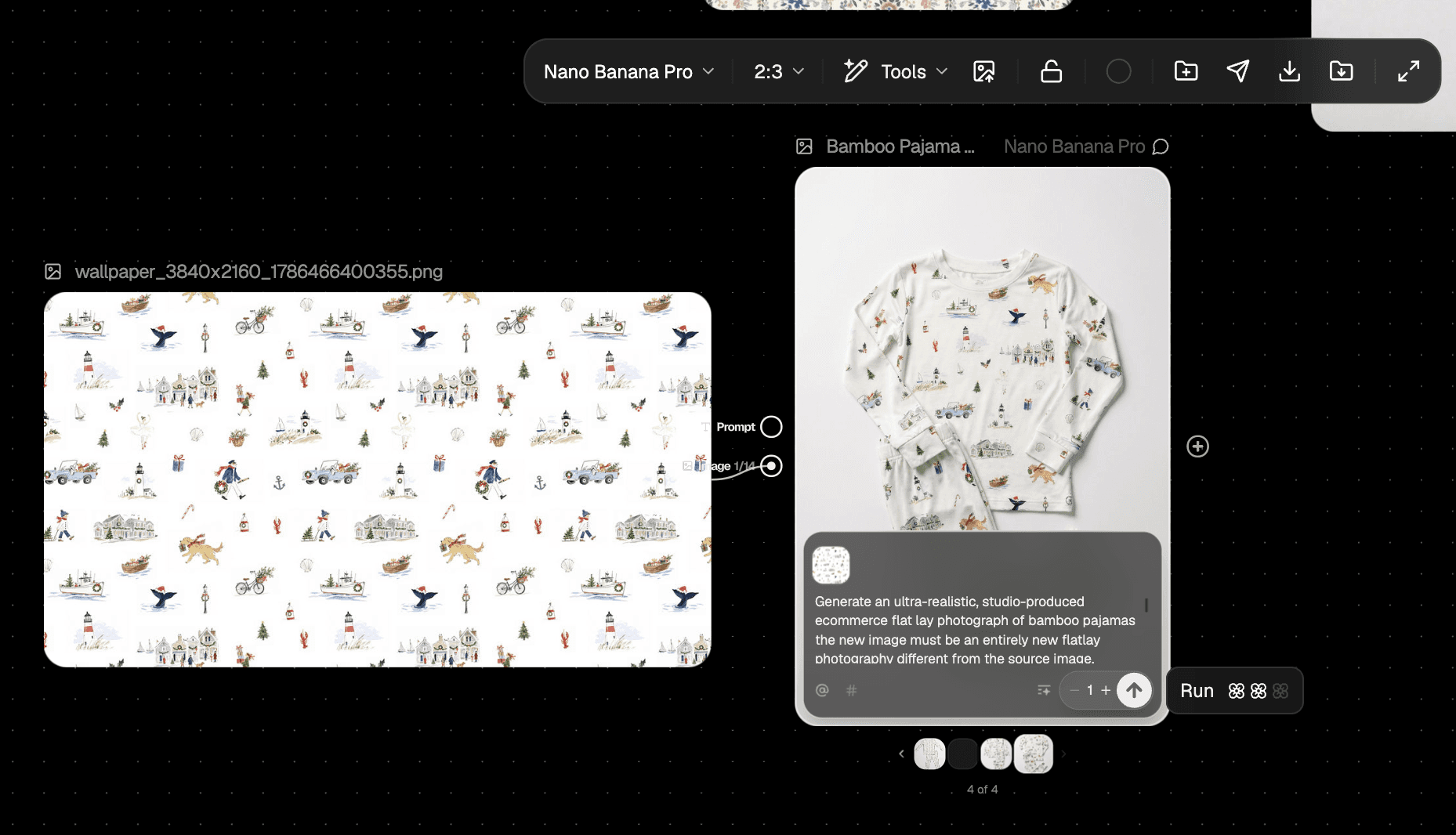
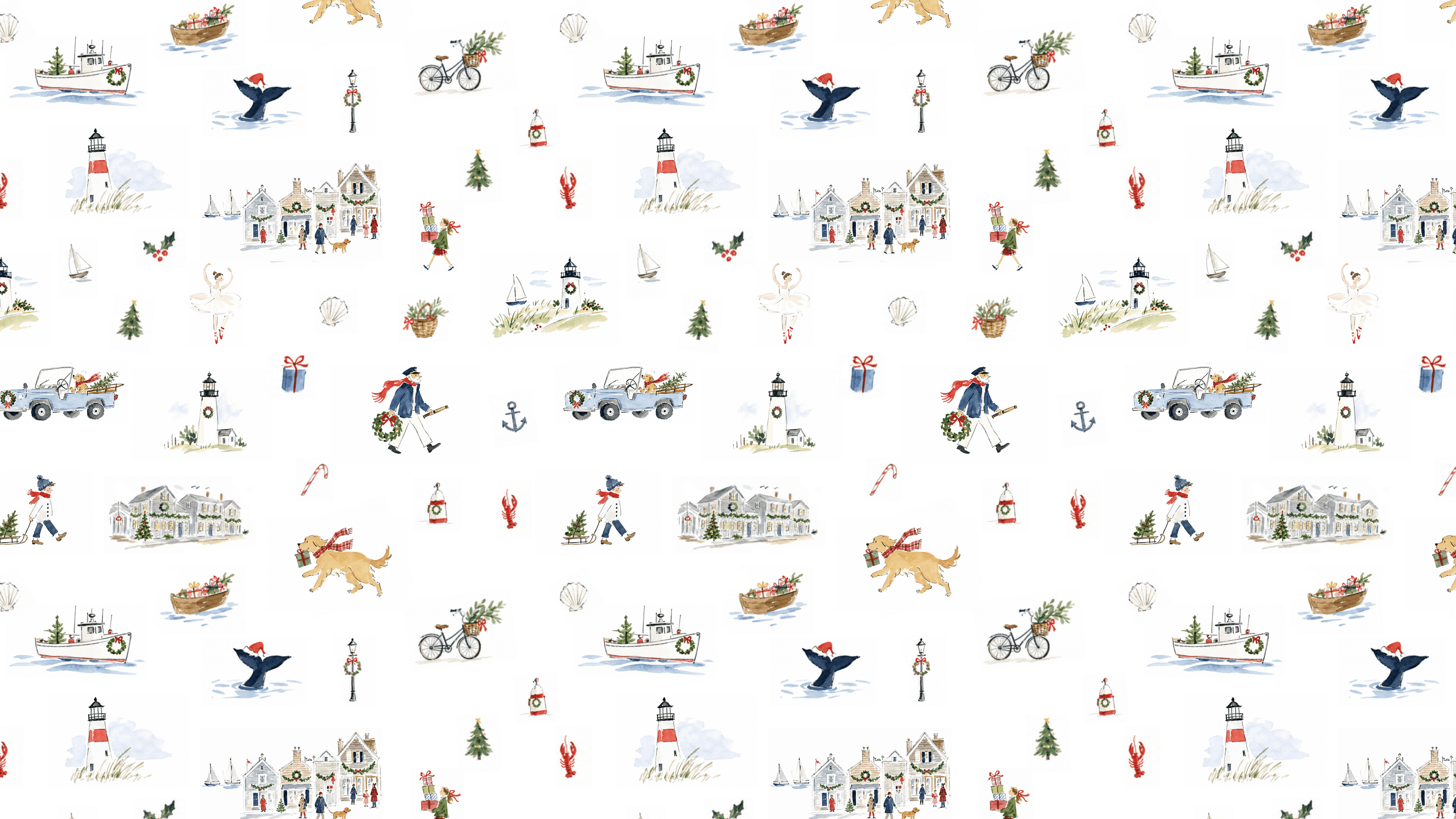
That same weekend gave John a window on something he'd been putting off: Tiny Tuckets' own holiday print. He'd been chasing a specific watercolor style for a while. One prompt came back with a menu of hero icons and smaller icons, and dozens of images with it. "I just saved these and kept my favorites and pushed them into a print," he says.
Then he put the print on a garment. A studio flatlay of bamboo pajamas, photographed the way an ecommerce PDP shot is photographed — of a garment that doesn't exist yet.
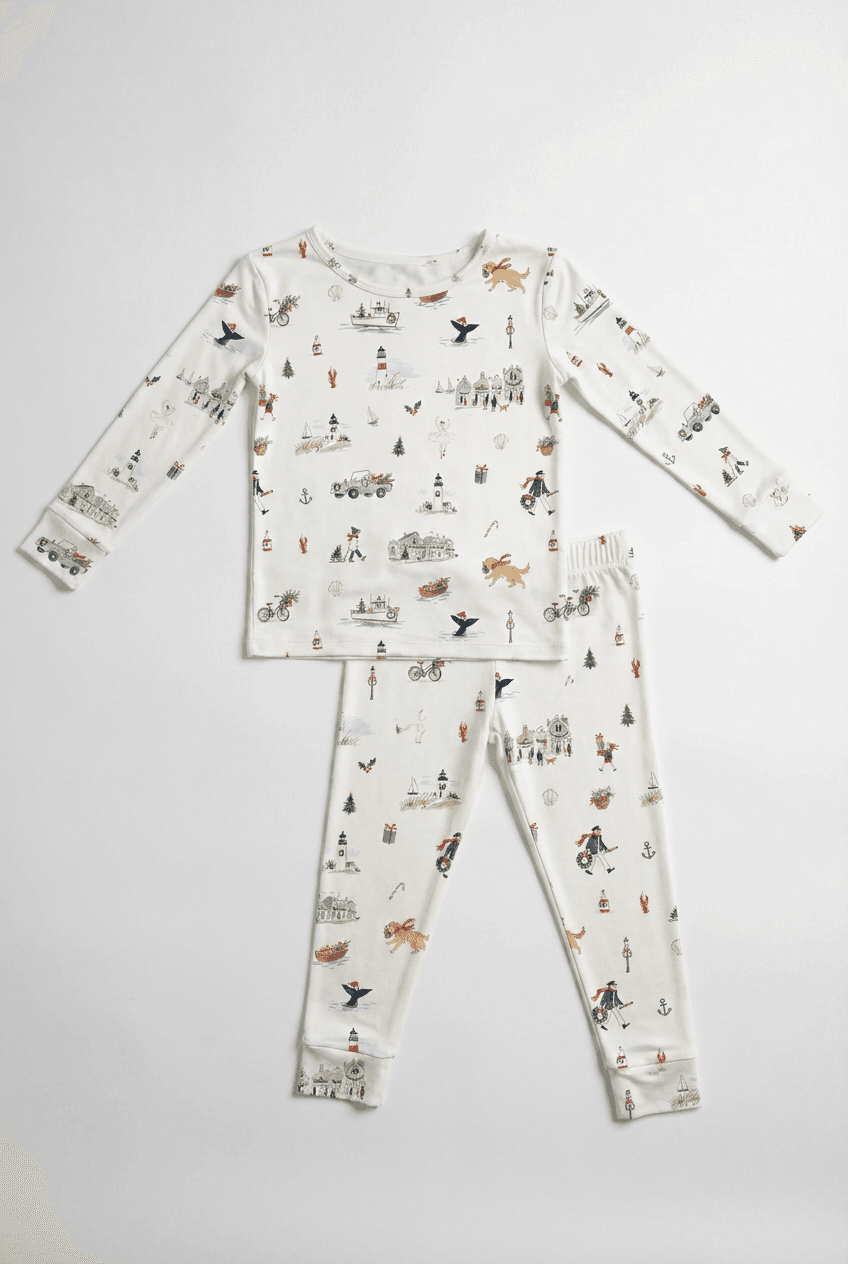
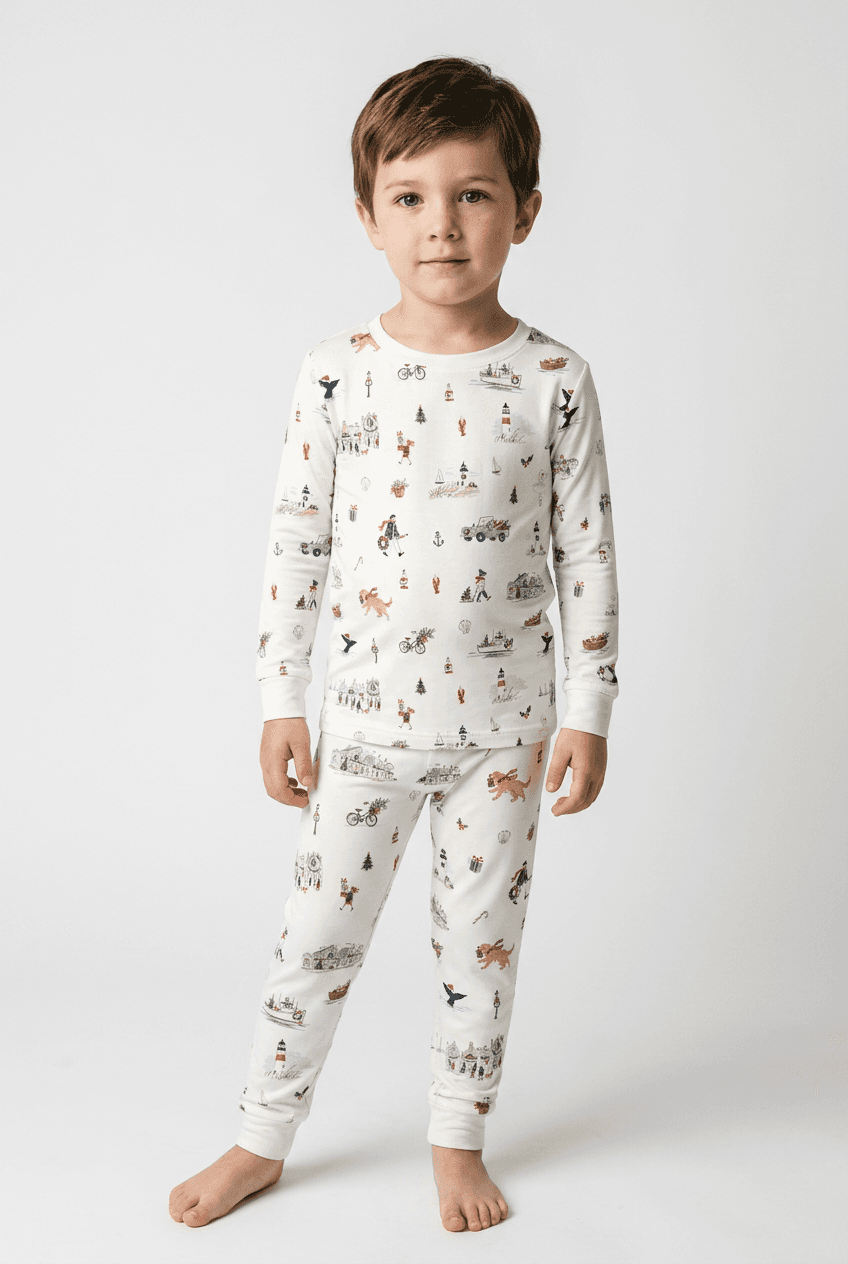
For a small consumer brand, being able to see the product before it exists isn't a creative capability. It's an operating advantage.
What doesn't change
Physical manufacturing will always take time. Fabric has to be printed. Garments cut, sewn, finished, inspected, packed, shipped.
Neither does the part John cares most about. "Still requires taste and judgement and understanding customers to nail this," he says. "This is why customers love our prints!"
A leverage story dressed as a speed story
The factory is fixed — capital and labor, bounded and slow. The three weeks in front of it were labor. An illustrator's hours, revision cycles, waiting.
What moved is what the business can say yes to. A wholesale request that might have been too late becomes viable. A concept too expensive to explore becomes testable. A product that would have shipped at the end of October arrives at the beginning. The question went from "Can we make this in time?" to "We can show you tomorrow."
"Merchants aren't asking 'is the AI good?'" John says. "They're asking 'what can I now afford to attempt?'"
For an independent brand, creativity has always been constrained by resources. How many concepts can we afford to explore? How fast can our illustrator turn something around? Is this wholesale opportunity even large enough to justify custom work? And if it is, do we still have time to make it?
Every one of those questions is friction between an idea and a product.
John Kalis runs Tiny Tuckets, a New England sleepwear brand built around original prints, seasonal collections, and the places that make childhood feel like childhood. The prints are the brand.
The tool didn't make our team work faster," John says. "It made a small team behave like a large one.
A Christmas Collection in August
In August, one of Tiny Tuckets' wholesale partners came to them with an idea: could they create an exclusive holiday collection, in time for Christmas?
It was exactly the kind of opportunity a growing brand wants. There was only one problem. The clock.
The old answer would have been maybe. Creating a custom collection traditionally meant going back to their illustrator, developing a new direction, waiting for sketches, reviewing them internally, making revisions, sharing concepts with the customer, incorporating their feedback, finalizing the repeat, and getting the artwork production-ready. Only then could the factory's 60-day production clock begin.
For Tiny Tuckets, that pre-production process typically takes about three weeks. Starting in August, those three weeks matter. Three weeks later into production means three weeks later onto a shelf, and during the holidays you don't get those weeks back.
"What if the print our customer already loved could become Christmas?"
Instead of starting from a blank canvas, John brought the existing summer collection into FLORA and asked a different question.
The familiar brand world stayed intact. But summer became holiday. A recognizable logo became Christmas red. A shark got a Santa hat. A sailboat got a wreath. Familiar characters and motifs were reimagined for the season.
And instead of describing those ideas in a brief and waiting weeks to see them, he could see them immediately. He explored directions, rejected what didn't work, refined what did, and kept the visual language of the original collection intact.
What had traditionally been a ~20-day creative and product-development process happened over a weekend.
The factory didn't get faster
The calendar moved with it. On the old timeline, final artwork and customer approval would have landed around August 28–30, and with the factory's 60 days after that, finished product would have arrived around October 27–29. This time the artwork was ready in time to start production around August 10, which puts it on a shelf around October 9.
Manufacturing takes as long as it always has. Everything in front of it got shorter, and for a holiday collection those weeks aren't just saved, they're spent selling.
Seeing the product before it exists
That same weekend gave John a window on something he'd been putting off: Tiny Tuckets' own holiday print. He'd been chasing a specific watercolor style for a while. One prompt came back with a menu of hero icons and smaller icons, and dozens of images with it. "I just saved these and kept my favorites and pushed them into a print," he says.
Then he put the print on a garment. A studio flatlay of bamboo pajamas, photographed the way an ecommerce PDP shot is photographed — of a garment that doesn't exist yet.
For a small consumer brand, being able to see the product before it exists isn't a creative capability. It's an operating advantage.
What doesn't change
Physical manufacturing will always take time. Fabric has to be printed. Garments cut, sewn, finished, inspected, packed, shipped.
Neither does the part John cares most about. "Still requires taste and judgement and understanding customers to nail this," he says. "This is why customers love our prints!"
A leverage story dressed as a speed story
The factory is fixed — capital and labor, bounded and slow. The three weeks in front of it were labor. An illustrator's hours, revision cycles, waiting.
What moved is what the business can say yes to. A wholesale request that might have been too late becomes viable. A concept too expensive to explore becomes testable. A product that would have shipped at the end of October arrives at the beginning. The question went from "Can we make this in time?" to "We can show you tomorrow."
"Merchants aren't asking 'is the AI good?'" John says. "They're asking 'what can I now afford to attempt?'"
A new medium needs a new canvas.
A new medium needs a new canvas.
A new medium needs a new canvas.
Use Cases
"/><stop offset="1" stop-color="rgba(15, 15, 15, 0)"/></linearGradient></defs><path d="M 899.729 124.429 L 931.177 124.429 L 931.177 108.467 L 946.905 108.467 L 946.905 44.616 L 884.001 44.616 L 884.001 92.504 L 868.274 92.504 L 868.274 124.429 L 852.554 124.429 L 852.554 140.392 L 836.826 140.392 L 836.826 156.355 L 852.554 156.355 L 852.554 172.317 L 836.826 172.317 L 836.826 204.242 L 821.098 204.242 L 821.098 236.168 L 852.554 236.168 L 852.554 252.129 L 758.2 252.129 L 758.2 236.167 L 789.65 236.167 L 789.65 204.241 L 805.378 204.241 L 805.378 172.316 L 821.098 172.316 L 821.098 124.428 L 836.826 124.428 L 836.826 92.504 L 852.554 92.504 L 852.554 44.616 L 836.826 44.616 L 836.826 28.654 L 962.625 28.654 L 962.625 44.616 L 978.353 44.616 L 978.353 60.579 L 994.081 60.579 L 994.081 76.541 L 978.353 76.541 L 978.353 124.429 L 946.905 124.429 L 946.905 140.392 L 931.177 140.392 L 931.177 156.355 L 946.905 156.355 L 946.905 236.168 L 978.417 236.168 L 978.417 220.205 L 994.145 220.205 L 994.145 204.242 L 1009.865 204.242 L 1009.865 188.28 L 1025.593 188.28 L 1025.593 204.242 L 1009.865 204.242 L 1009.865 220.205 L 994.145 220.205 L 994.145 236.168 L 1025.593 236.168 L 1025.593 252.13 L 915.449 252.13 L 915.449 156.355 L 899.729 156.355 Z M 1135.672 172.317 L 1119.944 172.317 L 1119.944 76.541 L 1104.216 76.541 L 1104.216 92.504 L 1088.496 92.504 L 1088.496 108.467 L 1072.768 108.467 L 1072.768 92.504 L 1088.496 92.504 L 1088.496 76.541 L 1104.216 76.541 L 1104.216 60.579 L 1119.944 60.579 L 1119.944 28.654 L 1135.672 28.654 L 1135.672 60.579 L 1151.392 60.579 L 1151.392 236.168 L 1167.12 236.168 L 1167.12 252.13 L 1104.216 252.13 L 1104.216 236.168 L 1119.944 236.168 L 1119.944 188.28 L 1135.672 188.28 Z M 1072.768 124.429 L 1072.768 140.392 L 1057.041 140.392 L 1057.041 156.355 L 1041.321 156.355 L 1041.321 172.317 L 1025.593 172.317 L 1025.593 156.355 L 1041.321 156.355 L 1041.321 140.392 L 1057.041 140.392 L 1057.041 124.429 Z M 176.61 25.988 C 124.406 25.988 78.864 38.954 68.867 80.108 C 64.424 102.095 70.533 130.282 105.522 145.504 C 107.678 146.379 109.332 146.83 110.516 147.152 C 112.382 147.661 113.082 147.852 112.742 148.886 C 112.186 150.577 106.633 150.014 102.19 148.323 C 69.424 136.484 51.65 107.168 54.983 77.289 C 60.536 35.572 109.966 -1.636 179.387 0.056 C 202.713 0.056 238.812 5.692 273.246 15.276 C 293.795 20.914 321.009 28.243 346.555 34.444 C 369.881 24.86 392.096 18.659 411.534 18.659 C 425.628 18.659 438.846 21.919 444.414 28.654 L 537.86 28.654 L 537.86 44.616 L 506.41 44.616 L 506.41 60.579 L 490.685 60.579 L 490.685 92.504 L 474.959 92.504 L 474.959 124.429 L 459.233 124.429 L 459.233 172.317 L 443.508 172.317 L 443.508 220.205 L 427.783 220.205 L 427.783 236.168 L 522.135 236.168 L 522.135 220.205 L 537.86 220.205 L 537.86 204.242 L 553.586 204.242 L 553.586 172.317 L 569.311 172.317 L 569.311 204.242 L 553.586 204.242 L 553.586 236.168 L 537.86 236.168 L 537.86 252.13 L 364.881 252.13 L 364.881 236.168 L 396.332 236.168 L 396.332 220.205 L 412.058 220.205 L 412.058 172.317 L 427.783 172.317 L 427.783 140.392 L 443.508 140.392 L 443.508 92.504 L 459.234 92.504 L 459.234 44.616 L 444.157 44.616 C 437.338 52.415 419.206 55.303 394.318 55.303 C 379.323 55.303 357.108 53.048 349.333 51.92 C 337.67 63.196 325.452 77.853 314.9 90.82 C 305.307 102.032 297.996 111.856 290.818 121.501 C 284.281 130.284 277.855 138.919 269.914 148.323 C 283.798 148.886 298.794 147.759 309.901 143.812 C 320.454 129.155 333.783 122.39 342.669 124.645 C 351.554 126.9 350.444 135.92 337.67 145.504 C 335.4 147.26 333.256 148.887 331.193 150.453 C 322.659 156.932 315.515 162.356 306.569 171.436 C 304.66 173.374 302.994 175.312 301.571 176.968 C 299.269 179.646 297.602 181.584 296.572 181.584 C 293.24 182.148 294.351 172 296.572 166.363 C 299.349 159.597 302.126 154.524 304.903 150.577 C 295.462 153.396 284.91 154.524 266.026 154.524 C 264.938 155.812 263.791 157.222 262.545 158.751 C 259.978 161.904 256.993 165.569 253.253 169.745 C 204.381 225.557 123.85 256 71.645 256 C 29.993 256 0 239.087 0 212.591 C 0 193.987 12.774 175.947 34.99 175.947 C 53.317 175.947 61.092 188.349 60.537 200.188 C 59.981 208.644 57.204 213.718 51.651 219.92 C 47.763 224.429 44.431 228.376 44.431 234.013 C 44.431 243.597 52.762 249.798 68.867 250.362 C 111.631 253.181 142.177 234.013 176.61 195.678 C 190.494 180.456 200.491 168.054 210.488 153.96 C 198.27 153.96 186.607 153.96 179.943 154.524 C 172.902 154.799 168.37 155.744 165.639 156.313 C 162.768 156.912 161.886 157.096 162.17 155.652 C 162.726 153.396 167.724 149.45 184.385 148.323 C 188.537 147.94 196.791 148.077 204.443 148.204 C 208.052 148.264 211.528 148.323 214.375 148.323 C 222.151 137.611 231.037 125.772 242.7 113.37 C 264.915 89.128 294.35 65.451 323.23 47.411 C 307.124 45.719 281.021 40.645 263.804 37.263 C 239.923 32.753 203.268 25.988 177.166 25.988 L 176.61 25.988 Z M 365.438 39.518 C 386.542 45.156 403.204 46.847 413.2 46.847 C 427.64 46.847 440.969 42.336 441.524 36.136 C 442.08 29.37 428.751 24.296 410.979 24.296 L 410.423 24.296 C 394.317 24.296 375.435 32.753 365.438 39.518 Z M 711.023 252.129 L 616.672 252.129 L 616.672 236.167 L 600.946 236.167 L 600.946 220.204 L 585.221 220.204 L 585.221 108.466 L 600.946 108.466 L 600.946 76.54 L 616.672 76.54 L 616.672 60.578 L 632.396 60.578 L 632.396 44.616 L 663.847 44.616 L 663.847 28.654 L 758.2 28.654 L 758.2 44.616 L 773.924 44.616 L 773.924 60.579 L 789.65 60.579 L 789.65 172.317 L 773.924 172.317 L 773.924 188.28 L 758.2 188.28 L 758.2 220.205 L 742.474 220.205 L 742.474 236.168 L 711.023 236.168 Z M 663.847 44.616 L 663.847 60.579 L 648.122 60.579 L 648.122 76.541 L 632.396 76.541 L 632.396 108.467 L 616.672 108.467 L 616.672 220.205 L 632.396 220.205 L 632.396 236.168 L 695.298 236.168 L 695.298 220.205 L 711.023 220.205 L 711.023 204.242 L 726.749 204.242 L 726.749 188.28 L 742.474 188.28 L 742.474 156.355 L 758.2 156.355 L 758.2 60.579 L 742.474 60.579 L 742.474 44.616 Z" fill="url(%23k7ftP17bN-2050371890-linear-gradient)" height="255.9995555606772px" id="k7ftP17bN" width="1167.1199228535695px"/></svg>)
Use Cases
Use Cases